What homeowners try, and how well it works
| Feature | What it does | The limitation |
|---|---|---|
| Creosote sweeping logs | Releases chemicals that dry out some deposits so they flake off | Removes nothing itself, and loosened flakes can land on the smoke shelf or damper and still need cleaning out |
| Spray or powder treatments | Can make light buildup more brittle over repeated fires | Slow to work, and won't clear thick glaze on their own |
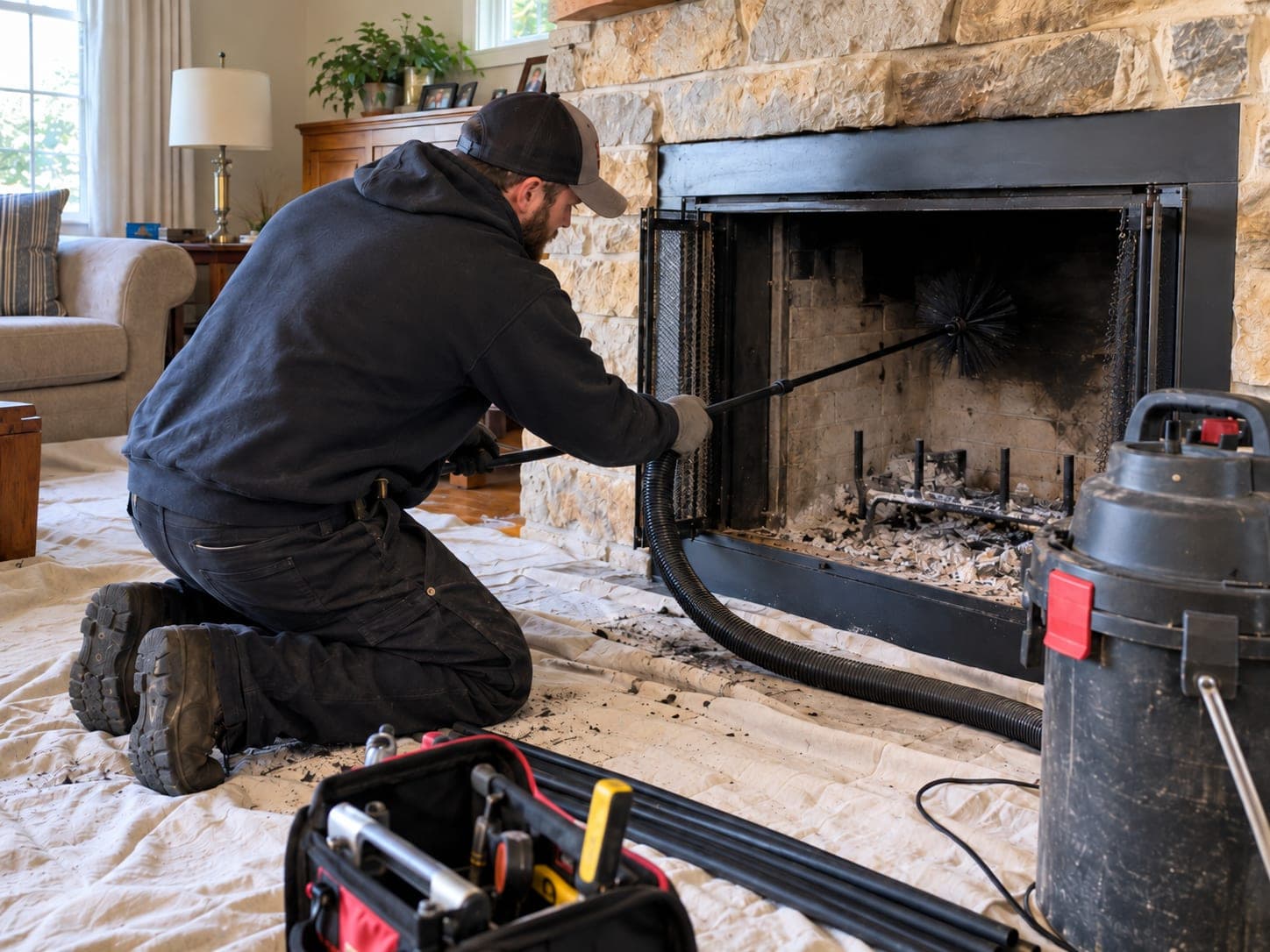
| Rented or store-bought brush kits | Clears loose soot if the brush fits the flue | The wrong size or stiffness can miss deposits or scratch metal liners, and roof work is a fall risk |
| Scraping from the firebox | Reaches the lowest few feet | Leaves the rest of the flue untouched and spreads debris |
Creosote sweeping logs
- What it does
- Releases chemicals that dry out some deposits so they flake off
- The limitation
- Removes nothing itself, and loosened flakes can land on the smoke shelf or damper and still need cleaning out
Spray or powder treatments
- What it does
- Can make light buildup more brittle over repeated fires
- The limitation
- Slow to work, and won't clear thick glaze on their own
Rented or store-bought brush kits
- What it does
- Clears loose soot if the brush fits the flue
- The limitation
- The wrong size or stiffness can miss deposits or scratch metal liners, and roof work is a fall risk
Scraping from the firebox
- What it does
- Reaches the lowest few feet
- The limitation
- Leaves the rest of the flue untouched and spreads debris
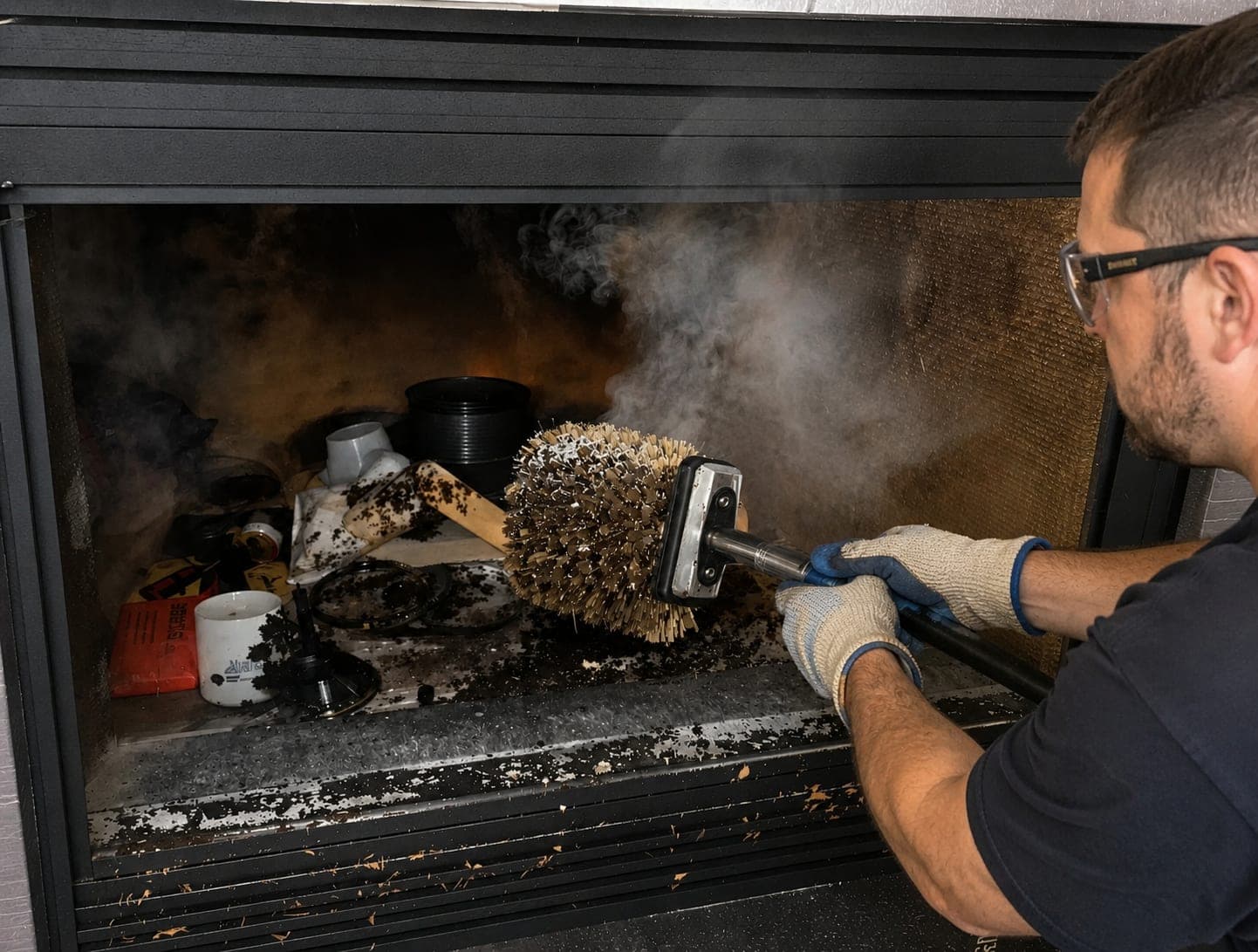
DIY methods can help between cleanings, but none of them show you what's still in the upper flue.
Why glazed creosote needs a different approach
Once creosote hardens into a shiny, tar-like coating, it behaves more like enamel than dust. Brushing rarely moves it, and chipping at it can crack clay flue tiles. Proper removal usually means a chemical treatment to break down the glaze, mechanical removal matched to the liner, and a camera check afterward. Our page on professional creosote removal and what drives its cost walks through each stage.
Don't try to burn it out
Some people build a very hot fire to burn off creosote. That is how chimney fires start. Burning glazed creosote can crack flue tiles and push heat into the framing around the chimney.
If the black staining is on the fireplace face or exterior brick instead of inside the flue, that's a different cleaning job. See removing creosote stains from brick.
When to stop and call
Signs it's beyond a DIY job
- Deposits are shiny, drippy, or too hard to scratch with a fingernail
- Buildup is thicker than roughly an eighth of an inch anywhere you can see
- A strong smoky or tar smell fills the room, especially in humid weather
- Smoke spills back into the room, or fires won't draw
- Twigs, leaves or nesting material fall into the firebox
- The chimney hasn't been cleaned after a year or more of regular use
Animal blockages trap smoke and speed up creosote formation, so a nest and heavy buildup often show up together. Our guide to safe chimney animal removal explains why you shouldn't pull a nest out yourself. For most wood burners, a yearly chimney cleaning keeps creosote at the stage where it brushes out easily.