On this page
Top 3 reasons to budget for a chimney inspection
Why it belongs in the household budget
Small repairs stay small
A hairline crack in a crown or a gap in flashing is a modest fix. Left alone, water gets into the brick and flue, and the same problem can grow into tuckpointing, liner work or a partial rebuild.
Fire and carbon monoxide risks get caught early
Creosote buildup, a blocked flue or a cracked liner can't be seen from the living room. An inspection finds them before a chimney fire or a backdraft does.
No surprises when you sell or upgrade
Buyers often ask about the chimney, and adding an insert, stove or gas logs depends on a sound flue. Knowing the condition ahead of time lets you plan the expense instead of reacting to it.
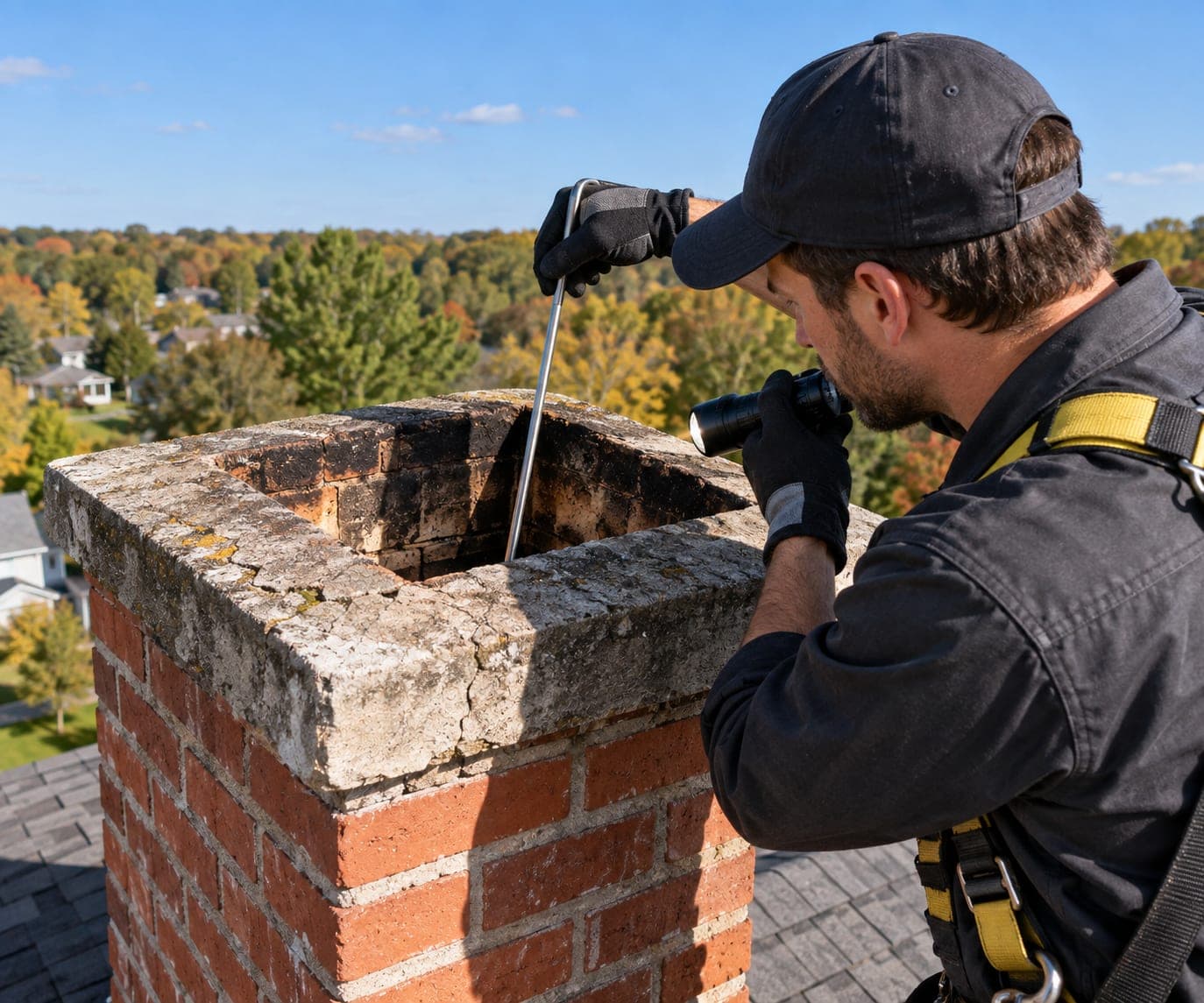
None of these reasons involve spending on repairs you don't need. They're about knowing the chimney's condition so the money you do spend goes to the right place.
Budget chimney inspection for Connecticut homeowners
A budget chimney inspection doesn't mean a rushed one. It means paying for the level of inspection your chimney actually needs, and not for work it doesn't. A few practical ways to keep the bill in check:
- Match the inspection to the situation. A chimney in steady, unchanged use usually needs only the basic annual check; a camera inspection makes sense after a sale, a chimney fire or an appliance change. The chimney inspection page explains the difference.
- Combine visits. Booking a sweep and an inspection together avoids a second trip.
- Inspect what you actually use. For a gas fireplace or a firebox concern, a fireplace inspection service may cover it; if the worry is the flue serving your heating system, ask about a flue inspection.
- Don't wait on water. Leaks are the most common way an inexpensive repair becomes an expensive one.
- Ask what's urgent. A good inspection separates safety items from things that can wait a season.
About pricing
Prices aren't listed here because they depend on the chimney, the level of inspection and what's found. The estimate is free, so you'll know the cost before you agree to anything. For the factors that drive cost, read how much does a chimney sweep cost.
Wondering whether something you've noticed is worth an inspection at all? Common chimney issues is a good place to start. We take calls around the clock, Sunday through Friday, and emergency calls are accepted when something can't wait for a scheduled visit.
What the inspection involves
Buying or selling a home is a common reason to document the chimney's condition. After a chimney fire, an earthquake or a storm, hidden damage is common.
Ask about the system
What you burn, how often, and anything you've noticed sets what to look at closely.
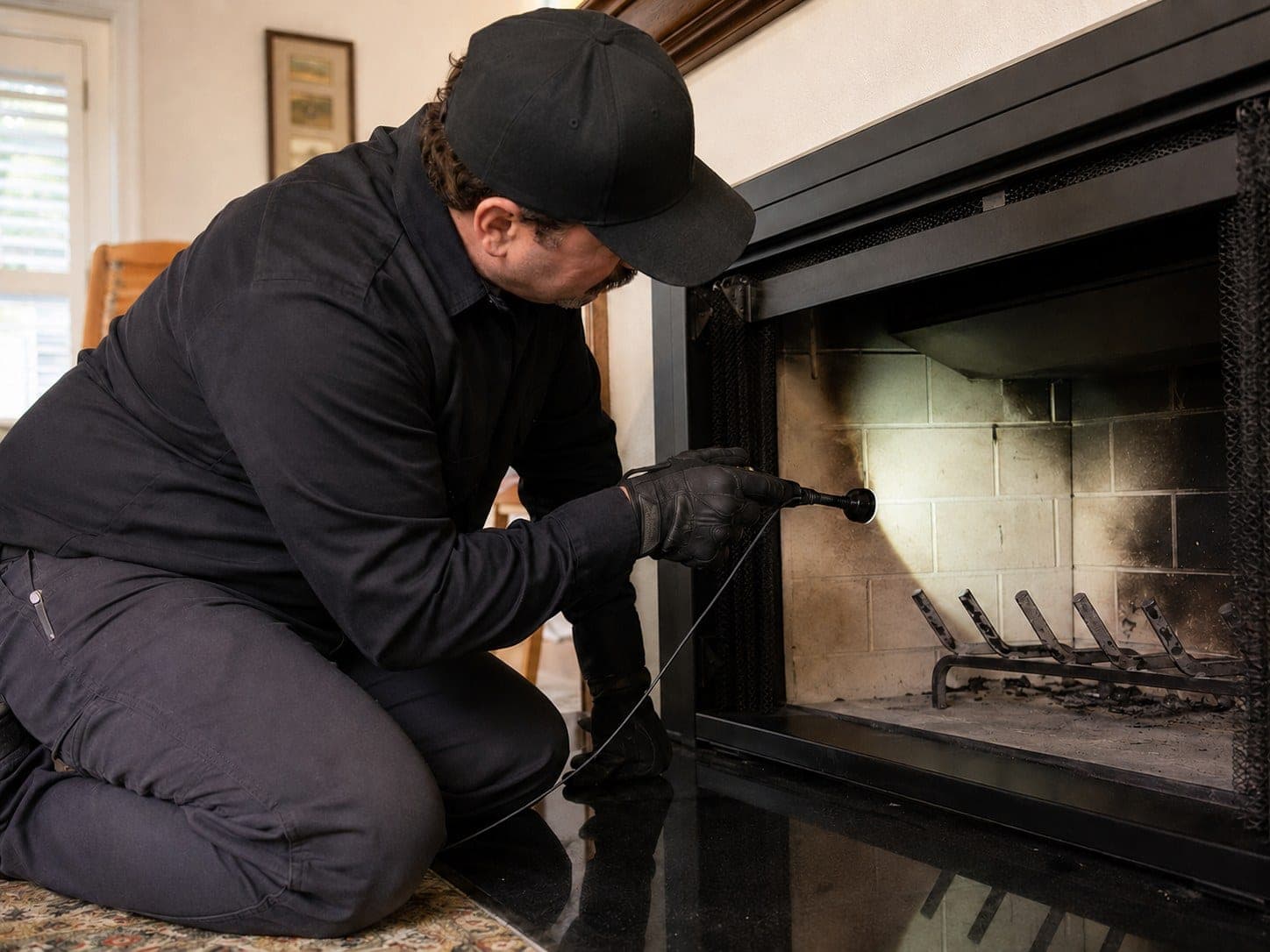
Check from the room
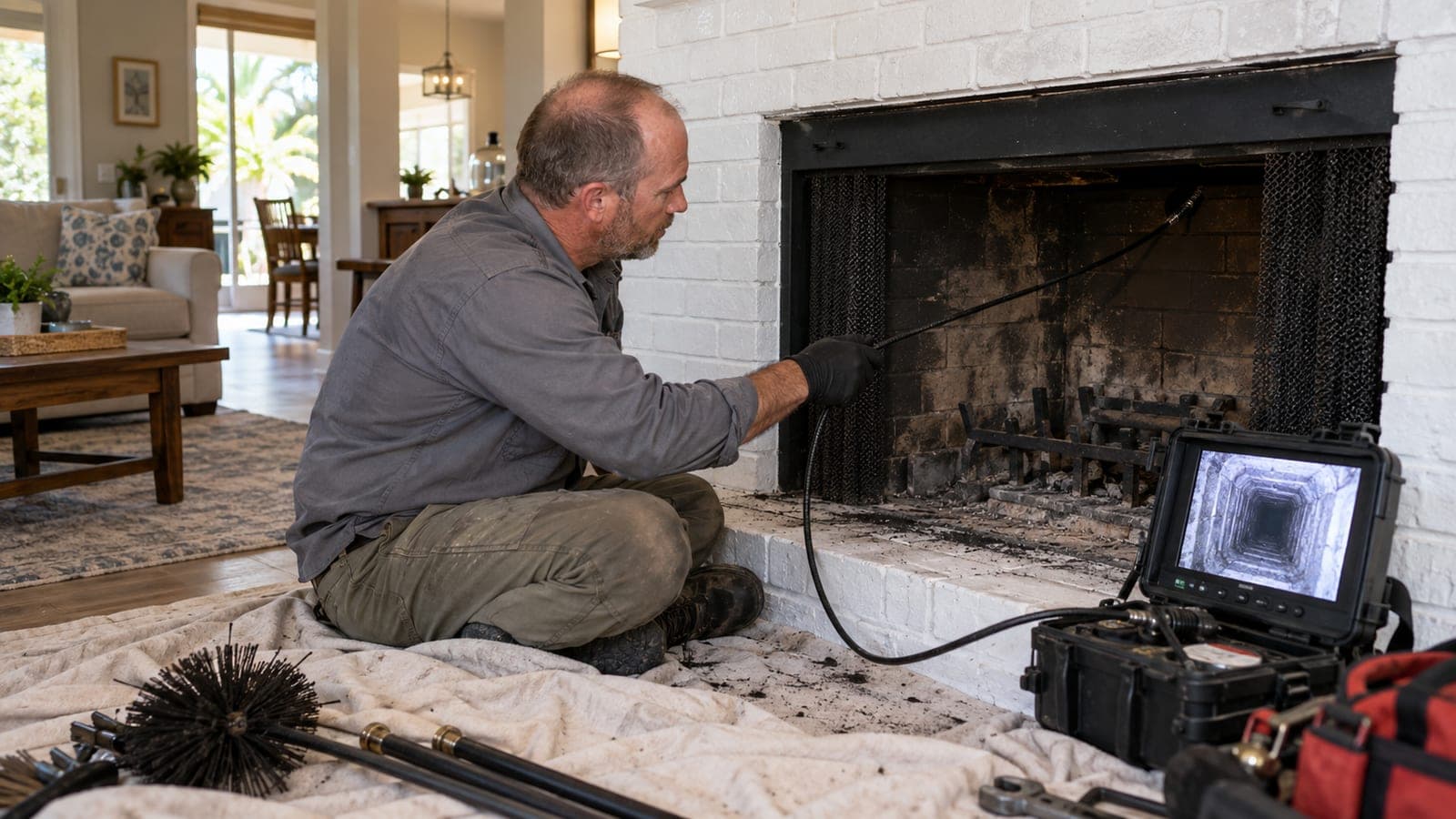
Firebox, damper, smoke chamber and the lower flue are examined with a light.
Check from outside
Crown, cap, flashing and the masonry above the roof are looked at where it is safe to reach.
Go further where needed
A camera can be run up the flue when the liner can't be seen any other way.
Report
You get the findings in plain terms: what's urgent, what can wait, and what's fine.
Signs of a chimney fire
A loud roaring sound, dense smoke or sparks from the top of the chimney can mean a chimney fire. Get everyone out and call 911; have the chimney inspected before the next fire.
What we look at
- Clearances to framing and combustibles, where visible
- Cap, screen and spark arrestor
- Firebox walls, floor and joints
- Smoke chamber and smoke shelf
- Damper operation and seal
- Crown for cracks and pooling water
- Flashing where the chimney meets the roof
How to prepare
- Write down what you've noticed and when it happens — smells, smoke, sounds or stains.
- Make sure the technician can reach the roof or attic access if it's needed.
- Let the fireplace or stove cool completely — ideally no fire for 24 hours before the visit.
- Note the make and model of any insert, stove or gas unit if you have it.
Signs it's time for chimney & fireplace inspection
- Water stains, a damp smell or flaking brick near the chimney
- Smoke in the room or a fire that won't draw
- A storm, earthquake or chimney fire may have damaged it
- You've just bought the home or are about to sell it
- You're switching fuel or adding an insert or stove