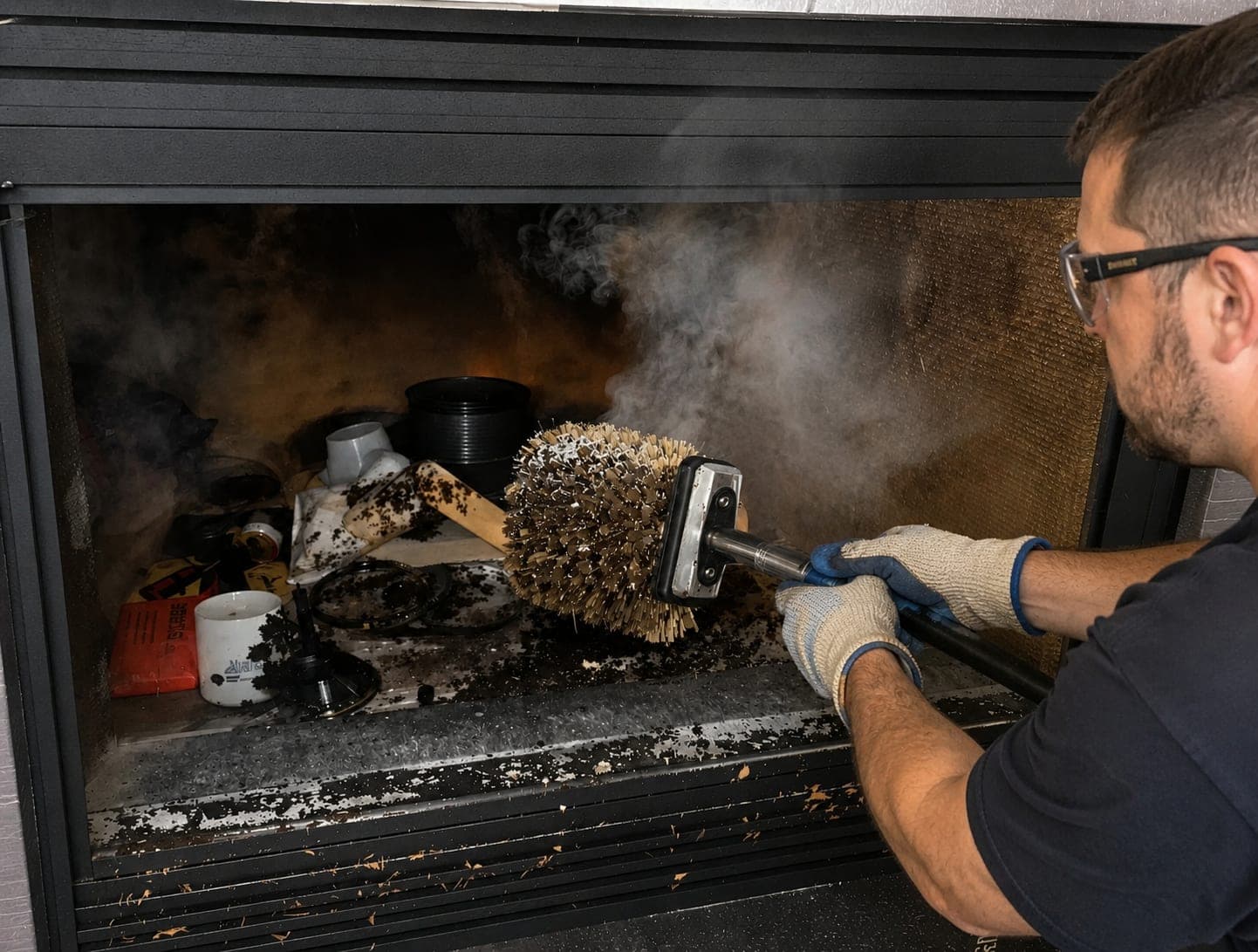
How creosote builds inside a flue
Creosote is what's left when wood smoke cools before it clears the chimney. Tar, vapor and unburned particles condense on the cooler flue walls and stick. It starts as a dusty soot that brushes off easily. After more cool, smoky fires it turns flaky and crunchy. Left long enough, it can harden into a shiny, tar-like glaze that is hard to remove and burns very hot if it ignites.
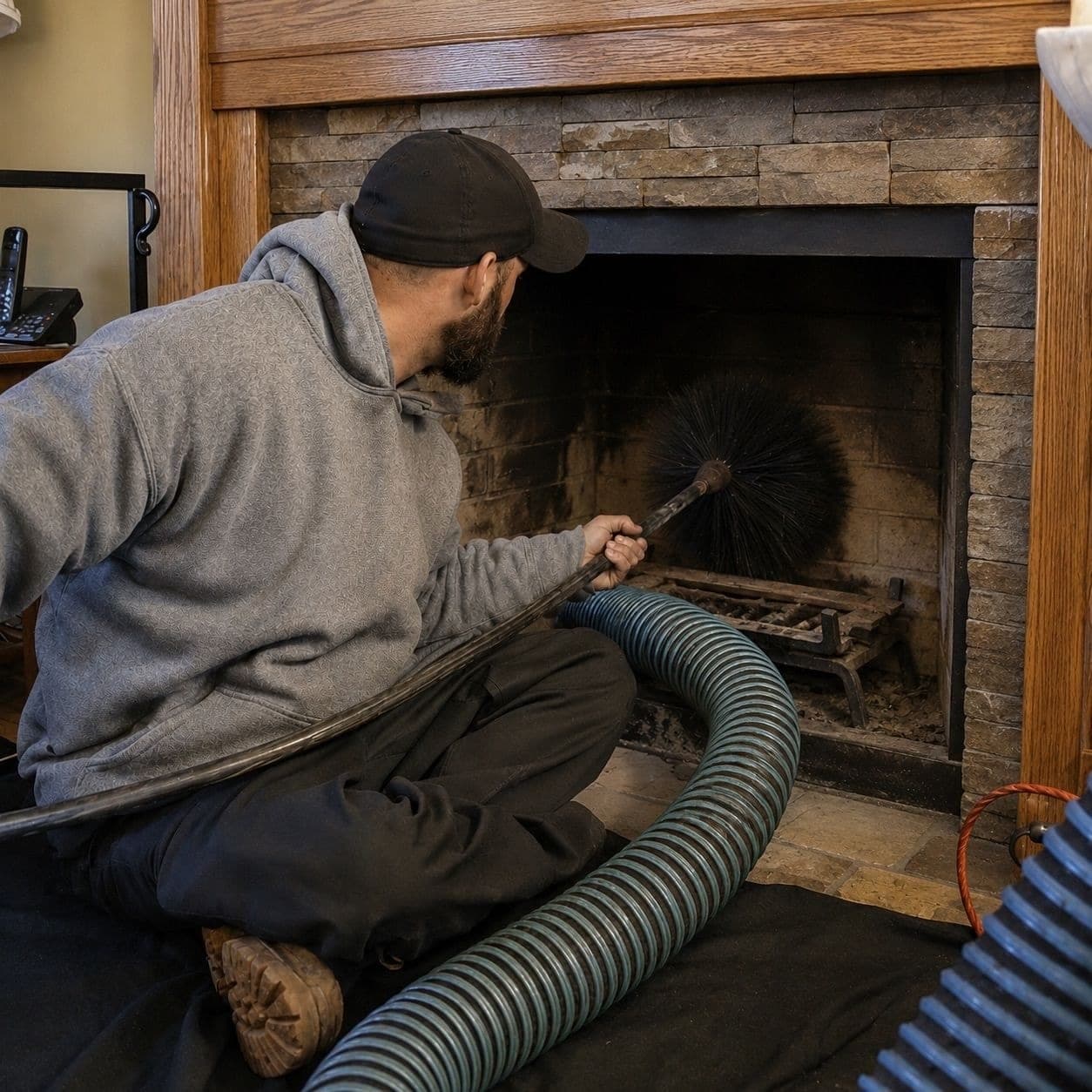
A few conditions speed this up:
- Firewood that hasn't dried long enough, so the fire spends its heat boiling off water
- Air controls or the damper choked down to stretch a fire through the night
- Long, smoldering fires instead of shorter, hotter ones
- An exterior chimney or oversized flue that never warms up fully
- A stove connected to a flue much larger than its outlet
If your flue already has thick, glossy deposits, read about the warning signs of heavy creosote buildup before your next fire.
Water damage and creosote build up
Water and creosote are a bad combination. When rain gets past a missing cap, a cracked crown or failed flashing, it soaks the deposits on the flue walls. Wet creosote is acidic. Over time it can eat into mortar joints and rust metal parts like the damper. It also gives off a strong campfire smell, especially on humid days or when air is drawn down the chimney.
Creosote build up and water leaks: signs to watch for
Signs that water and creosote are mixing
- Dark, tarry streaks running down the firebox walls or the fireplace face
- Brown stains on a ceiling or wall beside the chimney
- A sour, smoky odor that gets stronger after rain
- Rust on the damper, grate or stove door
- Sticky, wet residue on the smoke shelf
Fixing only one half rarely lasts. If you clean a leaking chimney, the new deposits get soaked again. If you seal the leak, the acidic residue is still there. We handle both: creosote removal and odor removal on one side, and the cap, crown or flashing repair that stops the water on the other. Our overview of chimney problems we see most often explains how these issues tend to link together.
How to prevent creosote build
No wood fire burns perfectly clean, but your habits make a big difference in how fast residue collects.
3 ways to minimize creosote build up
Burn dry, split hardwood
Wood that hisses, steams or bubbles at the ends is still wet. Split it, stack it off the ground and give it time to dry before you burn it.
Give the fire enough air
A bright, hot fire sends less unburned smoke up the flue. Several shorter fires are better than one fire left smoldering all night.
Keep the flue swept and capped
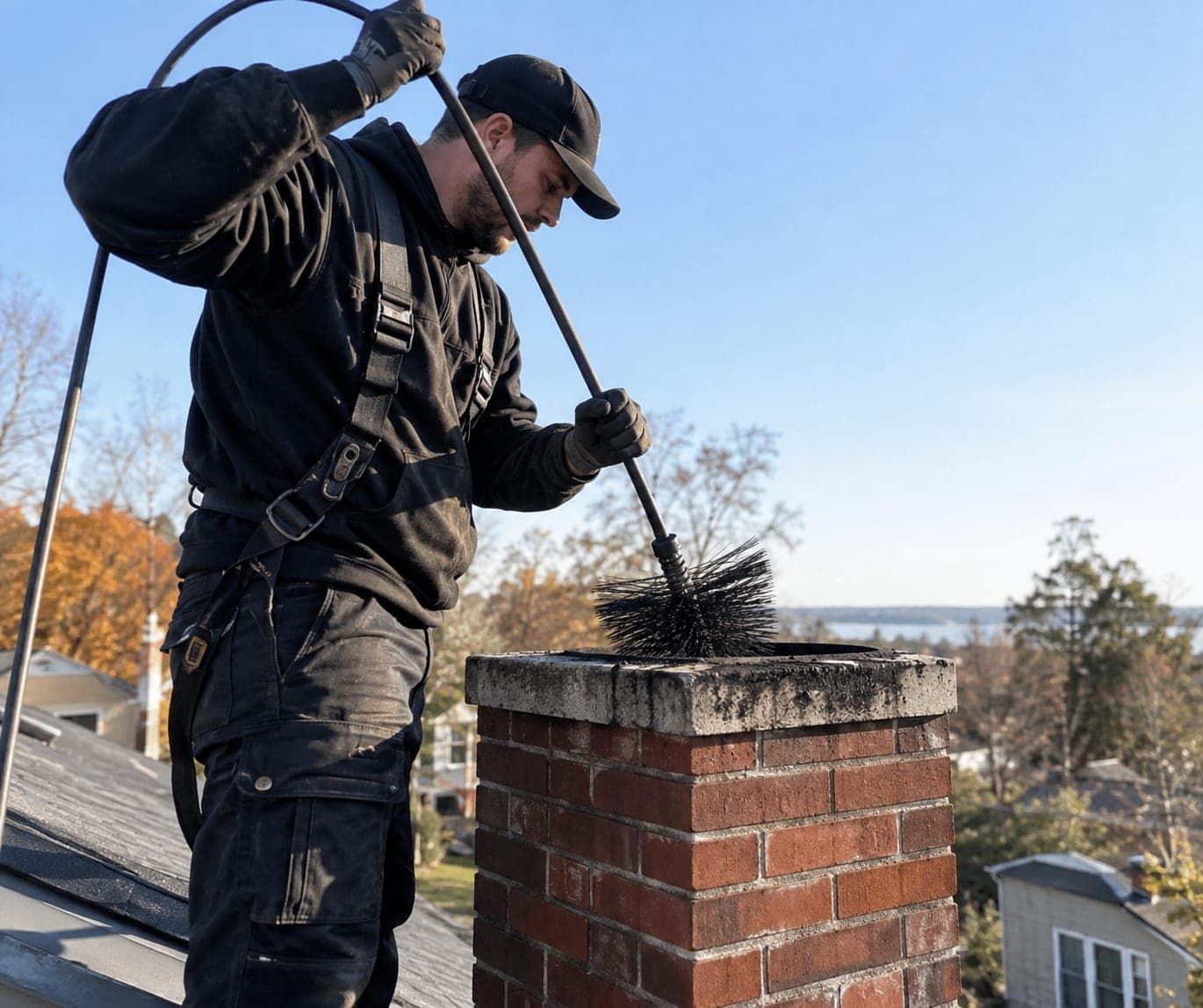
A regular annual chimney cleaning removes deposits before they harden into glaze. A cap keeps rain from soaking whatever is left.
Preventing creosote build up in Connecticut homes
These habits work the same in Hartford as anywhere else in Connecticut. What differs from house to house is the chimney itself. If your flue keeps coating up quickly even though you burn dry wood hot, ask during the free estimate whether flue size or the liner is part of the cause. Our page on other chimney issues homeowners run into covers related symptoms, and we also explain how stubborn creosote gets cleaned off.