Creosote build-up and removal, stage by stage
Creosote forms when smoke cools inside the flue and its tars and moisture condense on the walls. How it's removed depends on what it has turned into. That's why professional creosote removal starts with a look at the deposits instead of a one-size-fits-all sweep.
| Stage | What it looks like | Usual removal approach |
|---|---|---|
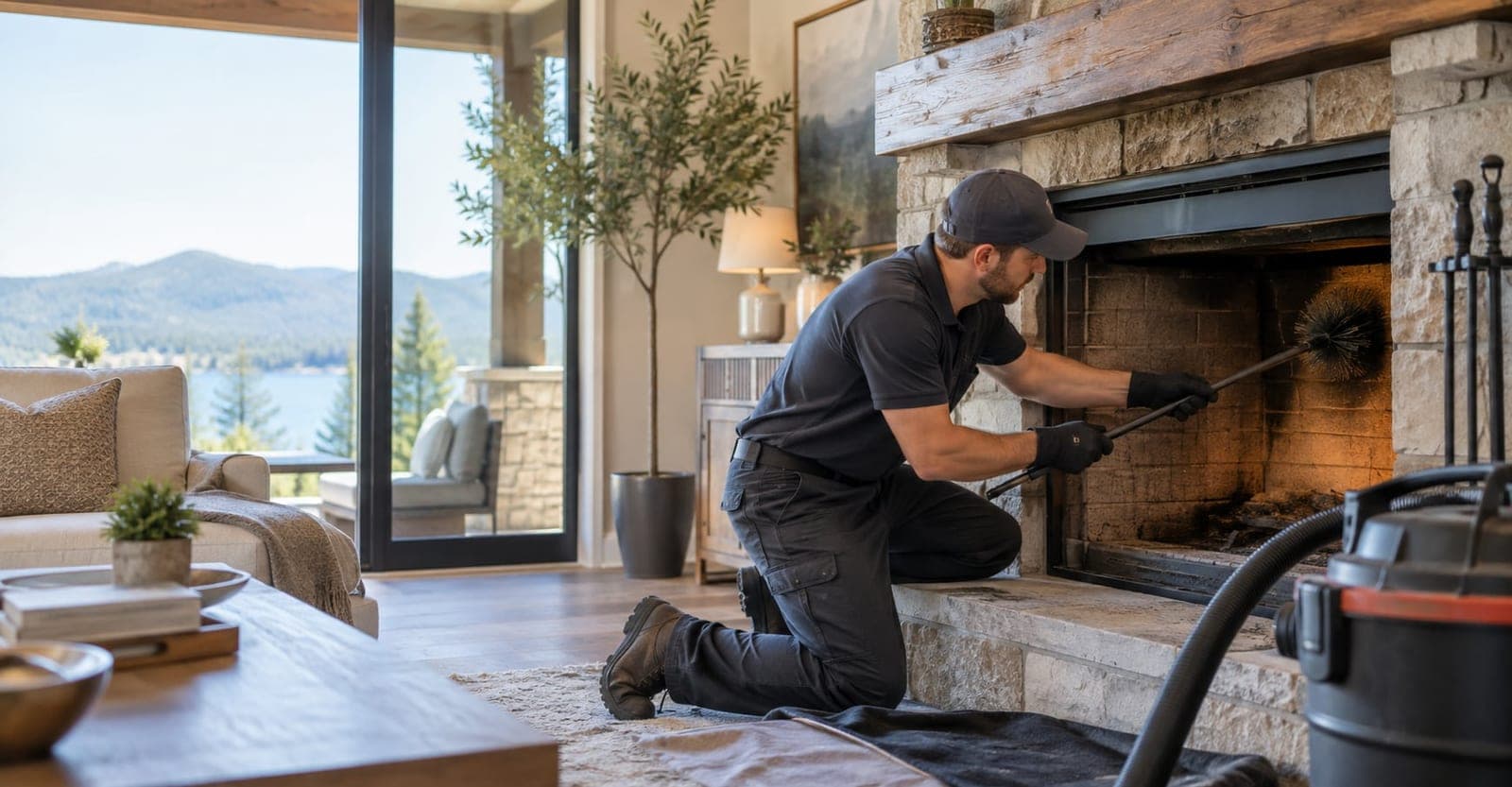
| Stage 1 | Dry, dusty black soot that flakes off easily | Standard brushing of the flue, smoke shelf and firebox |
| Stage 2 | Crunchy, porous flakes with a tar-like layer underneath | More aggressive rotary brushing, sometimes repeated |
| Stage 3 | Shiny, hard glaze that looks like dripped tar | Chemical treatment to soften it, then mechanical removal over one or more visits |
Stage 1 is what annual chimney cleaning is meant to catch. Once deposits reach stage 3, the job gets slower and more involved, and the glaze is the most flammable form. If you're deciding whether to tackle light deposits yourself, see what you can safely do to remove creosote at home.
Advanced creosote removal techniques
Glazed creosote bonds to the flue liner, and an ordinary brush won't take it off. Advanced techniques for these chimneys usually combine several steps:
- Chemical modifiers are applied to the glaze to dry it out and make it brittle so it can be broken loose
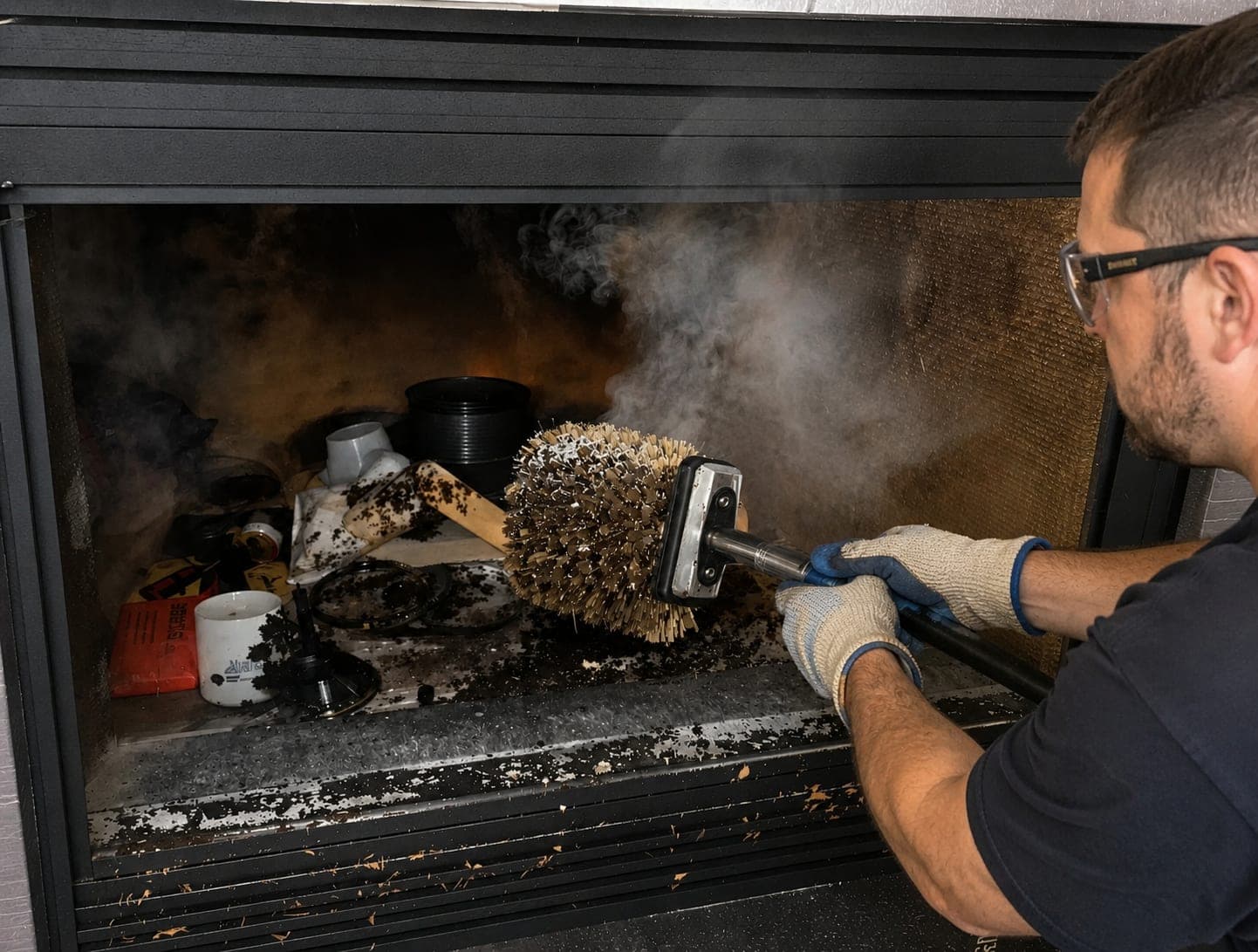
- Rotary cleaning heads work the flue wall harder than a standard wire brush and are chosen to suit the liner material
- Repeat treatments are used when the glaze is thick, so some stage 3 chimneys need more than one appointment
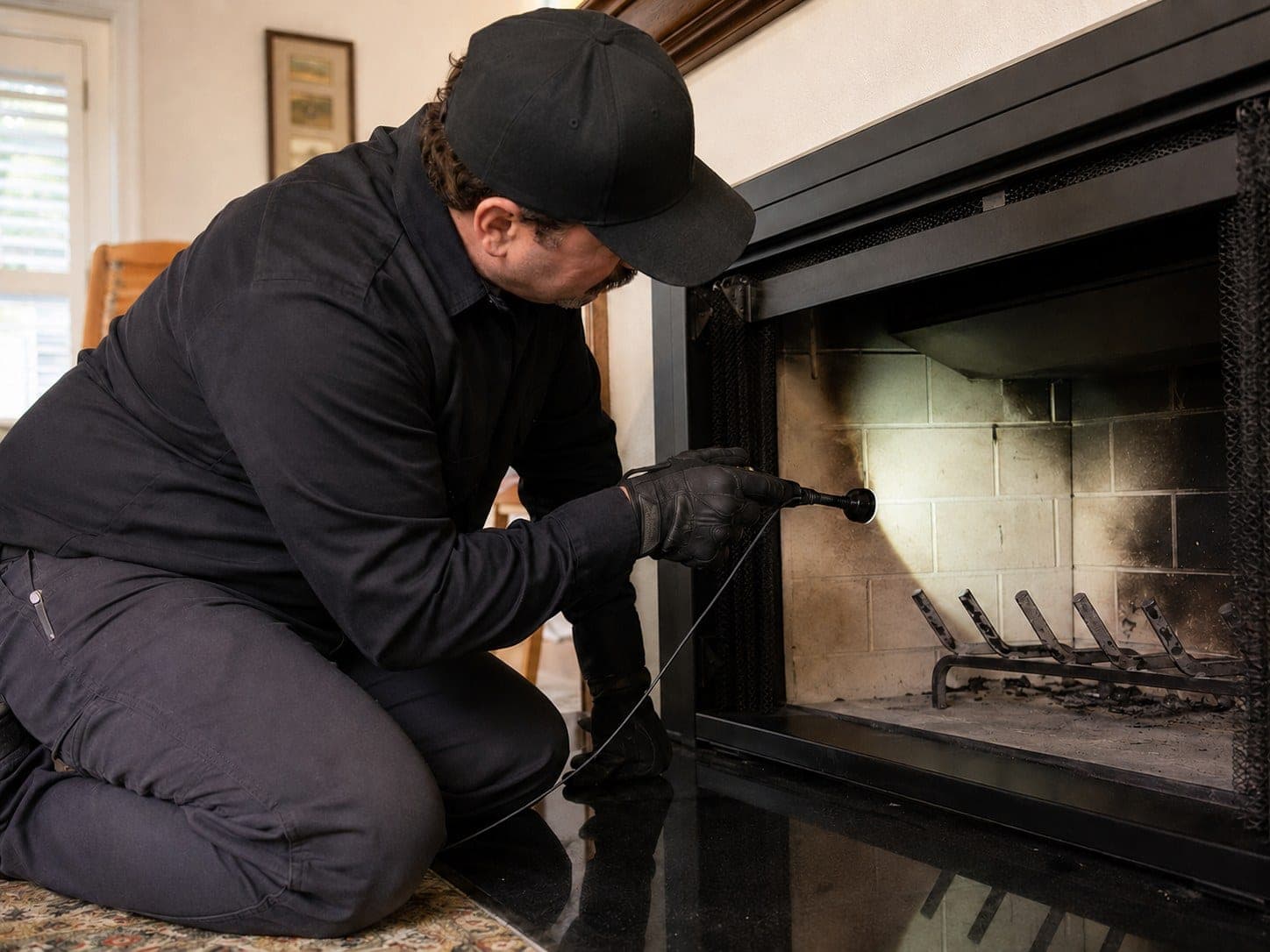
- Camera inspection after cleaning confirms the deposits are gone and checks the liner for cracks or heat damage
Heavy glaze often means a chimney fire has already happened without anyone noticing. If the camera shows cracked tiles or a damaged liner, that needs repair before the next fire. Black staining on the outside of the masonry is a separate job, covered under getting creosote stains off brick.
Creosote removal cost considerations
We don't publish prices because two chimneys rarely need the same work. The factors that raise or lower creosote removal cost are predictable, though:
What affects the cost
- The stage of the deposits, since glaze takes far more time than soot
- Flue height, size and shape, and whether the liner is clay tile, metal or unlined masonry
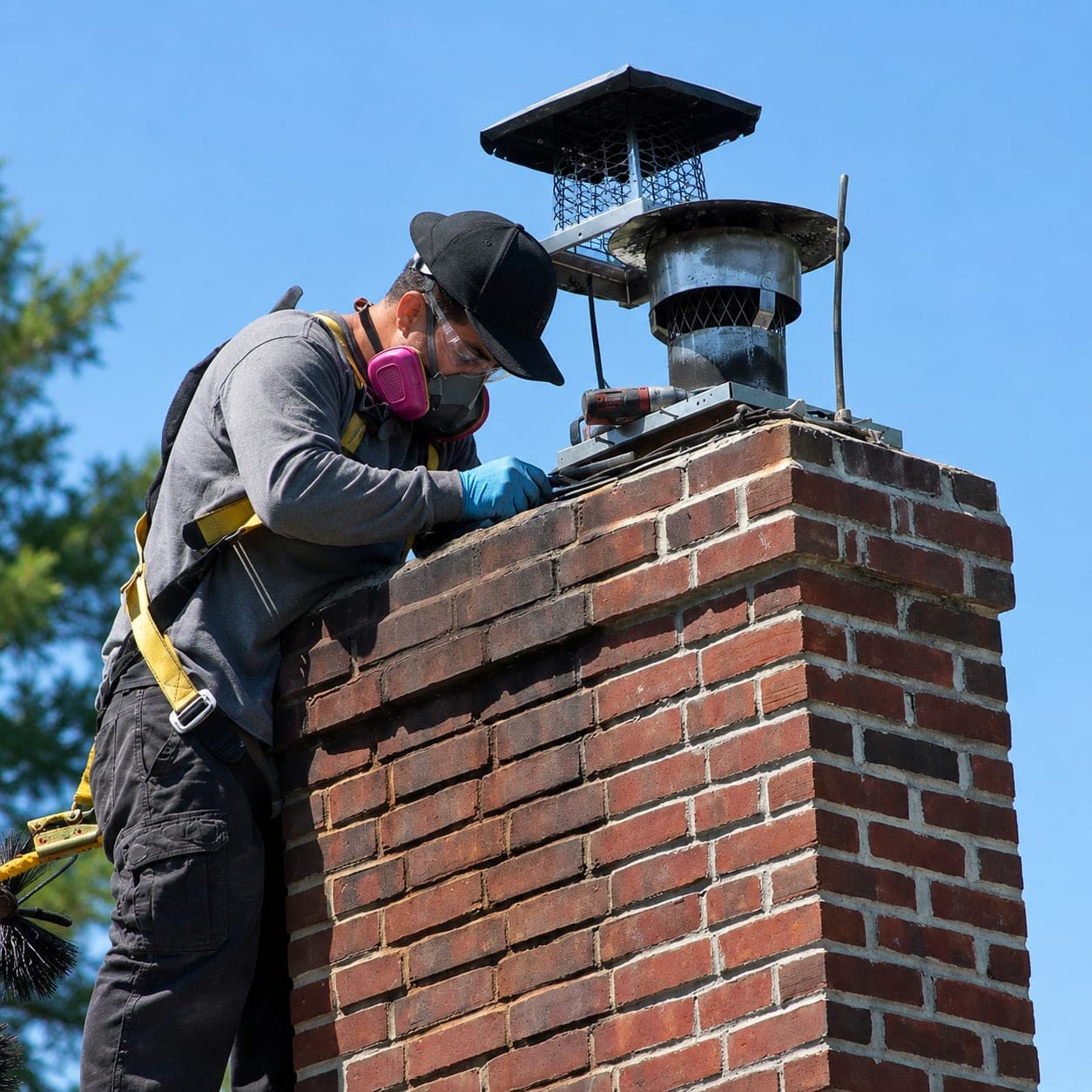
- Roof pitch and access to the chimney top
- How many flues or appliances need attention
- Whether a second visit or follow-up treatment is needed
- Any damage found during inspection that needs repair
Creosote removal cost in Hartford, East Hartford and across Connecticut
The same factors apply wherever your home is, so the most reliable figure comes from seeing the chimney. Estimates are free, and same-day visits are possible when the schedule allows. To learn what else can turn up during a cleaning, read our overview of common chimney issues.