On this page
What a wood stove installation call can cover
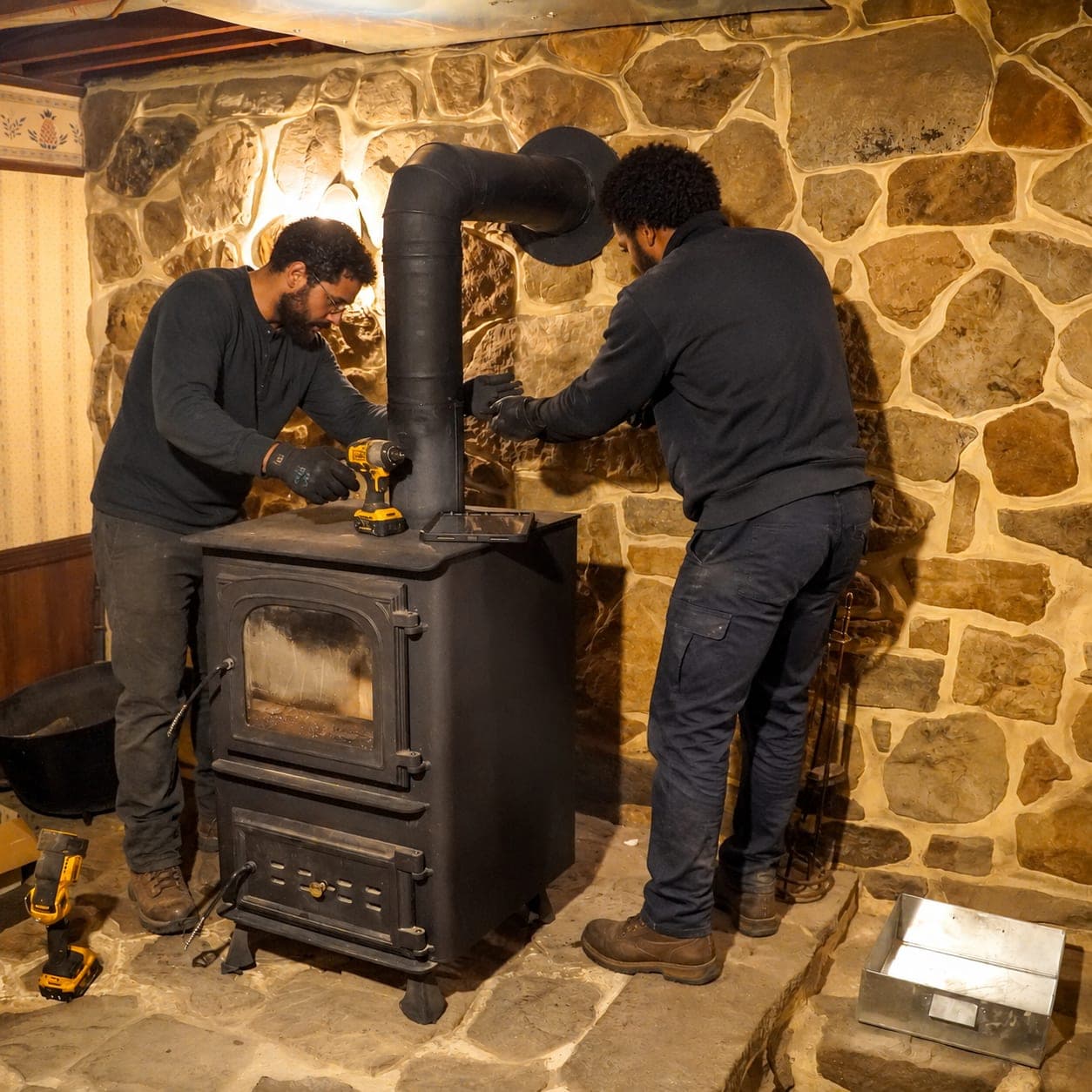
People who search for a wood stove installation service are usually in one of two situations. Some are planning a stove and can only talk after work. Others just connected a stove and something seems wrong. Either way, you can call any time. We're available 24 hours, Sunday through Friday, we accept emergency calls, and we offer same-day service where the schedule allows.
| Situation | What to do |
|---|---|
| Smoke backing into the house from a newly connected stove | Stop adding wood, open windows and call. Emergency calls are accepted at any hour, Sunday through Friday. |
| Animal noises or debris in the flue before the first fire | Don't light it. Call for blockage or nest removal. |
| Liner looks undersized, crushed or loose | Stop using the stove and schedule liner repair or installation. |
| Planning a stove and unsure the chimney can handle it | Request a free estimate for an inspection. |
If you suspect a chimney fire, get everyone out and call 911 before anything else.
What the visit covers
A cracked or missing baffle sends heat and smoke straight up the flue and raises creosote buildup. A connector pipe that has rusted or separated at a joint can leak smoke into the room.
Look at the space
Where the stove will sit, the clearances the manufacturer requires and the floor protection it needs.
Check the chimney
The flue's size and condition decide whether a liner is needed for a proper draft.
Install
The stove, connector or liner and hearth pad go in to the manufacturer's instructions and local code.
Test and walk through
A test burn, a draft check and how to run it cleanly.
Carbon monoxide
A stove or insert that vents poorly can push carbon monoxide into the home. If an alarm sounds or anyone feels dizzy or sick near it, get everyone outside and call 911.
Signs it's time for wood stove installation
- An old stove with cracked parts or warped plates
- A room or addition that needs a steady heat source
- An open fireplace that sends most of its heat up the chimney
- A chimney that's sound but oversized for a stove's outlet
How to prepare
- Have the make and model handy; it's usually on a plate on the back or under the ash lip.
- Clear a few feet around the unit and the area under any connector pipe.
- Make sure the roof or the attic access can be reached if the flue needs to be checked from above.
- Let the stove or insert go out and cool completely — ideally no fire for a full day before the visit.
What gets checked
- Hearth pad size and rating
- Clearances to walls, mantels and furniture
- Permit requirements
- Flue size against the stove's outlet
- Liner or connector route
Burning in a wood stove
In cold months many households keep a stove going around the clock and turn the air down overnight. A slow, smoldering fire sends cooler smoke up the chimney. That smoke condenses on the flue walls as creosote. It's the main reason continuous burning needs more attention, and what causes creosote buildup explains the process step by step. It also helps to understand what creosote is and why it ignites.
- Give the stove a hot, lively fire for part of each day instead of keeping it low all the time
- Burn only dry, seasoned wood
- Avoid shutting the air control all the way down for long overnight burns
- If the stove runs constantly, have the flue checked during the season, not just before it
Once deposits are thick, sweeping alone may not be enough, and professional creosote removal is the next step. Hard, glazed buildup takes a different approach. Our page on getting rid of stubborn, glazed creosote covers it.
wood stove installation in Connecticut: what can't be rushed
Being available at any hour, Sunday through Friday doesn't mean every step should happen at midnight. Liner sizing has to match the stove's manual. Clearances have to be confirmed. Connections have to be sealed properly. Assessment, cleaning and clearing a blocked flue can move quickly. Fitting a liner or connecting a stove is done at the pace accuracy requires. Before any stove goes into service, it's worth reviewing our guide to common chimney issues.