On this page
Why a wood burning stove builds creosote faster
A fireplace lit on weekends sends hot, fast-moving smoke up the flue. A stove that heats the house runs for hours at a time and is often turned down low overnight. That slow, cool smoke condenses on the liner as creosote, which builds up in layers:
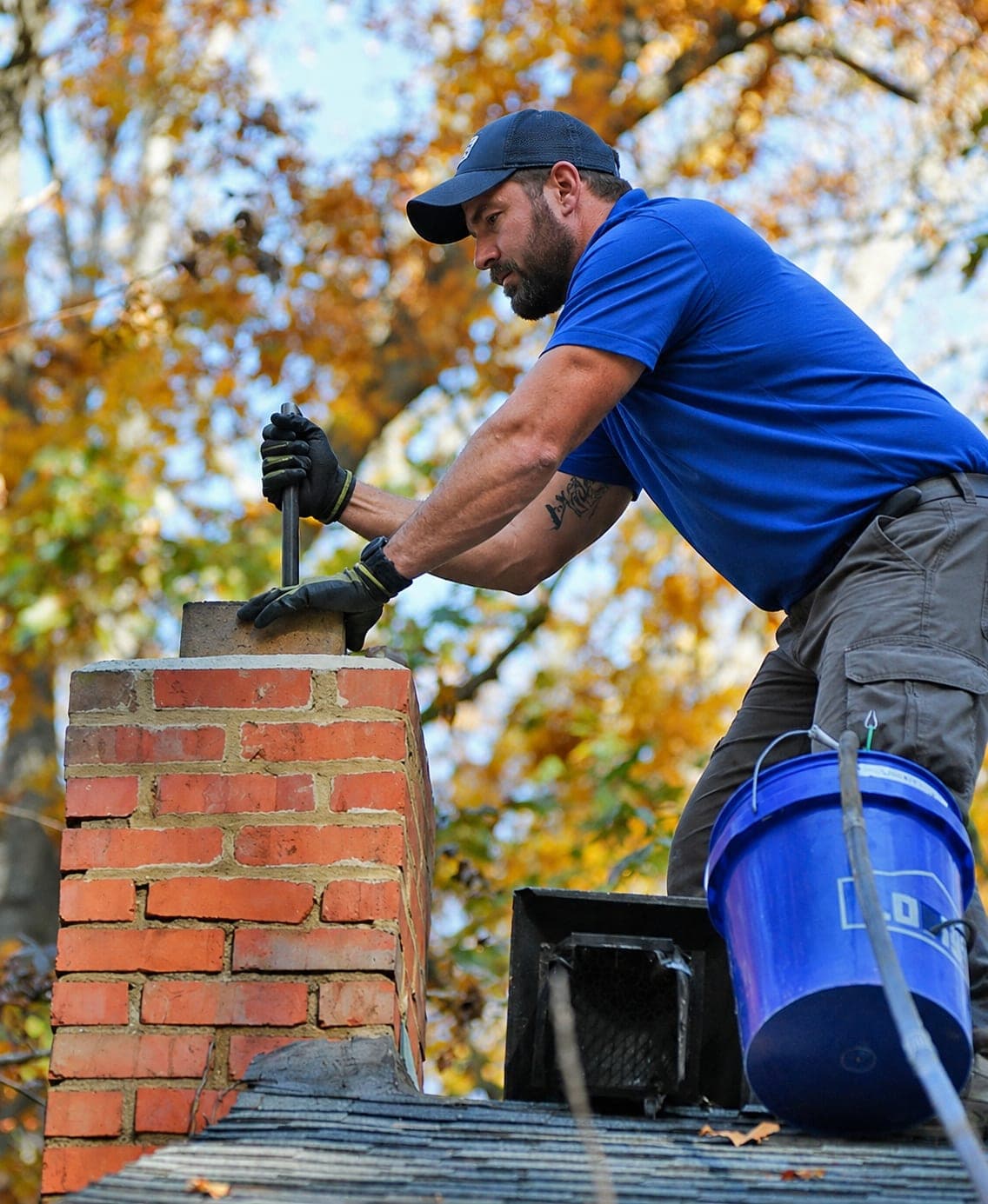
- Stage one: dry, flaky soot that brushes off easily
- Stage two: crunchy, tar-like deposits that cling to the liner
- Stage three: shiny, glazed creosote that hardens like enamel and burns intensely if it ignites
Brushing clears the first stage. The later stages require creosote removal. Glazed deposits are why a stove that was swept last year can still be risky by February.
How the visit works
A connector pipe that has rusted or separated at a joint can leak smoke into the room. Stoves burn hotter and smokier at low settings than people expect, so the flue collects creosote faster than an open fireplace's.
Hear what it's doing
How the stove burns, what's changed and when — that points to the door, the baffle, the air supply or the flue.
Check the stove itself
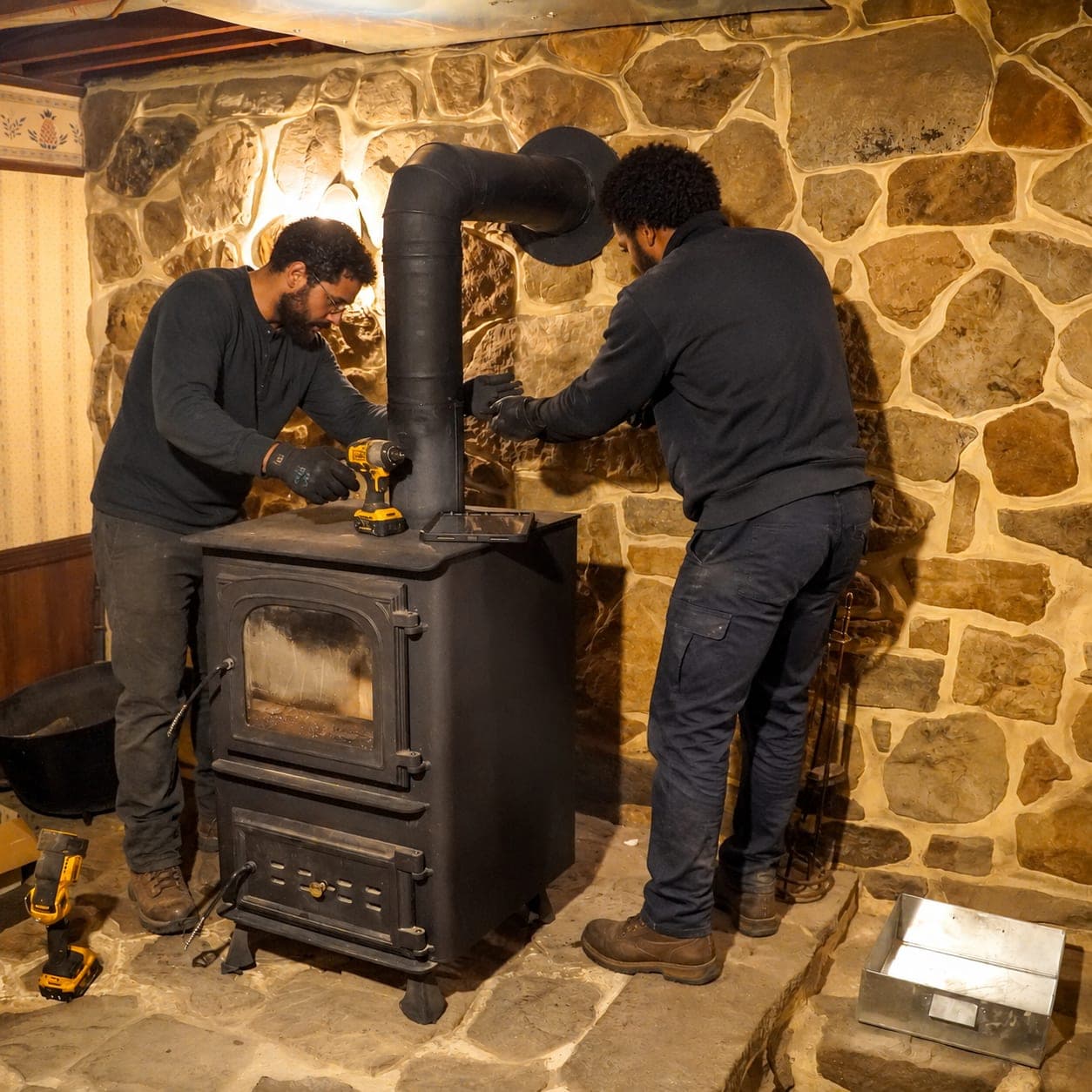
Door latch and gasket, glass, firebrick, baffle, air controls and the body for cracks or warping.
Check the connector and flue
Pipe joints, the thimble or liner connection, clearances to walls, and the flue for creosote and draft.
Explain and agree
What needs cleaning, adjusting or replacing, before any work starts.
How to prepare
- Have the make and model handy; it's usually on a plate on the back or under the ash lip.
- Let the stove or insert go out and cool completely — ideally no fire for a full day before the visit.
- Make sure the roof or the attic access can be reached if the flue needs to be checked from above.
- Write down what you've noticed — smoke at the door, a hard-to-control fire, noises or smells.
What the technician checks
- Clearances to walls, floor protection and the hearth pad
- Firebrick and baffle condition
- Liner or thimble connection at the chimney
- Air controls and their range
- Draft with the door closed
Signs of a chimney fire
A loud roaring sound, a glowing connector pipe, dense smoke or sparks from the top of the chimney can mean a chimney fire. Get everyone out and call 911; have the system inspected before the next fire.
When to book wood-burning stove
- Smoke escaping when the door is opened, or around a closed door
- A fire that won't stay low even with the air control shut
- Cracked firebrick or a sagging or broken baffle
- Heavy black deposits on the glass after short burns
Signs your stove is due for cleaning
- Smoke rolls out when you open the door to add wood
- The fire is harder to start or keep going than it was in the fall
- The glass blackens quickly, even with dry wood
- Flakes of creosote drop into the firebox or stove pipe
- A sour, smoky smell fills the room on humid days
- The cap screen looks packed when you look up at it from the yard
Many of these overlap with problems we see across all kinds of chimneys. This rundown of frequent chimney issues explains what causes them.
Keeping a wood burning stove in Connecticut going all winter
If the stove is your main heat source, a single fall cleaning may not last until spring. A mid-season check catches buildup before it turns to glaze. We clean freestanding stoves, stove inserts and the flues above them. We're available 24 hours, Sunday through Friday, offer same-day visits when the schedule allows, and give free estimates. Thinking of moving a stove into a fireplace opening? Read about wood stove inserts. Reconsidering wood altogether? Our gas vs. wood fireplace guide lays out both sides.