On this page
What the chimney needs before a stove goes in
A wood stove installation has two halves: setting the appliance and preparing the venting it connects to. The stove gets most of the attention, but the chimney decides how well the stove drafts and how safely it handles heat. Many older masonry flues were sized for an open fireplace. They are often too large for a modern stove, and an oversized flue tends to cause sluggish draft and heavy creosote.
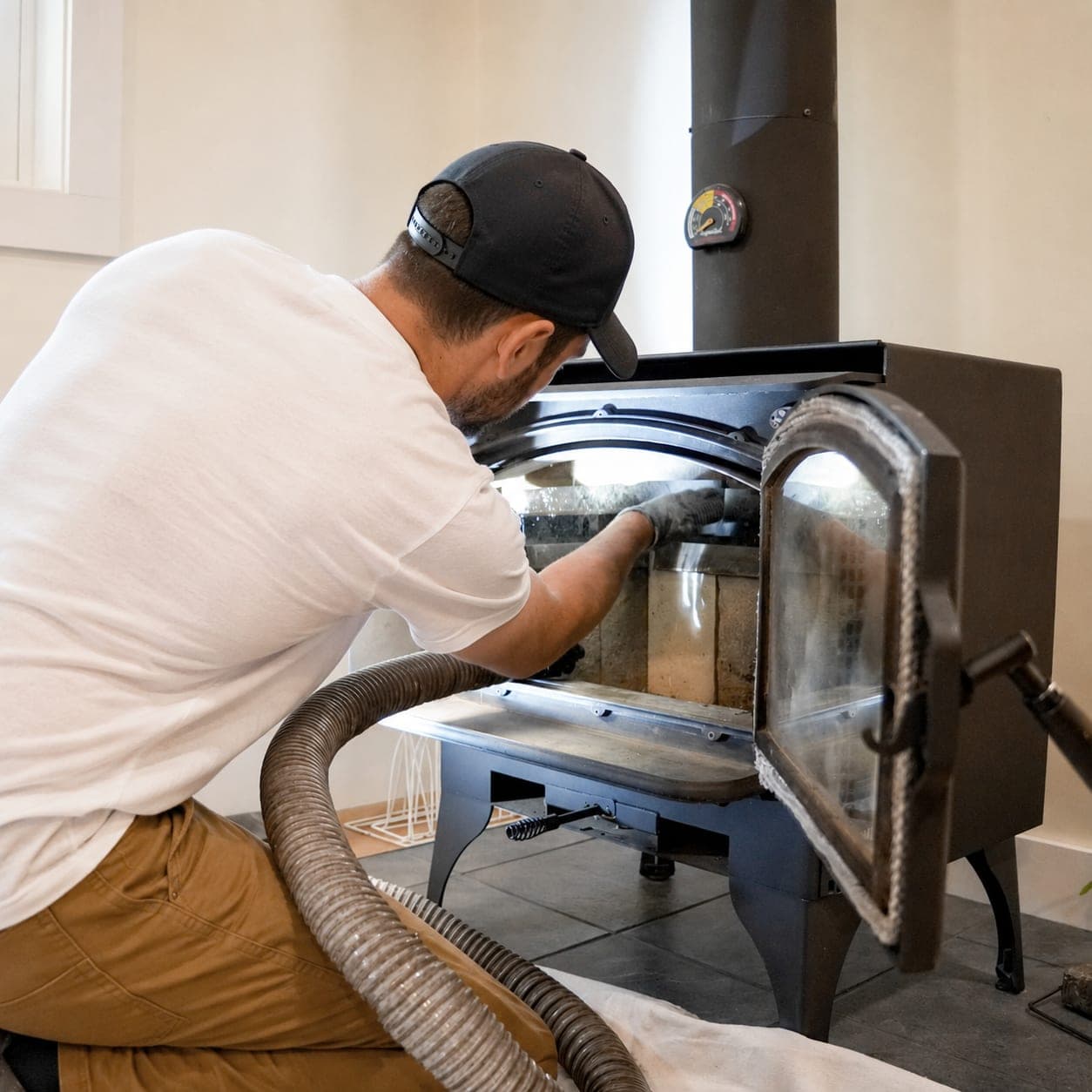
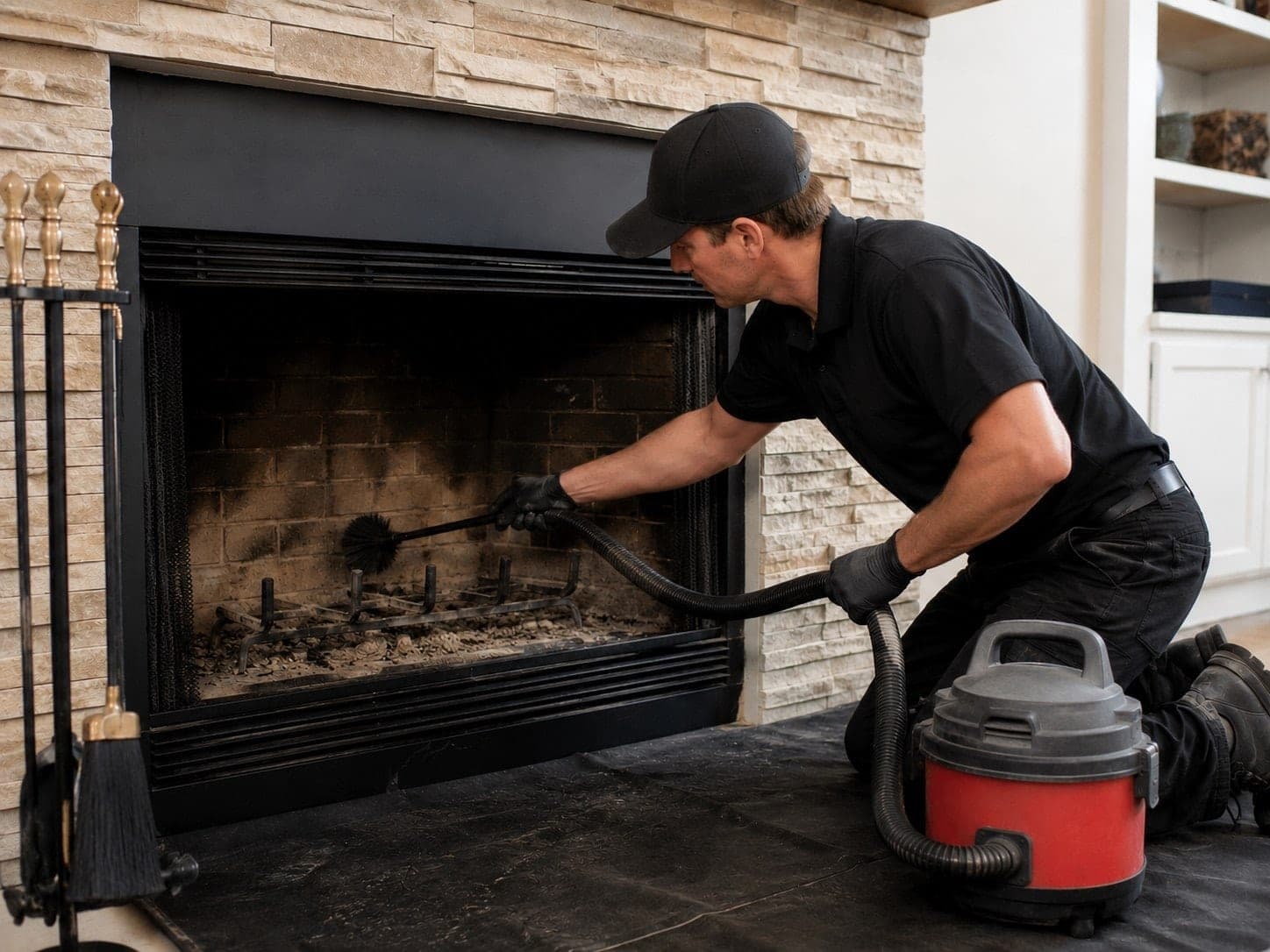
Our part of the project is the venting half. That includes a chimney and fireplace inspection or a camera inspection, a full cleaning, liner installation matched to the stove's flue outlet, and crown, flashing and cap work. Homeowners in Hartford and across Connecticut often find common chimney problems that surface during stove prep, such as cracked tiles or a deteriorated crown. Those are much easier to fix before a stove is connected.
Before the stove is connected
- Old creosote, soot and debris cleared from the flue
- Liner checked for cracked tiles, gaps or missing mortar
- Liner diameter matched to the stove manufacturer's specifications
- Crown, flashing and cap in sound, watertight condition
- Any nests or blockages removed and an animal screen in place
Rules all wood stoves share
Every wood stove has the same basic requirements, whatever the model. It must keep the clearances to combustibles shown on its listing label and in its manual. It needs a floor protector of the size the manual specifies. It must vent into a chimney that is intact and correctly sized. Ask your local building official whether your installation needs a permit and inspection.
The 2020 EPA standard and the stove you pick
New wood heaters sold in the U.S. must meet the EPA's 2020 emission standard, often called Step 2. On the standard test it limits particulate emissions to 2.0 grams per hour. Cleaner-burning stoves usually leave less creosote behind. They are also less forgiving of wet wood and badly sized flues, so the chimney matters even more.
Maybe you'd rather put the stove inside an existing firebox than stand it on the hearth. In that case, read about wood stove inserts. Fireplace insert installation is work we do. If you haven't settled on a fuel yet, our comparison of gas and wood fireplaces lays out the trade-offs.
Your wood stove chimney after installation
In the first season, have the flue checked after a stretch of regular burning so you learn how fast deposits form with your wood and your habits. Burn dry, seasoned wood. Pay attention if a smoky smell lingers. Routine care for a wood-burning stove and its flue keeps that early buildup from becoming a problem.
Need a woodstove installer ASAP in Connecticut?
When the heating plan is urgent, call. We're available 24 hours, Sunday through Friday, we accept emergency calls, and we offer same-day service where the schedule allows. Assessing the chimney and clearing it can happen quickly. Liner sizing and fit should still be done carefully, not rushed. You can see how our Sunday–Friday 24-hour stove help works before you reach out.
What the visit covers
A cracked or missing baffle sends heat and smoke straight up the flue and raises creosote buildup. A worn door gasket lets the stove pull in extra air, so the fire burns hot and fast and is hard to control.
Look at the space
Where the stove will sit, the clearances the manufacturer requires and the floor protection it needs.
Check the chimney
The flue's size and condition decide whether a liner is needed for a proper draft.
Install
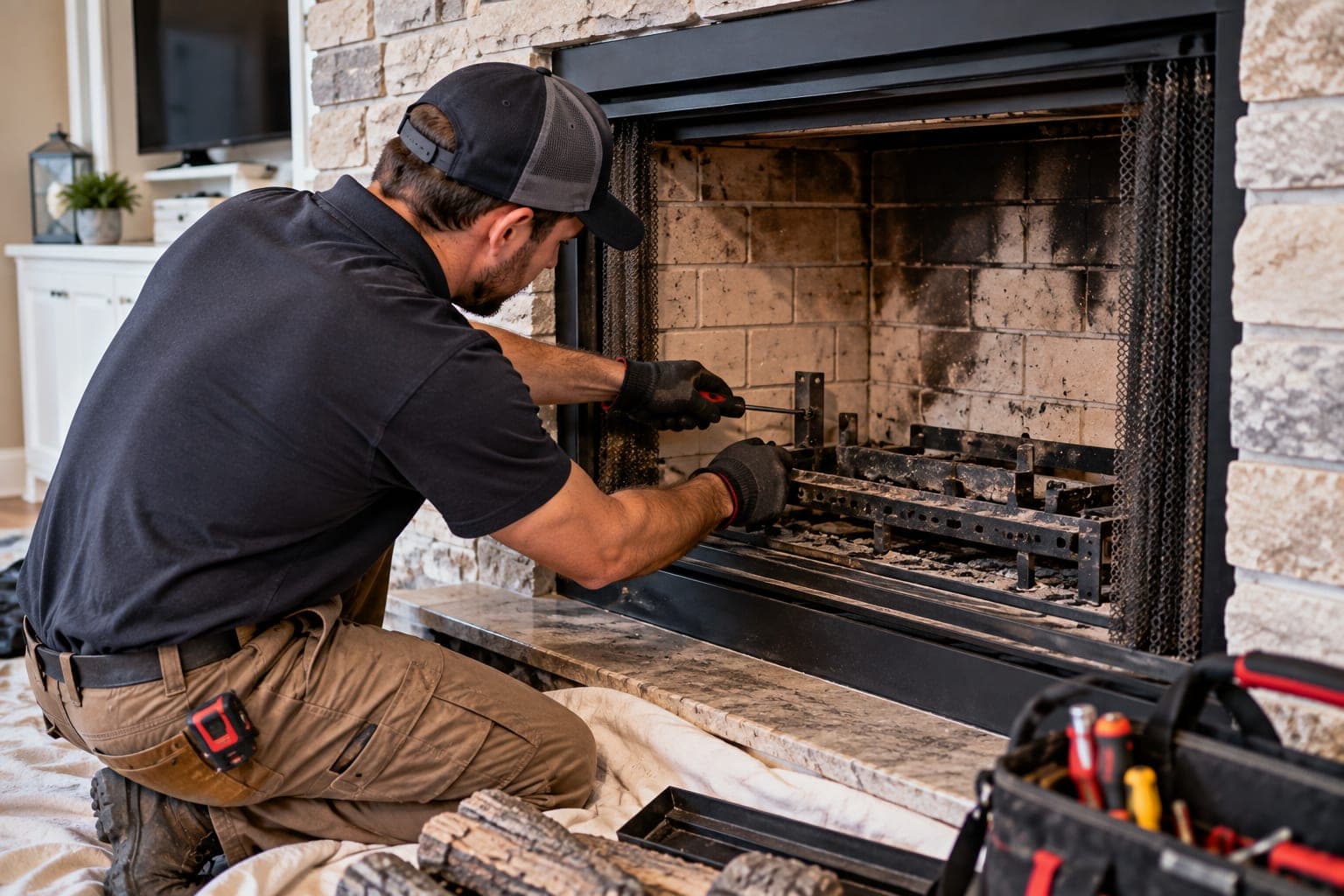
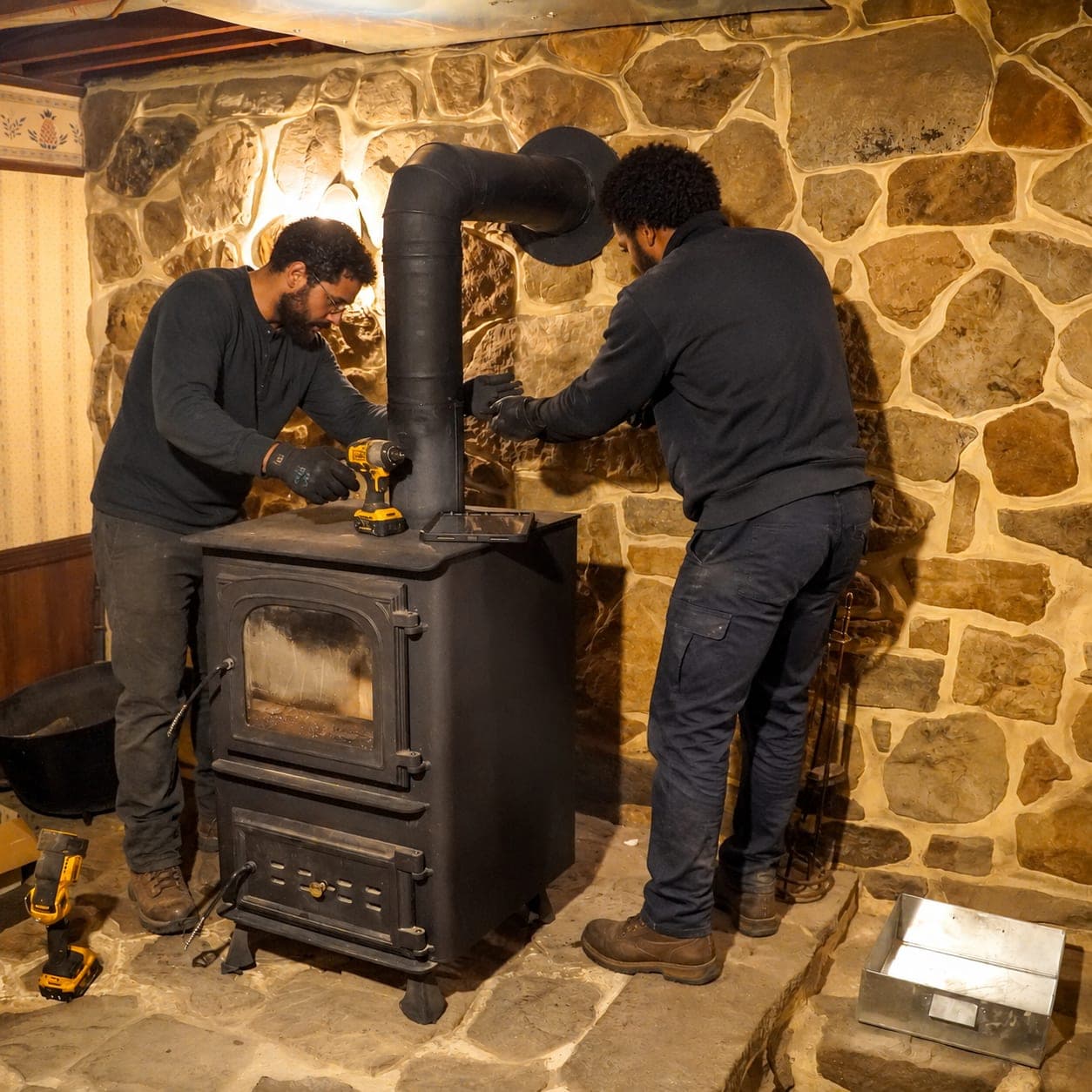
The stove, connector or liner and hearth pad go in to the manufacturer's instructions and local code.
Test and walk through
A test burn, a draft check and how to run it cleanly.
Signs of a chimney fire
A loud roaring sound, a glowing connector pipe, dense smoke or sparks from the top of the chimney can mean a chimney fire. Get everyone out and call 911; have the system inspected before the next fire.
Getting ready for the visit
- Write down what you've noticed — smoke at the door, a hard-to-control fire, noises or smells.
- Make sure the roof or the attic access can be reached if the flue needs to be checked from above.
- Clear a few feet around the unit and the area under any connector pipe.
- Let the stove or insert go out and cool completely — ideally no fire for a full day before the visit.
What the technician checks
- Liner or connector route
- Hearth pad size and rating
- Clearances to walls, mantels and furniture
- Smoke and carbon monoxide alarms nearby
- Flue size against the stove's outlet
- Permit requirements
Signs it's time for wood stove installation
- An open fireplace that sends most of its heat up the chimney
- An old stove with cracked parts or warped plates
- A chimney that's sound but oversized for a stove's outlet
- A room or addition that needs a steady heat source