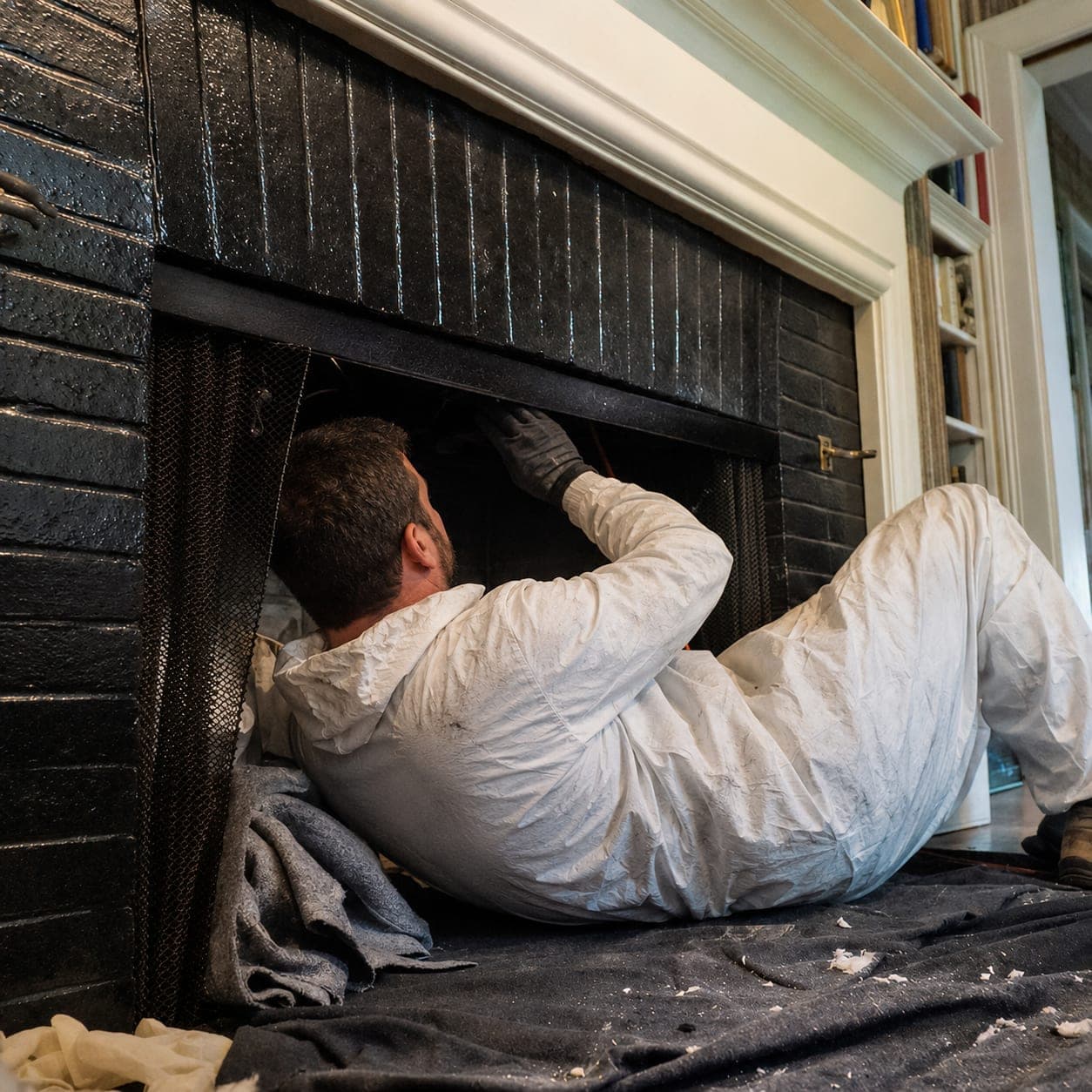
What breaks inside a smoke chamber
The smoke chamber sits between the damper and the bottom of the flue liner. It narrows the wide firebox opening down to the size of the flue. If you've never seen one, our guide to how a fireplace is put together shows where it sits. Many masonry fireplaces were built with chamber walls that step inward brick by brick, and some were never coated smooth. That leaves ledges where soot and creosote pile up.
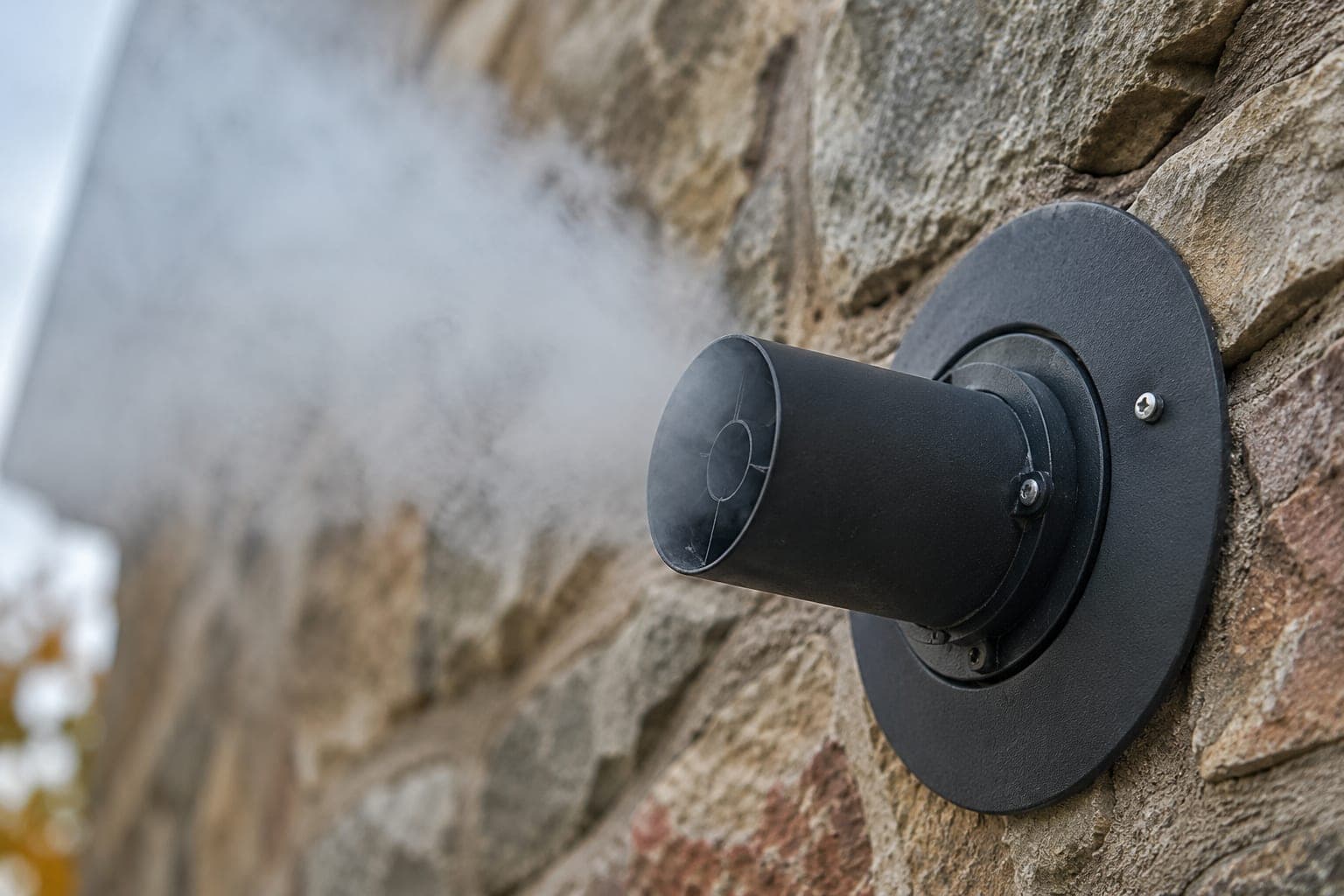
A chamber is usually considered broken when one or more of these turn up:
- Debris on the smoke shelf or damper: mortar crumbs, brick fragments or flakes of old parging
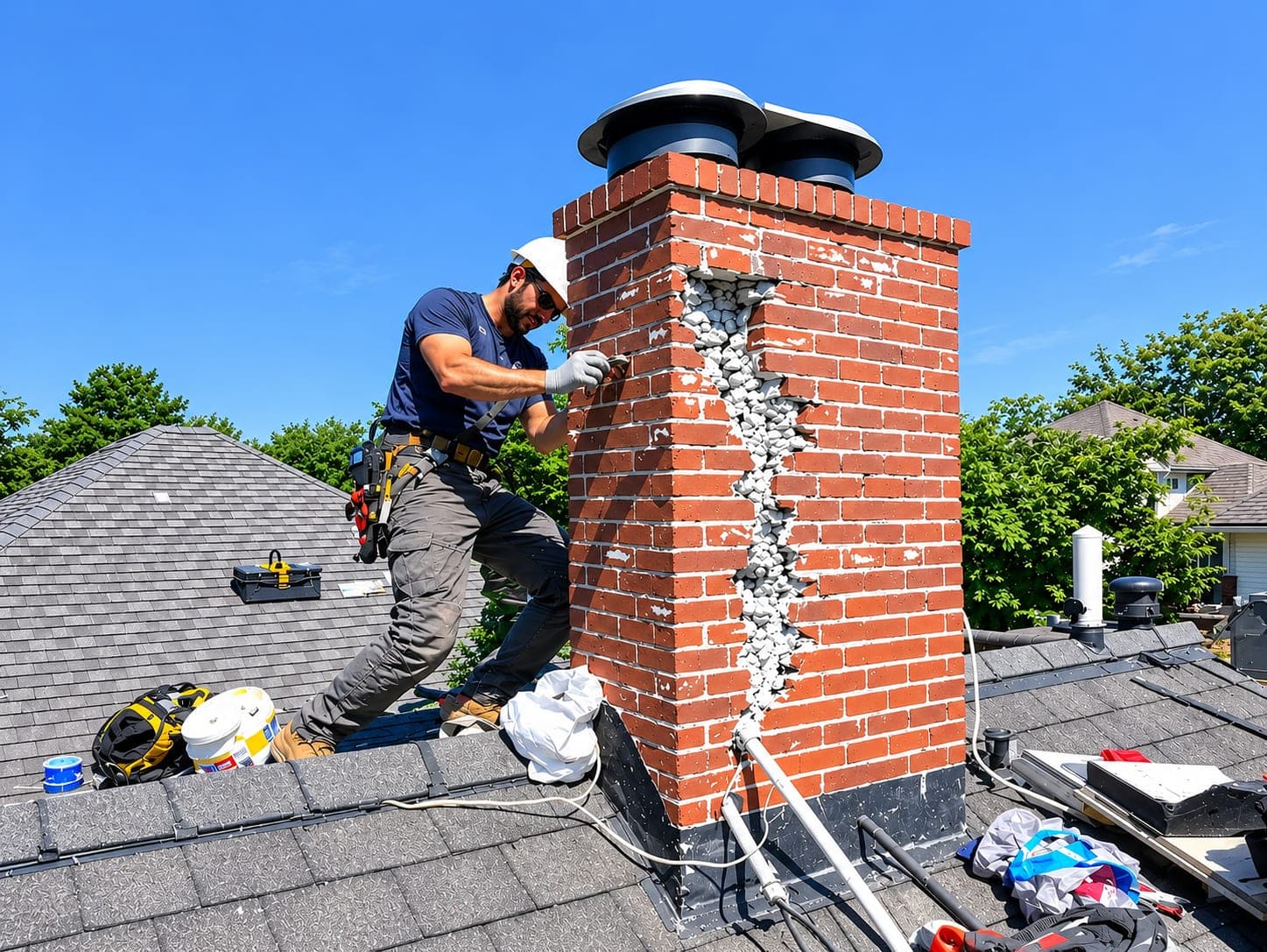
- Open joints or missing brick that leave gaps through the masonry
- Cracked or peeling parging where an earlier smooth coat has let go
- Thick, glazed creosote packed into stepped brick, which can feed a chimney fire
Not every rough chamber is broken. A stepped chamber with solid mortar is a different issue from one that is falling apart. What causes fireplace smoke chamber trouble covers that wider range.
Broken fireplace smoke chamber repair in Connecticut
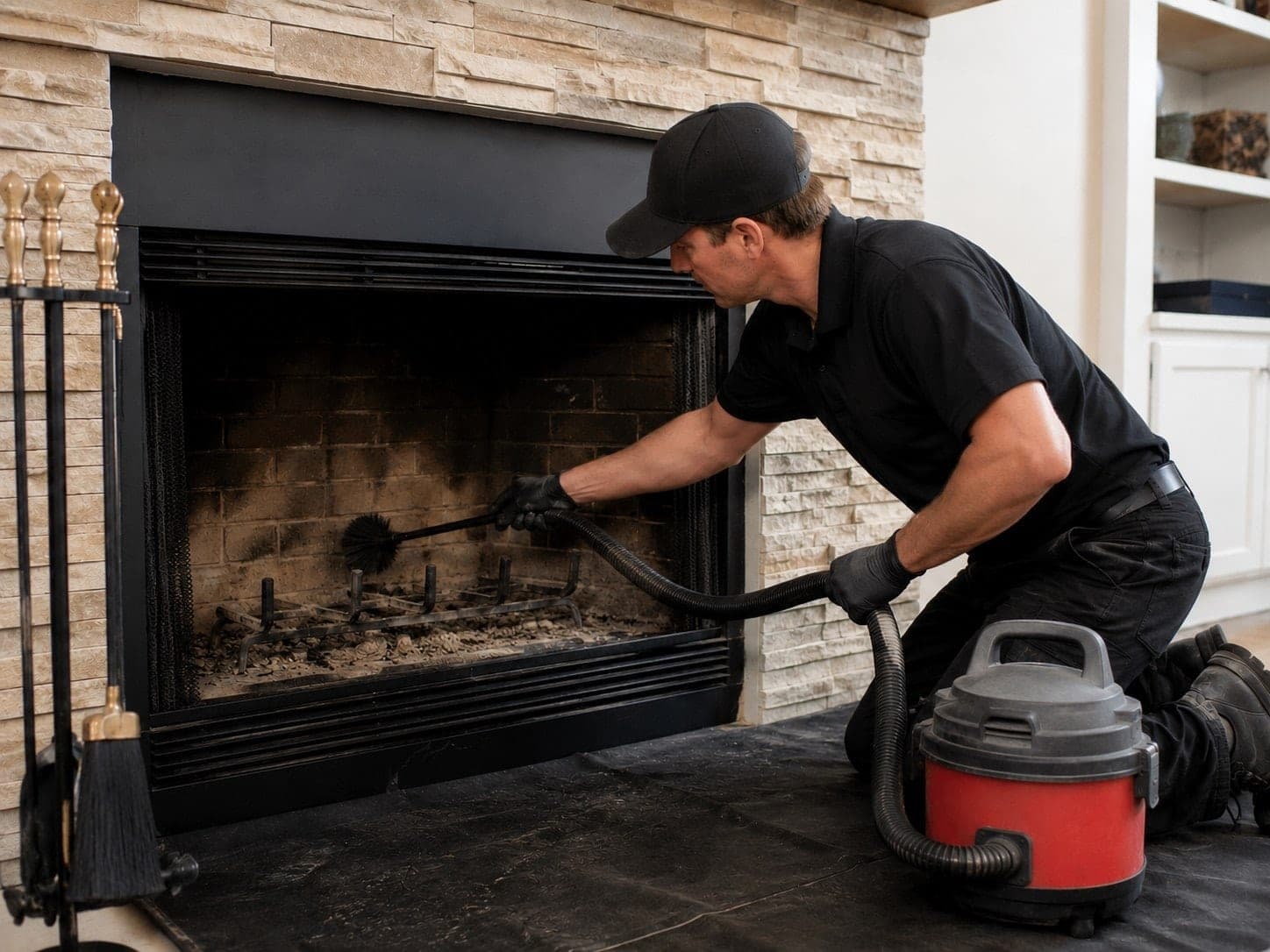
Repair starts with getting the chamber clean, because new mortar won't bond to soot or creosote. After that, the work depends on how much has failed:
- Loose or missing brick is reset with refractory mortar.
- Open joints are filled.
- The walls are parged, meaning troweled or sprayed with a heat-resistant mortar coat. This leaves the surface smooth, sealed and easier to sweep.
- Masonry that is too deteriorated to coat is rebuilt first, then parged.
This work is part of our fireplace and chimney repair service. Estimates are free and emergency calls are accepted. Same-day visits happen when the schedule allows. If you're weighing a full repair against a lighter fix, see a page on smoke chamber repair options.
Broken fireplace repair beyond the smoke chamber
A failing smoke chamber rarely breaks alone. The damper may be rusted open or shut, firebox joints may be eroded, and the refractory panels in factory-built units can crack. We look at the fireplace as a whole, so you hear about every broken part at once rather than one at a time.
Broken fireplace repair in East Hartford, Connecticut
Before you call from East Hartford, write down what you've been seeing. Note where the debris lands, whether it only happens when a fire is lit, and whether you smell smoke in other rooms. Those details help us judge whether the damage stops at the chamber or reaches the flue.
Broken fireplace repair in West Hartford, Connecticut
If you're a West Hartford homeowner who rarely burns wood, a full masonry repair isn't always the best use of money. For a mostly decorative fireplace, a sealed electric unit is one alternative; see how an electric fireplace installation works. Our guide to an efficient fireplace compares the trade-offs.
How the visit works
Small repairs done early usually avoid a partial rebuild later. Water that gets into a chimney widens cracks every season and can rot nearby framing.
Describe the problem
What you've noticed, when it started and whether it's worse after rain.
Find the source
The chimney is checked from the roofline down to the firebox — a ceiling stain can start at the flashing, the crown or porous brick.
Explain the options
You hear what failed and the ways to fix it, with what each involves.
Repair
Once you approve the scope, the area is protected and the work is done.
Check the result
The repaired area is shown to you and the site is cleaned up.
What the technician checks
- Flashing seal at the roof
- Damper and smoke chamber
- Mortar joints and brick faces
- Cap, screen and chase cover
- Firebox walls and floor
- Crown cracks and pooling water
- Flue liner condition
Signs it's time for chimney repair
- Pieces of flue tile in the firebox
- A cracked or crumbling crown
- Cracked, flaking or spalling brick
- Rust on the damper or firebox
If smoke comes into the room
Stop adding fuel, open a window and don't relight the fire until the chimney has been checked. If the smoke is heavy, an alarm sounds or you suspect a chimney fire, get everyone outside and call 911.