On this page
Why a custom fireplace needs its own cleaning plan
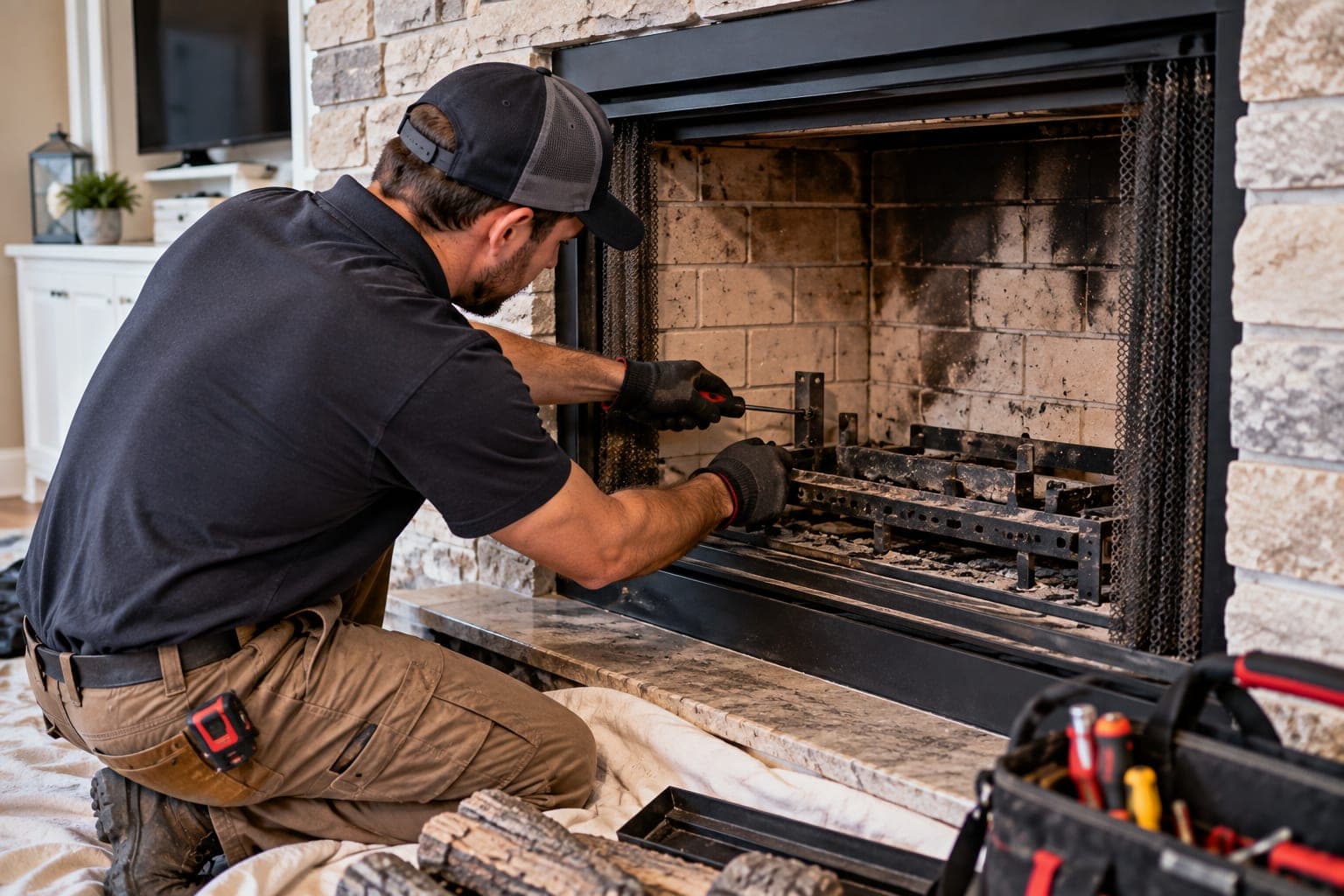
Standard fireplaces follow predictable dimensions. The firebox has a typical depth, the damper is where you expect it, and the smoke chamber follows a manufacturer's design or a common masonry pattern. Custom fireplaces often break those rules on purpose. A wide, shallow firebox, a corner or see-through opening, a raised hearth or an oversized surround all change where soot settles and how smoke moves. Before any fireplace cleaning starts, we look at how your fireplace is put together. That way the right brushes reach the smoke shelf and the room is protected properly.

What we look at first on custom fireplaces
- Openings on more than one side, which can draft differently than a single-face firebox
- Dampers that are an unusual size or mounted out of easy reach
- Decorative hearths, mantels and built-ins that need covering before work begins
- Flue size compared with the size of the opening
How the visit runs
Buildup narrows the flue, so smoke drafts poorly and can spill into the room. Creosote is flammable: a thick layer is the usual fuel for a chimney fire.
Protect the room
Drop cloths go down around the hearth and the opening is sealed so soot stays out of the house.
Look first
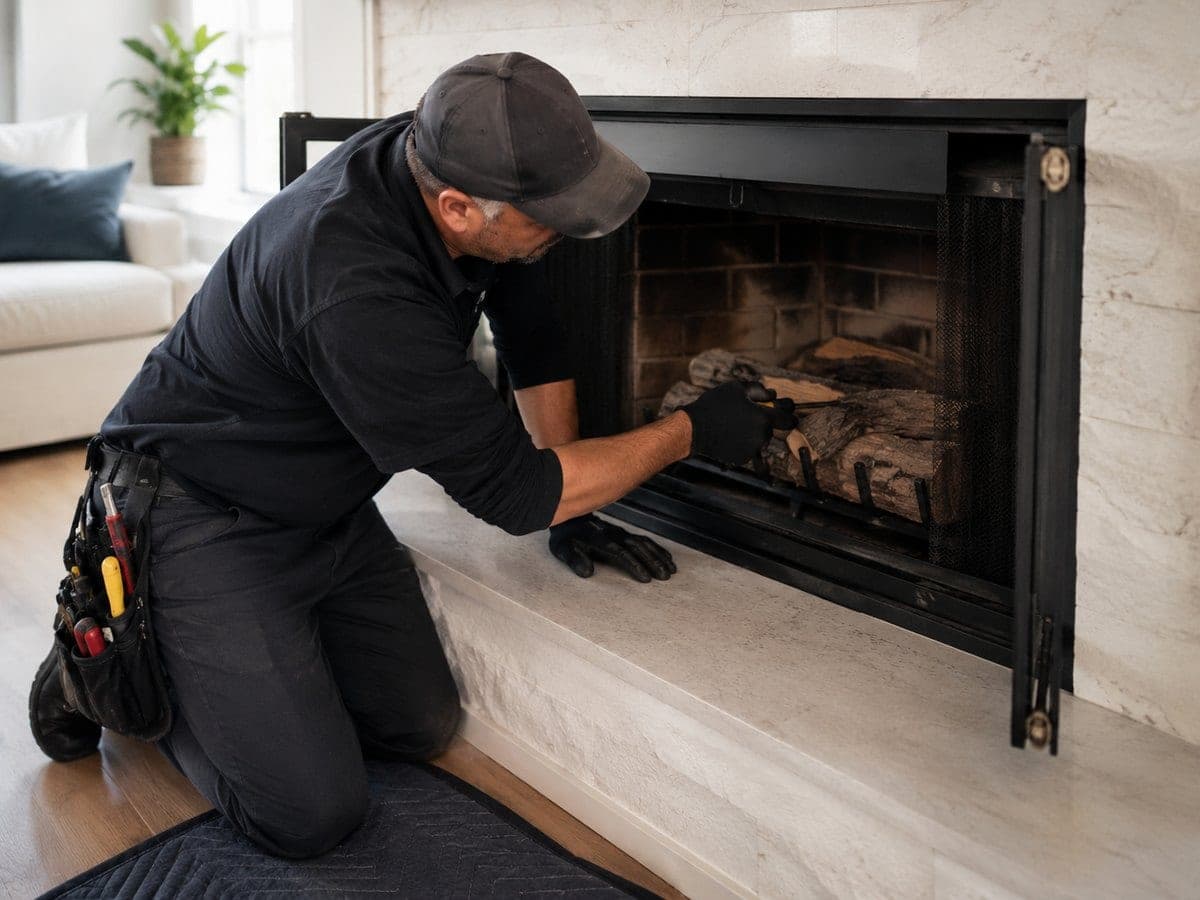
The firebox, damper and visible flue are checked before cleaning, so you know the condition things were in.
Brush the flue
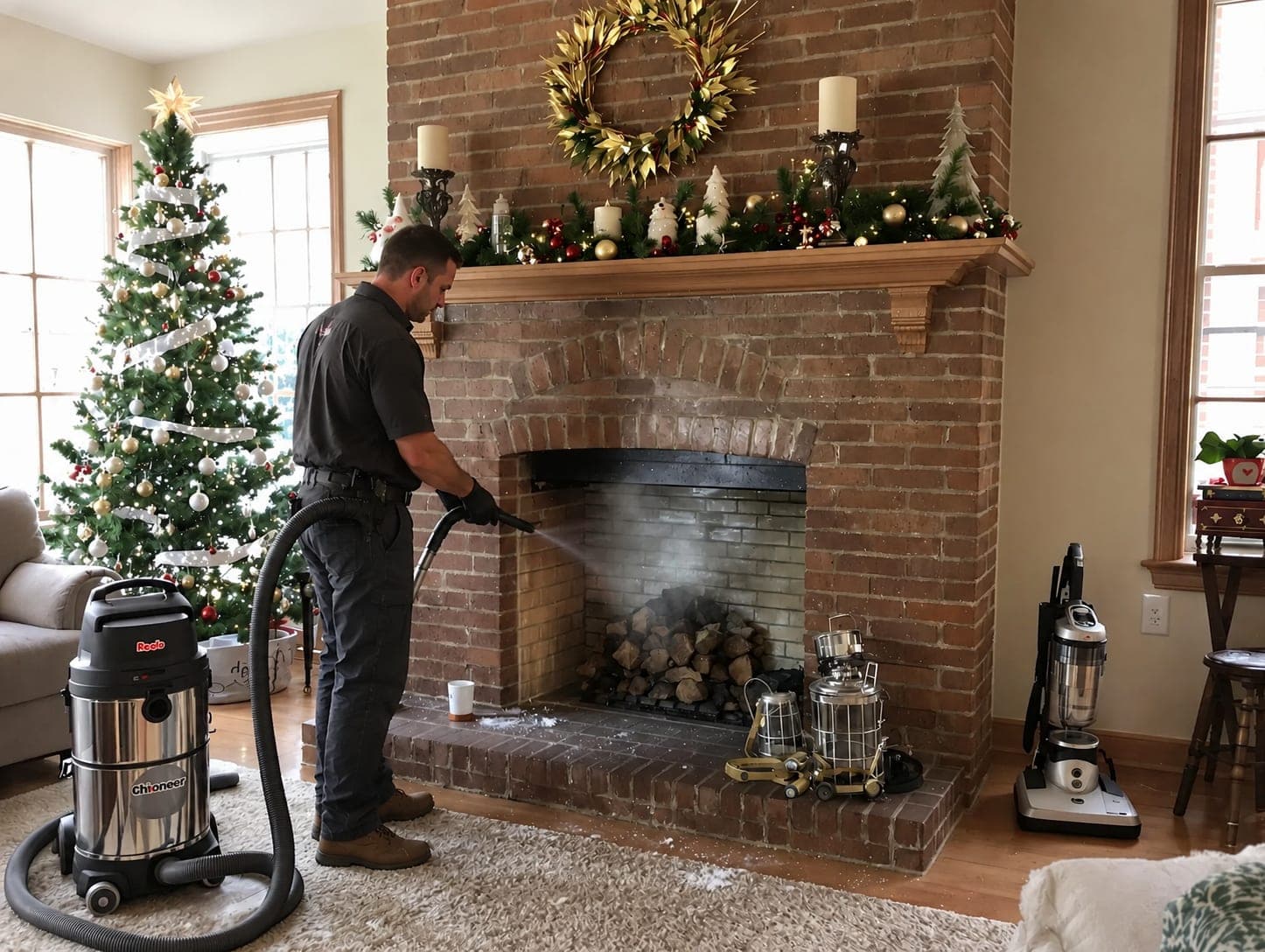
Rods and brushes sized to the flue clear soot and loose creosote from top to bottom.
Clean the smoke chamber and firebox
The areas just above the fire, where buildup collects fastest, are cleaned and vacuumed.
Explain what was found
You hear what was cleaned and anything that needs watching or repair, before anything else is suggested.
Before the technician arrives
- Move rugs, photos and anything fragile away from the work area.
- Let the fireplace or stove cool completely — ideally no fire for 24 hours before the visit.
- Keep pets in another room while the work area is open.
- Write down what you've noticed and when it happens — smells, smoke, sounds or stains.
When to book fireplace cleaning
- A full burning season since the last cleaning
- Soot marks on the face of the fireplace above the opening
- Scratching or chirping sounds, or debris falling into the firebox
- A campfire or tar smell from the fireplace, especially on warm or damp days
- Black, flaky or shiny glazed deposits inside the firebox or flue
What gets checked
- Draft — how readily smoke moves up the flue
- Visible liner sections for cracks or gaps
- Smoke shelf and smoke chamber
- Signs of animals or nesting material
- Cap and screen condition, where it can be seen safely
Carbon monoxide
A blocked or damaged flue can push carbon monoxide into the home. If an alarm sounds or anyone feels dizzy or sick near the fireplace, get everyone outside and call 911.
Stone, marble and other finishes that need a light touch
Many custom fireplaces are faced in natural stone, marble, slate or handmade tile. These finishes look great and mark easily. Porous stone soaks up soot and wet ash, and the wrong cleaner can etch polished marble. We keep the work contained to the firebox and flue, cover the surround and hearth, and keep harsh chemicals off decorative surfaces.
Cleaning won't undo old damage. If a surround is already cracked, dull or deeply stained, it needs restoration rather than cleaning. How classic marble fireplace renovation works explains what's involved.
Still planning a custom fireplace?
Cleaning and upkeep come after the build. If you're still at the drawing stage, read about custom fireplace design or, for brick and stone builds, custom masonry fireplace design. Have the chimney checked before the finish work goes on.
Keeping custom fireplaces burning well
A fireplace built to look striking can still draft poorly or collect creosote quickly, especially when the opening is large compared with the flue. Mention these signs when you call: - smoke rolling into the room - a strong smell after fires - black staining above the opening Our guide to common chimney problems covers what usually causes them. When a custom design makes the inside hard to see, we offer chimney and fireplace inspections, including camera inspections of the flue. For ways to get more heat and less smoke from your fires, see our guide to an efficient fireplace.