On this page
Inside a wood stove firebox
The wood stove firebox is the chamber where the fire burns. It's lined with parts made to wear out so the steel or cast-iron body doesn't have to. Knowing those parts makes it easier to tell a routine repair from a serious problem.
- Firebrick lines the floor and walls and shields the stove body from direct flame
- The baffle is a plate or board above the fire that holds hot gases in the firebox longer so they burn more completely
- Secondary air tubes, found in many newer stoves, feed air near the baffle to help that cleaner burn
- Door and glass gaskets are rope seals that let you control the fire by controlling the air
- The body, made of steel or cast iron, holds everything together
A stove with an intact baffle and tight gaskets burns hotter and cleaner and leaves less creosote in the flue. The efficient fireplace guide explains why.
What happens during the visit
A cracked or missing baffle sends heat and smoke straight up the flue and raises creosote buildup. A connector pipe that has rusted or separated at a joint can leak smoke into the room.
Hear what it's doing
How the stove burns, what's changed and when — that points to the door, the baffle, the air supply or the flue.
Check the stove itself
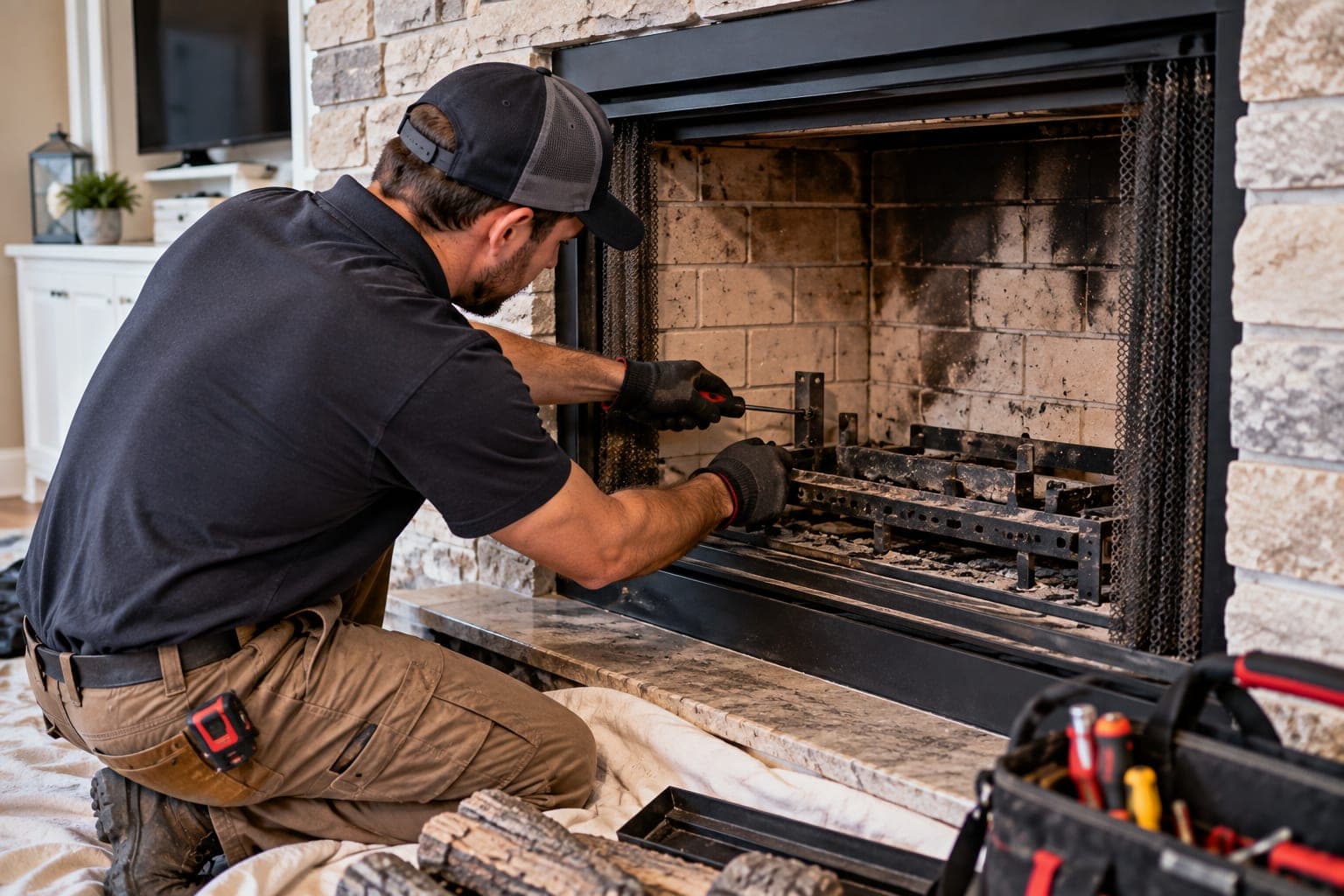
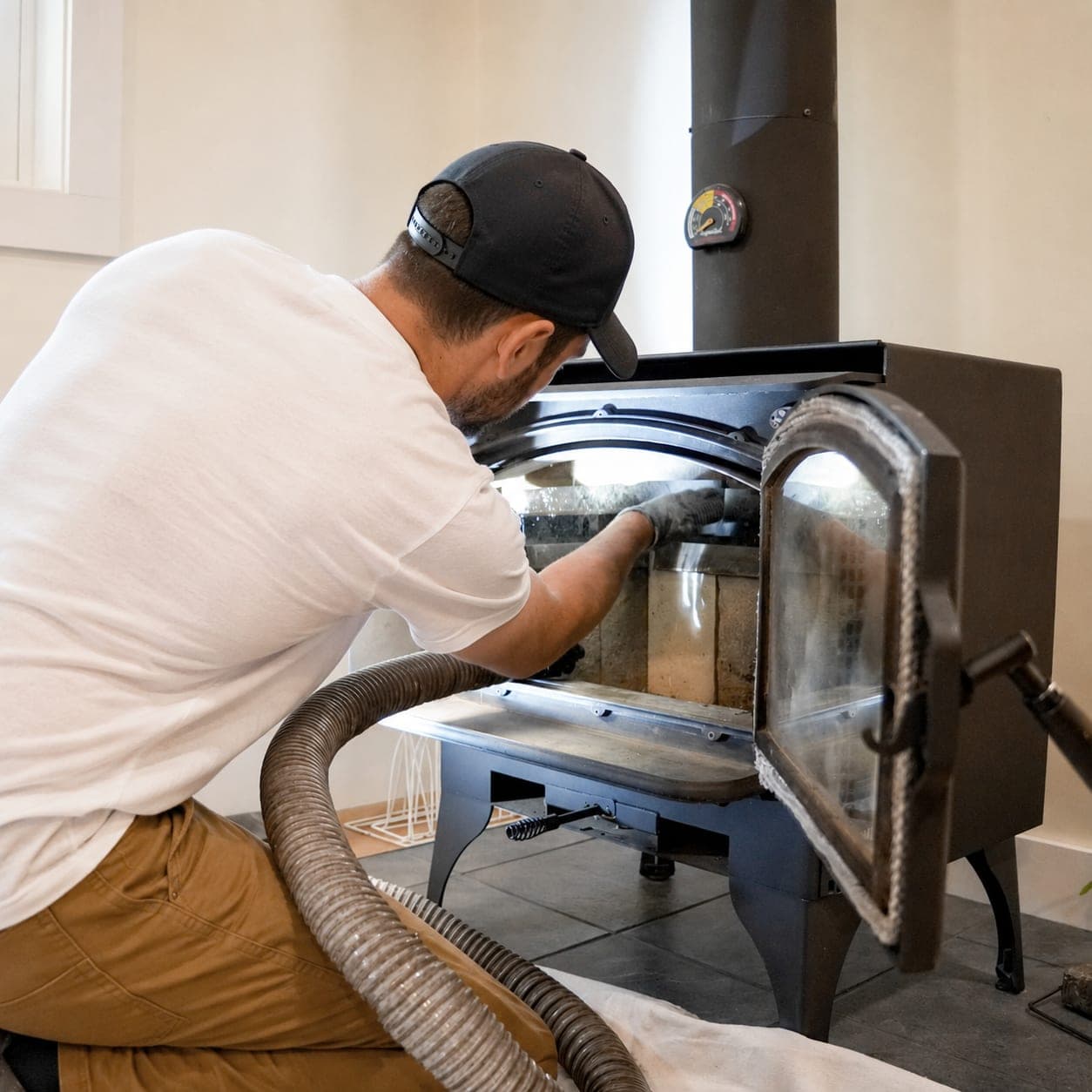
Door latch and gasket, glass, firebrick, baffle, air controls and the body for cracks or warping.
Check the connector and flue
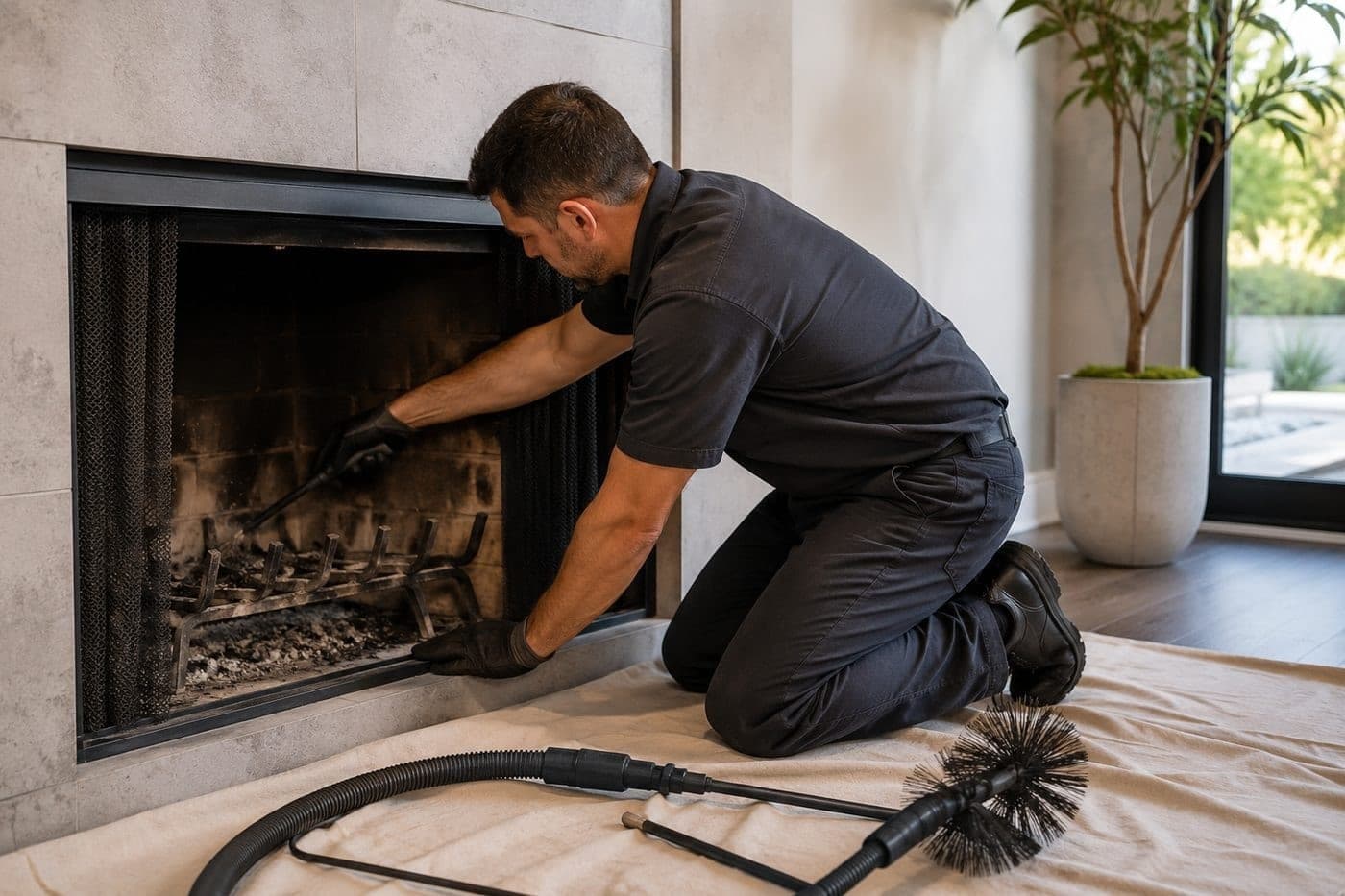
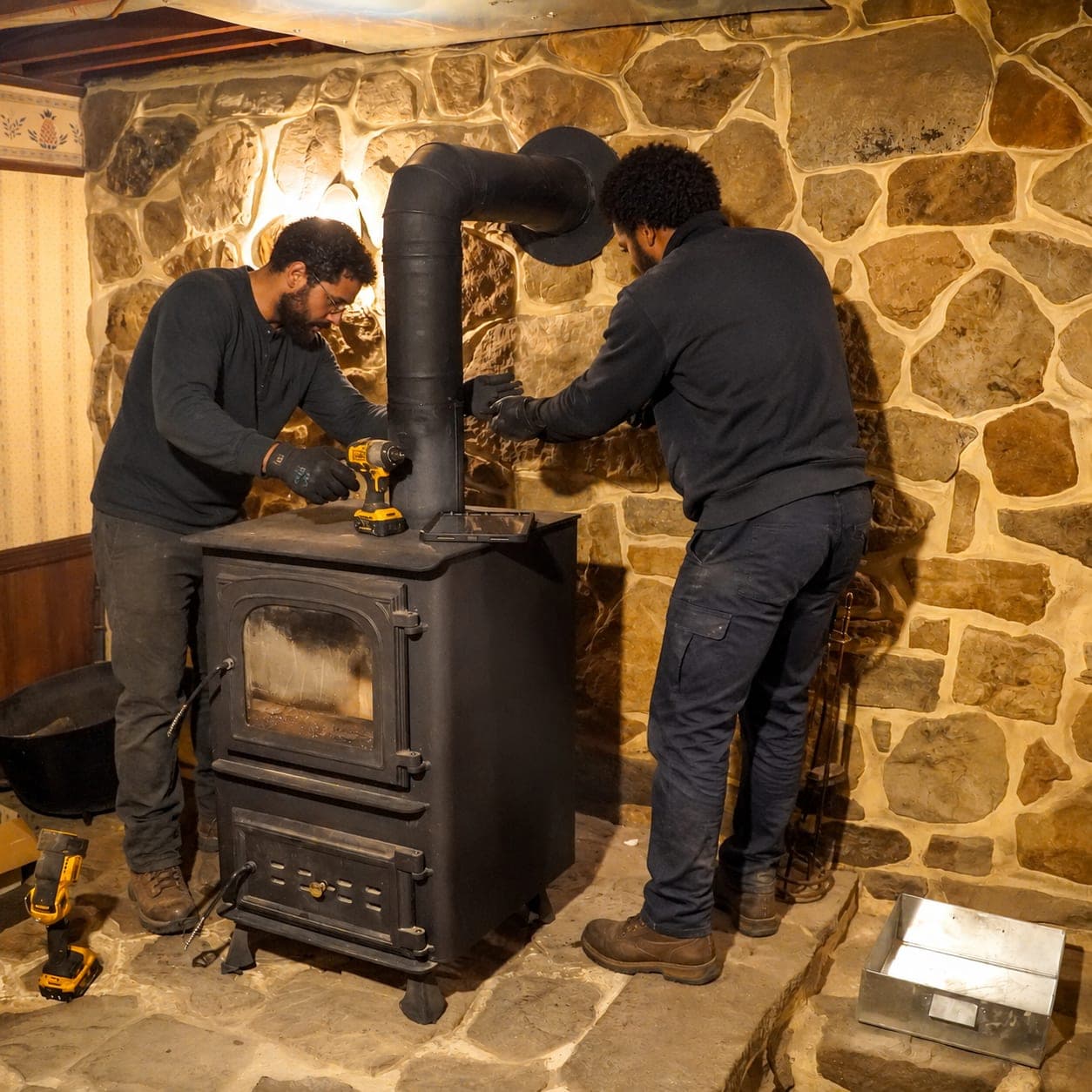
Pipe joints, the thimble or liner connection, clearances to walls, and the flue for creosote and draft.
Explain and agree
What needs cleaning, adjusting or replacing, before any work starts.
Before the technician arrives
- Let the stove or insert go out and cool completely — ideally no fire for a full day before the visit.
- Make sure the roof or the attic access can be reached if the flue needs to be checked from above.
- Write down what you've noticed — smoke at the door, a hard-to-control fire, noises or smells.
- Have the make and model handy; it's usually on a plate on the back or under the ash lip.
Only when it's cold
Doors, gaskets, ash pans and the firebox should only be handled once the unit is completely out and cold.
Signs to watch for
- Smoke escaping when the door is opened, or around a closed door
- Heavy black deposits on the glass after short burns
- A door that doesn't latch firmly or a gasket that's flattened or frayed
- Cracked firebrick or a sagging or broken baffle
What we look at
- Door latch, gasket and glass seal
- Connector pipe joints, screws and rust
- Clearances to walls, floor protection and the hearth pad
- Air controls and their range
- Creosote in the connector and flue
- Firebrick and baffle condition
- Liner or thimble connection at the chimney
What wood stove firebox repair covers
For homeowners in Hartford and across Connecticut, wood stove firebox repair usually means replacing whichever liner or seal has worn out. We match parts to your stove's make and model.
| What you see | Usual fix |
|---|---|
| Brick cracked all the way through, crumbling or missing | Replace those bricks with correctly sized firebrick |
| Fine hairline cracks in bricks that are still in place | Often fine to keep using; keep an eye on them |
| Baffle sagging, warped or broken | Replace it with a part made for your model |
| Flattened or frayed door or glass gasket | New rope gasket set in gasket cement |
| Cracked stove glass | Replacement glass cut for the door |
| Crack in the stove body or a failed weld | Assessment; often a sign the stove should be replaced |
If your fire burns in a masonry fireplace rather than a stove, the work is different. See firebox repair for open fireplaces, or rebuilding a worn-out masonry firebox when the damage goes deeper than a few bricks.
Repair the stove or replace it?
Most firebox wear is cheap compared with a new stove, so fixing brick, baffles and gaskets is usually the sensible choice. A crack in the body itself is different. We won't patch a cracked stove body and call it fixed, because the body is what keeps fire and smoke out of the room. If you're facing a replacement and wondering whether to stay with wood, our gas versus wood fireplace comparison and the guide to choosing between gas and wood are good places to start.
Stop burning and call
If you see a glowing spot on the stove body or smoke leaking from a seam, stop adding fuel, close the air control and don't relight the stove until it has been checked. If anything nearby starts to scorch or smoke fills the room, get everyone outside and call 911. We take emergency calls 24 hours a day, Sunday through Friday.