On this page
- What firebox repair covers and who needs it
- Signs your firebox needs attention
- What happens during a firebox repair visit
- Repair options and what decides between them
- Firebox repair cost and timing: what affects the scope
- Benefits of investing in professional firebox restoration
- How to prepare: clean the logs and firebox
- Firebox, caps and more: related work we handle
- Calling a firebox repair master in Connecticut
What firebox repair covers and who needs it
The firebox is the open chamber where the fire actually burns. In a masonry fireplace it is lined with firebrick set in heat-resistant refractory mortar. In a factory-built (prefab) fireplace it is usually lined with molded refractory panels. Both are designed to absorb intense heat and keep it away from the framing and walls around the fireplace. If you want to see how the firebox connects to the damper, smoke chamber and flue, our guide to fireplace anatomy walks through each part.
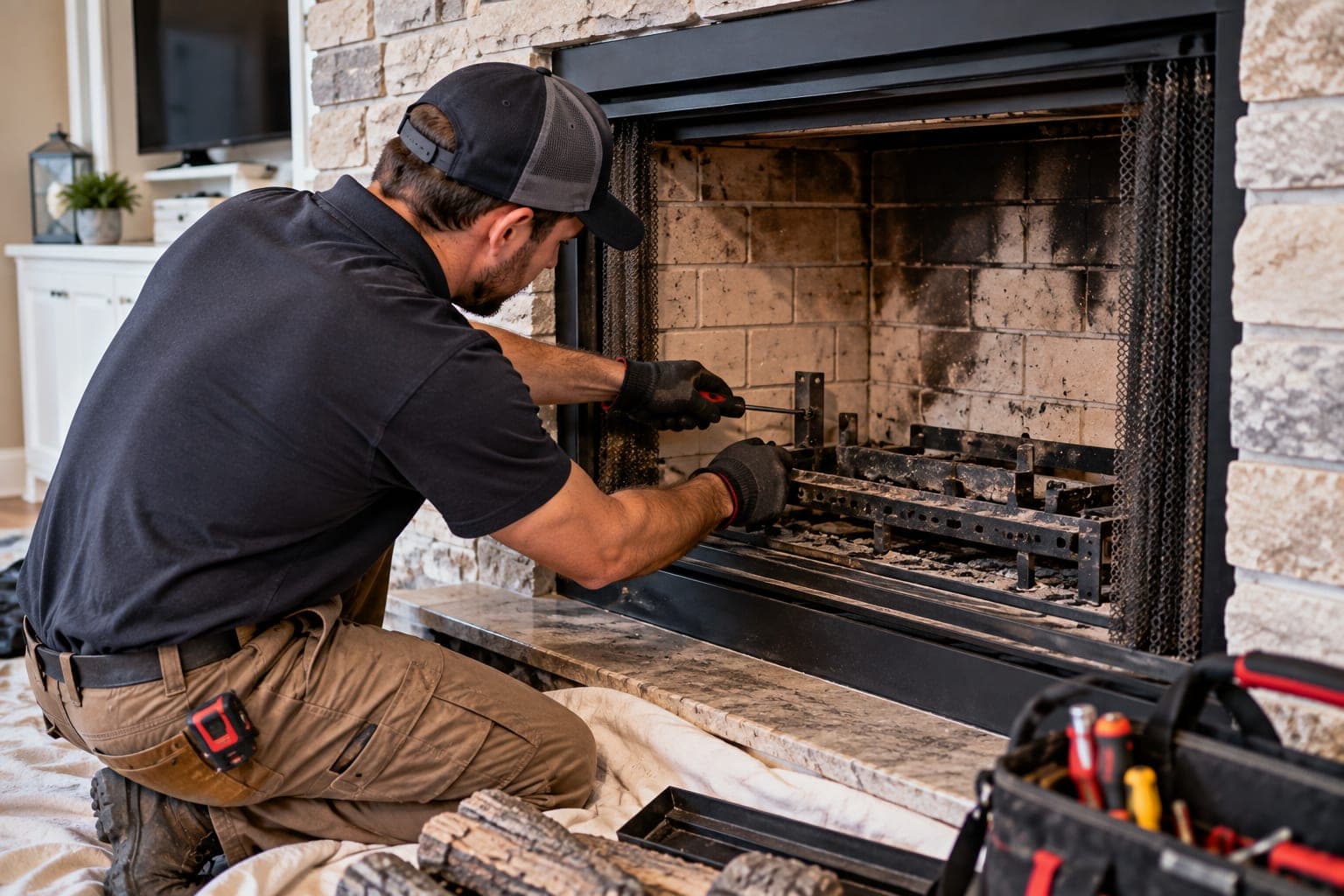
Firebox repair restores that protective lining. It is worth considering if you burn wood regularly, if you have bought a home with a fireplace that hasn't been used in years, if you have had a chimney fire, or if you have simply noticed gaps, cracks or loose pieces when you clean out the ash.
Signs your firebox needs attention
- Mortar joints that are sandy, recessed or missing between firebricks
- Firebrick that is cracked, spalled (flaking off in layers) or shifting out of place
- Cracks running through a prefab refractory panel, or panels that have pulled away from the back or sides
- Gaps where the firebox meets the hearth or the face of the fireplace
- Bits of brick, mortar or panel material mixed in with the ash
- Smoke stains on the face of the fireplace that weren't there before
Firebox cracks: what the size and pattern tell you
Not every firebox crack means a major job. Fine surface crazing on firebrick is common after years of heating and cooling. Cracks that open wider, run through the full depth of a brick, follow mortar joints across several courses, or let you see behind the lining are a different matter, because heat can reach materials it was never supposed to touch. In prefab units, the manufacturer usually sets a limit on how wide a panel crack can be before the panel must be replaced. We look at width, depth, location and whether the crack is still moving before recommending anything.
What happens during a firebox repair visit
How a typical visit runs
Talk through the history
We ask how often you burn, what fuel you use, when the fireplace was last swept and what you have noticed.
Clean and expose the firebox
Any remaining ash and soot is cleared so the brick, joints or panels can be seen clearly.
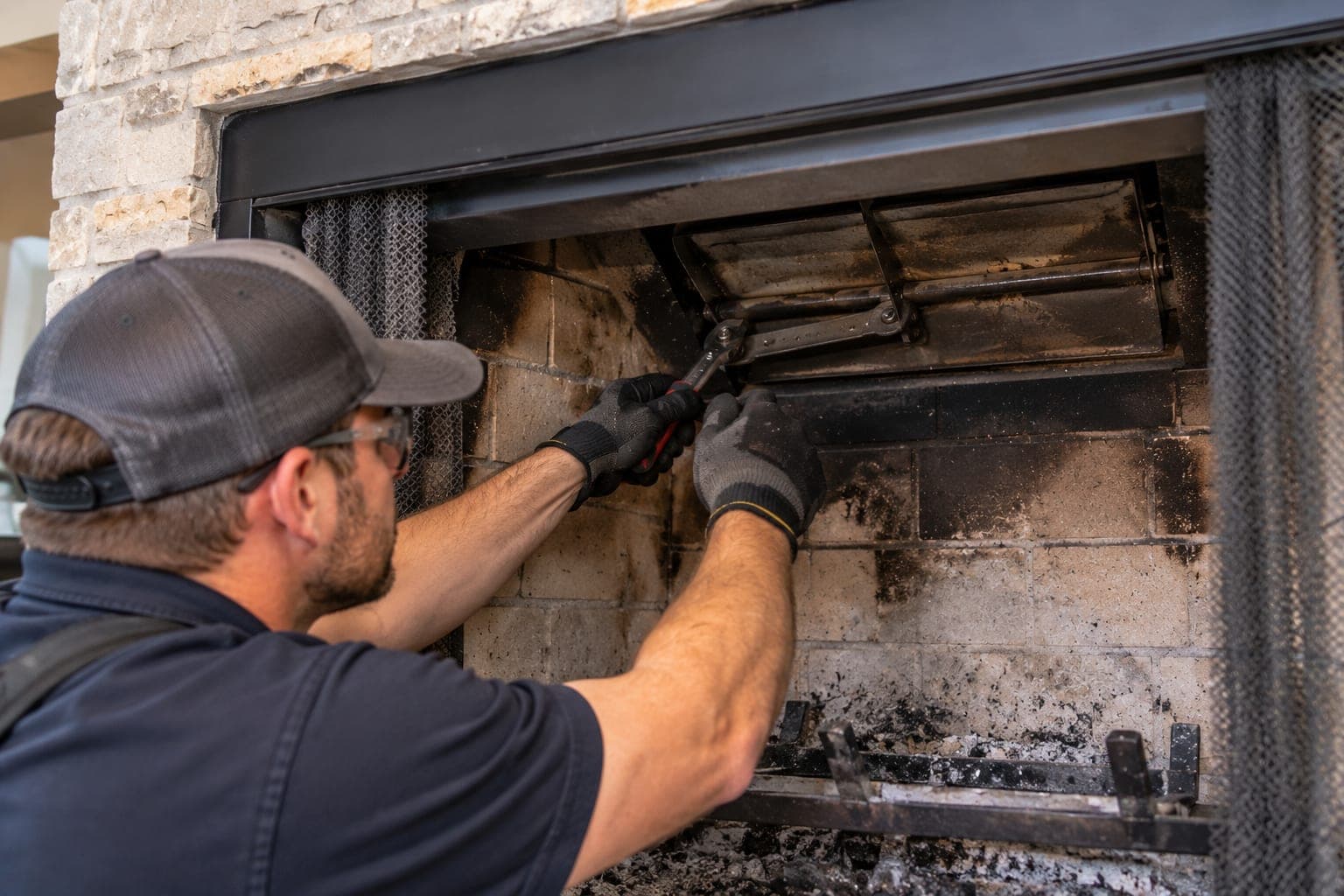
Inspect the firebox and nearby components
We examine the lining, the hearth joint, the damper and the lower smoke chamber, since problems often overlap.
Explain findings and options
You get a plain explanation of what we found, what can wait and what shouldn't, along with a free estimate.
Complete the repair
Joints are repointed, damaged brick or panels are replaced, or a larger rebuild is scheduled if that's what the condition calls for.
Final check and curing guidance
We look over the finished work and tell you how long to wait and how to break in the repair with small fires.
What we check and repair
- Condition of each firebrick: cracking, spalling, loose or missing units
- Refractory mortar joints on the back wall, sides and floor
- Prefab refractory panels: cracks, warping, gaps and mounting
- The joint between the firebox floor and the hearth extension
- Damper operation and seal
- Lower smoke chamber surfaces visible from the firebox
- Signs of heat or smoke escaping into surrounding materials
Repair options and what decides between them
| Feature | Targeted repair | Full rebuild |
|---|---|---|
| Best for | Isolated failed joints, a few damaged bricks or one or two cracked panels | Widespread deterioration, shifting walls or damage after a chimney fire |
| What's done | Repointing joints with refractory mortar, replacing individual bricks or panels | Removing the old lining and relaying the firebox |
| Disruption | Usually limited to the firebox opening | More demolition, debris and curing time |
Best for
- Targeted repair
- Isolated failed joints, a few damaged bricks or one or two cracked panels
- Full rebuild
- Widespread deterioration, shifting walls or damage after a chimney fire
What's done
- Targeted repair
- Repointing joints with refractory mortar, replacing individual bricks or panels
- Full rebuild
- Removing the old lining and relaying the firebox
Disruption
- Targeted repair
- Usually limited to the firebox opening
- Full rebuild
- More demolition, debris and curing time
The deciding factors are how much of the lining is sound, whether the back and side walls are still plumb, and whether damage keeps recurring in the same spot. When most of the firebox is failing, patching becomes a short-term fix, and you can read how firebox rebuilding works to see what that larger job involves.
Masonry, prefab and stove fireboxes
Masonry fireboxes are repaired with firebrick and refractory mortar. Prefab fireboxes are repaired with replacement panels made to fit that unit, not with regular mortar or brick. Wood stoves have their own firebrick and baffle layouts, which we cover under our wood stove firebox repair service.
Firebox repair cost and timing: what affects the scope
We don't quote a number before seeing the firebox, because two fireplaces with similar-looking cracks can need very different work. After the inspection, the free estimate lays out what's included. These are the things that change firebox restoration cost and timing the most:
- How much of the lining is damaged: a few joints versus most of the firebox
- Construction type: masonry firebrick versus prefab panels, and whether replacement panels for your model are still available
- Related problems: a failing damper, smoke chamber damage or water getting in from above
- Access: the size of the opening and any doors, inserts or grates that must come out first
- Curing time: refractory mortar needs time before the fireplace goes back into regular use
Benefits of investing in professional firebox restoration
- Heat stays inside the firebox instead of reaching the wood framing around it
- Fewer gaps for smoke and gases to escape into the room
- Correct heat-rated materials, rather than household mortar or caulk that can fail under fire
- Problems in the damper or smoke chamber get spotted at the same visit
- A sound firebox reflects heat into the room better, which ties into the tips in our guide to efficient fireplace use
How to prepare: clean the logs and firebox
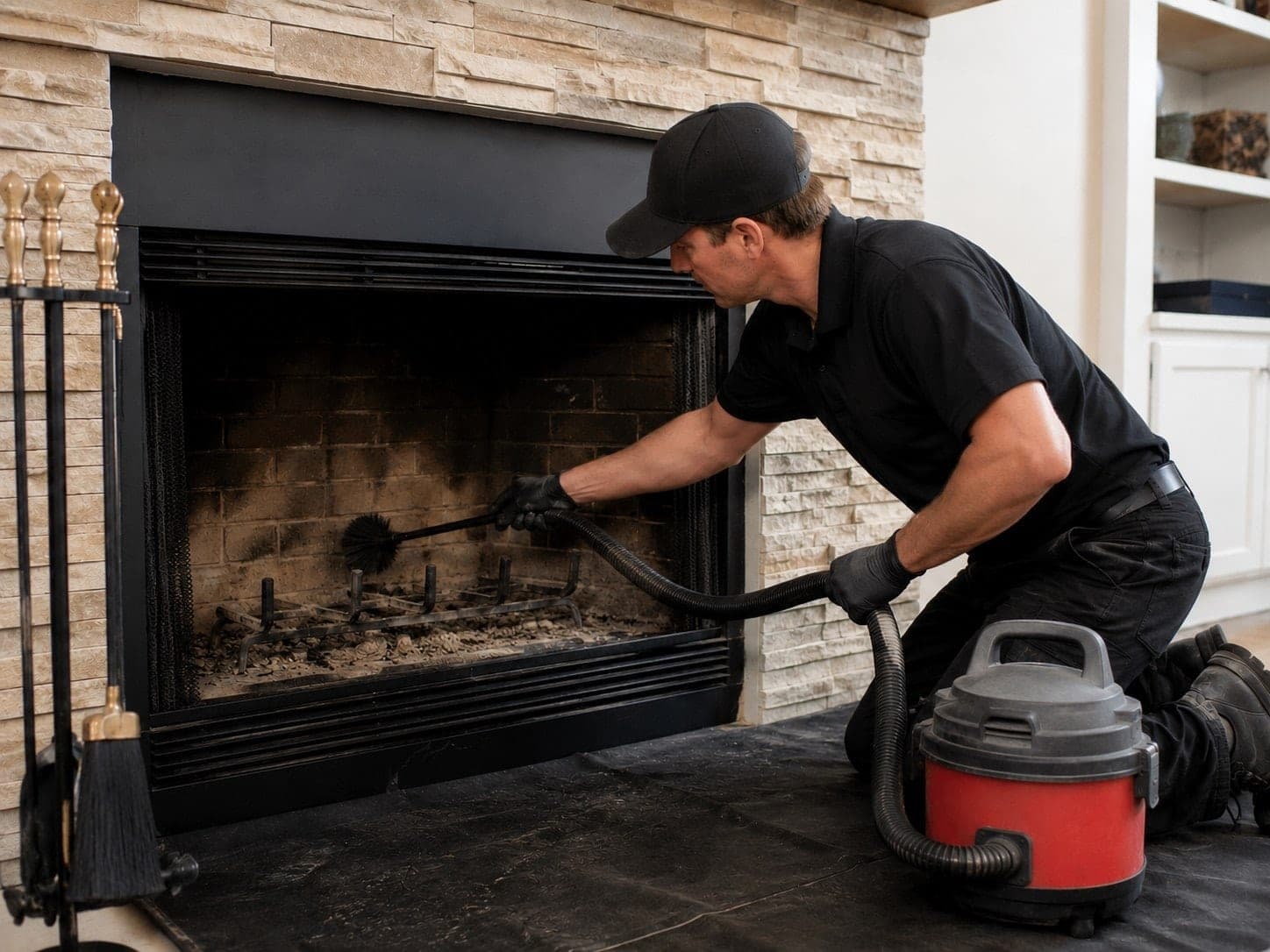
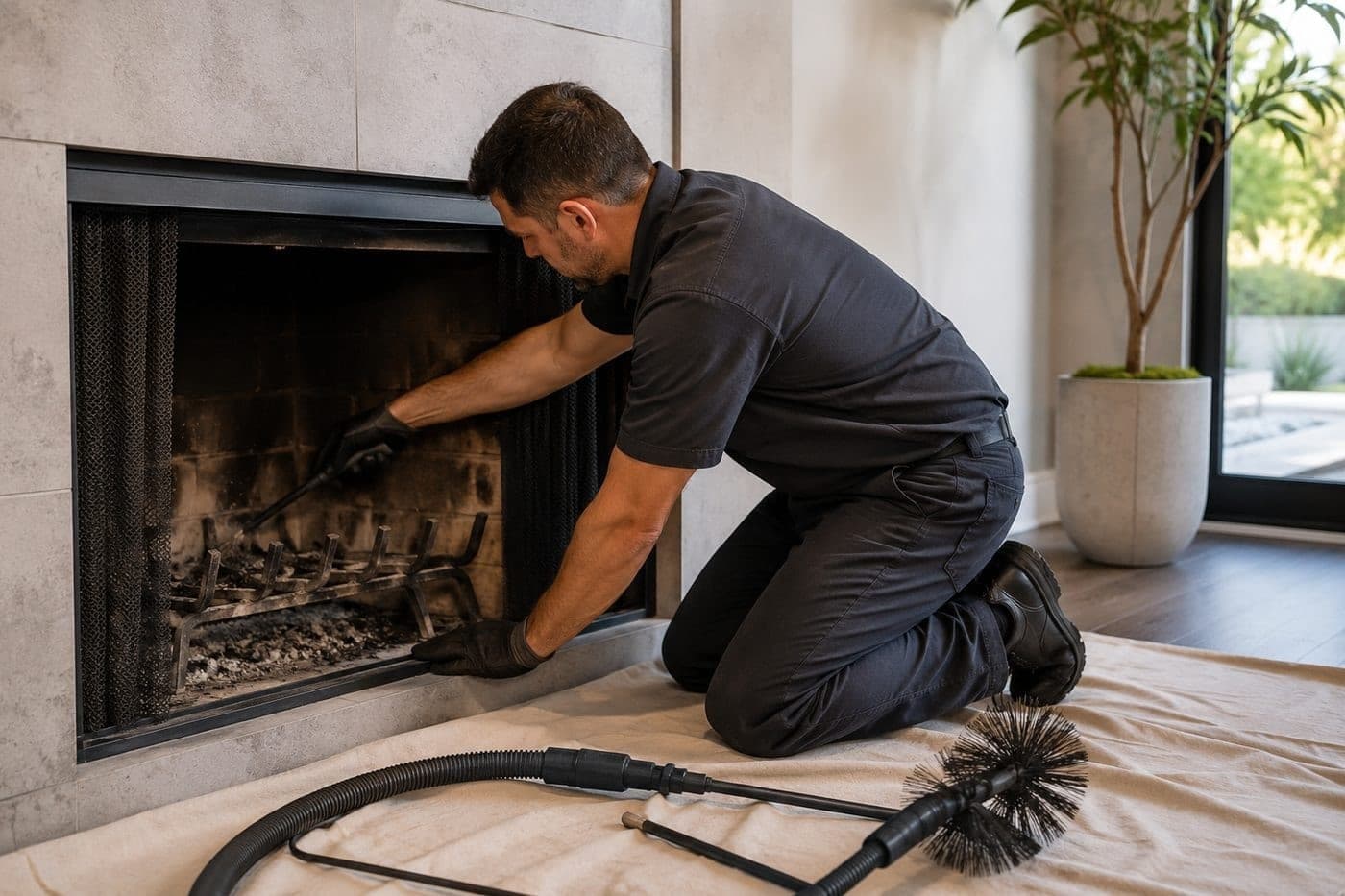
If you can do it safely, consider removing logs and ash from the firebox before we arrive. A clean firebox lets us see joints and cracks right away. Only do this when the fireplace is completely cold, since ash can hold live embers for days. Scoop ash into a metal container with a tight lid and set it outside, away from the house and anything that can burn. Move unburned logs, tools and grates out of the way, clear a path to the fireplace, and keep pets in another room. If you'd rather not handle it, that's fine; we clean the firebox as part of the visit.
Hold off on fires until it's checked
If you see loose bricks, open joints or a crack you can see through, stop using the fireplace until it has been inspected. Small fires won't fix the problem and can push heat into spaces that aren't built for it. For more general precautions, see our page on fireplace safety.
Firebox, caps and more: related work we handle
Firebox trouble often has company. Water coming down a chimney without a cap can soak the firebox and speed up mortar failure, and a warped damper can let heat and moisture cycle through the same area. Since we also handle chimney cap installation, damper repair, smoke chamber repair, refractory panel replacement and fireplace door repair, we can deal with the cause instead of only the symptom. If the whole fireplace needs attention, our fireplace firebox repair page explains how we approach the firebox as part of a larger fireplace repair.
Calling a firebox repair master in Connecticut
Getting in touch is simple: call or request an estimate through the site. We're available 24 hours, Sunday through Friday, emergency calls are accepted, and same-day service is offered where the schedule allows. It helps to have a few details ready: the type of fireplace (masonry, prefab or stove), when you last used it, what you've noticed, and a photo of the firebox if you can take one. We also serve surrounding towns, including firebox repair in Glastonbury and firebox repair for homes in West Hartford.