On this page
Signs your firebox needs rebuilding
The firebox takes more direct heat than any other part of a fireplace, and years of hot fires followed by cold nights wear down even good brick. A few loose joints can usually be handled with our firebox repair service. Rebuilding becomes the conversation when the damage is spread across a wall or the whole lining.
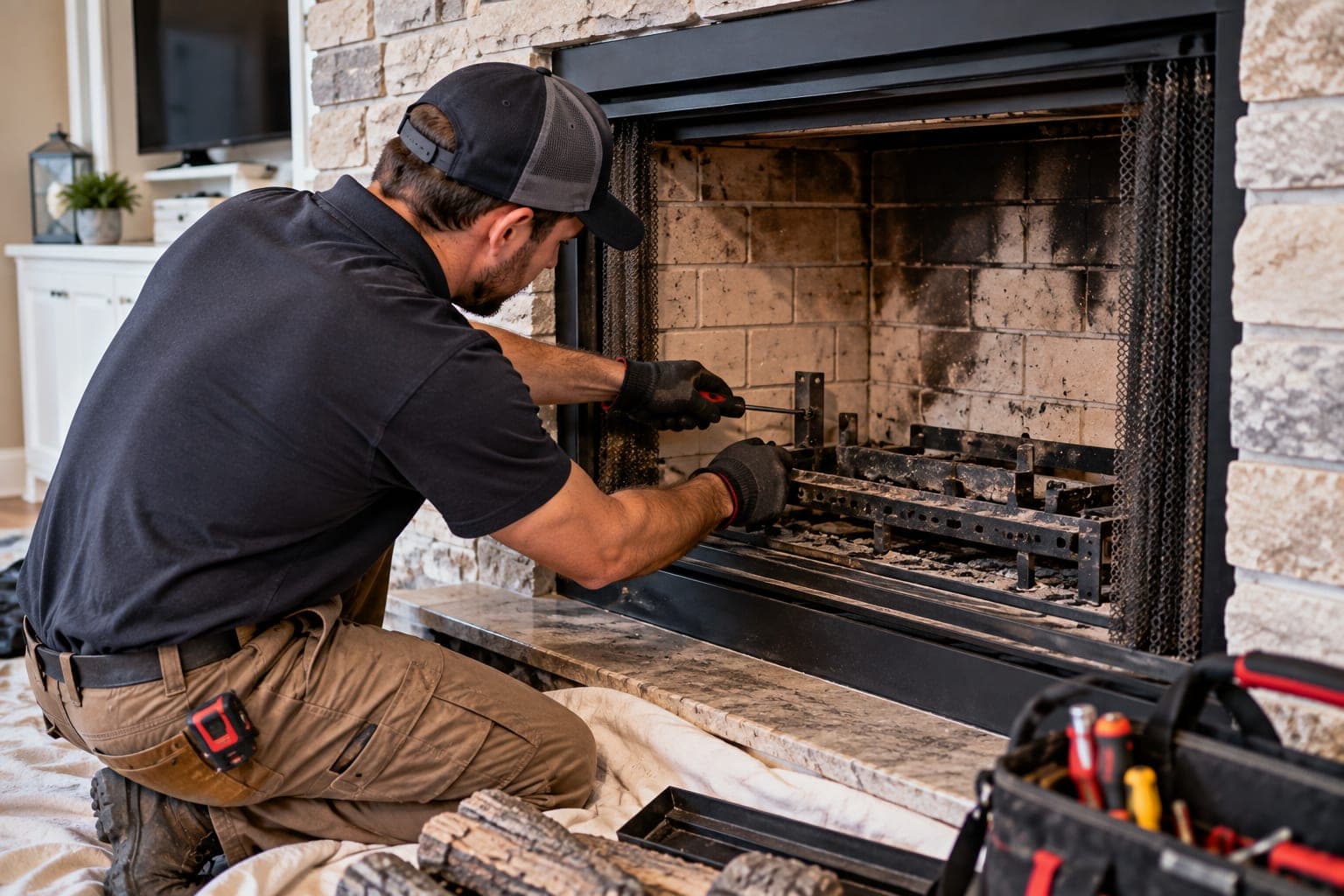
Damage that usually points to a rebuild
- Cracks running through several bricks, not just the joints between them
- Brick faces flaking or spalling, leaving rough, crumbly surfaces
- Mortar joints recessed, sandy or missing across large areas
- A back wall that bows, leans or shifts when pressed
- Gaps where the firebox meets the hearth or the area above the damper
- Earlier patches that keep cracking out after a season
These matter because the firebox is what keeps fire heat away from the framing and wall materials around it. Our guide to fireplace safety explains why a sound lining is worth the attention, and if you want to see how the firebox, smoke chamber and flue fit together, read our guide to fireplace anatomy.
What the visit covers
Firebrick is laid in refractory mortar made for direct flame; ordinary mortar breaks down in a firebox. Missing mortar and loose or broken firebrick let heat reach the masonry and framing behind the fireplace.
Check the firebox
Every joint and brick or panel, and the transitions to the hearth and smoke chamber.
Explain the scope
Tuckpointing joints, replacing bricks or panels, or rebuilding the firebox.
Repair
Firebrick is set in refractory mortar, or listed panels are fitted on a factory-built unit.
Cure and confirm
You hear how long the mortar needs before the first fire and what was done.
Signs it's time for firebox rebuilding
- Heat or discoloration on the wall or mantel around the fireplace
- Mortar missing or crumbling between firebricks
- Firebrick that's cracked through, loose or spalled
- Cracked or crumbling refractory panels
- Gaps where the firebox meets the hearth or the smoke chamber
Before the technician arrives
- Clean out loose ash if you can do it safely when cold.
- Let the fireplace cool completely — no fire the day before.
- Clear the hearth and nearby furniture.
Have cracks checked before more fires
Hairline cracks in firebrick are common, but any crack should be looked at before you keep burning. Missing mortar, loose brick or a crack you can see through means no fires until it's repaired.
What we look at
- Refractory panels on factory-built units
- Hearth and smoke chamber transitions
- Back and side walls for movement
- Cracked, loose or spalled firebrick
- Damper above the firebox
- Mortar joints between firebricks
How we perform firebox rebuilding
What the work looks like
Look at the whole opening
We check the firebox, the damper and what we can see above it, so you know whether the damage stops at the brick or goes further.
Remove what has failed
Damaged firebrick and deteriorated joints come out. Sometimes that is one wall; sometimes it is the full lining.
Rebuild with heat-rated materials
New firebrick goes in with refractory mortar, not ordinary masonry mortar, which breaks down under fire heat.
Ease back into use
We explain how to bring the new firebox up to temperature with smaller fires before you return to full loads.
Open masonry fireplaces are the most common job, and how fireplace firebox repair works covers that side in more detail. Stoves with brick-lined burn chambers are a different animal, handled through wood stove firebox repair.
Where we provide firebox rebuilding
We handle firebox rebuilding in Hartford, CT and across Connecticut. Estimates are free, same-day visits are possible where the schedule allows, and we take emergency calls around the clock, Sunday through Friday if a firebox fails mid-season.
Firebox needs rebuilding? Maybe it's time for an insert
| Feature | Rebuild the firebox | Install an insert |
|---|---|---|
| Look | Keeps the open, traditional fire | Glass-front unit set into the opening |
| Heat into the room | Similar to what you have now | Typically much more, since less heat goes up the flue |
| Best fit | You love the open fire and burn occasionally | You want to heat the room regularly |
Look
- Rebuild the firebox
- Keeps the open, traditional fire
- Install an insert
- Glass-front unit set into the opening
Heat into the room
- Rebuild the firebox
- Similar to what you have now
- Install an insert
- Typically much more, since less heat goes up the flue
Best fit
- Rebuild the firebox
- You love the open fire and burn occasionally
- Install an insert
- You want to heat the room regularly
If the fireplace feels more decorative than useful, an insert can be worth pricing alongside a rebuild. Our page on an efficient fireplace walks through why open fires lose so much heat. We install inserts too, and we'll tell you what the existing firebox needs before one goes in.