On this page
Backyard outdoor fireplaces: All your questions answered
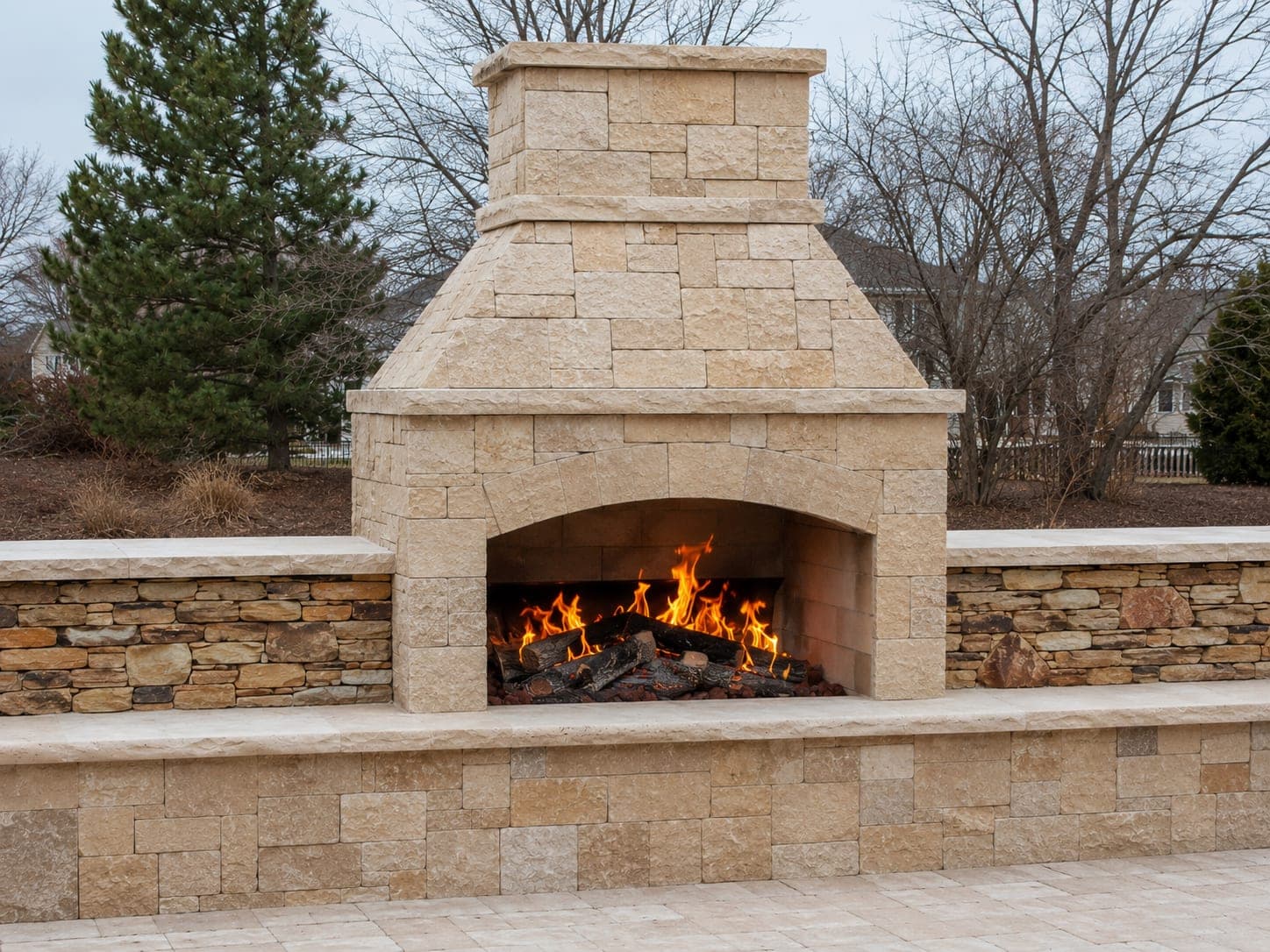
Backyard outdoor fireplaces get treated like furniture, but they're working fireplaces with fireboxes, smoke chambers and chimneys. Here are the questions homeowners ask us most once theirs has been through a few seasons.
Does an outdoor fireplace really need cleaning?
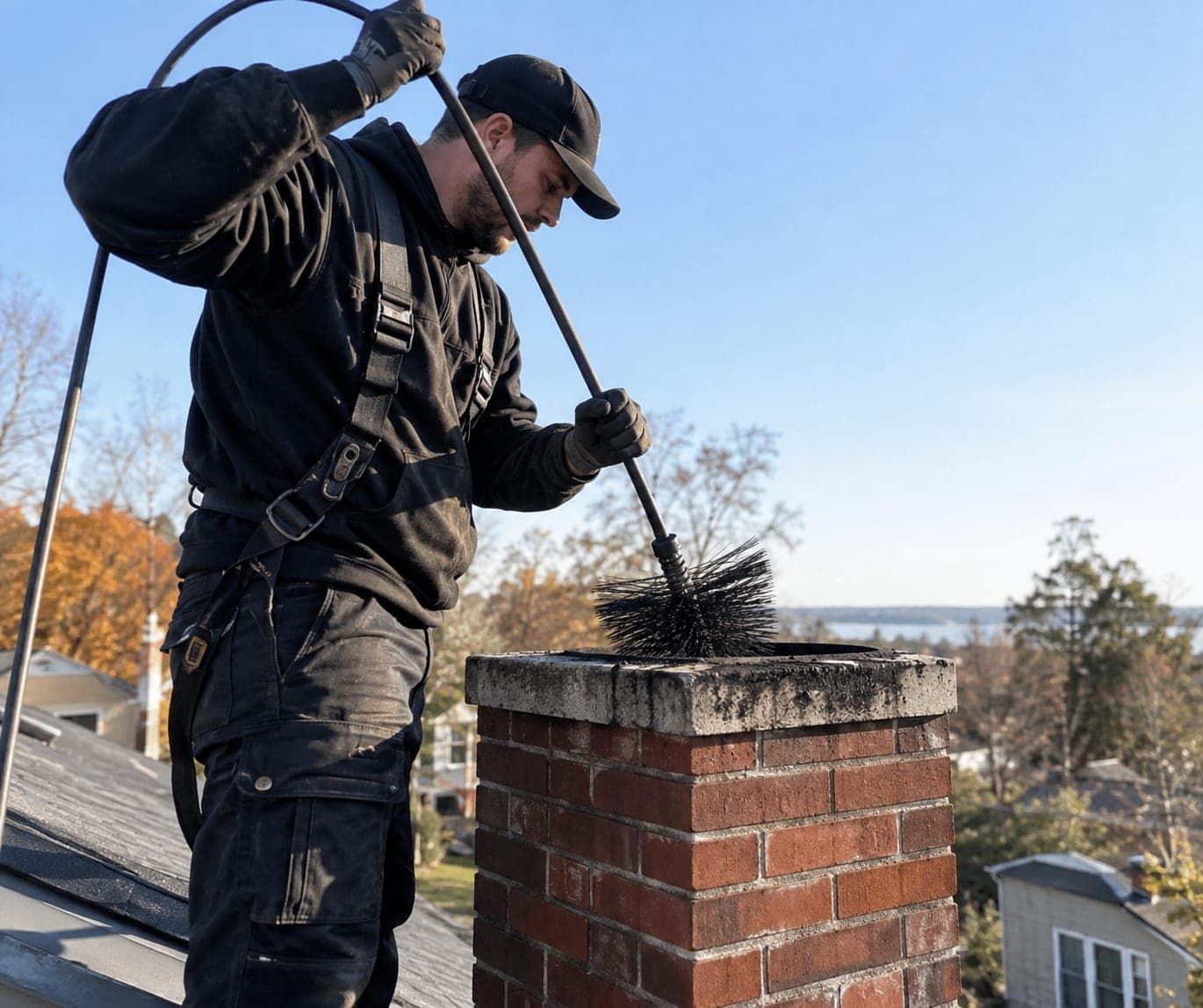
Yes. Ash left in the firebox soaks up rain and turns into a corrosive paste that eats at mortar and metal. Creosote still builds in the flue, and an open-top chimney collects leaves, twigs and nests over the off-season. A Fireplace Cleaning with Creosote Removal and Chimney Blockage Removal where needed resets it for the season.
Why does mine smoke onto the patio?
Outdoor chimneys are often short, and wind swirls around patios, walls and rooflines. A partly blocked flue, a poorly shaped smoke chamber or a missing cap can all push smoke out the front. Many of the same causes in our guide to common chimney issues apply outside, too.
What wears out first?
Usually the mortar joints and the top of the chimney. Water gets into the crown and joints, freezes, expands and loosens brick or stone. Chimney Crown Repair, Chimney Tuckpointing and Chimney Masonry Repair stop the damage before it turns into a rebuild.
How an outdoor fireplace visit runs
Gas fire features need the same care for burners, ignition and gas lines as indoor gas units. Rain and freeze-thaw cycles get into outdoor masonry faster than into an indoor fireplace, so joints and caps wear sooner.
Look at the setting
Placement, clearances to the house, overhangs and nearby plants.
Check the structure
Firebox, masonry, joints, cap and any chimney.
Check the fuel side
Burner, ignition and gas line on gas units; ash and debris on wood-burning ones.
Explain
What needs attention now and what can wait for the season.
How to prepare
- For a gas unit, note any trouble lighting it or changes in the flame.
- Let the fire area cool completely; no fire the day before.
- Move furniture and covers away from the firebox.
When to book outdoor fireplace
- Mortar washing out of the joints
- Cracked or loose stone, brick or cap
- Smoke that blows back toward the seating
- A gas burner that won't light or burns unevenly
Keep the fire area clear
Keep furniture, plants and anything that burns well away from the firebox, and never leave a fire unattended. On a gas unit, if you smell gas, shut it off at the valve if you safely can, move away and call your gas utility or 911.
What gets checked
- Burner, ignition and gas line on gas units
- Firebox and its fire-rated lining
- Cap or chimney top
- Clearances to the house, overhangs and plants
- Stone, brick and mortar joints
- Drainage around the base
What all outdoor fireplaces have in common
Whether yours is site-built stone, a modular kit or a gas-fired unit, all outdoor fireplaces share the same weak points: full weather exposure, an open flue inviting animals and debris, and sparks that can drift toward fences and trees. That shapes the work we do on them:
| Type | What tends to need attention | Work we do |
|---|---|---|
| Masonry or stone | Mortar joints, crown, firebox brick | Masonry repair, crown repair, tuckpointing, firebox repair |
| Modular kit | Firebox liner, cap, joints between sections | Cleaning, firebox repair, cap installation |
| Wood-burning, any type | Sparks, debris, animals in the flue | Spark arrestor and animal screen installation, nest removal |
| Gas-fired | Burner, logs, gas supply | Gas log installation, gas line installation, gas fireplace service |
A properly fitted cap with a spark arrestor screen is one of the most useful upgrades for any open-air fireplace. It keeps rain and animals out and embers in. When you're still choosing a look for a new patio feature, our custom fireplace page and the custom fireplace design service are good places to start. For worn masonry, see our guide to common chimney problems.