On this page
Reasons to consider installing a new fireplace outside
An outdoor fireplace isn't about heating the house. It's about getting more use out of the yard. Homeowners usually come to us for one of these reasons:
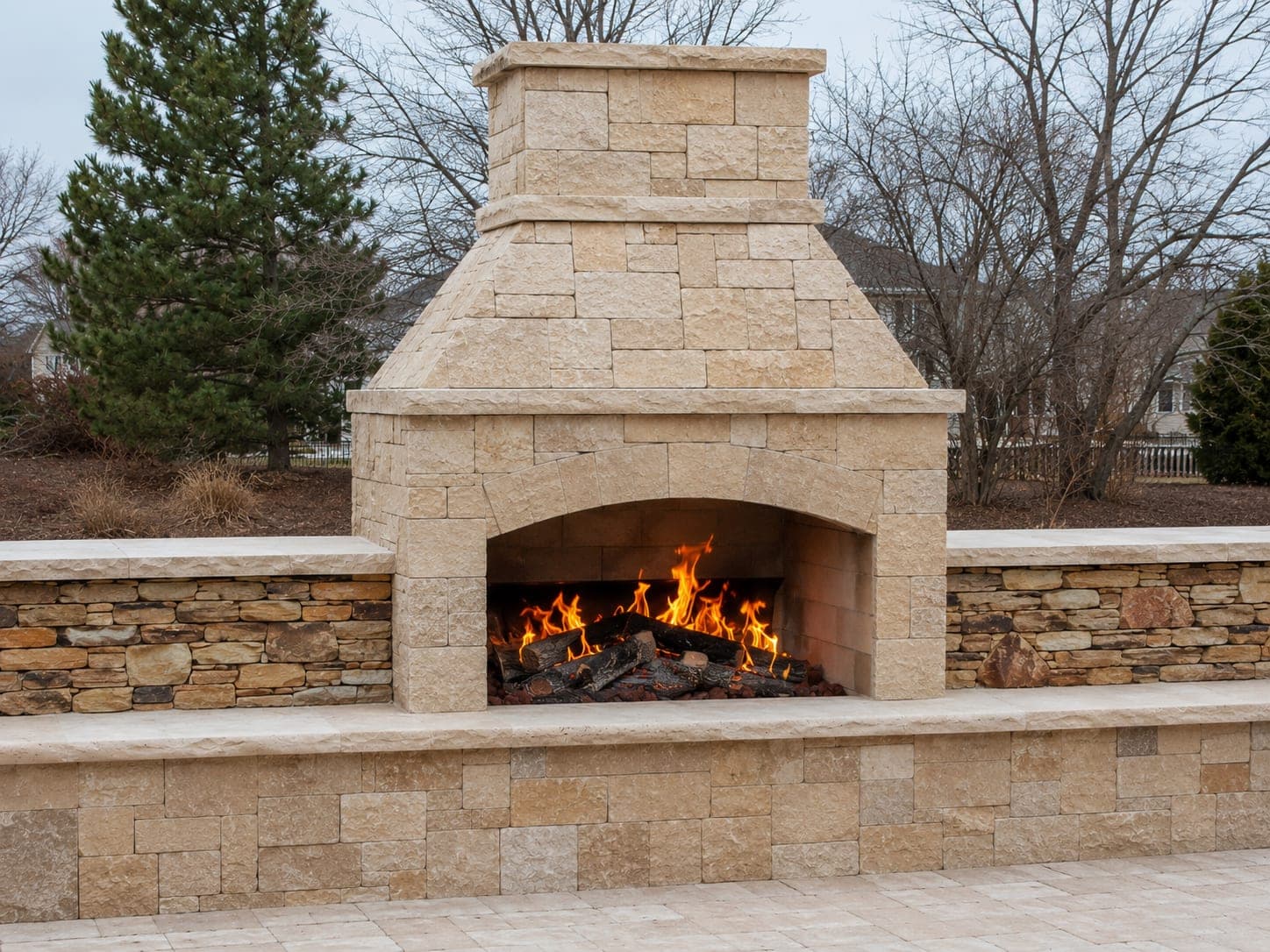
- Stretching patio season into cooler spring and fall evenings
- Giving guests a natural gathering point that a portable fire pit can't match
- Enjoying a wood fire without smoke, ash or drafts inside the house
- Adding a strong visual anchor to a new patio, pool area or outdoor kitchen
Before any design work, check with your town about outdoor burning and setback requirements. We plan placement around whatever applies to your property and around basic fireplace safety: distance from the house, roof overhangs, trees and seating.
What the visit covers
Gas fire features need the same care for burners, ignition and gas lines as indoor gas units. Placement matters: distance from the house, overhangs, trees and fences limit where an outdoor fire is safe.
Look at the setting
Placement, clearances to the house, overhangs and nearby plants.
Check the structure
Firebox, masonry, joints, cap and any chimney.
Check the fuel side
Burner, ignition and gas line on gas units; ash and debris on wood-burning ones.
Explain
What needs attention now and what can wait for the season.
What the technician checks
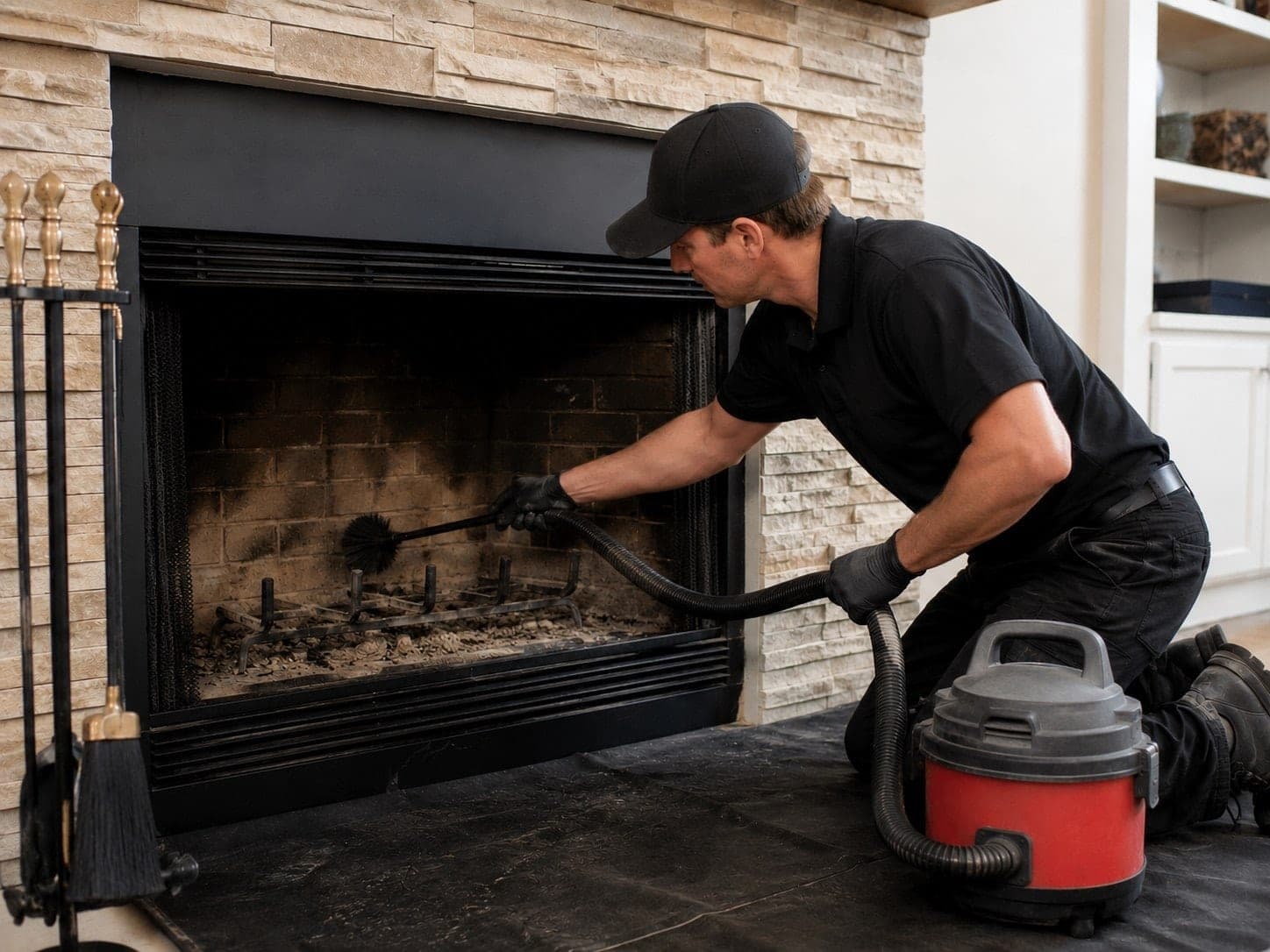
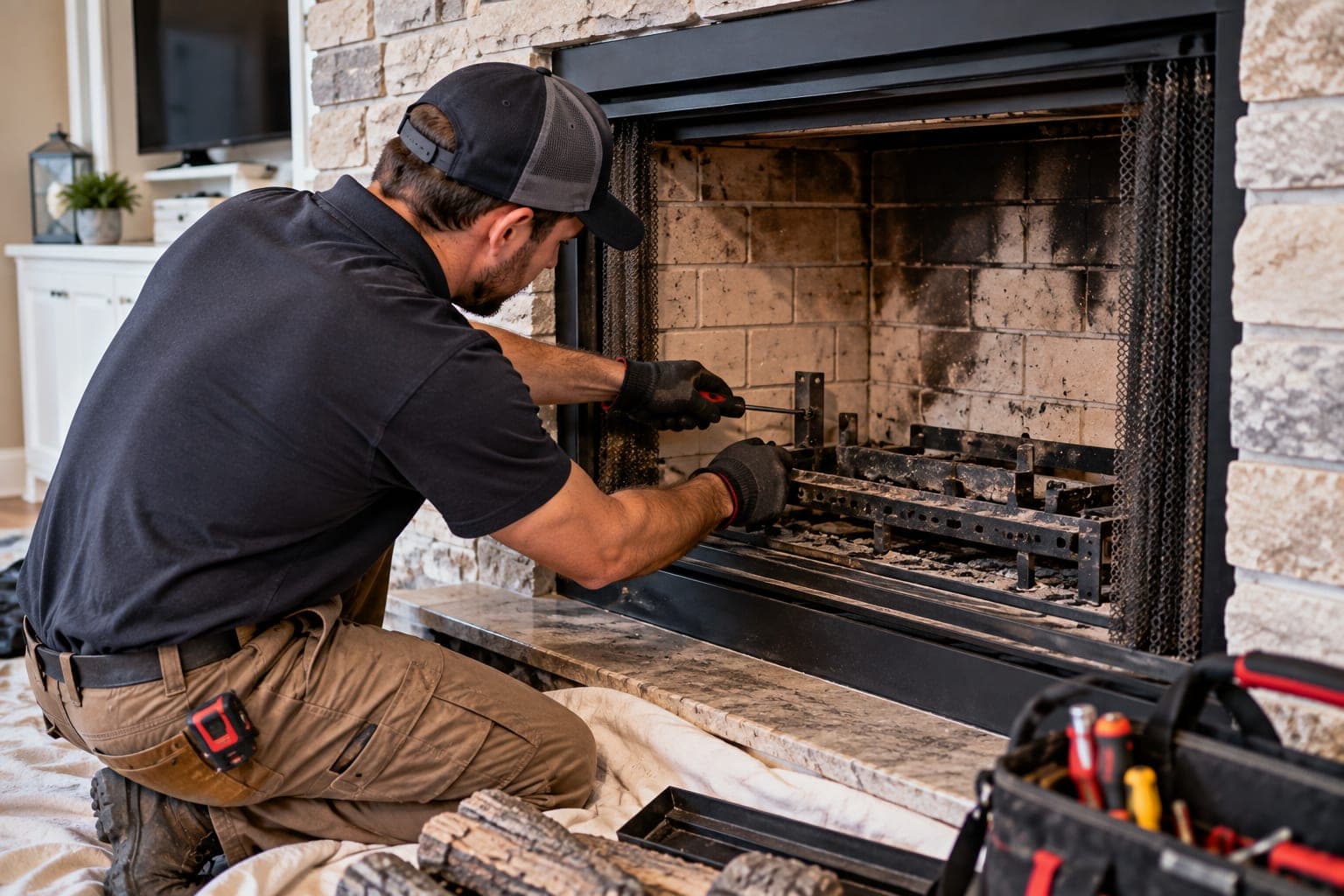
- Stone, brick and mortar joints
- Cap or chimney top
- Firebox and its fire-rated lining
- Clearances to the house, overhangs and plants
- Burner, ignition and gas line on gas units
- Drainage around the base
Keep the fire area clear
Keep furniture, plants and anything that burns well away from the firebox, and never leave a fire unattended. On a gas unit, if you smell gas, shut it off at the valve if you safely can, move away and call your gas utility or 911.
Signs to watch for
- A gas burner that won't light or burns unevenly
- Mortar washing out of the joints
- Smoke that blows back toward the seating
- Cracked or loose stone, brick or cap
- Rust on a steel firebox or chimney
Before the technician arrives
- For a gas unit, note any trouble lighting it or changes in the flame.
- Let the fire area cool completely; no fire the day before.
- Move furniture and covers away from the firebox.
Matching your new fireplace to your architectural style
An outdoor fireplace will sit beside your home for decades, so it should look like it belongs there. A brick Colonial usually calls for brick, or for stone that echoes the foundation. Shingle and farmhouse exteriors pair well with fieldstone and a heavy timber mantel. Modern homes suit smooth stucco, large-format stone panels or a clean steel firebox with minimal trim.
Proportion matters as much as material. The chimney stack, firebox opening and hearth should be scaled to the patio and the wall behind them. Our fireplace anatomy guide is a handy primer on the parts we'll discuss, from the firebox up to the smoke chamber.
Costs and specific models
New fireplace installation cost in East Hartford
In East Hartford, the cost of a new fireplace installation follows the same drivers as anywhere else. They include wood or gas fuel, a prefabricated unit or a custom masonry build, the foundation or pad, chimney height and finish materials. A gas unit adds gas line installation, and a masonry build adds footings and stonework.
New fireplace installation cost in West Hartford
For West Hartford projects, pricing starts with a free on-site estimate. We measure the space, check access for equipment and materials, and write out the scope line by line. That way you can change materials or size and see exactly what shifts. Ask about energy-efficient fireplace options if you want gas convenience outdoors.