On this page
Gas or wood outside?
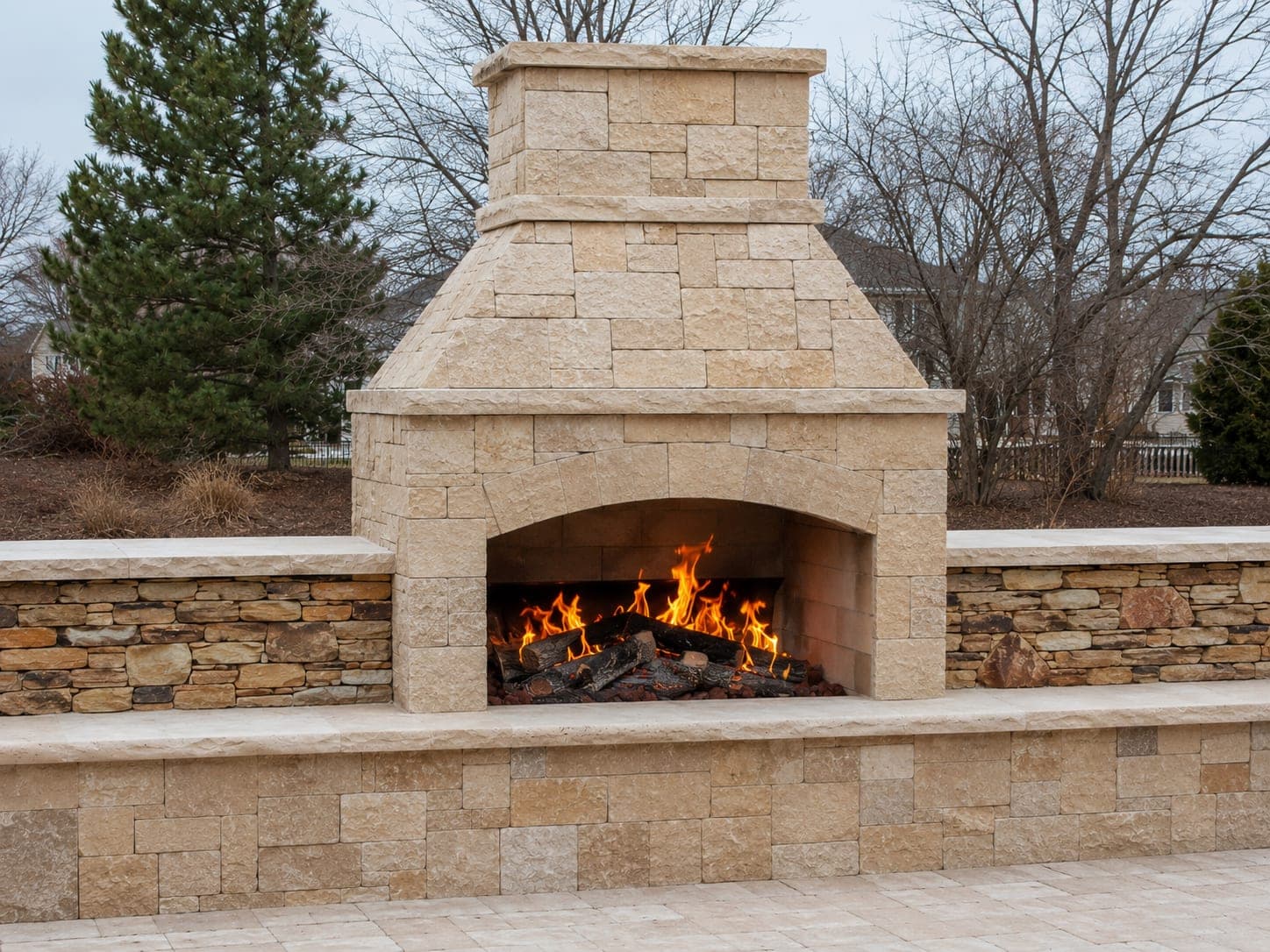
The fuel decision shapes everything else, from where the fireplace can sit to how much upkeep it needs. Here's how the two compare once the unit is outdoors.
| Feature | Gas | Wood-burning |
|---|---|---|
| Lighting | Switch, key or remote | Kindling and a bit of patience |
| Fuel | Connected gas supply | Seasoned firewood you store and carry |
| Smoke and embers | Minimal | Smoke drift and sparks to plan around |
| Upkeep | Routine service | Ash removal and periodic chimney cleaning |
| Feel | Steady, clean flame | Crackle, wood smoke and stronger radiant heat |
Lighting
- Gas
- Switch, key or remote
- Wood-burning
- Kindling and a bit of patience
Fuel
- Gas
- Connected gas supply
- Wood-burning
- Seasoned firewood you store and carry
Smoke and embers
- Gas
- Minimal
- Wood-burning
- Smoke drift and sparks to plan around
Upkeep
- Gas
- Routine service
- Wood-burning
- Ash removal and periodic chimney cleaning
Feel
- Gas
- Steady, clean flame
- Wood-burning
- Crackle, wood smoke and stronger radiant heat
Outdoor units still have a firebox, a smoke chamber and a flue, the same parts covered in our fireplace anatomy guide. The difference is that weather hits them from every side. Outdoors, the warmth you feel is radiant heat near the hearth, since most of the rest goes up the flue. Our guide to fireplace efficiency explains why that happens.
How an outdoor fireplace visit runs
Placement matters: distance from the house, overhangs, trees and fences limit where an outdoor fire is safe. Rain and freeze-thaw cycles get into outdoor masonry faster than into an indoor fireplace, so joints and caps wear sooner.
Look at the setting
Placement, clearances to the house, overhangs and nearby plants.
Check the structure
Firebox, masonry, joints, cap and any chimney.
Check the fuel side
Burner, ignition and gas line on gas units; ash and debris on wood-burning ones.
Explain
What needs attention now and what can wait for the season.
Before the technician arrives
- For a gas unit, note any trouble lighting it or changes in the flame.
- Let the fire area cool completely; no fire the day before.
- Move furniture and covers away from the firebox.
When to book outdoor fireplace installation
- Smoke that blows back toward the seating
- Rust on a steel firebox or chimney
- Mortar washing out of the joints
- Cracked or loose stone, brick or cap
- A gas burner that won't light or burns unevenly
What the technician checks
- Drainage around the base
- Stone, brick and mortar joints
- Burner, ignition and gas line on gas units
- Clearances to the house, overhangs and plants
- Cap or chimney top
- Firebox and its fire-rated lining
Keep the fire area clear
Keep furniture, plants and anything that burns well away from the firebox, and never leave a fire unattended. On a gas unit, if you smell gas, shut it off at the valve if you safely can, move away and call your gas utility or 911.
Where an outdoor fireplace can go
The best spot for an outdoor fireplace is rarely the first one people point to. A fireplace tucked against the house looks cozy, but smoke, heat and embers need room. We work through the site before recommending a location.
Placement checks for an outdoor fireplace
- Distance from house walls, windows and doors, and which way smoke will drift
- Overhangs, pergolas, trees and anything else above the flue outlet
- A level, noncombustible base that can carry the unit's weight
- The route for a gas line on gas units
- Whether your town requires a permit for the structure or the gas work
Manufacturer clearances are minimums, and an outdoor site often calls for more because wind is unpredictable. The fireplace safety guide covers the habits that keep an outdoor fire from becoming a problem.
Built for weather
Rain running down an open flue rusts metal parts and wears out masonry joints. Freeze-thaw cycles open small cracks. A chimney cap keeps water out of the flue, and on wood-burning units a spark arrestor screen catches embers before they reach nearby roofs or plantings. We install both.
For gas units, we run the gas line to the fireplace location, so you don't have to coordinate a separate trade. If you're starting from an empty yard rather than replacing an existing unit, see how new outdoor fireplace installation works.