On this page
Your fireplace fix review: what we look at before quoting
Before any repair starts, you get a plain review of the problem: what's broken, why it probably failed, and what fixing it involves. The estimate is free.
| What you notice | Common causes we check |
|---|---|
| Smoke rolls into the room | Closed or partly closed damper, cold flue, blocked flue, or a smoke chamber problem |
| Gas pilot won't stay lit | Dirty pilot, worn thermocouple or thermopile, gas supply issue |
| Cracked or missing firebrick or panels | Heat damage to the firebox or refractory panels |
| Glass door won't seal, or the glass is cracked | Worn gasket, bent door frame, heat-stressed glass |
| Electric unit is dark or the heater is dead | Failed bulb or LED strip, fan, heating element or control board |
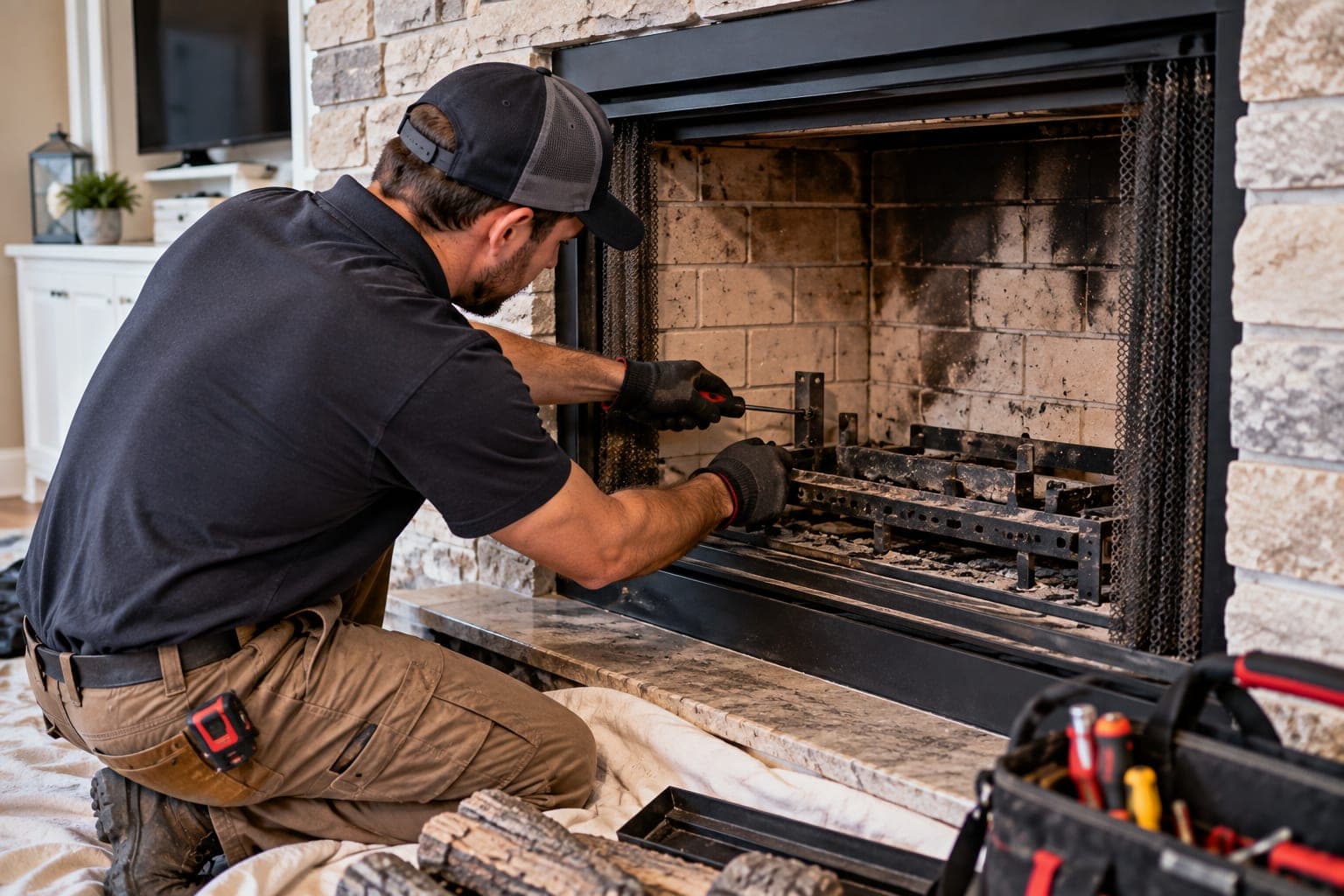
A symptom can have more than one cause. That's why the review comes before the parts order. Replacing a thermocouple won't help if the real issue is a clogged pilot orifice, and repointing a firebox won't cure smoke caused by a partly closed damper.
Repairs by fireplace type
Wood-burning fireplaces
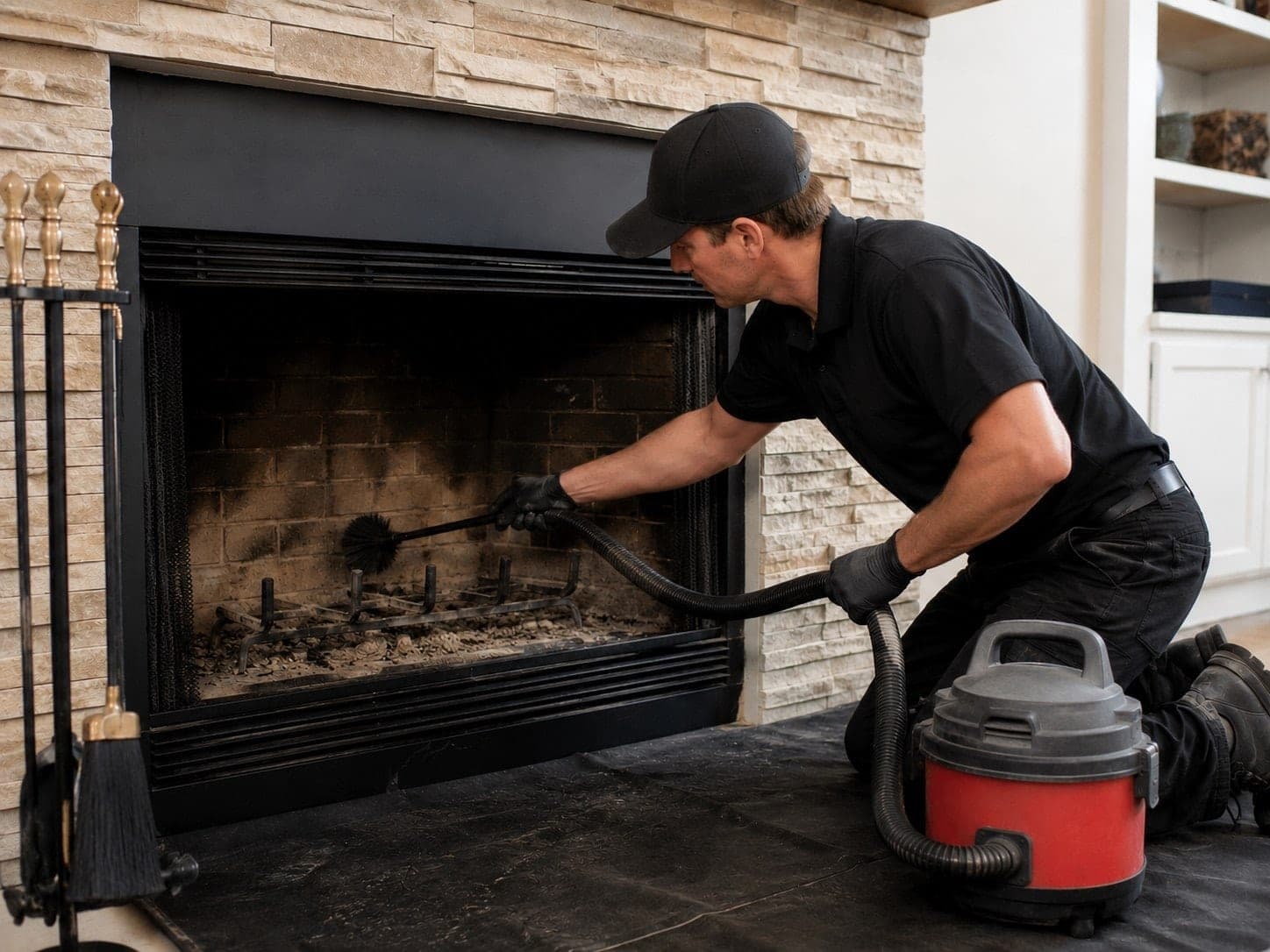
Wood fireplace repairs usually involve the firebox brick and mortar, the damper, the smoke chamber, or a draft problem that makes the fire hard to start and smoky to run. Wood inserts and stoves have their own parts, including gaskets, baffles and door glass. Brand-specific work such as wood fireplace repair is handled separately. If you've seen loose brick, heavy soot on the face, or smoke you can't explain, our fireplace safety guide covers when to stop using the fireplace until it's checked.
Gas fireplaces
Gas units mostly fail at the ignition system: the pilot assembly, thermocouple or thermopile, and the valve. Other common issues are hazy or cracked glass, crumbling logs, and refractory panels that have cracked from heat. Most of these are part replacements rather than rebuilds. Our guide to fireplace anatomy explains how the pieces fit together.
Electric fireplaces
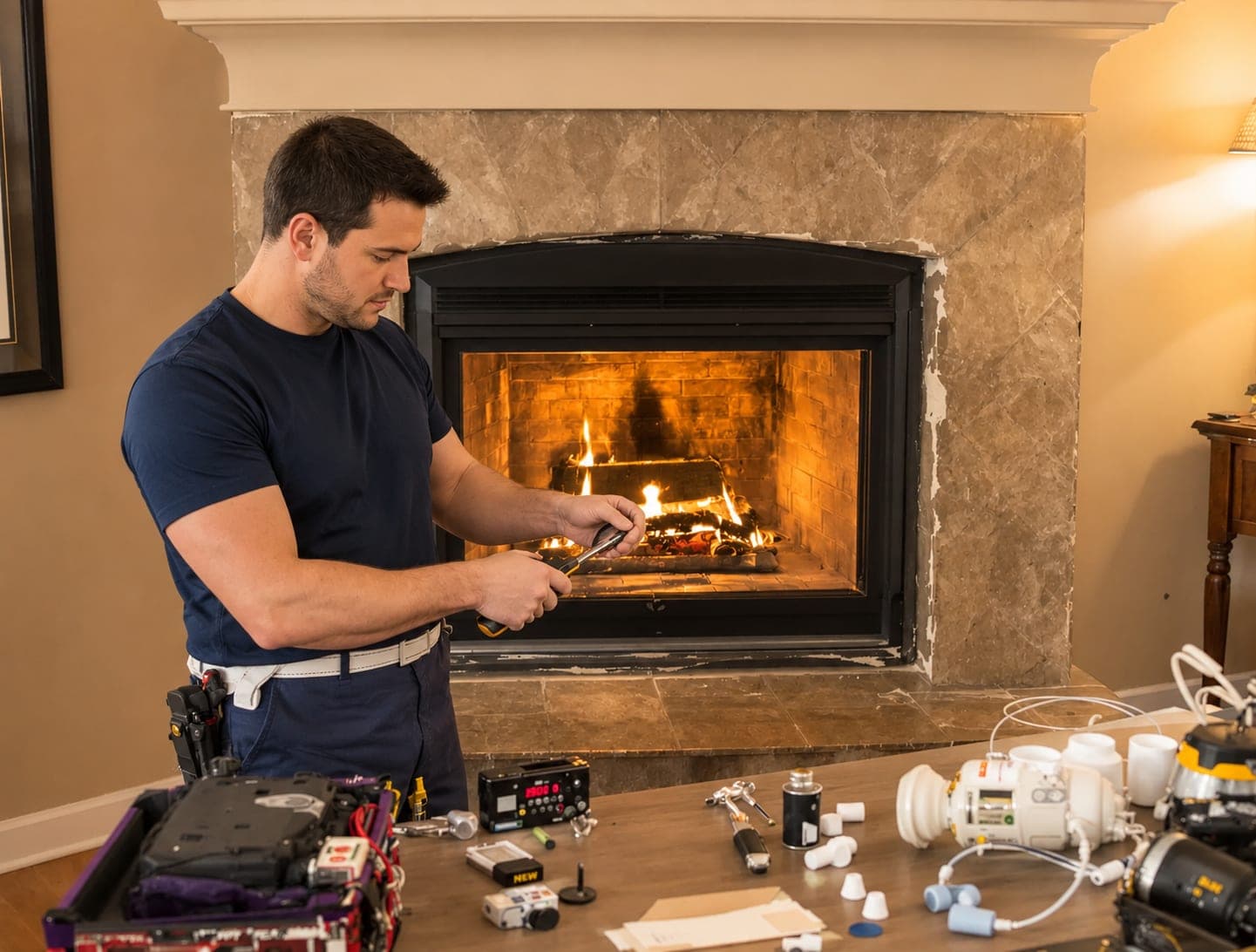
With electric units, the problem is usually lights, motors or electronics, not combustion. Flame effects dim, fans get noisy, and heaters shut off on their own. For one major brand, see how electric fireplace repair works. When a unit is too far gone to be worth fixing, a new electric fireplace installation is another option to weigh.
What happens during the visit
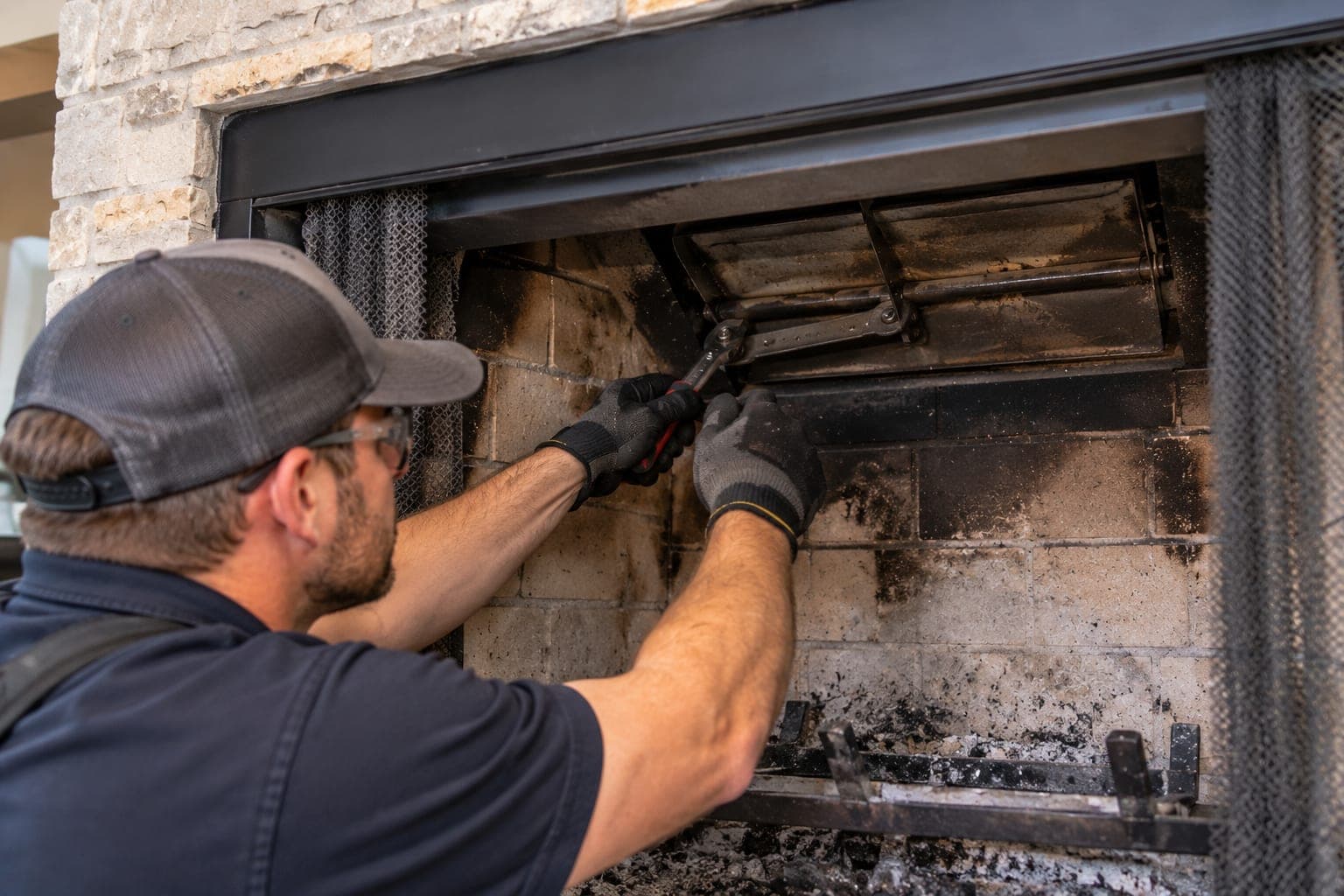
Cracks in the firebox let heat reach the framing behind it. A damaged smoke chamber is a common cause of smoke spilling into the room.
Find the cause
The firebox, damper, smoke chamber and any doors, glass or panels are checked.
Confirm the type
Masonry or factory-built — the repair has to suit the system.
Explain the fix
You hear the options and what each involves before work starts.
Repair and test
The work is done and the fireplace is checked before you use it.
When to book fireplace repair
- Smoke coming into the room
- A damper that won't open or close
- Doors or glass that are cracked or don't seal
- Rust or warping inside the firebox
Before the technician arrives
- Keep pets in another room while the work area is open.
- Let the fireplace or stove cool completely — ideally no fire for 24 hours before the visit.
- Clear a few feet of space in front of the hearth or appliance.
- Move rugs, photos and anything fragile away from the work area.
If smoke comes into the room
Stop adding fuel, open a window and don't relight the fire until the chimney has been checked. If the smoke is heavy, an alarm sounds or you suspect a chimney fire, get everyone outside and call 911.
Checked on every visit
- Draft from the opening
- Firebrick or refractory panels
- Smoke chamber and smoke shelf
- Doors, glass and gaskets
- Hearth and surround