On this page
Fire in the chimney or a gas smell comes first
If you hear a roaring sound in the chimney or see flames or sparks coming from the top, get everyone out and call 911 from outside. If you smell gas, leave the house and call your gas utility or 911 from outside. Fireplace repair comes after the immediate danger has been handled.
What the visit covers
Cracks in the firebox let heat reach the framing behind it. A damaged smoke chamber is a common cause of smoke spilling into the room.
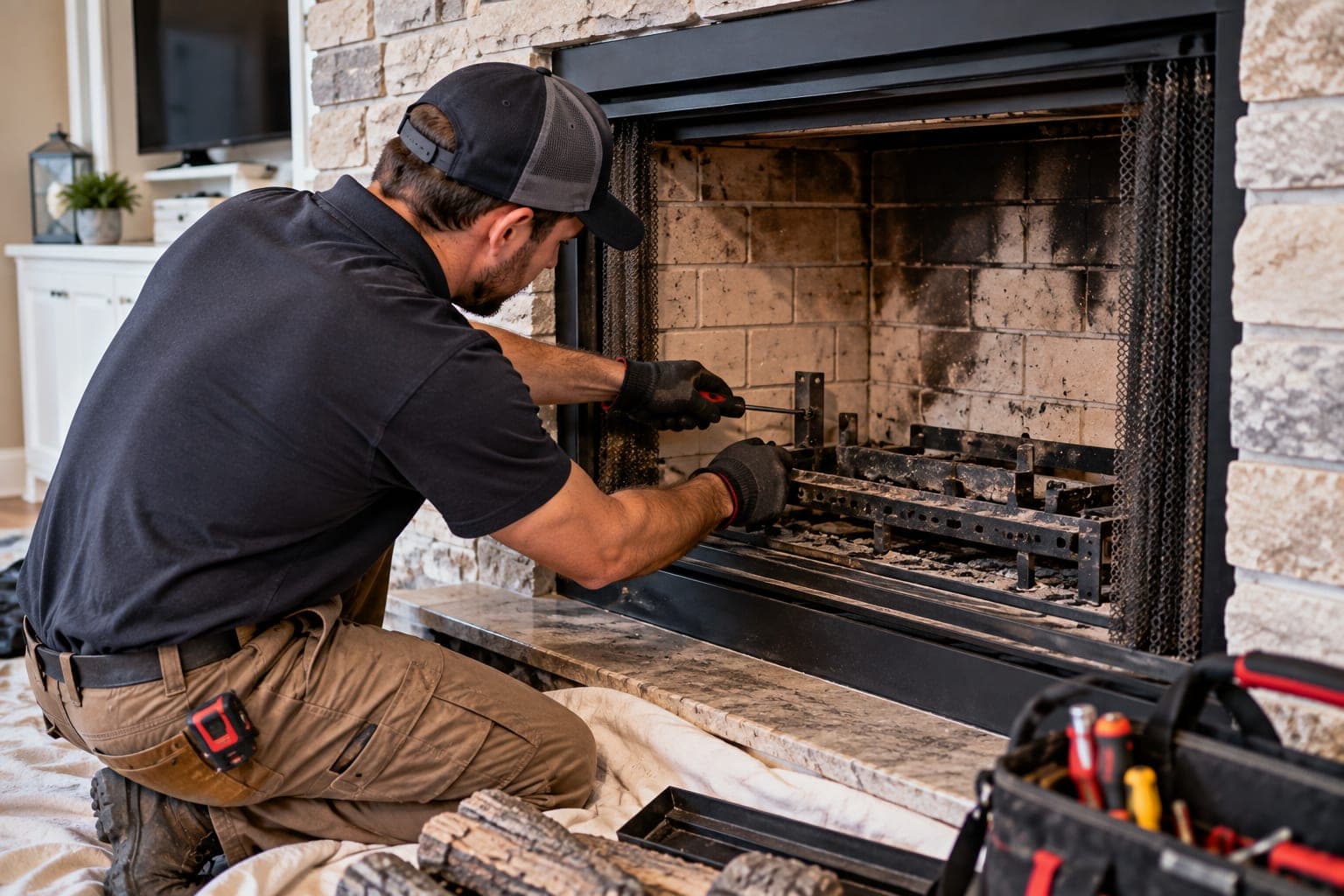
Find the cause
The firebox, damper, smoke chamber and any doors, glass or panels are checked.
Confirm the type
Masonry or factory-built — the repair has to suit the system.
Explain the fix
You hear the options and what each involves before work starts.
Repair and test
The work is done and the fireplace is checked before you use it.
What gets checked
- Doors, glass and gaskets
- Draft from the opening
- Damper operation
- Hearth and surround
- Firebrick or refractory panels
When to book fireplace repair
- A fireplace that is hard to light or won't stay lit
- Rust or warping inside the firebox
- Doors or glass that are cracked or don't seal
- A damper that won't open or close
Before the technician arrives
- Clear a few feet of space in front of the hearth or appliance.
- Keep pets in another room while the work area is open.
- Write down what you've noticed and when it happens — smells, smoke, sounds or stains.
- Make sure the technician can reach the roof or attic access if it's needed.
If smoke comes into the room
Stop adding fuel, open a window and don't relight the fire until the chimney has been checked. If the smoke is heavy, an alarm sounds or you suspect a chimney fire, get everyone outside and call 911.
Potential fireplace emergencies, and which can't wait
Not every fireplace problem is an emergency. These are the ones worth calling about right away, even late at night:
- Smoke pouring into the room that doesn't clear as the fire dies down
- Cracked or shattered glass on a gas fireplace or insert
- A damper that has fallen shut, or a broken top-damper cable, while the fire or coals are still hot
- Firebrick falling out, or a crack opening in the firebox wall
- Delayed ignition or flames lifting off the burner on a gas unit (shut the gas off first)
- A bird, animal or nest suddenly blocking the flue
Other problems can usually wait for a scheduled visit, such as a stained glass panel, an electric unit that's slow to start, or a hairline mortar crack you've been watching. When you call, describe what you see, and you'll get an honest answer about whether it needs an emergency visit.
Emergency fireplace repair in Connecticut
Emergency calls are accepted 24 hours a day, Sunday through Friday. Same-day service is offered when the schedule allows, for homes in Hartford and elsewhere in Connecticut. Timing depends on the day's workload, so you'll get a straight answer about what's possible rather than an arrival time that can't be kept.
An emergency visit makes the fireplace safe first: clearing the blockage, securing the damper, or shutting down a gas unit with broken glass. Then the permanent repair is planned. If parts have to be ordered, brand-specific work follows, such as wood stove and insert repair or electric fireplace service.
Planning for potential fireplace emergencies
A few minutes of preparation before the burning season makes a bad night much easier to handle.
Before the first fire of the season
- Know where the gas shutoff for your fireplace is and how to turn it
- Test the smoke and carbon monoxide alarms on every level
- Check that the damper opens fully and closes again
- Keep a household fire extinguisher where you can reach it from the hearth
- Save the business contact in your phone so you aren't searching at night
- Schedule an inspection if the fireplace hasn't been looked at recently
For more on everyday habits, see our fireplace safety guide. To learn the names of the parts you might need to describe over the phone, read understanding the parts of a fireplace.