On this page
Stove trouble that's really chimney trouble
A wood stove depends on steady draft. Hot gases rise up the flue and pull fresh air through the firebox. If anything slows that flow, the stove behaves badly even when nothing inside it has failed. Before you replace parts, look at the chimney. These are the complaints we hear most and where they usually start.
| What you notice | Frequent cause | Work that addresses it |
|---|---|---|
| Smoke rolls out when the door opens | Flue narrowed by creosote or a clogged cap | Chimney flue cleaning, blockage removal |
| Fire is hard to start and keeps dying down | Weak draft from a damaged or oversized liner | Liner repair or liner installation, draft repair |
| Strong campfire smell on humid days | Creosote deposits reacting with damp air | Creosote removal, odor removal |
| Scratching sounds or twigs in the stove | Animals or nests in the flue | Animal and nest removal, animal screen installation |
| Rust or water stains near the stove pipe | Failed crown, flashing or cap | Crown repair, flashing repair, cap replacement |
Some parts belong to the stove itself, such as door gaskets, baffles and glass. Those are specific to each manufacturer, and the manual for your model is the place to start. Our guide to common chimney issues behind poor stove performance explains the flue-side causes in more depth.
Calling a wood stove repair master: what to have ready
Useful details for the first call
- Brand and model from the stove's label
- Roughly how old the stove and chimney are
- What happens, and when: lighting, mid-burn or overnight
- What wood you burn and how long it has dried
- When the chimney was last cleaned or inspected
- Photos of the cap and stove pipe, if you can take them safely
With those details we can often narrow the likely cause before we arrive. Estimates are free, same-day service is offered where the schedule allows, and emergency calls are accepted at any hour, Sunday through Friday. That's the same availability described in our Sunday–Friday 24-hour stove and chimney service.
How to find wood stove repair pros you can trust
A search for wood stove repair pros returns a mix of dealers, appliance technicians and chimney services. Ask each one whether they'll look at the flue, and whether they'll explain the cause before recommending work. We serve homeowners in Hartford and other communities around Connecticut. If you're outside Hartford, call and ask whether your town is on the schedule.
If you're still choosing equipment, you can read about freestanding wood-burning stoves or about inserts that fit inside an existing fireplace. For a broader look, see our overview of frequent chimney problems.
What happens during the visit
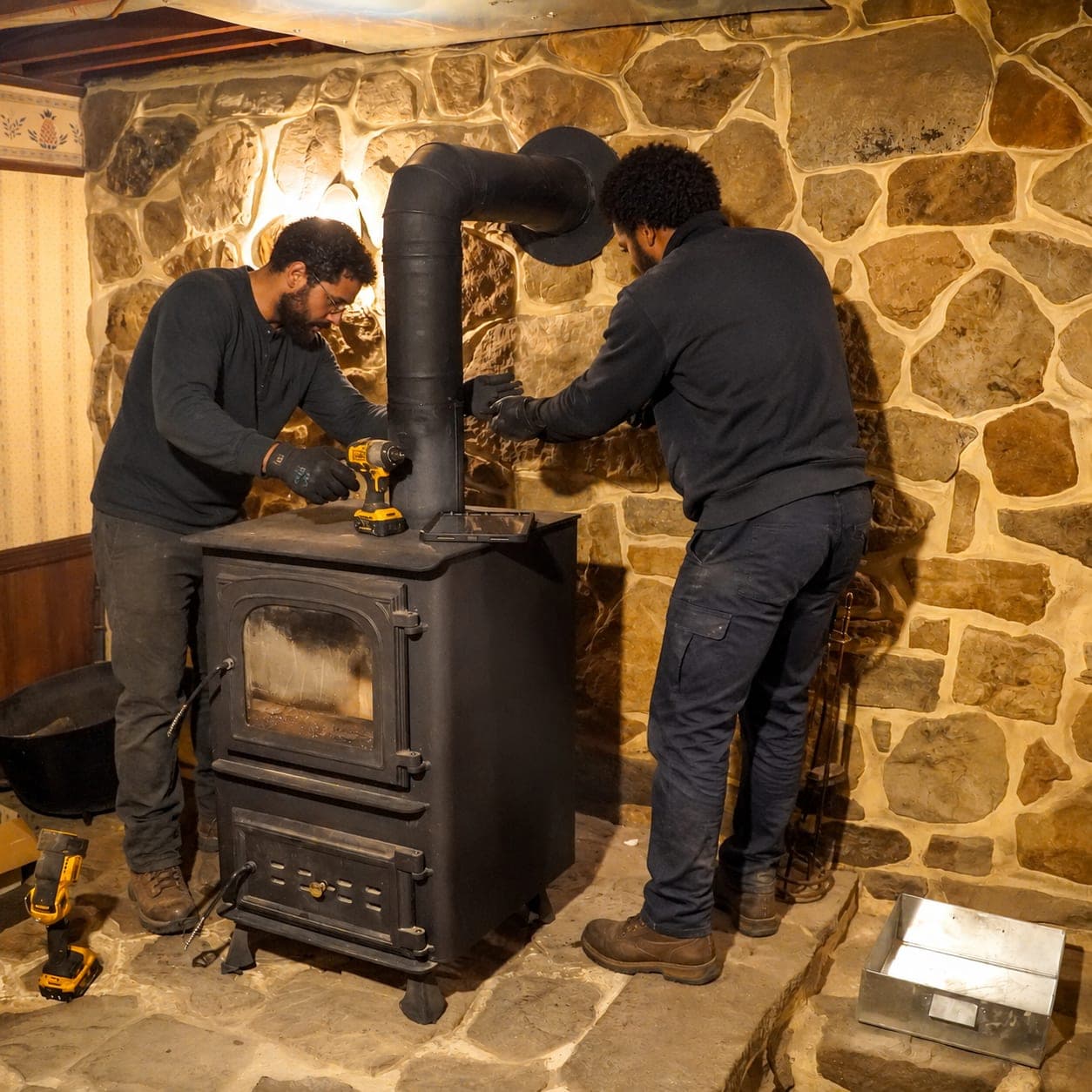
A connector pipe that has rusted or separated at a joint can leak smoke into the room. A worn door gasket lets the stove pull in extra air, so the fire burns hot and fast and is hard to control.
Hear what it's doing
How the stove burns, what's changed and when — that points to the door, the baffle, the air supply or the flue.
Check the stove itself
Door latch and gasket, glass, firebrick, baffle, air controls and the body for cracks or warping.
Check the connector and flue
Pipe joints, the thimble or liner connection, clearances to walls, and the flue for creosote and draft.
Explain and agree
What needs cleaning, adjusting or replacing, before any work starts.
What the technician checks
- Connector pipe joints, screws and rust
- Creosote in the connector and flue
- Firebrick and baffle condition
- Clearances to walls, floor protection and the hearth pad
- Draft with the door closed
Before the technician arrives
- Clear a few feet around the unit and the area under any connector pipe.
- Have the make and model handy; it's usually on a plate on the back or under the ash lip.
- Make sure the roof or the attic access can be reached if the flue needs to be checked from above.
- Let the stove or insert go out and cool completely — ideally no fire for a full day before the visit.
Carbon monoxide
A stove or insert that vents poorly can push carbon monoxide into the home. If an alarm sounds or anyone feels dizzy or sick near it, get everyone outside and call 911.
Signs it's time for wood stove repair
- Rust, gaps or soot streaks at connector pipe joints
- Heavy black deposits on the glass after short burns
- Cracked firebrick or a sagging or broken baffle
- A door that doesn't latch firmly or a gasket that's flattened or frayed
- A fire that won't stay low even with the air control shut