On this page
Pellet stoves: a modern alternative to cordwood
A pellet stove burns small, uniform pellets made from compressed wood. An auger feeds them from a hopper into a burn pot at a steady rate. All pellet stoves rely on electricity for the auger, the combustion fan and the room blower. During a power outage they stop unless they have backup power. For a wider overview, see our guide to how pellet stoves work.
| Feature | Wood-burning stove | Pellet stove |
|---|---|---|
| Fuel | Split, seasoned cordwood | Bagged compressed wood pellets |
| Feeding | By hand, several times a day | Automatic, from a hopper |
| Power | None needed to burn | Electricity for the feed and fans |
| Venting | Lined masonry or factory-built chimney | Pellet vent pipe through a wall or up a lined chimney |
| Main residue | Creosote on flue walls | Fine fly ash in the stove and vent |
| During an outage | Keeps heating | Stops without backup power |
Fuel
- Wood-burning stove
- Split, seasoned cordwood
- Pellet stove
- Bagged compressed wood pellets
Feeding
- Wood-burning stove
- By hand, several times a day
- Pellet stove
- Automatic, from a hopper
Power
- Wood-burning stove
- None needed to burn
- Pellet stove
- Electricity for the feed and fans
Venting
- Wood-burning stove
- Lined masonry or factory-built chimney
- Pellet stove
- Pellet vent pipe through a wall or up a lined chimney
Main residue
- Wood-burning stove
- Creosote on flue walls
- Pellet stove
- Fine fly ash in the stove and vent
During an outage
- Wood-burning stove
- Keeps heating
- Pellet stove
- Stops without backup power
Homeowners comparing wood and pellet stoves may also want to look at stoves and fireplace inserts side by side.
Environmental advantages, weighed honestly
Pellets are generally made from sawdust and other wood byproducts. Because the fuel is dry and uniform, a pellet stove burns more consistently and with less visible smoke than most cordwood fires. There are trade-offs. Making and shipping pellets takes energy, the stove uses electricity, and the bags have to go somewhere. A modern wood stove certified to current EPA limits is also far cleaner than older models. The real benefit depends on the specific stoves, the fuel quality and how you run them.
Pellet stoves need annual cleaning, including the vent
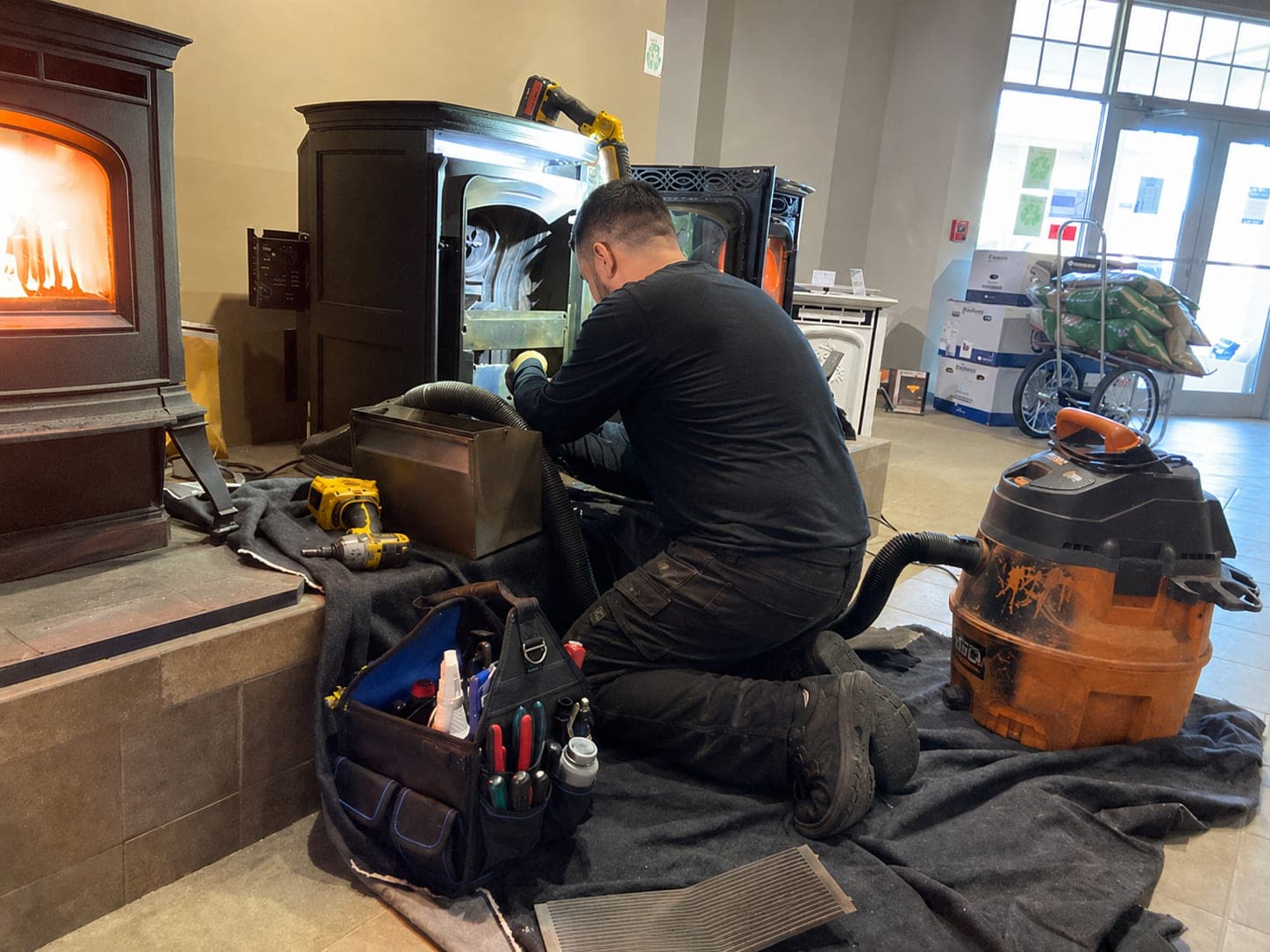
Fly ash collects in the burn pot, the heat exchanger and the vent. A restricted vent hurts combustion and can bring a smoky smell into the room. Manufacturers' manuals typically call for routine cleaning plus a thorough cleaning at least once a year. Internal stove parts should be maintained according to the maker's instructions.
Our work is where a pellet stove meets the chimney. When a pellet vent runs up an existing masonry chimney, we handle chimney flue cleaning, liner installation for a properly sealed run, cap installation and nest removal. A chimney inspection confirms the setup is sound. More on the stove side is on our pellet stove page, and chimney issues that can affect any venting setup is useful background reading.
What the visit covers
Pellet stoves depend on electricity: a fan or control fault, or a power cut, stops the draft the fire relies on. A pellet vent that isn't cleaned collects fine ash and can leak exhaust at its joints.
Read the symptoms
Error codes, how it fails and when — at lighting, during a burn or at shutdown.
Clean the combustion path
Burn pot, heat exchanger tubes, ash traps and the combustion fan area are cleaned.
Check the parts
Igniter, fans, auger, door gasket and safety switches are tested.
Clean and check the vent
The vent pipe is cleaned and its joints and termination checked, then the stove is test-run.
Checked on every visit
- Door and hopper gaskets
- Burn pot and air holes
- Auger and hopper feed
- Vent pipe joints and termination
- Pressure and temperature safety switches
- Combustion and convection fans
Getting ready for the visit
- Run the hopper low if you can, so the feed system can be reached.
- Note any error codes and when the problem happens.
- Clear space around the stove and the outside vent termination.
- Let the stove burn out, then switch it off and unplug it once it is cold.
Off, cold and unplugged
Clean the burn pot, ash pan or glass only with the stove off, completely cold and unplugged — the auger and fans can start on their own.
Signs to watch for
- Lazy, dark or sooty flames
- The stove won't light or keeps shutting down
- Pellets piling up in the burn pot
- Error codes on the control panel