On this page
Benefits of fireplaces and wood stoves, side by side
Both burn wood, but they do different jobs. An open fireplace is mostly about the fire itself. A stove or insert is built to heat.
| Feature | Open fireplace | Wood stove or insert |
|---|---|---|
| Atmosphere | Wide, open view of the flames | Fire behind glass doors |
| Heat delivered | Modest, with much of it lost up the chimney | Designed to heat a room or more |
| Burn control | Limited to how much wood you add | Adjustable air control |
| Wood use | Burns through a load quickly | Longer burn from each load |
| Upkeep | Firebox, damper and flue | Gaskets, glass, baffle, liner and flue |
Atmosphere
- Open fireplace
- Wide, open view of the flames
- Wood stove or insert
- Fire behind glass doors
Heat delivered
- Open fireplace
- Modest, with much of it lost up the chimney
- Wood stove or insert
- Designed to heat a room or more
Burn control
- Open fireplace
- Limited to how much wood you add
- Wood stove or insert
- Adjustable air control
Wood use
- Open fireplace
- Burns through a load quickly
- Wood stove or insert
- Longer burn from each load
Upkeep
- Open fireplace
- Firebox, damper and flue
- Wood stove or insert
- Gaskets, glass, baffle, liner and flue
If you haven't settled on wood, the trade-offs between gas and wood are worth reading. Electric fireplace inserts are another option for people who want the look without burning anything.
How the visit works
Stoves burn hotter and smokier at low settings than people expect, so the flue collects creosote faster than an open fireplace's. A connector pipe that has rusted or separated at a joint can leak smoke into the room.
Hear what it's doing
How the stove burns, what's changed and when — that points to the door, the baffle, the air supply or the flue.
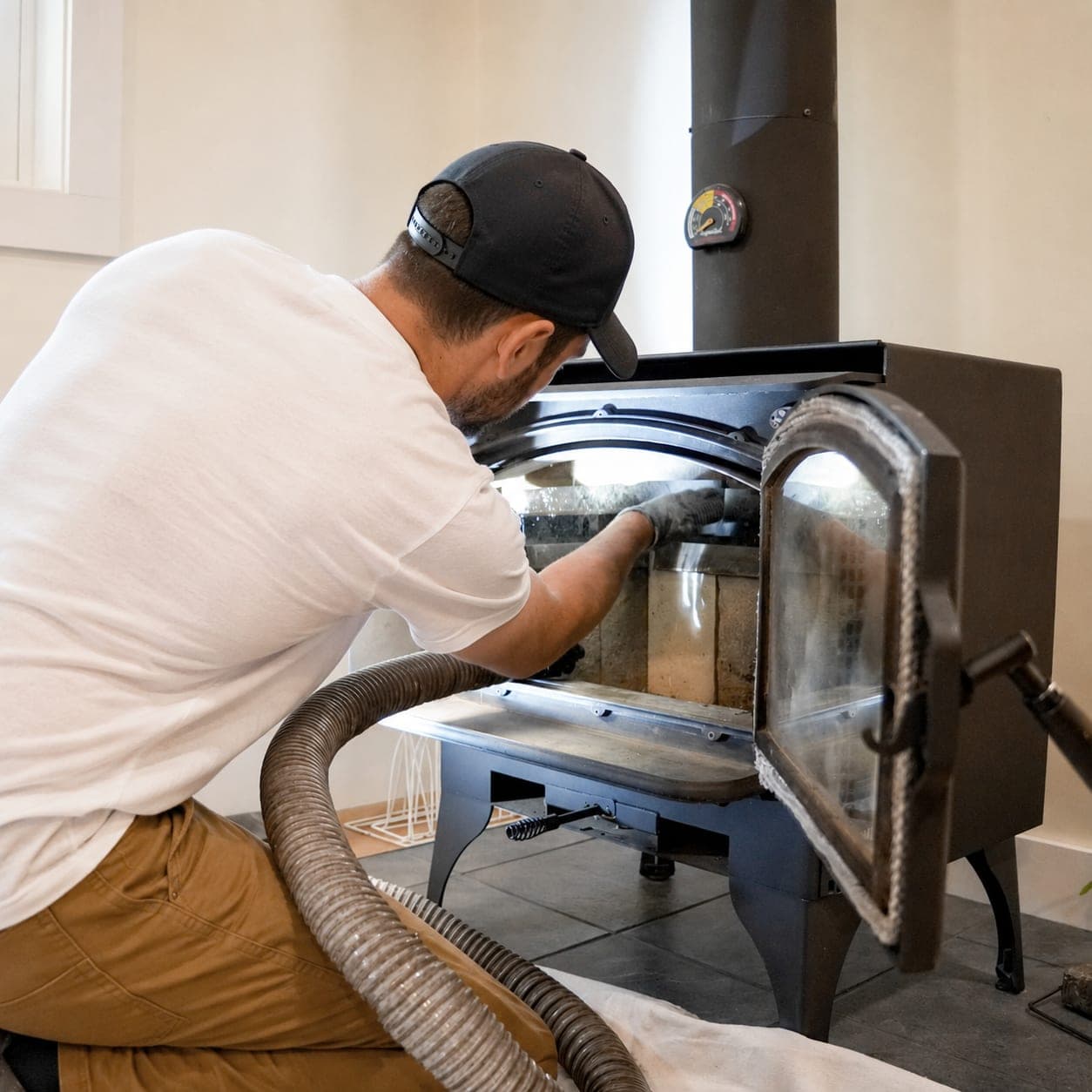
Check the stove itself
Door latch and gasket, glass, firebrick, baffle, air controls and the body for cracks or warping.
Check the connector and flue
Pipe joints, the thimble or liner connection, clearances to walls, and the flue for creosote and draft.
Explain and agree
What needs cleaning, adjusting or replacing, before any work starts.
When to book wood stoves and fireplace inserts
- Heavy black deposits on the glass after short burns
- Smoke escaping when the door is opened, or around a closed door
- Rust, gaps or soot streaks at connector pipe joints
- Cracked firebrick or a sagging or broken baffle
Only when it's cold
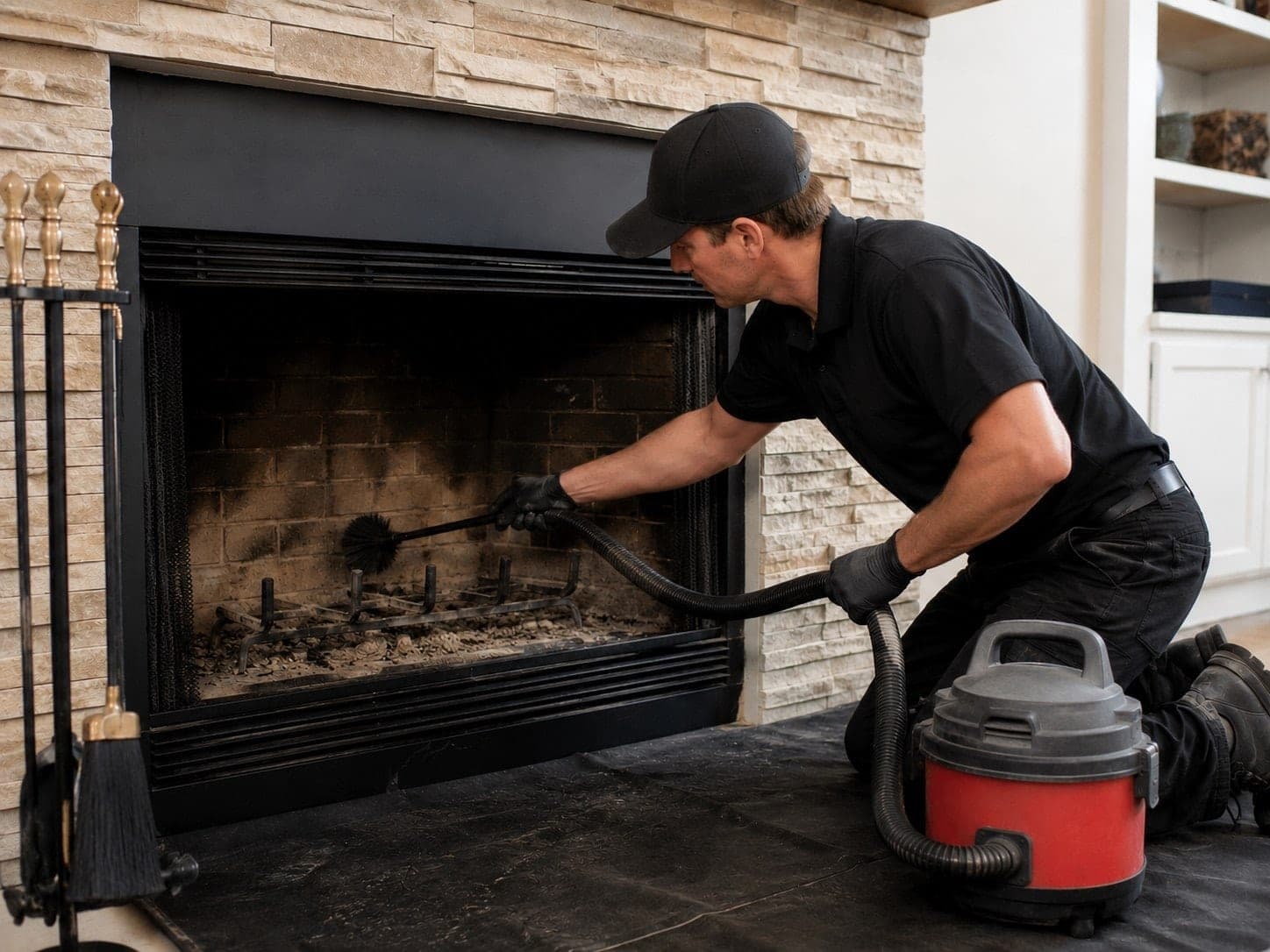
Doors, gaskets, ash pans and the firebox should only be handled once the unit is completely out and cold.
What the technician checks
- Creosote in the connector and flue
- Clearances to walls, floor protection and the hearth pad
- Draft with the door closed
- Door latch, gasket and glass seal
- Connector pipe joints, screws and rust
- Firebrick and baffle condition
Before the technician arrives
- Let the stove or insert go out and cool completely — ideally no fire for a full day before the visit.
- Make sure the roof or the attic access can be reached if the flue needs to be checked from above.
- Clear a few feet around the unit and the area under any connector pipe.
- Write down what you've noticed — smoke at the door, a hard-to-control fire, noises or smells.
Fireplace wood stove care through the season
Owner habits that keep a stove or insert healthy
- Burn split, seasoned hardwood. Wet wood is the fastest route to creosote.
- Watch the glass. A heavy black film usually means the fire is smoldering or the fuel is damp.
- Test the door gasket by closing the door on a strip of paper. If the paper slides out easily, the seal is worn.
- Shovel ashes into a lidded metal container and keep it outdoors, away from the house.
- Listen to the insert's blower. Grinding or rattling means it needs attention.
- Have the flue checked every year, and more often if the stove is your main heat source.
We clean wood stoves, fireplace inserts and the flues above them, including creosote removal when buildup has hardened. Insert-specific work is covered on our wood burning fireplace inserts page.
How the government regulates wood stoves and fireplaces
Federal emission standards for residential wood heaters date back to 1988. The EPA tightened them in 2015 in two steps, and the stricter second step took effect in May 2020. The rules cover wood stoves, wood-burning inserts, pellet stoves and some central wood heaters. Traditional site-built masonry fireplaces fall outside them. The standards apply to how heaters are made and sold, and they don't require anyone to tear out an older stove already in place. Your town may have its own requirements for installing a new stove or insert, so ask your local building official before work starts.
Searching for a 2020-era Connecticut wood stove insert dealer or fireplace retailer?
Manufacturers redesigned or re-tested many models to meet the 2020 deadline. A dealer or fireplace retailer sells the unit, and we don't. Our job is making sure the chimney can handle it: inspection, liner installation, insert installation and the cleanings that follow. Ask any dealer whether a model meets the 2020 Step 2 standard, and get the manual's venting specifications in writing.
From our wood stoves and fireplaces archives
Background reading that pairs with this page: ways to get more heat from a fireplace, a plain comparison of gas and wood fireplaces, and our page on wood and gas fireplace inserts.