On this page
The benefits of fireplaces and stoves
An open fireplace is mostly about atmosphere: a wide view of the flames and the sound of the fire. Much of its heat goes up the chimney with the smoke. A stove or insert closes the fire behind glass and controls the air feeding it. More heat stays in the room, and a load of wood lasts longer.
| Feature | Open fireplace | Stove or insert |
|---|---|---|
| Heat in the room | Modest; much is lost up the flue | Steady, room-filling heat |
| Fire control | Limited to the damper and how you load wood | Adjustable air supply |
| Look | Open flame, no glass | Fire viewed through glass |
| Upkeep | Firebox and flue cleaning | Unit, liner and flue cleaning |
Heat in the room
- Open fireplace
- Modest; much is lost up the flue
- Stove or insert
- Steady, room-filling heat
Fire control
- Open fireplace
- Limited to the damper and how you load wood
- Stove or insert
- Adjustable air supply
Look
- Open fireplace
- Open flame, no glass
- Stove or insert
- Fire viewed through glass
Upkeep
- Open fireplace
- Firebox and flue cleaning
- Stove or insert
- Unit, liner and flue cleaning
Efficient and beautiful stoves, fireplaces and fireplace inserts
You no longer have to choose between efficiency and good looks. Many newer wood stoves and inserts use an air wash that sweeps across the glass to keep the view clear. Most new wood stoves sold in the U.S. must also meet EPA emission standards. Our guide to an efficient fireplace covers the burning habits that matter as much as the unit itself. Whatever you choose, a neglected flue leads to the same common chimney problems.
Brands homeowners ask about
Advantages of Hearthstone stoves
Hearthstone is known for stoves built with soapstone. Soapstone absorbs heat and releases it slowly, so the room stays warm long after the fire dies down and the heat feels gentle rather than scorching. The trade-off is a slower warm-up from a cold start. We clean Hearthstone and other wood stoves along with the chimney they vent into.
That credit came from an older energy-efficiency program. Its terms and deadlines changed several times, and later versions worked differently. Don't plan a purchase around an old figure.
Check current rules first
We install and service equipment; we don't give tax advice. Before buying a wood or pellet unit with a credit in mind, check current IRS guidance or ask a tax preparer. Keep the manufacturer's certification paperwork as well.
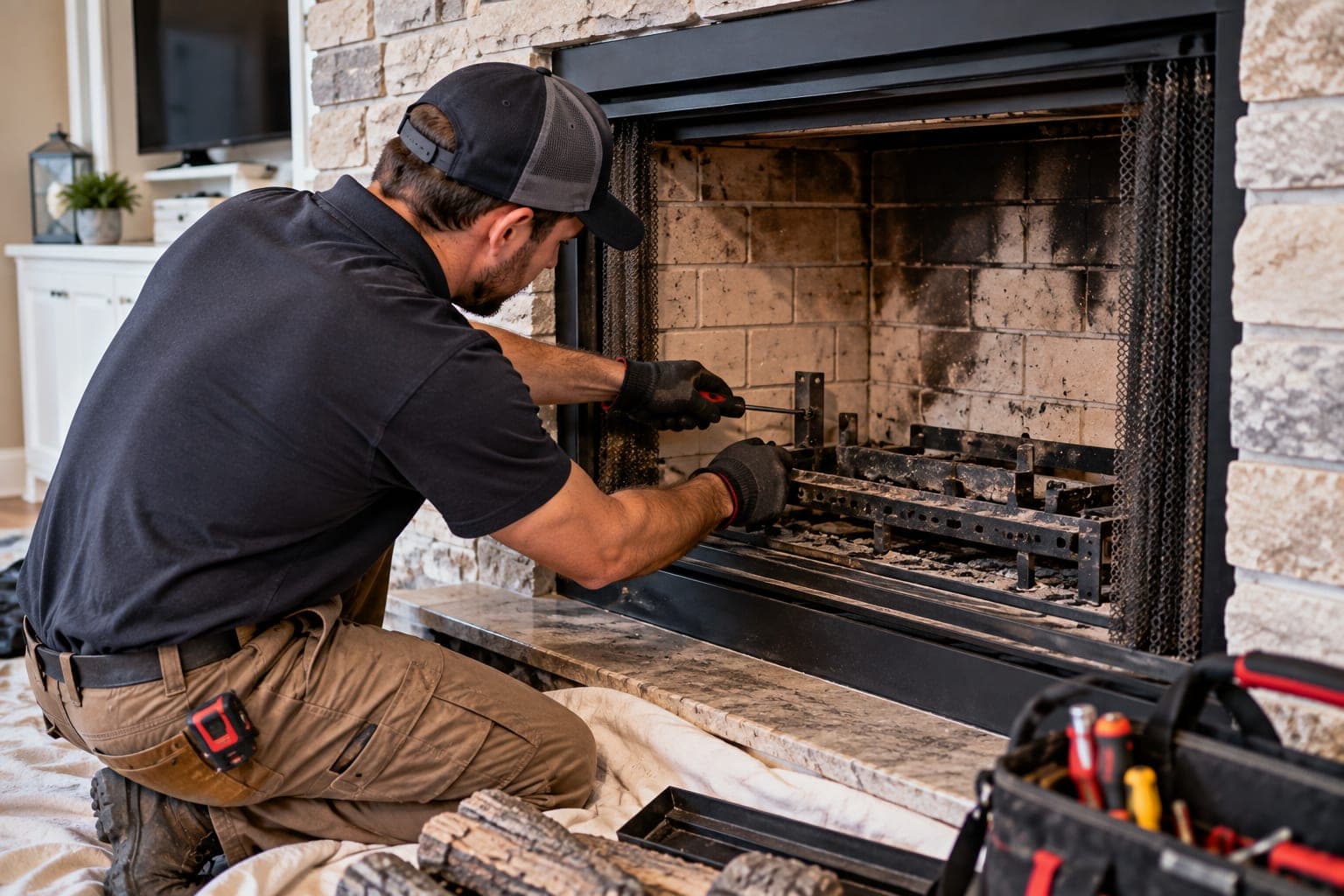
How a stove visit runs
A connector pipe that has rusted or separated at a joint can leak smoke into the room. A cracked or missing baffle sends heat and smoke straight up the flue and raises creosote buildup.
Hear what it's doing
How the stove burns, what's changed and when — that points to the door, the baffle, the air supply or the flue.
Check the stove itself
Door latch and gasket, glass, firebrick, baffle, air controls and the body for cracks or warping.
Check the connector and flue
Pipe joints, the thimble or liner connection, clearances to walls, and the flue for creosote and draft.
Explain and agree
What needs cleaning, adjusting or replacing, before any work starts.
Signs to watch for
- A fire that won't stay low even with the air control shut
- A door that doesn't latch firmly or a gasket that's flattened or frayed
- Smoke escaping when the door is opened, or around a closed door
- Heavy black deposits on the glass after short burns
Before the technician arrives
- Have the make and model handy; it's usually on a plate on the back or under the ash lip.
- Let the stove or insert go out and cool completely — ideally no fire for a full day before the visit.
- Make sure the roof or the attic access can be reached if the flue needs to be checked from above.
- Write down what you've noticed — smoke at the door, a hard-to-control fire, noises or smells.
Signs of a chimney fire
A loud roaring sound, a glowing connector pipe, dense smoke or sparks from the top of the chimney can mean a chimney fire. Get everyone out and call 911; have the system inspected before the next fire.
What gets checked
- Liner or thimble connection at the chimney
- Firebrick and baffle condition
- Clearances to walls, floor protection and the hearth pad
- Air controls and their range
- Creosote in the connector and flue
- Draft with the door closed