Why there's no single honest number
Search for how much a chimney sweep costs and you'll find averages that span a wide range. That isn't because companies are being vague. Two chimneys on the same street can need very different amounts of work. One may have a light coat of soot. The other may have glazed creosote, a nest packed above the damper, and a cracked flue tile nobody knew about. An average can't see inside your chimney, so the most useful thing to understand is what moves the price up or down. Then you can tell whether a quote is reasonable.
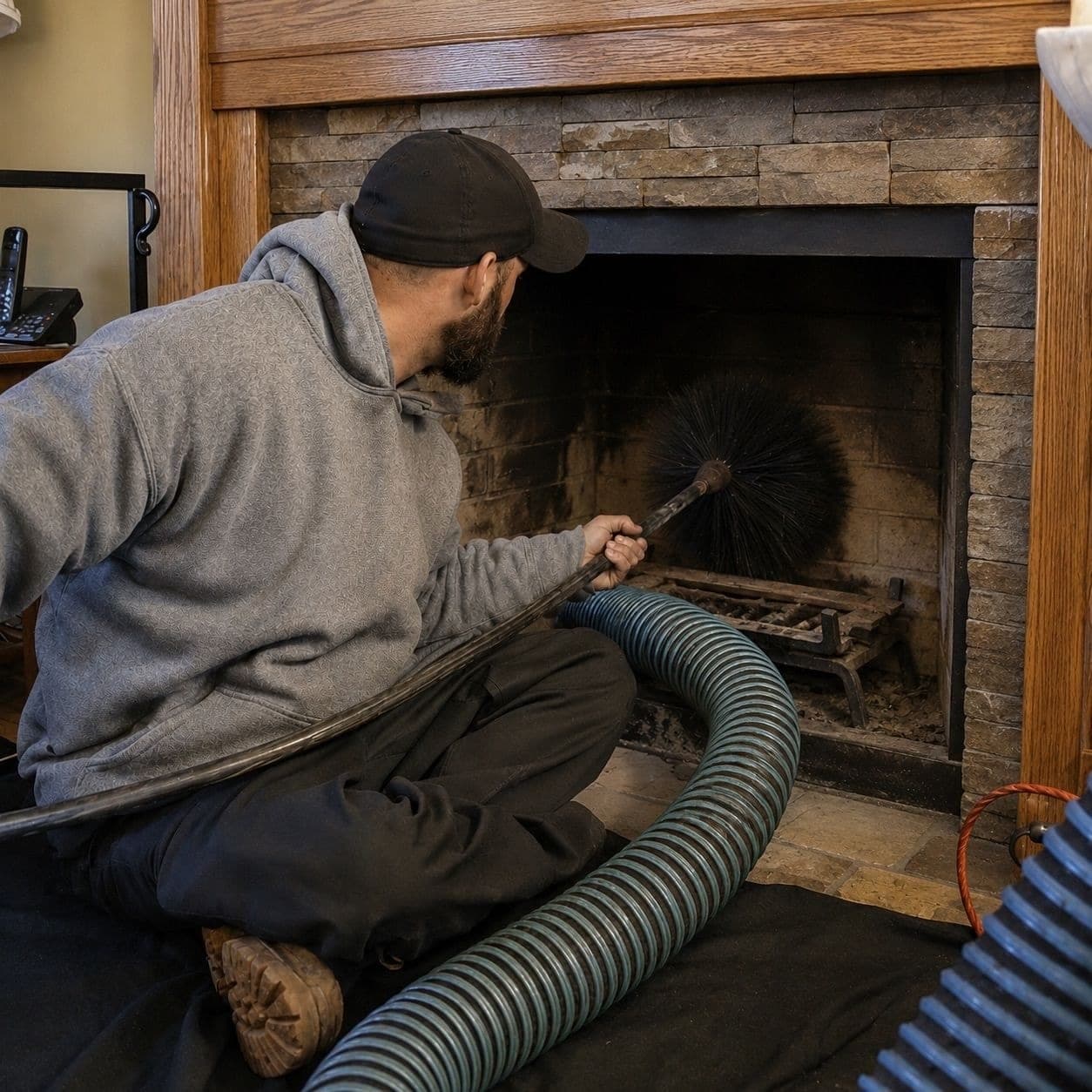
What affects chimney sweep pricing
Most of the cost of a sweep comes from time on site, how hard the job is, and what equipment it needs. These are the factors that matter most:
| Factor | Why it changes the cost | What to mention when you call |
|---|---|---|
| Number of flues | Each flue is a separate passage that has to be cleaned and checked. | How many fireplaces, stoves or other appliances vent through the chimney |
| Appliance type | Open fireplaces, inserts, wood stoves and gas units are each cleaned differently. Inserts often have to be pulled out or worked around. | Whether you have an open fireplace, an insert, a freestanding stove or gas logs |
| Creosote stage | Loose soot brushes out quickly. Flaky or tar-like glazed creosote takes extra passes, special tools or a separate removal process. | How often you burn and whether you've noticed a strong smell or shiny black deposits |
| Height and roof access | Steep, tall or multi-story roofs take more setup time and safety equipment. | Number of stories and roof pitch, if you know them |
| Blockages | Nests, leaves, fallen masonry or debris have to be found and cleared before sweeping can finish. | Any sounds, smoke backing up or poor draft |
| Camera or detailed inspection | Video scanning of the full flue adds equipment and review time. | Whether you're buying or selling, or had a chimney fire or storm |
| Timing | Emergency or after-hours visits are scheduled differently from routine appointments. | Whether this is urgent or can wait for a regular slot |
Creosote is the factor homeowners underestimate most. If buildup has hardened into a glaze, a standard brushing won't remove it. See what's involved in creosote cleaning to understand why heavy deposits are often quoted separately.
Average chimney costs: sweeping vs. complications vs. repair
It helps to think in tiers instead of one average price. Most chimney work falls into one of three groups, and each costs a different amount for different reasons.
| Feature | Routine sweep | Sweep with complications |
|---|---|---|
| What's involved | Brushing the flue, smoke chamber and firebox, plus a visual check | Heavy creosote, blockages, nests or a hard-to-reach flue |
| Biggest cost driver | Number of flues and access | Extra labor and specialty tools |
| How it's usually quoted | Often per flue or per visit | Base sweep plus the added work |
| When you'd need it | Regular maintenance for a system in use | Long gaps between cleanings, or signs of a problem |
What's involved
- Routine sweep
- Brushing the flue, smoke chamber and firebox, plus a visual check
- Sweep with complications
- Heavy creosote, blockages, nests or a hard-to-reach flue
Biggest cost driver
- Routine sweep
- Number of flues and access
- Sweep with complications
- Extra labor and specialty tools
How it's usually quoted
- Routine sweep
- Often per flue or per visit
- Sweep with complications
- Base sweep plus the added work
When you'd need it
- Routine sweep
- Regular maintenance for a system in use
- Sweep with complications
- Long gaps between cleanings, or signs of a problem
Average cost of chimney sweep services: what should be included
Two quotes with different totals may not cover the same work. Before comparing numbers, ask whether each of these is part of the visit. Our page on what happens during a sweep visit walks through the process in more detail.
Ask whether the sweep includes:
- Cleaning the full length of the flue, not just the lower section
- Cleaning the smoke chamber and smoke shelf
- Clearing the firebox and removing ash
- Checking the damper for operation and damage
- A visual check of the crown, cap and flashing
- Drop cloths and containment to keep soot out of the room
- Photos or a written note of anything found
If your main concern is the firebox, glass doors or an insert rather than the flue, a fireplace sweep may be the better fit. Ask which one your system needs.
Cost to remove a bird nest from a chimney, explained
Nest and animal removal is usually priced apart from a routine sweep, because the work can vary a great deal. The main questions are:
- Is anything still living in it? Some birds that nest in chimneys, such as chimney swifts, are protected under federal law. An active nest may have to stay put until the birds leave.
- How far down is the nest, and how compacted? A loose nest near the top comes out quickly. Packed material sitting on the damper takes much longer.
- Is there damage or odor? Droppings, debris and trapped animals can leave smells and stains that need extra cleaning.
- How will you keep them out? Most repeat problems stop once a cap or animal screen is installed, so many homeowners plan for that at the same time.
If you're hearing scratching or chirping, read about getting animals out of a chimney safely before lighting a fire.
Don't smoke them out
Lighting a fire to drive out birds or animals can trap them, fill your home with smoke, or ignite dry nest material. Leave the damper closed and get the chimney checked. Only close it once the fireplace is completely cold and no stove, furnace or water heater vents into that flue.
Chimney relining cost breakdown for 2026
Relining is one of the larger chimney projects, and it's often what turns a routine sweep into a bigger conversation. If you're budgeting for it this year, the quote should be built from these parts:
- Liner material. Stainless steel, aluminum for certain gas appliances, and poured or cast-in-place systems differ in cost and in which fuels they suit.
- Diameter and length. The liner has to match the appliance and run the full height of the chimney, so taller chimneys need more material.
- Insulation. Some installations need an insulating wrap or fill, which adds materials and labor.
- Removing what's there. Broken clay tiles or an old liner may need to come out first.
- Top plate, cap and connections. These finish the system and keep water and animals out.
- Related repairs. Smoke chamber or damper work is sometimes needed at the same time.
- Inspection before and after. A camera inspection confirms the need beforehand and the fit afterward.
Ask for these items to be listed separately. That way you can see whether a difference between quotes comes from material choice, scope or labor.
Ask to see the evidence
If a sweep turns up a recommendation for relining or major repair, it's reasonable to ask for photos or camera footage of the problem before you decide. A good contractor will show you what they saw.
How to compare chimney sweep estimates
A fair way to compare quotes
Describe your system the same way to everyone
Give each company the number of flues, appliance types, how often you burn, and any symptoms. That way the quotes describe the same job.
Confirm what's included
Use the checklist above. A lower number that leaves out the smoke chamber or an inspection isn't really lower.
Separate the sweep from the repairs
Ask for repairs to be itemized apart from cleaning, so you can schedule them on your own timeline unless there's a safety issue.
Ask how surprises are handled
Find out what happens if heavy creosote or a blockage turns up. Will the technician stop and check with you before doing added work?
Get findings in writing
Notes and photos help you plan, and they're useful if you sell the house later.
When paying for a sweep saves money
A sweep costs far less than dealing with a chimney fire, smoke damage or water damage that has gone unnoticed. Regular cleaning also catches small problems, like a cracked crown or loose flashing, while they're still simple fixes. To learn the warning signs, start with our guide to common chimney issues. For problems that tend to show up between cleanings, see this overview of frequent chimney problems.
If you'd like a clear number for your own chimney, request a free estimate for our chimney sweep service. Same-day visits are available when the schedule allows, and we take emergency calls 24 hours a day, Sunday through Friday.