On this page
Open flame fireplace repair and installation
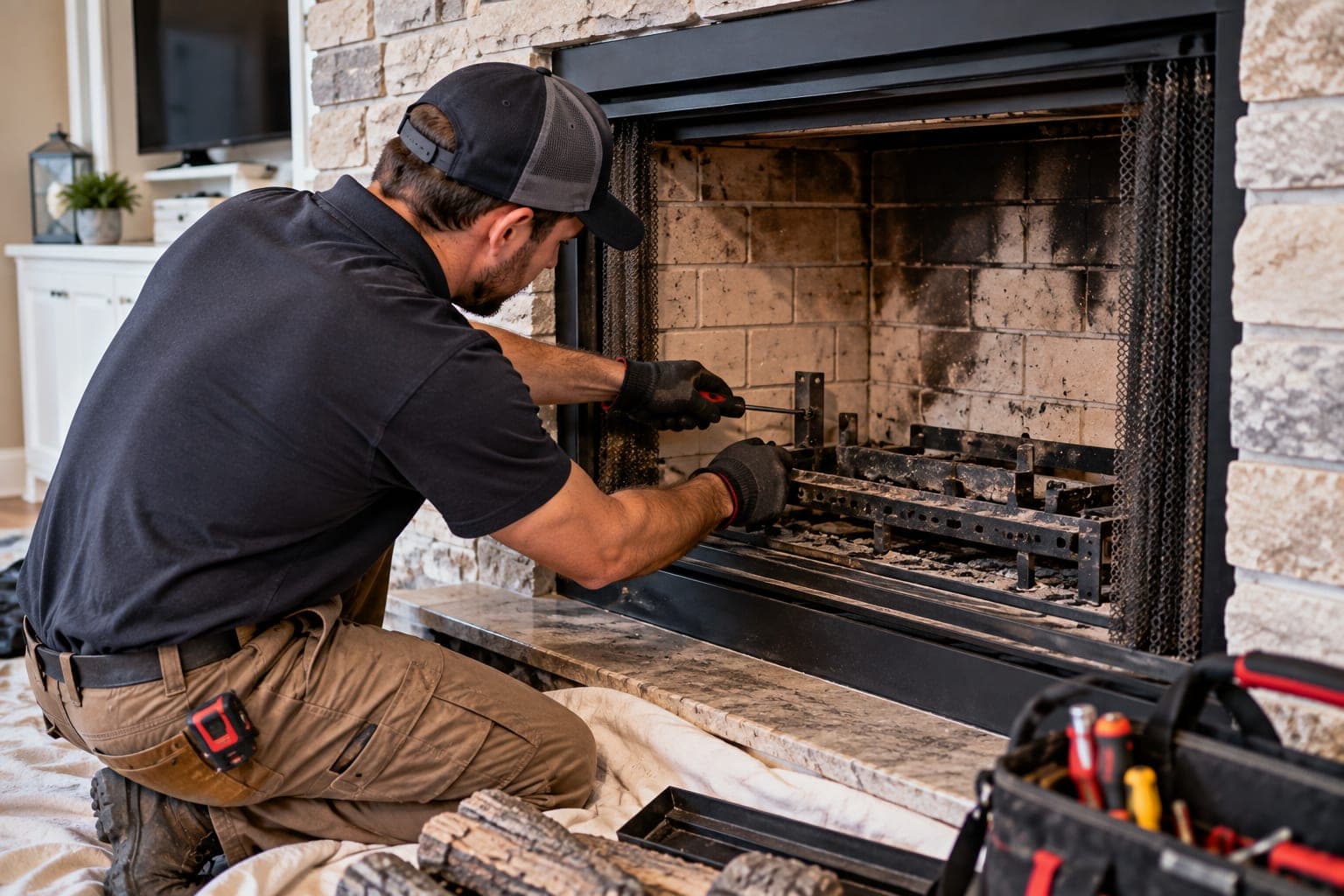
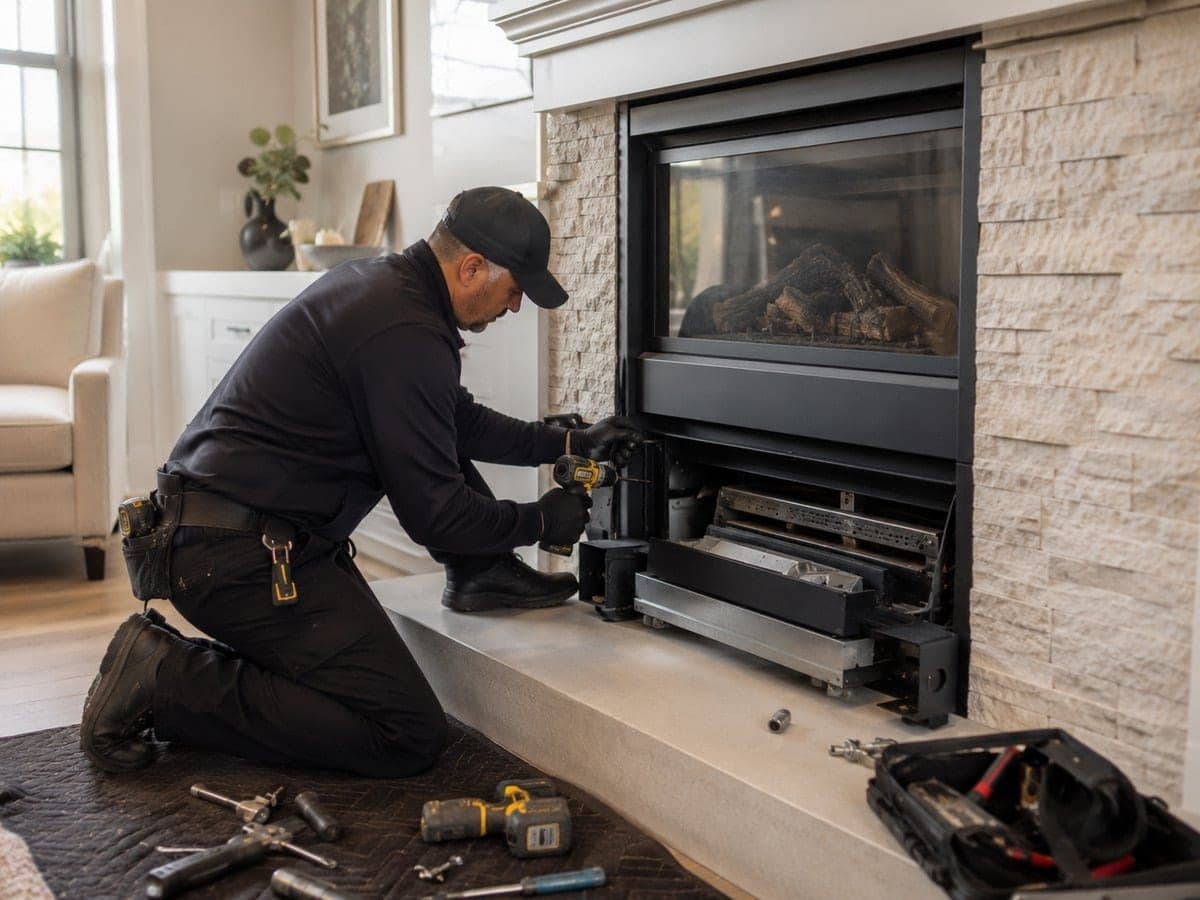
A real-flame fireplace burns wood or gas and sends exhaust up a chimney or vent. The common repairs are damaged firebox brick, a damper that no longer seals, poor draft, and gas burners or pilots that won't stay lit. If a unit is past saving, we also handle fireplace installation, gas fireplace installation and insert installation. Our guide to fireplace Anatomy names the parts involved.
| Feature | Open flame (wood or gas) | Electric flame effect |
|---|---|---|
| Heat source | Burning fuel | Electric heater element |
| Venting | Chimney or vent required | None |
| Typical failures | Brick, damper, draft, pilot, burner | Flame motor, LEDs, controls, heater |
| Safety concern | Smoke, carbon monoxide, heat | Wiring and overheating |
Heat source
- Open flame (wood or gas)
- Burning fuel
- Electric flame effect
- Electric heater element
Venting
- Open flame (wood or gas)
- Chimney or vent required
- Electric flame effect
- None
Typical failures
- Open flame (wood or gas)
- Brick, damper, draft, pilot, burner
- Electric flame effect
- Flame motor, LEDs, controls, heater
Safety concern
- Open flame (wood or gas)
- Smoke, carbon monoxide, heat
- Electric flame effect
- Wiring and overheating
What happens during the visit
A damaged smoke chamber is a common cause of smoke spilling into the room. Cracks in the firebox let heat reach the framing behind it.
Diagnosis
What is failing and why.
Options
Repair, replace a part, or reline — explained plainly.
Work
Done once you approve the scope.
Check
Draft and operation are tested afterwards.
Carbon monoxide
A blocked or damaged flue can push carbon monoxide into the home. If an alarm sounds or anyone feels dizzy or sick near the fireplace, get everyone outside and call 911.
When to book fireplace repair
- A damper that won't open or close
- Doors or glass that are cracked or don't seal
- Rust or warping inside the firebox
- Cracked or missing firebrick or refractory panels
How to prepare
- Make sure the technician can reach the roof or attic access if it's needed.
- Write down what you've noticed and when it happens — smells, smoke, sounds or stains.
- Clear a few feet of space in front of the hearth or appliance.
- Let the fireplace or stove cool completely — ideally no fire for 24 hours before the visit.
Checked on every visit
- Hearth and surround
- Smoke chamber and smoke shelf
- Draft from the opening
- Damper operation
- Firebrick or refractory panels
- Doors, glass and gaskets
- Mortar joints inside the firebox
Electric fireplaces: flame rods and color effects
Electric fireplace repair: replacing your flame rod
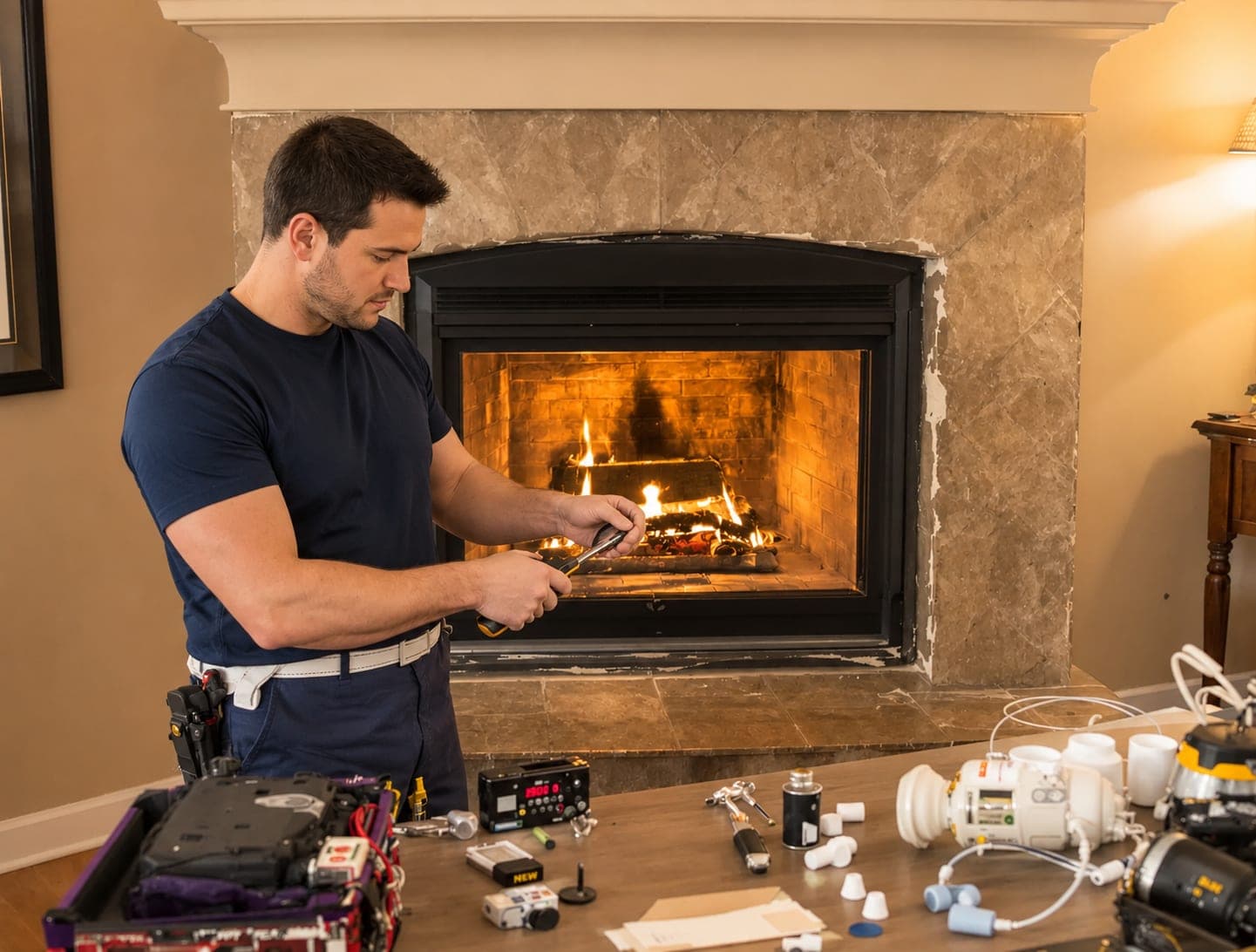
Many electric fireplaces create flicker with a slowly turning rod covered in reflective strips. A small motor drives the rod, and light bounces off it onto a screen. When the flame freezes, clicks, grinds or wobbles, the problem is usually the motor, the rod or the coupling between them. The heater often keeps working through all of this. Our electric fireplace repair service covers one of the most common electric brands.
Color-changing fireplaces with multicolor flames
Units with multicolor flames use LED arrays and a controller. When one color drops out, first check the remote, its batteries and the display mode. If those are fine, the cause is often an LED strip, a connector or the control board. If you're shopping for a new unit instead, see how electric fireplace installation works.
Should a fireplace stay open after a fire?
With a wood fireplace, keep the damper open until the fire is completely out and the ashes are cold. Closing it early can push smoke and carbon monoxide back into the room. Keep the screen in place, and follow the door maker's guidance on whether the glass doors should be open or closed while the fire burns. Once everything is cold, close the damper so heated room air doesn't escape up the flue. Our fireplace safety guide covers more of these habits, and efficient fireplace explains what a closed damper saves.