On this page
What goes wrong in an old, broken fireplace
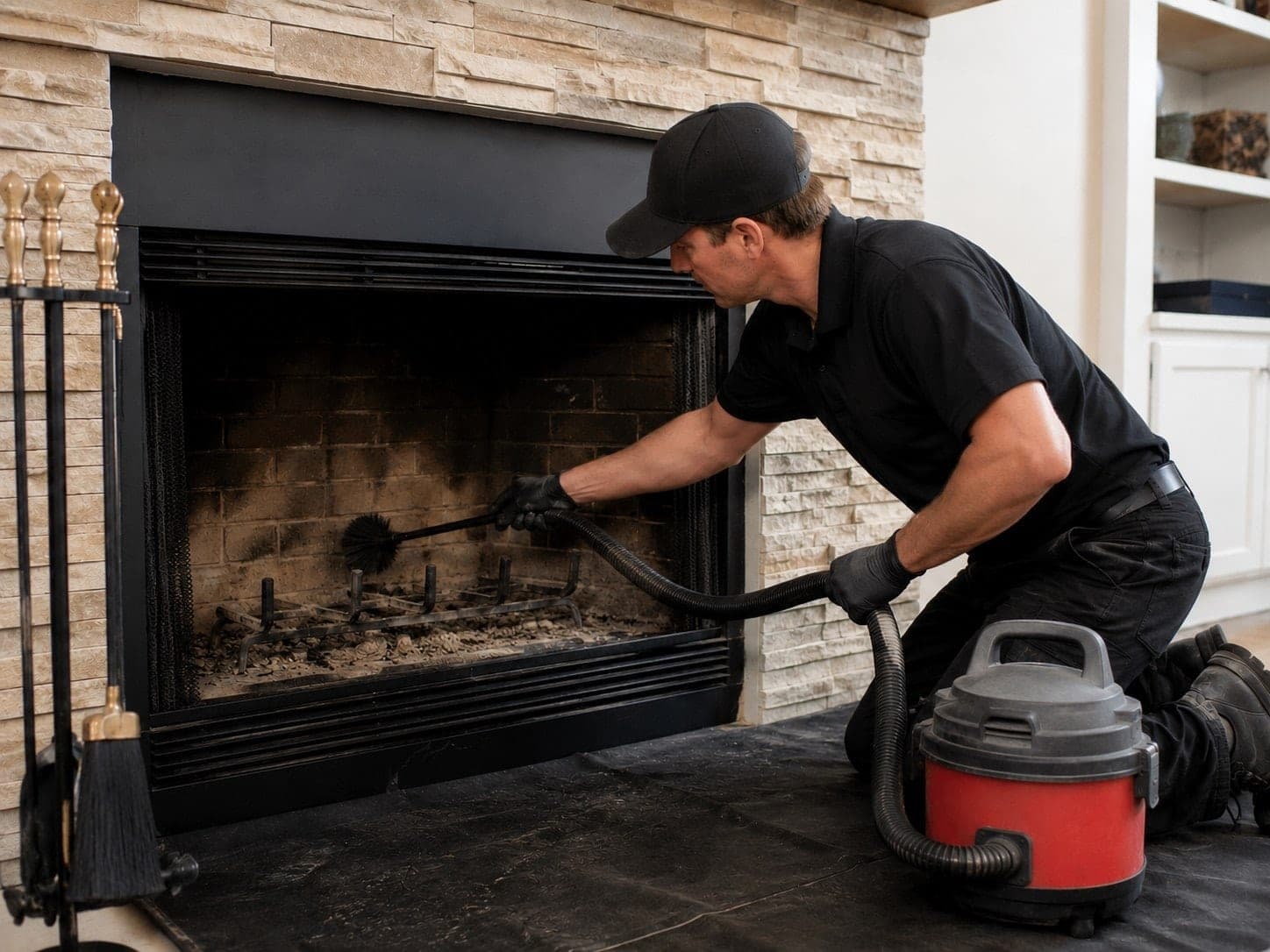
Old fireplaces rarely fail all at once. Years of heating and cooling slowly open the mortar joints in the firebox. Dampers rust shut or stop sealing. Smoke chambers lose their smooth coating, and clay liners crack. A fireplace that hasn't been used in years may also have nesting material or fallen masonry sitting in the flue. If you want to know what each of those parts does, our guide to fireplace anatomy walks through them one by one.
Typical repairs on an older masonry fireplace
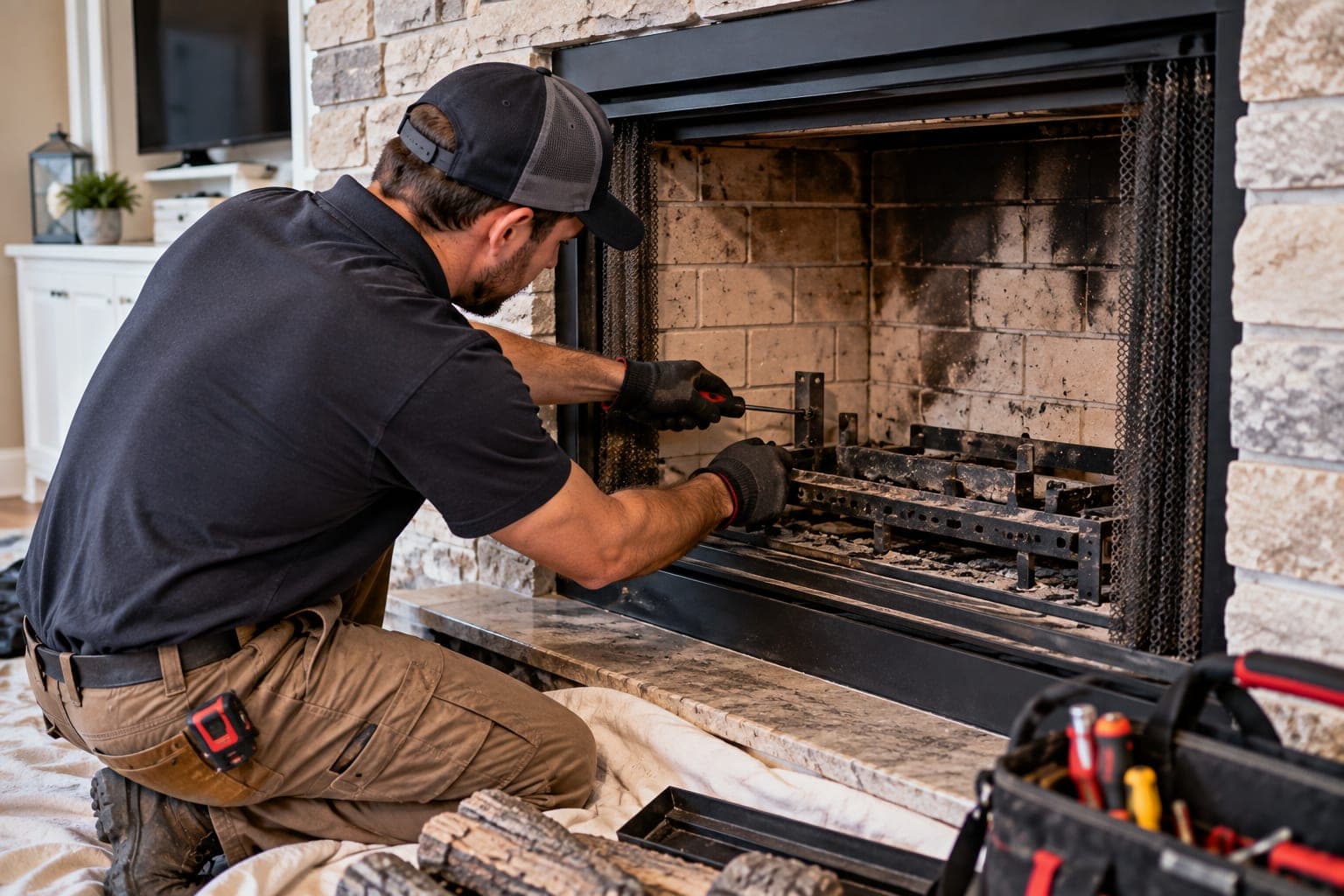
- Firebox repair: replacing cracked or loose firebrick and repointing joints with refractory mortar
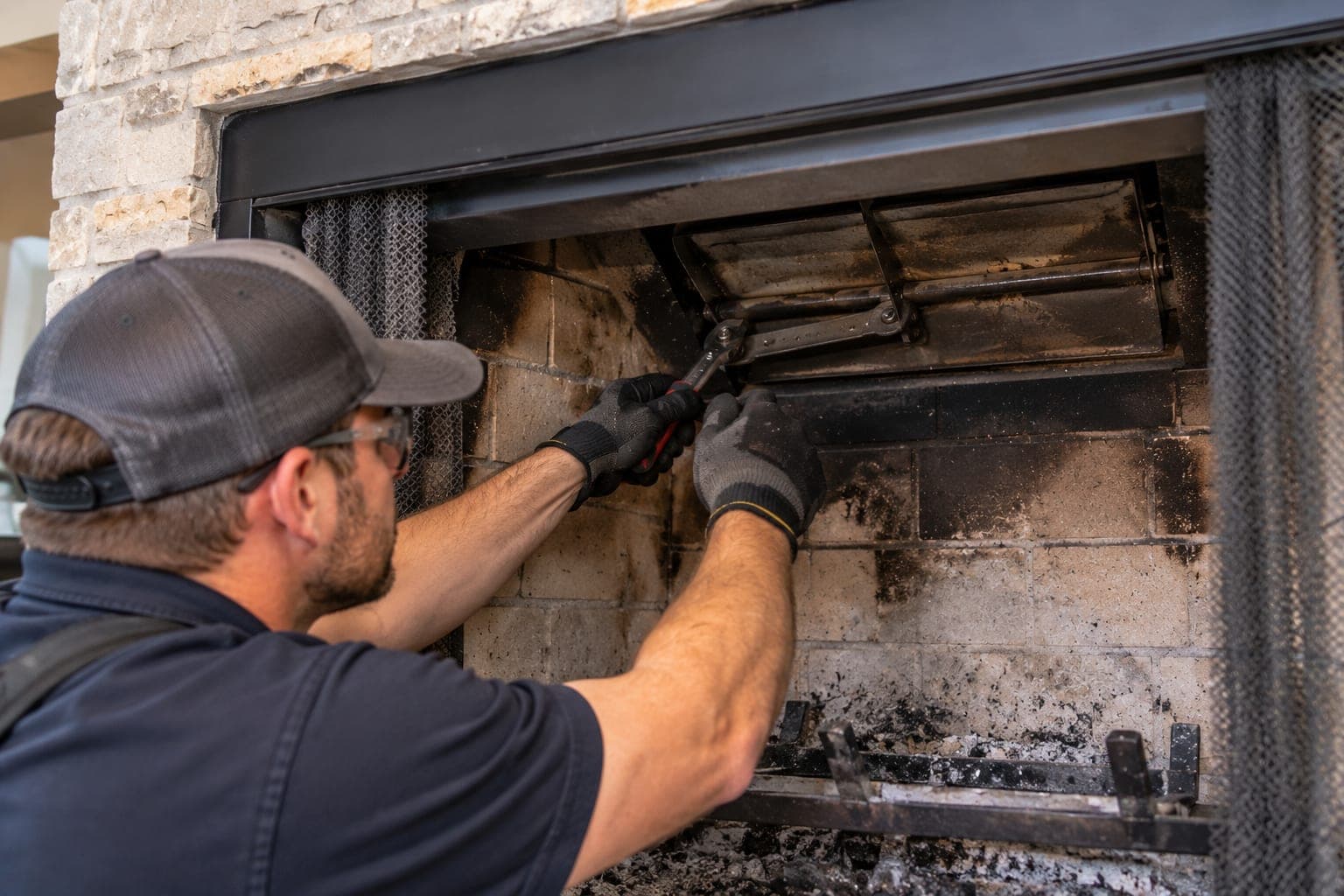
- Damper repair: freeing or replacing a rusted throat damper that won't open or close
- Smoke chamber repair: re-coating rough or crumbling surfaces that trap creosote and weaken the draft
- Liner work: repairing a cracked liner, or installing a new one when the old flue can't be trusted
- Restoration: bringing a long-unused fireplace back to safe, working condition
Older metal and factory-built fireplaces
Prefab fireplaces from past decades fail in their own ways: rusted firebox panels, warped baffles and corroded chase tops that let water in. Rust that has eaten through metal is a safety problem, not a cosmetic one. Our page on why old rusted metal fireplaces fail explains the warning signs. Sometimes the honest answer is that a worn-out prefab unit should be replaced. If you'd rather switch to electric, electric fireplace installation is one option.
What the visit covers
Cracks in the firebox let heat reach the framing behind it. Worn gaskets and glass on inserts and gas units waste heat and can leak exhaust.
Diagnosis
What is failing and why.
Options
Repair, replace a part, or reline — explained plainly.
Work
Done once you approve the scope.
Check
Draft and operation are tested afterwards.
Carbon monoxide
A blocked or damaged flue can push carbon monoxide into the home. If an alarm sounds or anyone feels dizzy or sick near the fireplace, get everyone outside and call 911.
Before the technician arrives
- Write down what you've noticed and when it happens — smells, smoke, sounds or stains.
- Let the fireplace or stove cool completely — ideally no fire for 24 hours before the visit.
- Keep pets in another room while the work area is open.
- Note the make and model of any insert, stove or gas unit if you have it.
When to book fireplace repair
- Smoke coming into the room
- A damper that won't open or close
- Rust or warping inside the firebox
- A fireplace that is hard to light or won't stay lit
- Doors or glass that are cracked or don't seal
Checked on every visit
- Mortar joints inside the firebox
- Doors, glass and gaskets
- Firebrick or refractory panels
- Draft from the opening
- Hearth and surround
- Smoke chamber and smoke shelf
Old fireplace repair cost
Repairing an old fireplace has no flat price. Two fireplaces that look alike from the living room can be very different inside. The cost mainly depends on:
- How much of the firebox, damper or smoke chamber needs work
- Whether the flue liner is sound or needs repair or replacement
- Matching older brick, or finding parts for a discontinued metal unit
- Access to the chimney and roof
- Whether water damage has spread beyond the fireplace itself
Does the cost differ east or west of Hartford?
Homeowners on both sides of Hartford ask whether their location changes the price. In practice, the fireplace sets the price, not the address. The condition of the masonry, the flue and any parts involved matters far more than the town you live in. The reliable way to find out is a free estimate based on your actual fireplace.
How we provide old fireplace repair
On the firebox, damper, smoke chamber, liner and surrounding masonry. We'll also tell you plainly when repair isn't worth it, such as when a prefab firebox has rusted through. Once the fireplace is working again, these ways to get more heat from an older fireplace help you get the most out of it.