What makes a metal fireplace rust
Most metal fireplaces are factory-built (prefab) units. They have a steel firebox lined with refractory panels, set inside a metal outer casing with air spaces that keep heat away from walls and floor framing. Older freestanding metal fireplaces are simpler, often a single steel shell that depends on clearance from nearby walls. Rust usually starts wherever moisture sits. Common sources are water coming down the flue past a missing or damaged cap, a leaking chase cover, condensation in a unit that's rarely used, and ash left in the firebox where it soaks up humidity. To see how these layers fit together, our guide to fireplace anatomy walks through each part.
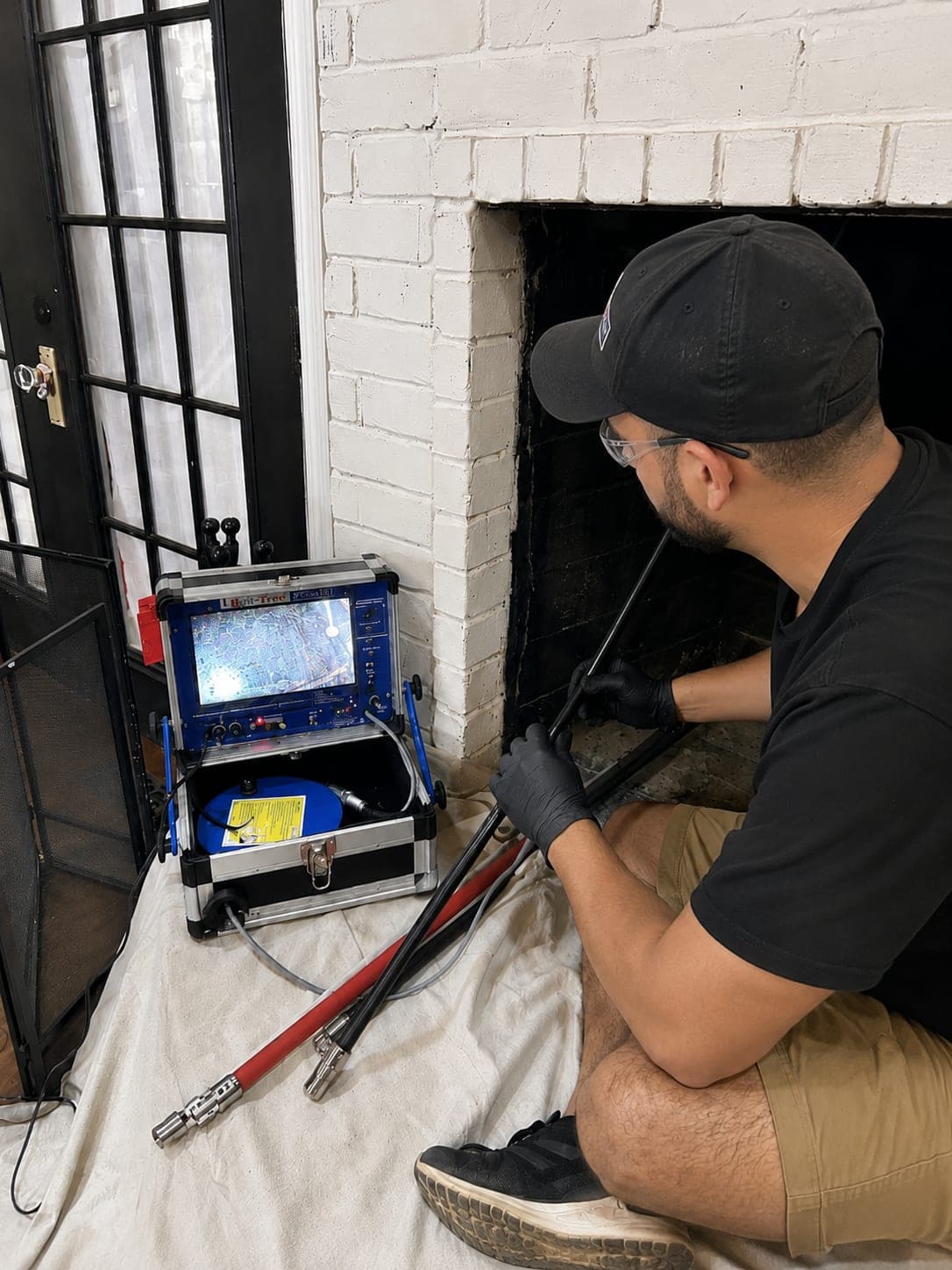
Old rusted metal fireplace repair: what to look for
Signs the rust is more than cosmetic
- Metal that flakes off in layers, not just orange staining
- Pinholes or gaps where you can see light or insulation
- Firebox walls that are warped or bulging, or a top that sags
- Refractory panels that are cracked, loose or crumbling
- Rust streaks running down from the damper or flue collar, which point to an ongoing water leak
- Doors or glass frames that no longer close because the frame has rusted or shifted
How to remedy a rusted firebox liner
In a prefab fireplace, the firebox liner means two things: the metal shell and the refractory panels set against it. Each one is fixed differently:
- Surface rust on sound metal can usually be cleaned off. The moisture source then has to be stopped so the rust doesn't come back.
- Cracked or worn refractory panels are replaceable parts. They should be swapped for panels made for that unit, not patched with general-purpose cement.
- Rusted-through or warped steel is a different problem. Factory-built fireplaces are designed and tested as complete assemblies, and a hole in the firebox can let heat reach the framing. Patching or welding over it doesn't restore the original design.
Stopping the water matters as much as treating the rust. Otherwise a cleaned firebox will simply rust again. That often means a new chimney cap or chase cover at the top of the chimney.
Restore a rusted metal fireplace insert or replace it?
A metal insert sitting inside a masonry fireplace is judged the same way. If the body is solid and the rust is on the surround, door frame or outer surfaces, cleaning it and replacing worn parts can keep it in service. Replacement is usually the better use of your money if the firebox is rusted through, the blower housing is corroded, or parts for an older model are no longer available. A new electric unit is one option, covered on our electric fireplace installation page. It's also worth reading what makes a fireplace efficient before you choose.
Repair and replacement service for rusted metal fireplaces
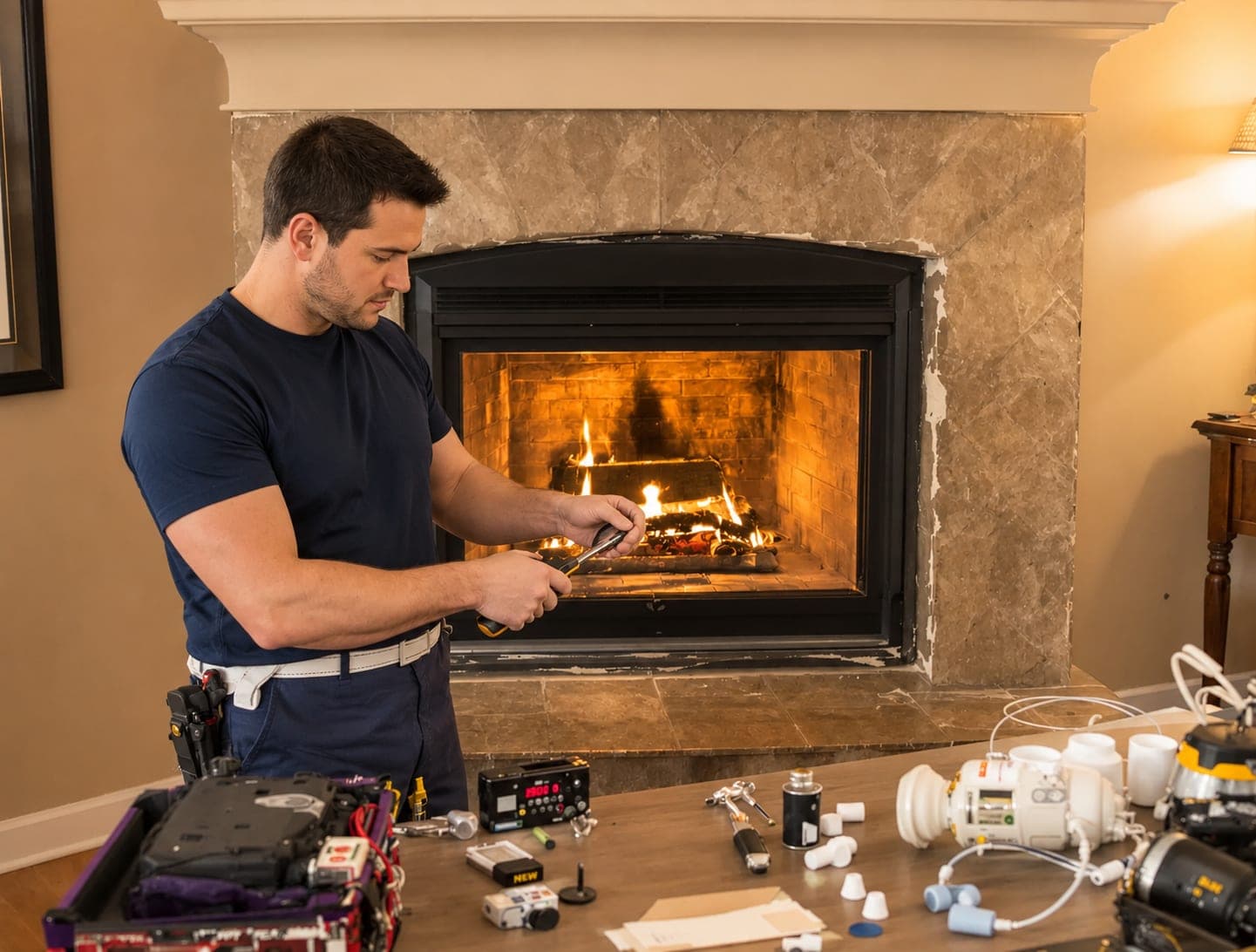
We handle both outcomes. We repair an old metal fireplace when it's worth saving, and we replace a prefab unit when it isn't. Our old fireplace repair service covers what a worn unit typically needs: refractory panel replacement, door and glass repair, and cleanup. Estimates are free, so you can see which option makes sense before you commit. Homeowners in Hartford and across Connecticut can request a visit, and same-day appointments are possible when the schedule allows.
Rust isn't always the only problem in an older fireplace. If you also see damage above the firebox, read about what causes a broken fireplace smoke chamber. In a brick fireplace, cracked fireplace brick is the closer match.
What the visit covers
A damaged smoke chamber is a common cause of smoke spilling into the room. Worn gaskets and glass on inserts and gas units waste heat and can leak exhaust.
Diagnosis
What is failing and why.
Options
Repair, replace a part, or reline — explained plainly.
Work
Done once you approve the scope.
Check
Draft and operation are tested afterwards.
Carbon monoxide
A blocked or damaged flue can push carbon monoxide into the home. If an alarm sounds or anyone feels dizzy or sick near the fireplace, get everyone outside and call 911.
What the technician checks
- Damper operation
- Doors, glass and gaskets
- Mortar joints inside the firebox
- Draft from the opening
- Smoke chamber and smoke shelf
- Firebrick or refractory panels
- Hearth and surround
Signs to watch for
- Cracked or missing firebrick or refractory panels
- Rust or warping inside the firebox
- A damper that won't open or close
- Doors or glass that are cracked or don't seal