On this page
What maintenance looks like for each kind of fireplace
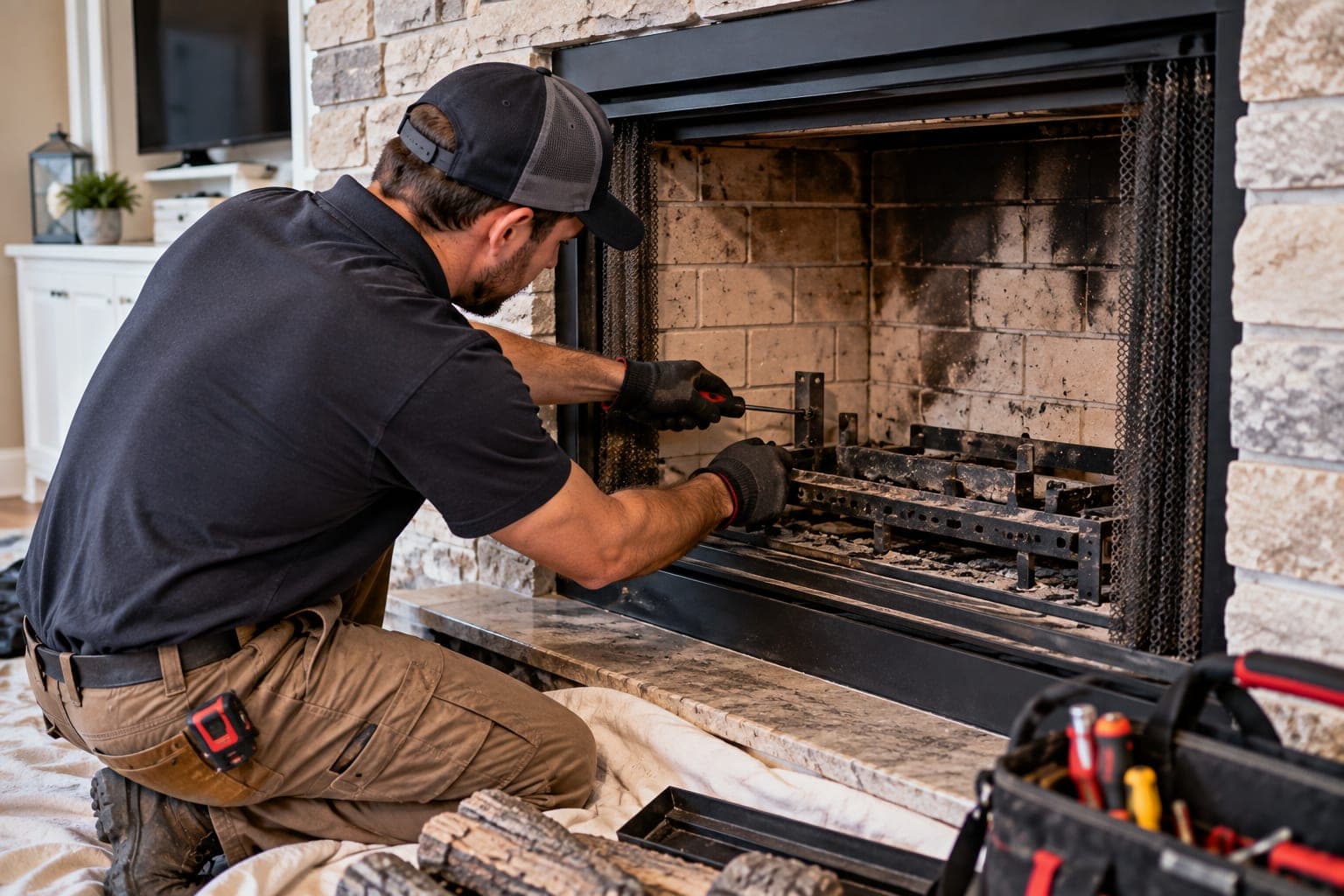
Fire-safety guidance commonly recommends an inspection every year, but the work after the inspection differs a lot from one fireplace to the next. Here's the practical breakdown:
| Fireplace type | What builds up or wears out | Main maintenance work |
|---|---|---|
| Open wood-burning masonry | Creosote and soot in the flue, cracked firebox mortar, damper wear | Chimney sweep, firebox and damper check, crown and cap condition |
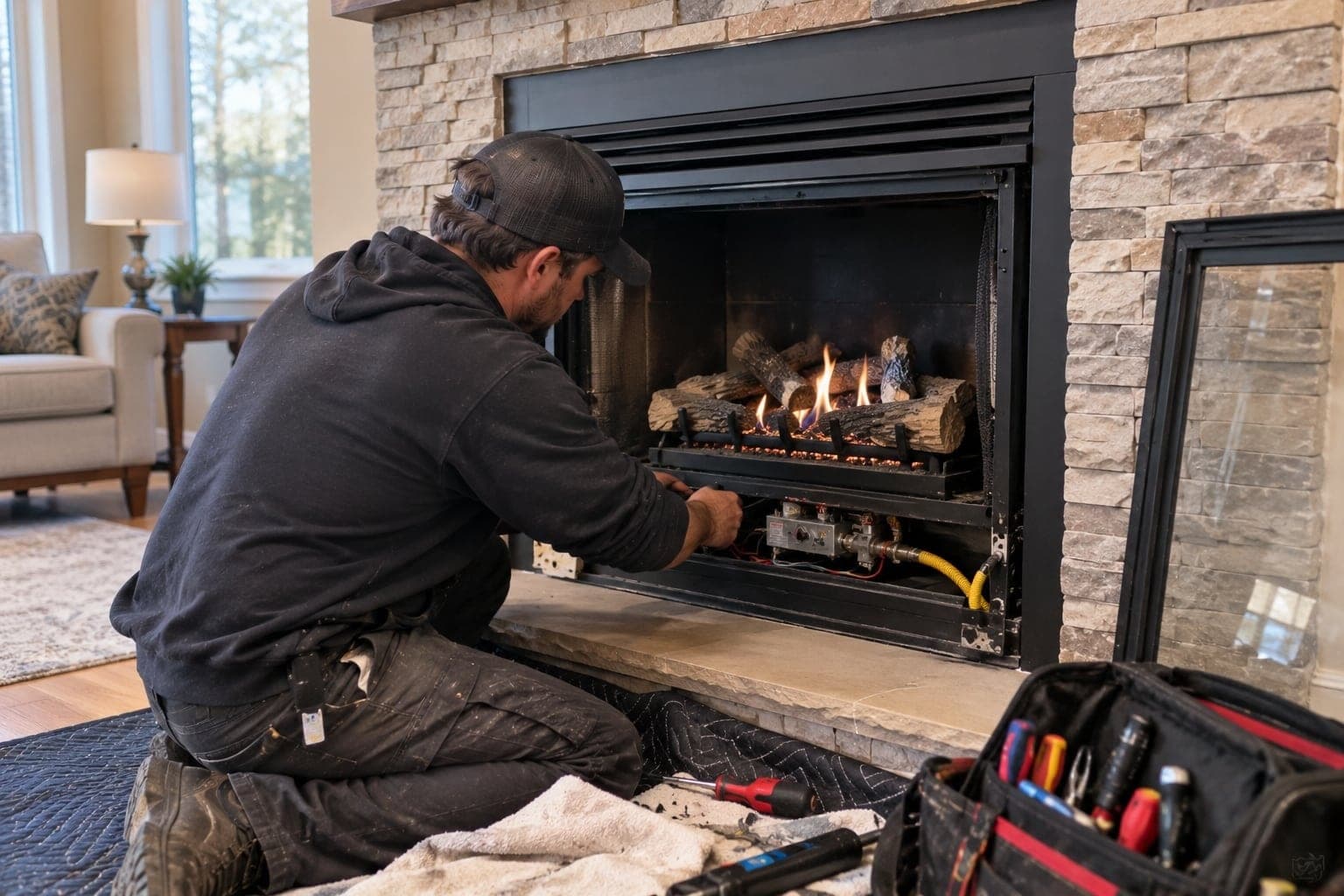
| Gas fireplace or gas logs | Dust and insects in the burner and pilot, glass film, gasket wear | Burner and pilot cleaning, glass and gasket care, vent check |
| Wood insert or wood stove | Creosote in the liner, gasket and baffle wear | Liner sweep, gasket and door seal check, baffle inspection |
| Factory-built (prefab) | Damaged refractory panels, chase and cap rust, vent joints | Panel and cap inspection, flue cleaning, chase cover condition |
If the parts named here are unfamiliar, our illustrated fireplace anatomy guide puts names to them. If your fireplace runs on gas, the gas fireplace maintenance service page goes deeper into burners, pilots and venting.
Choosing a fireplace maintenance company
A reliable fireplace maintenance provider should leave you with more than a cleaner hearth. Before you book anyone, it's worth asking:
Worth asking before you book
- Who actually does the work?
- Will you show me what you found, with photos or a camera inspection where the flue is hard to see?
- Can you fix what you find, or will I need another company?
- Does the visit cover my type of fireplace, including the vent or liner, not just the firebox?
- Is the estimate free, and will I get it before any work starts?
Because we also handle chimney repair, liner work, firebox and damper repair, and gas fireplace service, a problem found during maintenance doesn't have to become a second search for a contractor.
Fireplace maintenance across Connecticut
We work with homeowners in Hartford and the surrounding parts of Connecticut. If you live nearby, there's a dedicated page for fireplace maintenance for homes in West Hartford. Same-day service is offered where the schedule allows, and calls are taken 24 hours a day, Sunday through Friday. Many owners book before the first cold snap. Gas owners can see what a fall gas fireplace tune-up covers. For habits that keep a fireplace safe between visits, read our fireplace safety guide.
What the visit covers
Logs set in the wrong place cause soot and incomplete burning. Blocked or damaged venting can push exhaust into the room.
Check ignition
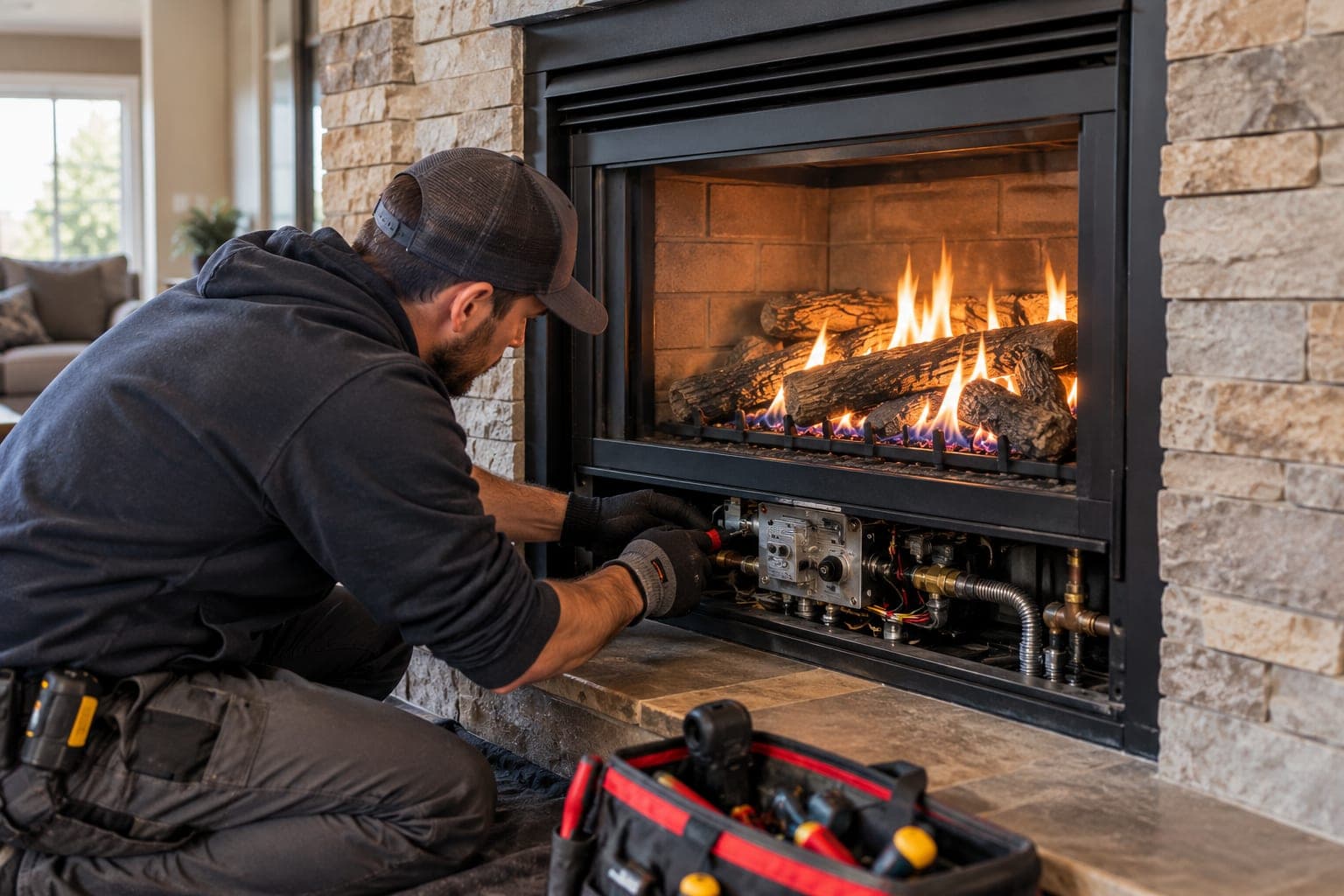
Pilot, thermocouple or thermopile and igniter are tested.
Clean the burner
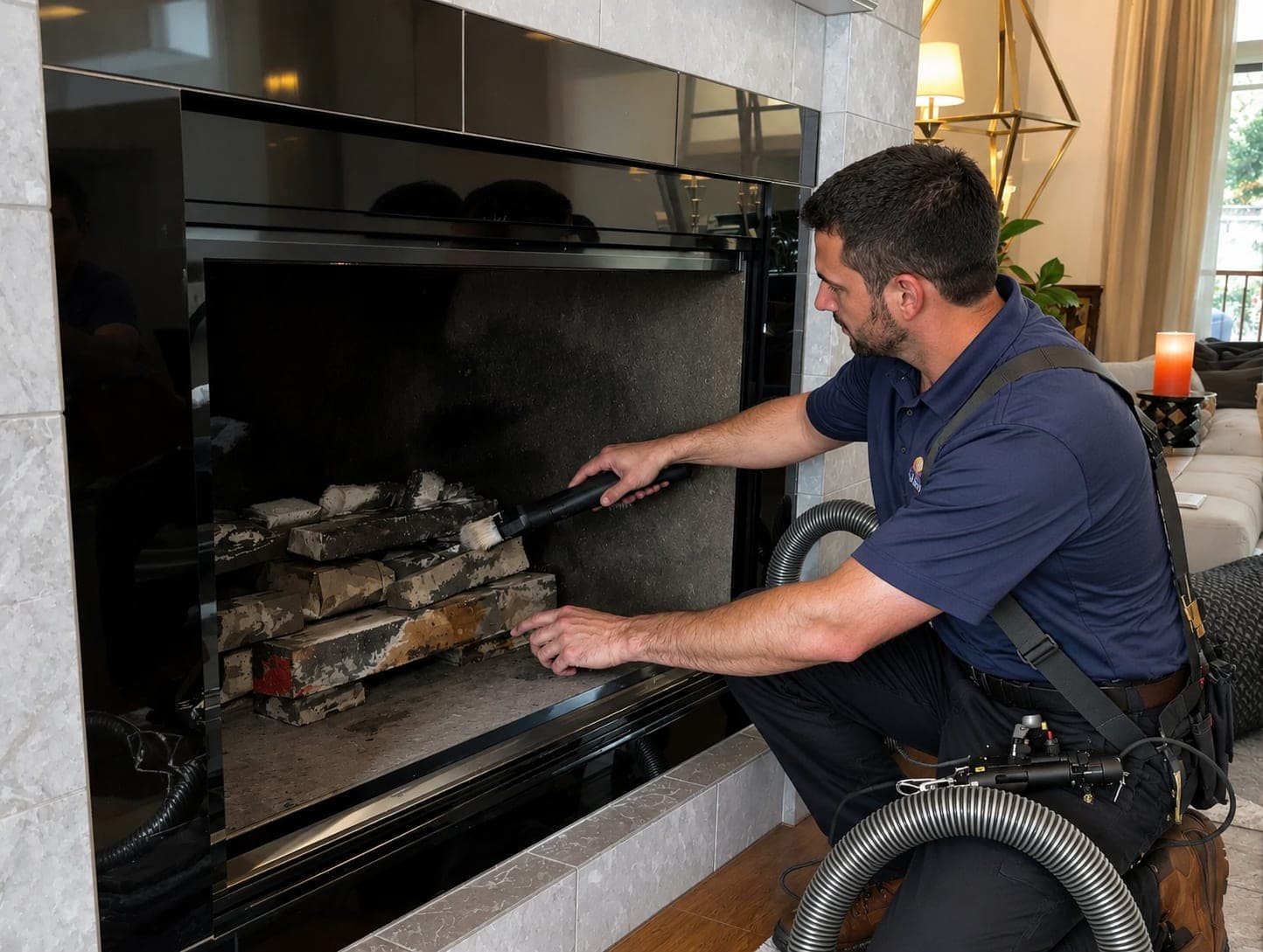
Burner ports, pilot assembly and logs are cleaned and logs placed per the manual.
Check venting
The vent and termination are checked for blockage and damage.
Test
The unit is run and the flame and controls are checked.
What we look at
- Thermocouple or thermopile output
- Log placement
- Vent and termination cap
- Pilot assembly and flame
- Burner ports
- Controls and remote
- Glass and gasket seal
Signs to watch for
- Yellow, lazy or uneven flames
- The pilot won't light or keeps going out
- Glass that is cloudy, cracked or loose
- Soot on the glass or logs
- The unit clicks but won't ignite
Before the technician arrives
- Note what happens when you try to light it.
- Turn the unit off and let it cool.
- Find the model number, usually on a plate under the lower grille.
- Have the remote or wall switch working.
If you smell gas
Leave the home right away, don't use switches or phones inside, and call your gas utility or 911 from outside.