On this page
Advantages of electric fireplace inserts
An insert uses the fireplace opening you already have, so it changes the room without a renovation. It's a different project from adding a wall-mount or freestanding electric unit.
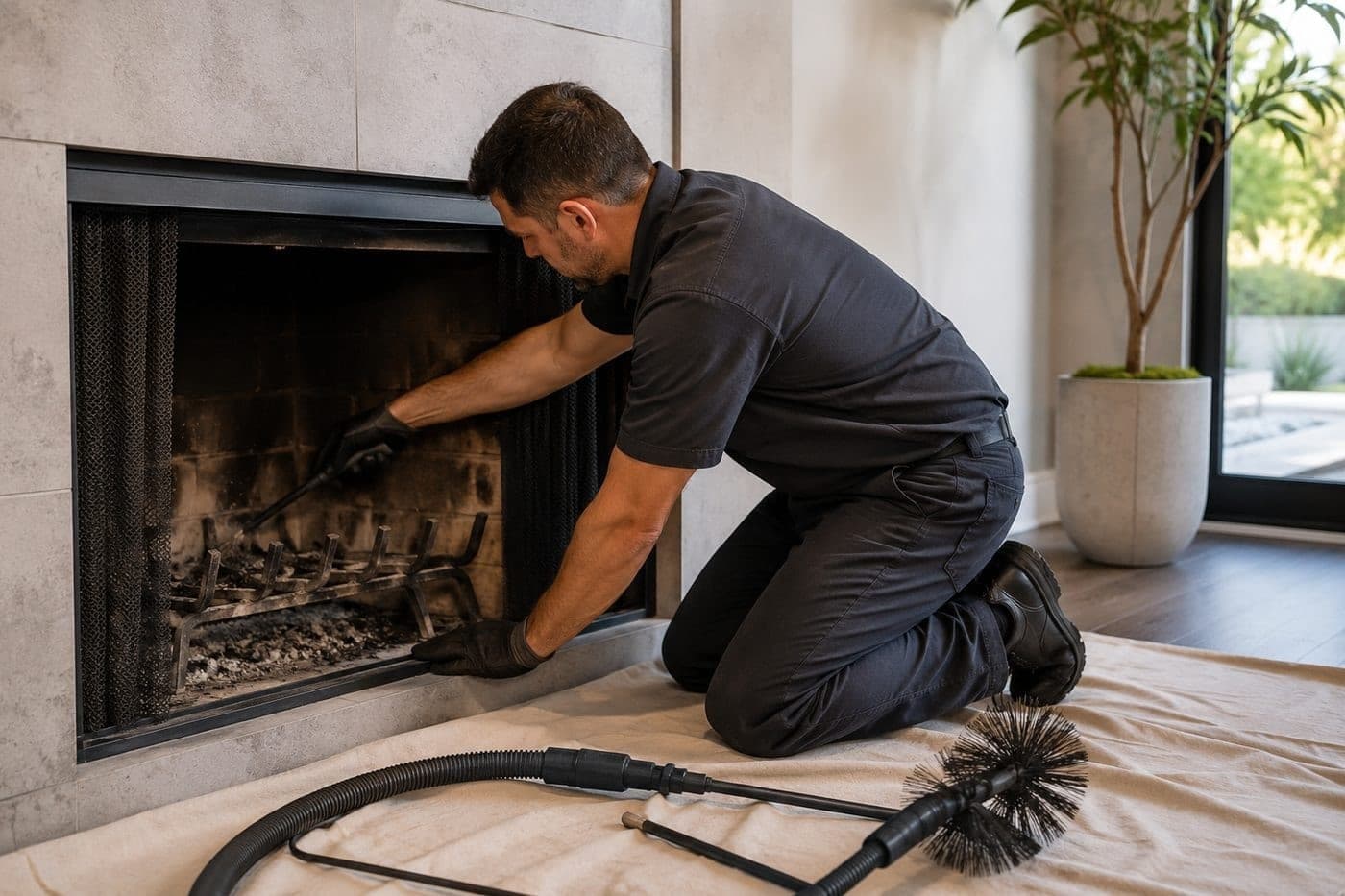
- No gas line, venting or new chimney work needed
- No ash, soot or wood to haul
- The flame runs with or without heat
- A trim kit closes off the opening and gives a finished look
- Can make an old, unused fireplace usable again
An insert doesn't use the chimney, but the chimney is still there. Rain, animals and cold drafts can still get in from above. A closed damper and a good chimney cap keep a retired flue quiet, and we handle both.
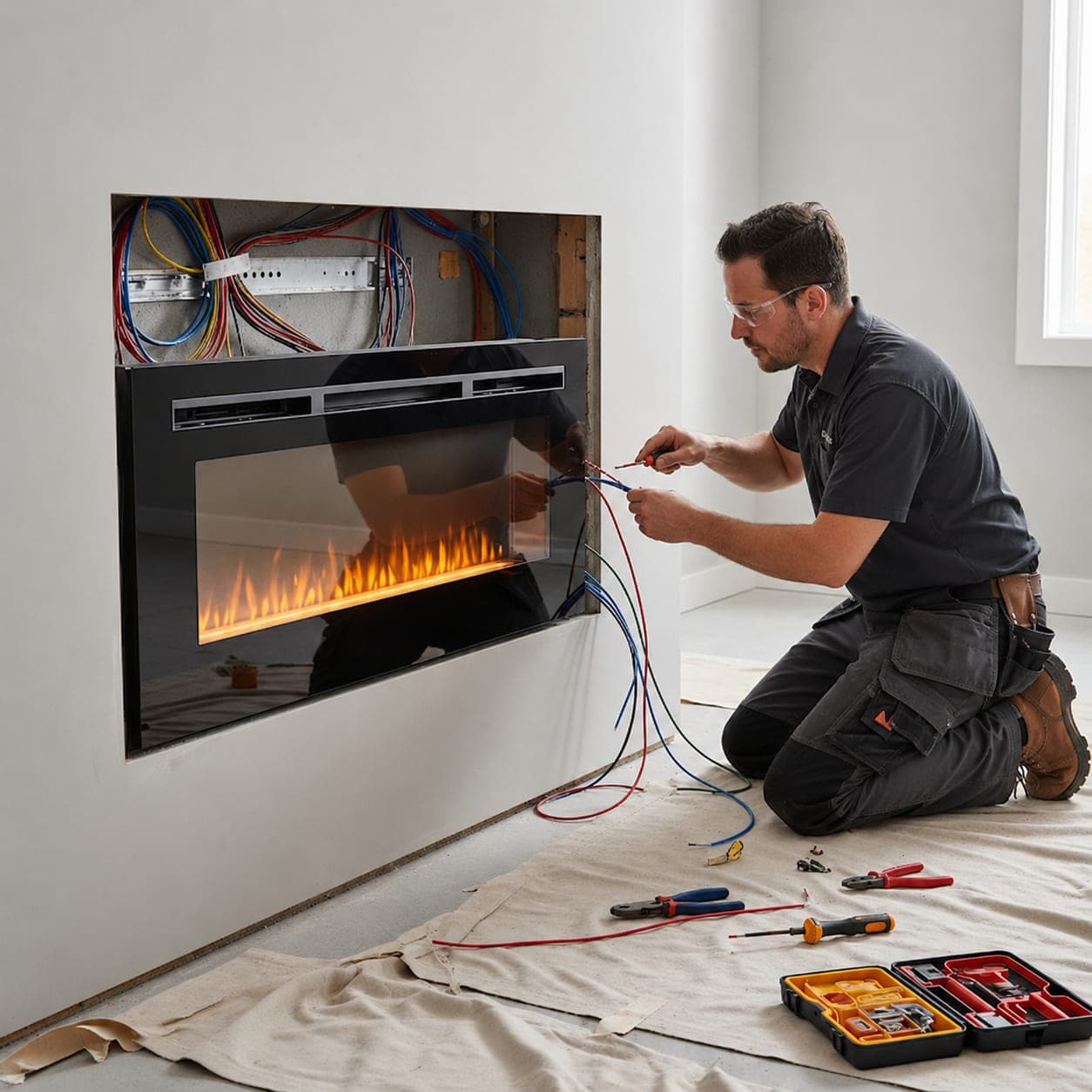
What happens during the visit
Dust in the heater and blocked air vents are a common cause of overheating shutdowns. A unit on a busy or undersized circuit can trip the breaker and run poorly.
Power
The outlet or circuit, the cord and the connection inside the unit.
Heat
Heating element, blower fan and overheat protection.
Flame effect
Lighting, flicker motor and the screen or media in front of it.
Controls
Control board, wall switch, thermostat and remote receiver.
When to book electric fireplace inserts
- The flame effect works but no heat comes out
- No response to the remote or the wall control
- Clicking, rattling or grinding from the fan or flicker motor
- The unit shuts itself off after a few minutes
- The heater runs but the flame effect is dark or frozen
If it smells hot or trips the breaker
Switch it off, unplug it or turn off its breaker, and don't use it until it has been checked. Keep curtains and furniture clear of the heater outlet.
What gets checked
- Flame-effect motor and lighting
- Breaker and circuit load
- Control board, wall switch and remote receiver
- Heating element and thermal cutoff
- Outlet, plug, cord or hardwired connection
- Blower fan and air vents
Before the technician arrives
- Write down what happens and when: at start-up, after a few minutes, or only on heat.
- Clear space around the unit so its vents and back panel can be reached.
- Note the make and model from the label if you can find it.
- If it smells hot or trips the breaker, unplug it or switch off its breaker until the visit.
Electric fireplace inserts available today
| Style | Best for | Watch for |
|---|---|---|
| Box insert | Standard masonry or prefab openings | The trim kit must cover the gap between the insert and the firebox |
| Electric log set | Keeping an open, traditional look | Less heat, and no glass front |
| Wide or linear insert | Wider, shallower openings | Correct depth and the front-to-back taper |
| Mist-effect insert | The most realistic flame | Needs water refills and periodic cleaning |
Choosing the best electric fireplace insert: a complete buying guide
How to pick the right insert
Measure the opening carefully
Measure the front width, rear width, height and depth. Most fireboxes taper toward the back, so one width measurement isn't enough.
Plan for power
Most inserts plug into an outlet, so check where the nearest one is and how the cord will run. If a new outlet is needed, that's work for an electrician.
Decide between heat and ambiance
If heat matters, compare heater output and look for a built-in thermostat. If you mostly want the look, focus on flame quality.
Judge the flame in person if you can
Layered LEDs, color options and mist effects vary a lot between models and price points.
Check parts support
Choose a maker that sells replacement parts. That decides whether a future repair is simple or impossible.
Before sliding an insert into an old firebox, read our fireplace safety guide. It's also worth knowing what's behind the opening, and the fireplace anatomy guide walks through each part. If an insert you already own has a dead heater, a dark flame or an unresponsive remote, our repairs for electric inserts cover those failures. If it works but looks dated, electric fireplace restoration is an option. Still deciding between an insert and a standalone unit? See electric fireplaces for walls and freestanding use.