On this page
Fireplace firebox sweeping service
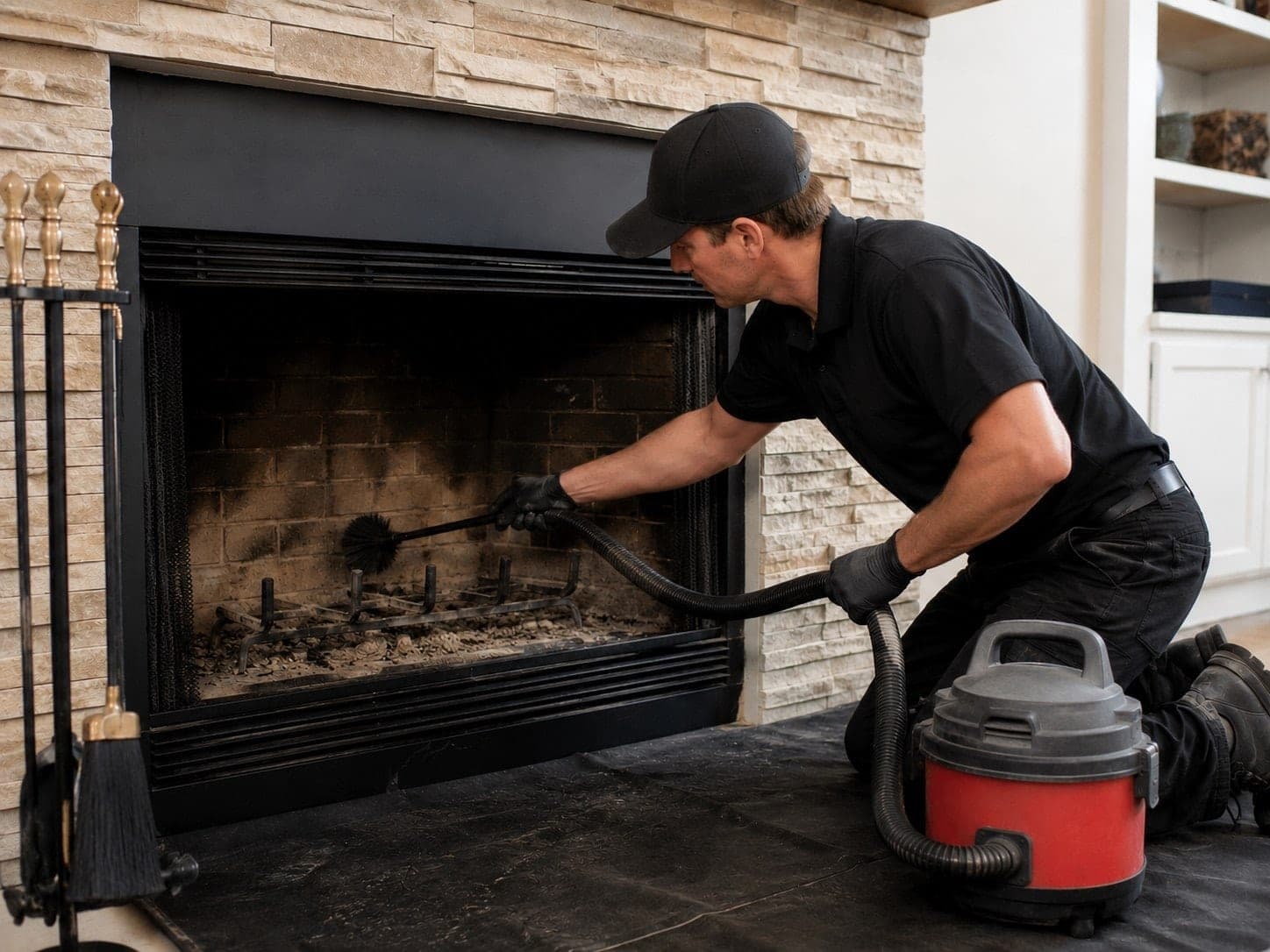
A fireplace sweep starts where the fire burns. The firebox collects ash, half-burned wood and a glaze of creosote on the back wall. The smoke shelf behind the damper catches soot and debris that fall back down. The damper itself gets coated until it sticks. Fireplace sweeping clears each of these: the ash comes out, the firebox walls are brushed, the smoke shelf is vacuumed, and the damper is cleaned and checked so it opens and closes fully.
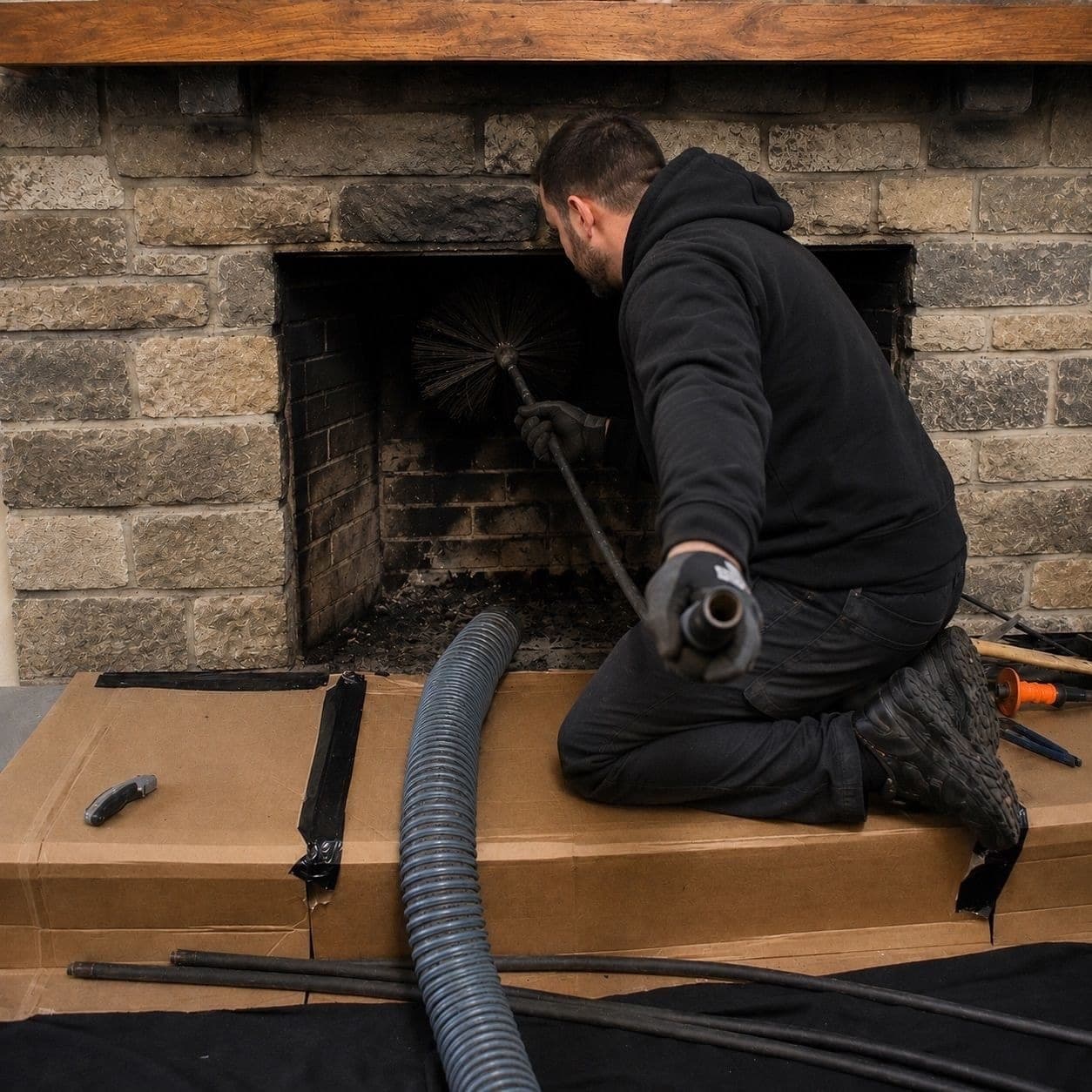
Wood stoves and fireplace inserts get the same attention, because creosote builds up inside the unit and its connector pipe before it reaches the chimney. For cleaning the flue itself from top to bottom, see how chimney sweep works.
Deep clean fireplace sweeps
Some fireplaces need more than a standard sweep. Shiny, tar-like creosote that has hardened on the flue walls won't come off with brushing, so it needs creosote removal. A smoky smell that lingers in summer often needs chimney odor removal along with the cleaning. Twigs, leaves or nesting material on the smoke shelf mean an animal has been in the chimney. A deep clean deals with whatever the sweep turns up instead of leaving it for next season.
Budget-friendly fireplace sweeping
Fireplace cleaning costs the least when it's done before buildup turns into a bigger job. A few habits keep each sweep simple:
- Burn dry, seasoned hardwood, because wet wood produces far more creosote.
- Don't burn trash, cardboard or painted wood in the fireplace.
- Keep a cap on the chimney so rain, leaves and animals stay out.
- Schedule the sweep before buildup hardens into glazed creosote.
To learn what affects the price, read our guide to how much does a chimney sweep cost. Estimates are free, so you'll know what the job involves before any work starts.
Commercial fireplace sweep services
Restaurants, inns, event spaces and offices with working fireplaces usually burn more often than homes do, so buildup comes faster. We sweep commercial fireplaces as part of our commercial chimney services. Since we're available 24 hours, Sunday through Friday, the sweep can happen before you open or after you close.
Fireplace sweeping in Connecticut
We sweep fireplaces in Hartford and throughout Connecticut, with same-day visits when the schedule allows. If the sweep turns up cracked firebrick or a damaged flue, we'll tell you. Common Chimney Issues like these are easier to handle when they're caught early.
How the visit works
Debris and nests can block the flue completely and trap carbon monoxide. Buildup narrows the flue, so smoke drafts poorly and can spill into the room.
Set up
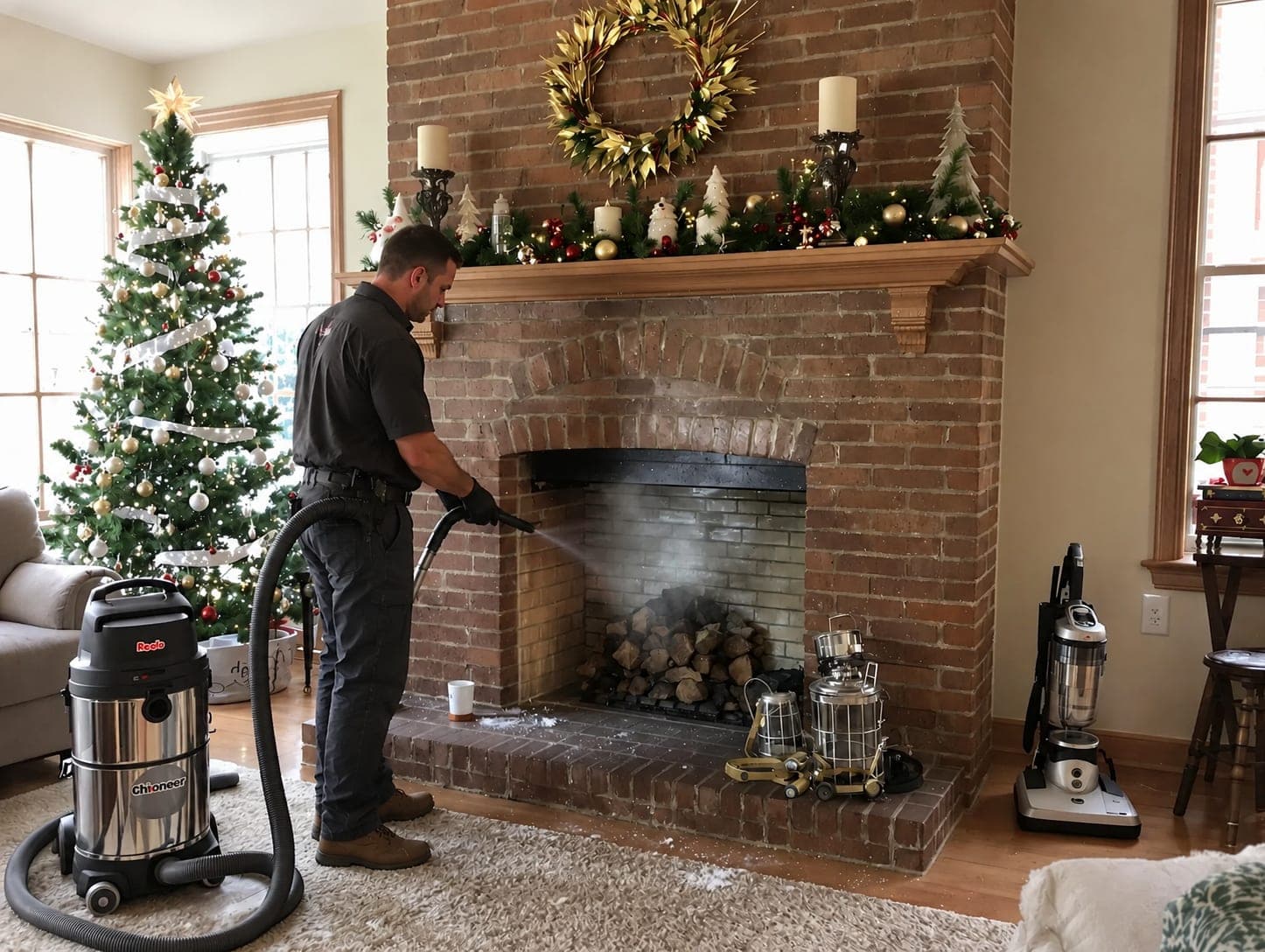
The hearth area is covered and a vacuum keeps dust under control while the flue is open.
Check the system
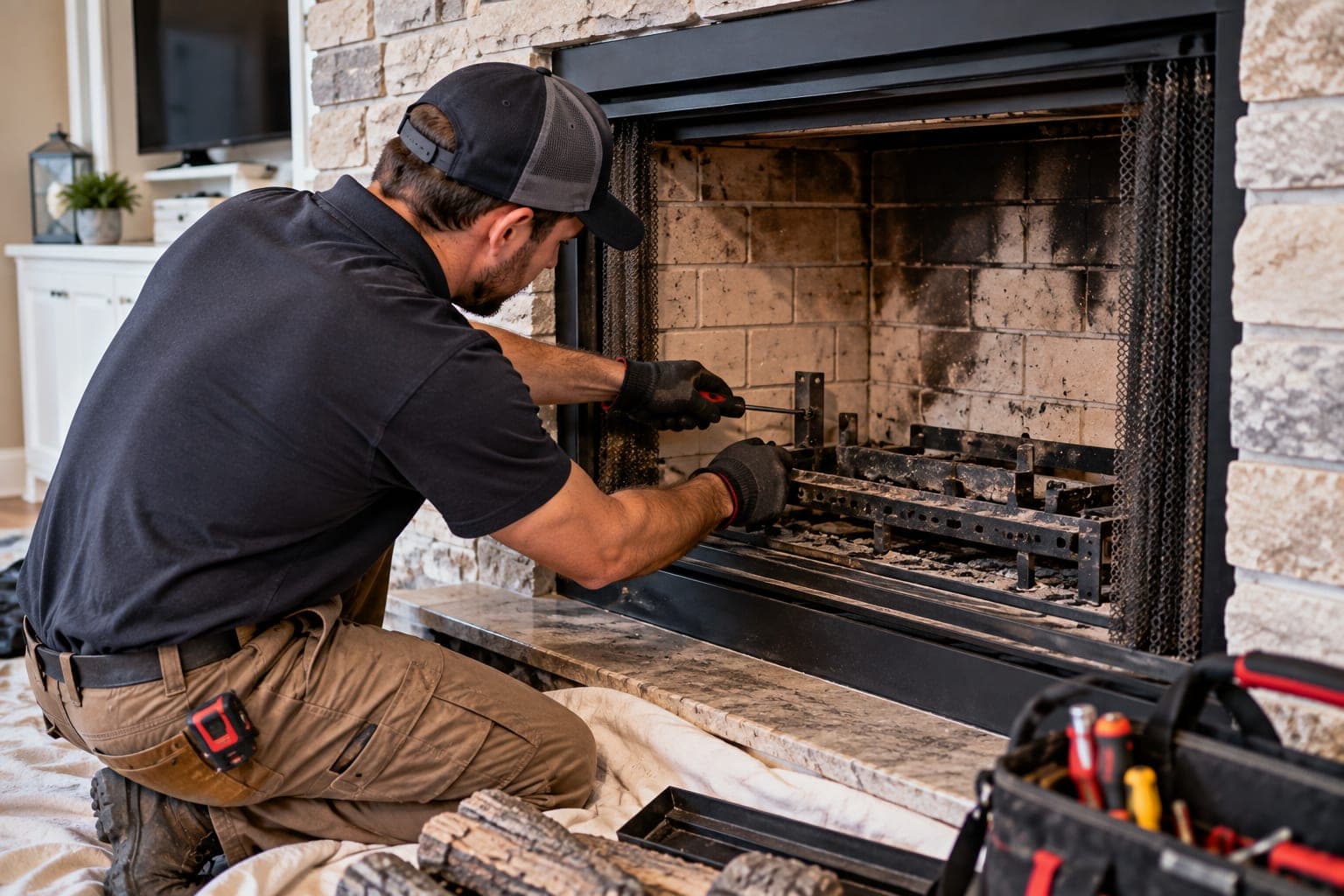
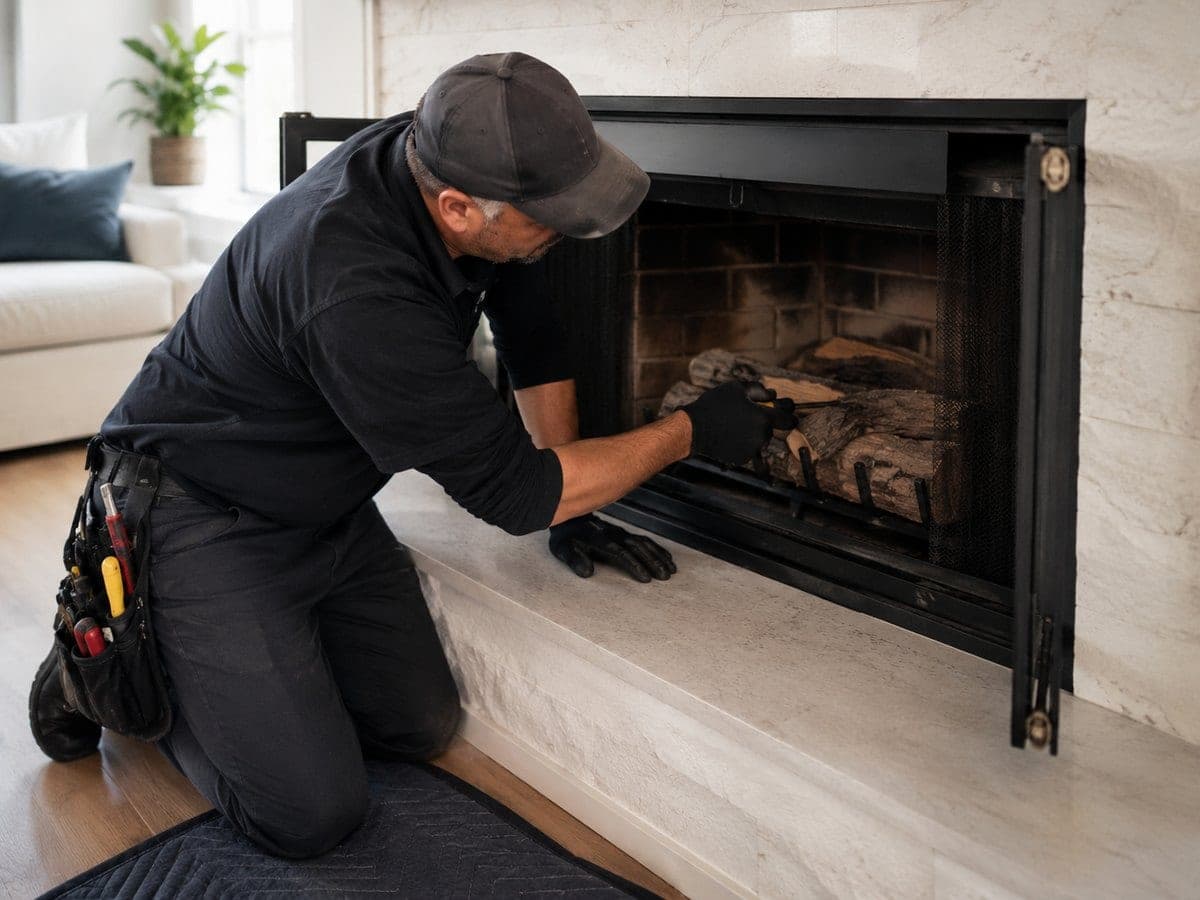
The damper, firebox walls and the visible flue liner are looked at before any brushing.
Clear the deposits
Soot and creosote are removed from the liner, smoke shelf and smoke chamber.
Finish and report
The area is cleaned up and you get a plain summary of the chimney's condition.
Checked on every visit
- Visible liner sections for cracks or gaps
- Signs of animals or nesting material
- Smoke shelf and smoke chamber
- Creosote level and type in the flue
- Damper opening, closing and seal
- Firebox brick or panels and mortar joints
- Draft — how readily smoke moves up the flue
If smoke comes into the room
Stop adding fuel, open a window and don't relight the fire until the chimney has been checked. If the smoke is heavy, an alarm sounds or you suspect a chimney fire, get everyone outside and call 911.
Before the technician arrives
- Let the fireplace or stove cool completely — ideally no fire for 24 hours before the visit.
- Keep pets in another room while the work area is open.
- Note the make and model of any insert, stove or gas unit if you have it.
- Write down what you've noticed and when it happens — smells, smoke, sounds or stains.
Signs to watch for
- Fires that are hard to start or keep going
- Soot marks on the face of the fireplace above the opening
- A campfire or tar smell from the fireplace, especially on warm or damp days
- Scratching or chirping sounds, or debris falling into the firebox
- Smoke rolling into the room instead of drawing up