On this page
Your fireplace firebox really takes the heat
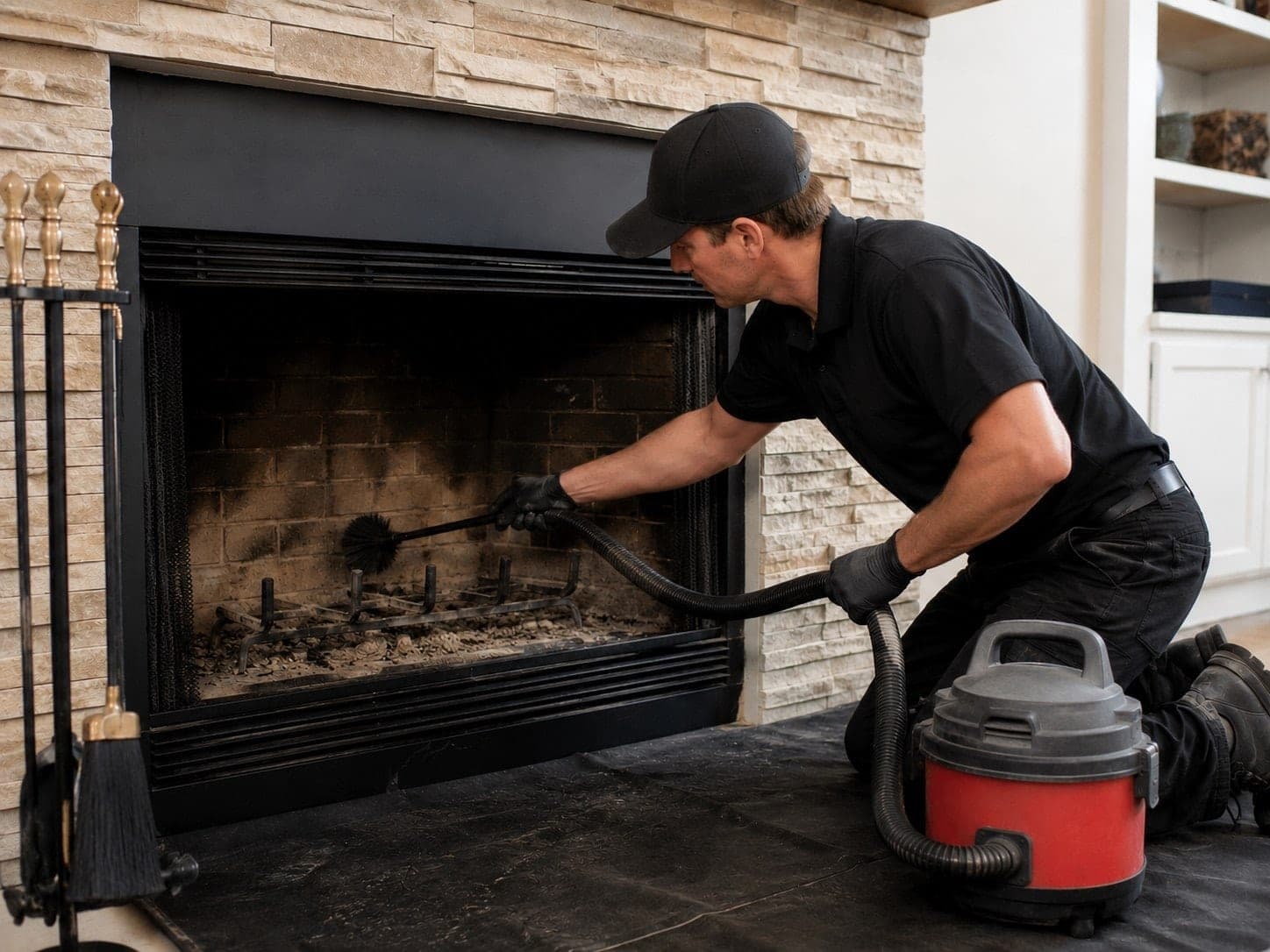
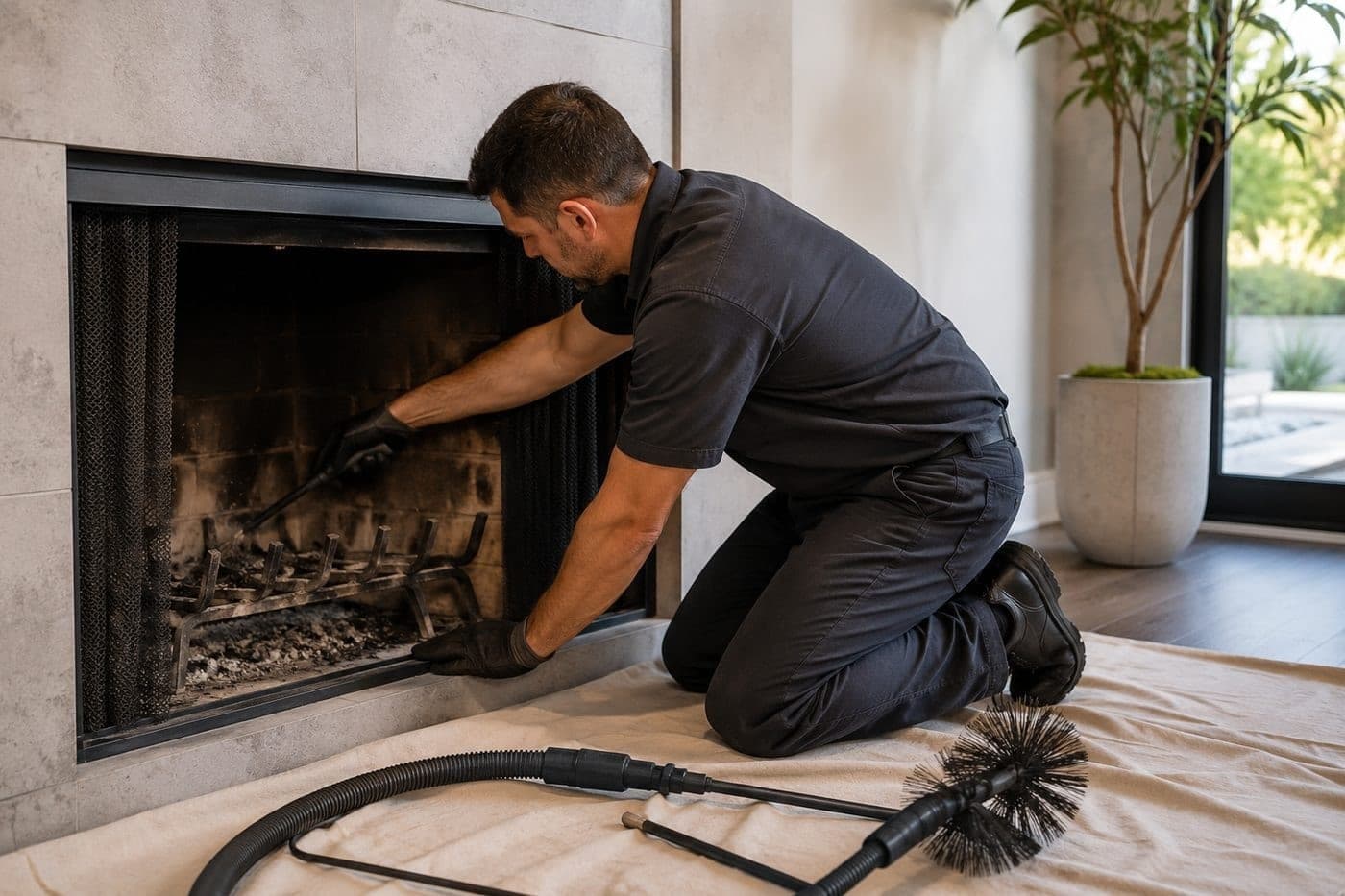
The fireplace firebox is the chamber where the fire actually burns: the floor, back and side walls between the opening and the damper. In a masonry fireplace it's lined with firebrick laid in refractory mortar. In a factory-built fireplace it's lined with molded refractory panels. Either way, it absorbs more punishment than any other part of the hearth, which is why firebox work is among the most common repairs a wood-burning fireplace needs.
What wears a firebox down
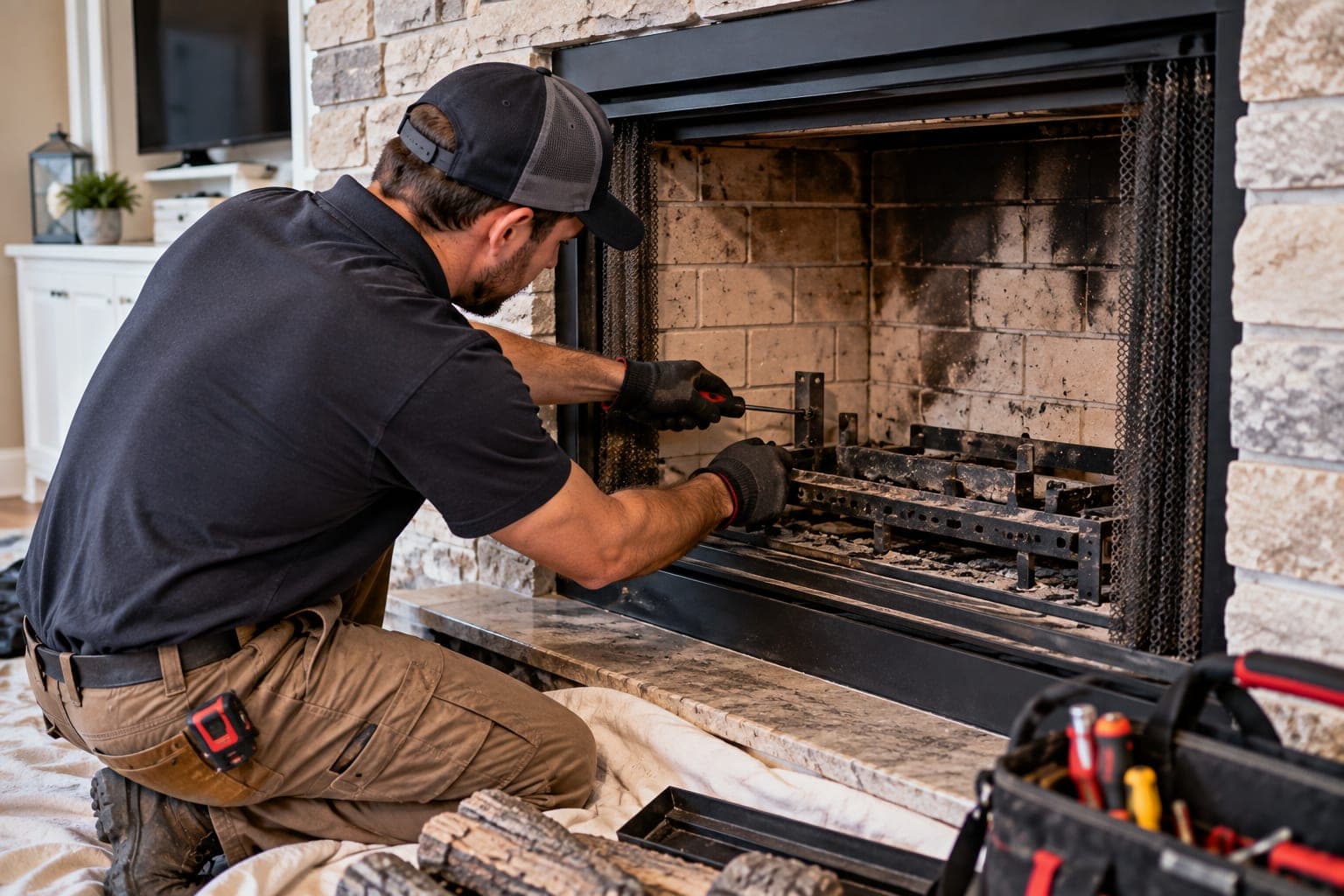
- Repeated heating and cooling that opens joints a little more each season
- Wet or unseasoned wood that steams and burns unevenly
- Logs dropped against the back wall and pokers jabbed into joints
- Water reaching the firebox from above through a damaged crown, cap or flashing
To see where the firebox sits relative to the damper and smoke chamber, look at this breakdown of fireplace parts.
Understanding how firebox wear influences fireplace performance
A worn firebox is more than a cosmetic issue. Firebox wear influences fireplace performance and safety in a few concrete ways:
| Damage | Effect on the fireplace | Usual repair |
|---|---|---|
| Eroded or missing mortar joints | Heat can travel through gaps toward the structure behind | Repointing with refractory mortar |
| Cracked or spalling firebrick | Thinner lining and rough faces that hold soot | Replacing individual bricks |
| Cracked refractory panels | Metal firebox exposed behind the panel | Refractory panel replacement |
| Shifted back or side wall | Disturbed airflow that can push smoke forward | Firebox rebuild |
An intact, smooth back wall also throws heat into the room instead of soaking it up, part of running a fireplace efficiently.
The firebox and fireplace opening
Damage often shows first where the firebox and fireplace opening meet. Smoke stains climbing the face above the opening, loose bricks along the front edge or a sagging steel lintel all deserve a look. Staining means smoke is escaping the draw, which can point to a draft or chimney problem rather than the brick itself. Once the opening is repaired, glass doors can be added through our fireplace door installation service.
Fireplace firebox help near you
We come to homes across Connecticut, estimates are free, and same-day visits are possible where the schedule allows. Wood stoves have fireboxes too; for those, see repairs on wood stoves and inserts. Until the work is done, basic fireplace safety is worth keeping in mind.
How the visit works
Firebrick is laid in refractory mortar made for direct flame; ordinary mortar breaks down in a firebox. Cracked refractory panels in a factory-built unit expose the metal box behind them.
Check the firebox
Every joint and brick or panel, and the transitions to the hearth and smoke chamber.
Explain the scope
Tuckpointing joints, replacing bricks or panels, or rebuilding the firebox.
Repair
Firebrick is set in refractory mortar, or listed panels are fitted on a factory-built unit.
Cure and confirm
You hear how long the mortar needs before the first fire and what was done.
Getting ready for the visit
- Clear the hearth and nearby furniture.
- Clean out loose ash if you can do it safely when cold.
- Let the fireplace cool completely — no fire the day before.
Have cracks checked before more fires
Hairline cracks in firebrick are common, but any crack should be looked at before you keep burning. Missing mortar, loose brick or a crack you can see through means no fires until it's repaired.
Signs to watch for
- Firebrick that's cracked through, loose or spalled
- Cracked or crumbling refractory panels
- Gaps where the firebox meets the hearth or the smoke chamber
- Mortar missing or crumbling between firebricks
What the technician checks
- Back and side walls for movement
- Hearth and smoke chamber transitions
- Cracked, loose or spalled firebrick
- Damper above the firebox
- Mortar joints between firebricks