On this page
Two kinds of brick, two kinds of repair
| Feature | Firebox (firebrick) | Face and hearth brick |
|---|---|---|
| Job | Contains fire, shields framing | Appearance, hearth protection |
| Material | Firebrick and refractory mortar | Standard brick and matched mortar |
| Common damage | Cracks, open joints, spalling | Chips, stains, loose bricks |
| Urgency | Often a safety repair | Usually cosmetic unless loose |
Job
- Firebox (firebrick)
- Contains fire, shields framing
- Face and hearth brick
- Appearance, hearth protection
Material
- Firebox (firebrick)
- Firebrick and refractory mortar
- Face and hearth brick
- Standard brick and matched mortar
Common damage
- Firebox (firebrick)
- Cracks, open joints, spalling
- Face and hearth brick
- Chips, stains, loose bricks
Urgency
- Firebox (firebrick)
- Often a safety repair
- Face and hearth brick
- Usually cosmetic unless loose
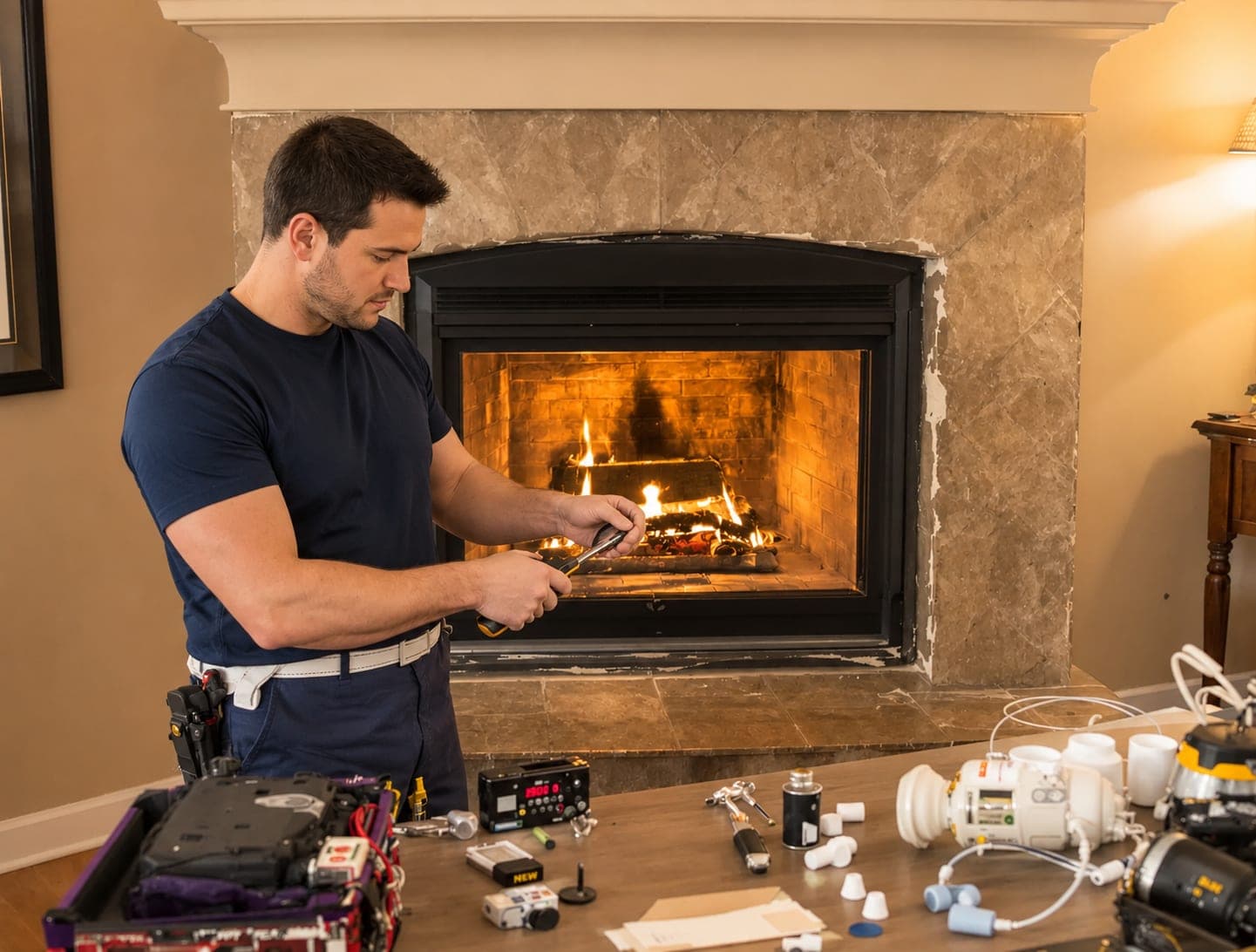
Patching a firebox with ordinary mortar is a common shortcut. It fails because regular mortar breaks down under direct flame, so the joints open again and heat reaches the framing behind the firebox. Firebox work calls for heat-rated refractory materials. See our guide to fireplace anatomy for where each layer sits.
How the visit works
Cracks in the firebox let heat reach the framing behind it. Worn gaskets and glass on inserts and gas units waste heat and can leak exhaust.
Find the cause
The firebox, damper, smoke chamber and any doors, glass or panels are checked.
Confirm the type
Masonry or factory-built — the repair has to suit the system.
Explain the fix
You hear the options and what each involves before work starts.
Repair and test
The work is done and the fireplace is checked before you use it.
What gets checked
- Hearth and surround
- Draft from the opening
- Smoke chamber and smoke shelf
- Mortar joints inside the firebox
- Firebrick or refractory panels
- Damper operation
If smoke comes into the room
Stop adding fuel, open a window and don't relight the fire until the chimney has been checked. If the smoke is heavy, an alarm sounds or you suspect a chimney fire, get everyone outside and call 911.
Before the technician arrives
- Let the fireplace or stove cool completely — ideally no fire for 24 hours before the visit.
- Note the make and model of any insert, stove or gas unit if you have it.
- Clear a few feet of space in front of the hearth or appliance.
- Move rugs, photos and anything fragile away from the work area.
Signs to watch for
- A fireplace that is hard to light or won't stay lit
- Doors or glass that are cracked or don't seal
- A damper that won't open or close
- Smoke coming into the room
Signs your brick fireplace needs repair
Look for these
- Cracks that run all the way through a firebrick, not just fine surface crazing
- Mortar joints that are crumbling, recessed or missing
- Bricks that move when pressed
- Flaking or spalling brick faces
- Soot staining above the opening, which can mean smoke is escaping
- Gaps between the firebox and the surrounding masonry
Fine crazing on firebrick is normal wear. Open joints and through-cracks are not. Read what causes cracked fireplace brick to tell the difference, and see fixing cracked fireplace bricks repair for how damaged units are dealt with. Until a damaged firebox is checked, follow the precautions in our fireplace safety guide.
Choosing a brick fireplace repair specialist
Whoever you hire, ask these questions before the work starts:
- Will you use refractory mortar inside the firebox?
- How will you match the face brick and mortar color?
- Will you check the smoke chamber and chimney above before calling the job done?
- Is this a repair, or does the firebox need rebuilding?
We handle firebox repair, firebrick replacement, face brick and mortar repair, and full fireplace restoration. When we find related chimney problems, we also do tuckpointing and masonry repair. A sound firebox reflects more heat into the room, as our efficient fireplace guide explains. Some homeowners decide to stop burning wood altogether, and the electric fireplace installation service is one alternative.