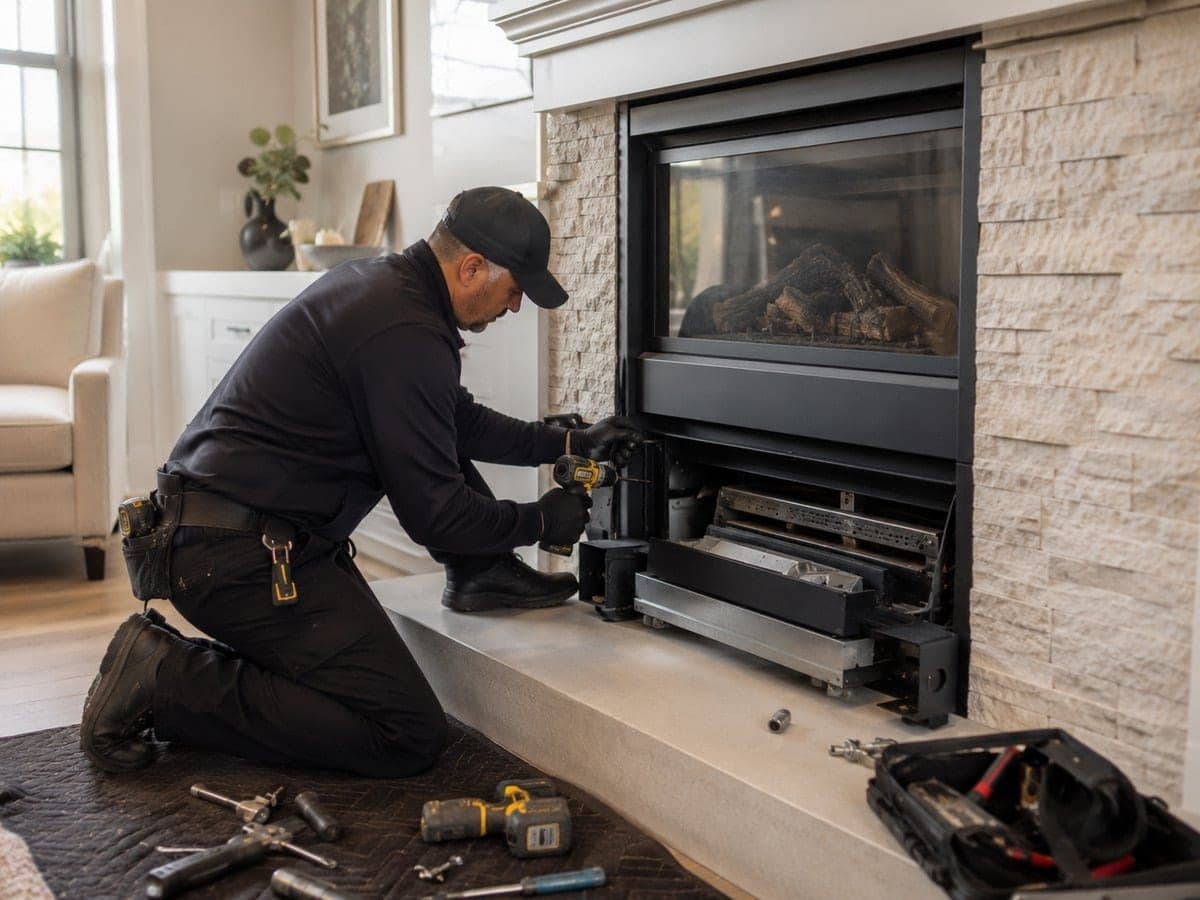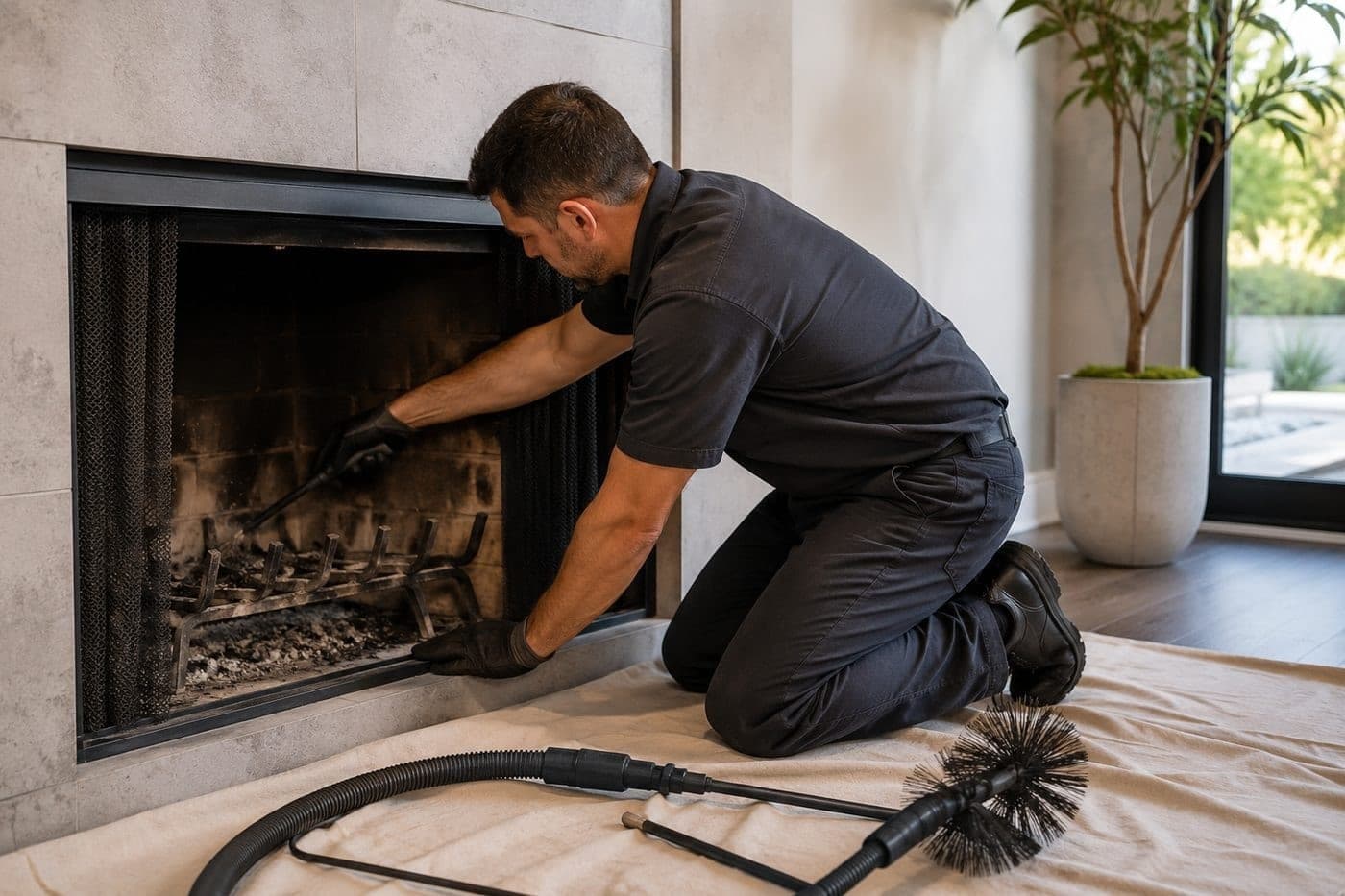
What wears a firebox out
Firebrick and refractory panels are built to take heat, but not without limit. Damage usually traces back to one of a handful of causes. A firebox repair holds up best when that cause is dealt with too.
- Heat cycling. Every fire heats the lining, and every night it cools again. Over years, that expansion and contraction opens joints and cracks brick.
- Water from above. A missing cap, a cracked crown or failed flashing can let rain run down into the firebox, and wet brick and mortar break down faster. We handle cap installation, crown repair and flashing repair, so the leak can be fixed along with the damage it caused.
- Fires that run too hot. Scrap lumber, overloaded grates and fires built tight against the back wall concentrate heat on one spot.
- Physical knocks. Logs dropped in, a grate dragged across the floor or a poker jammed into the back wall can chip and loosen brick.
What the visit covers
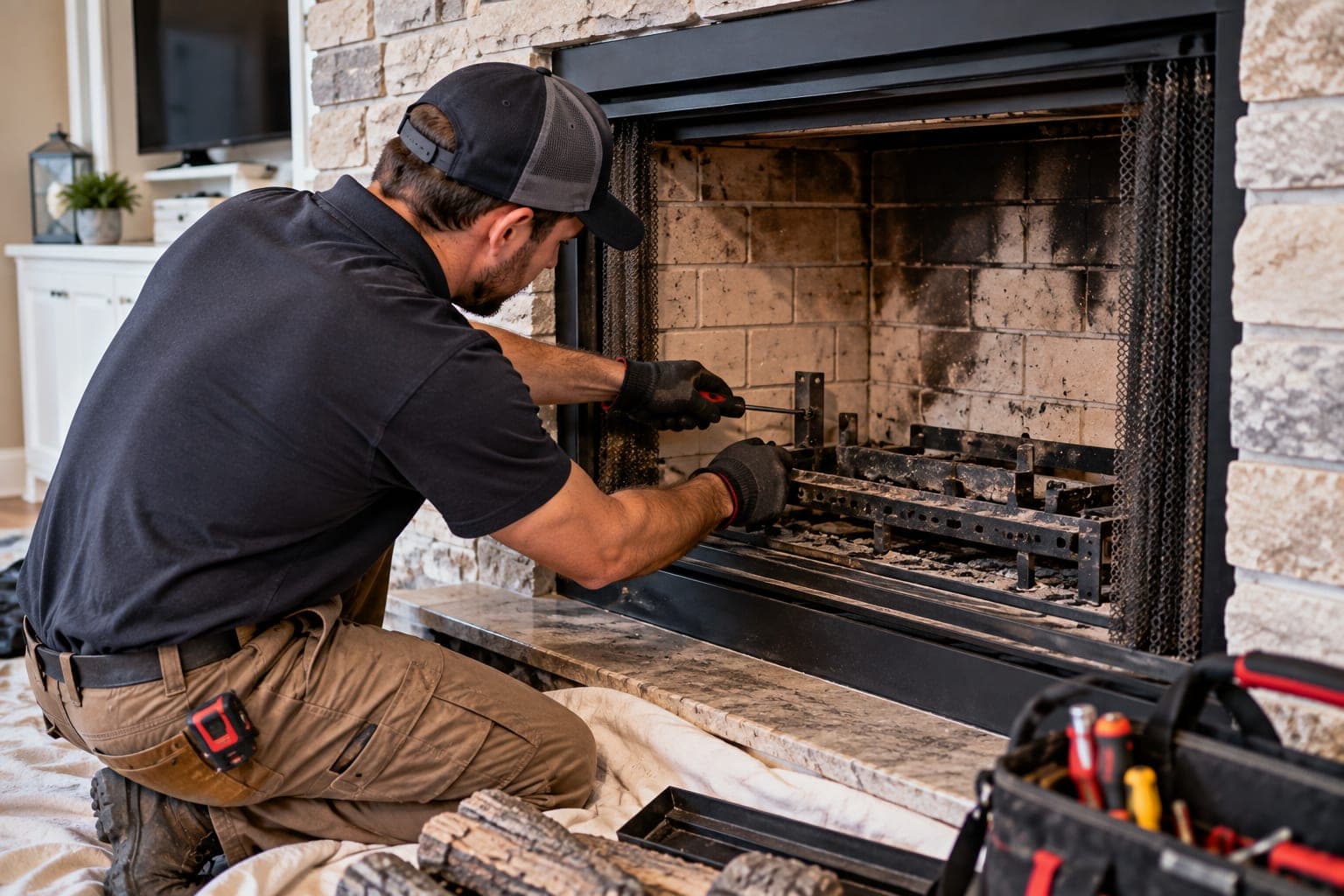
Missing mortar and loose or broken firebrick let heat reach the masonry and framing behind the fireplace. Cracked refractory panels in a factory-built unit expose the metal box behind them.
Check the firebox
Every joint and brick or panel, and the transitions to the hearth and smoke chamber.
Explain the scope
Tuckpointing joints, replacing bricks or panels, or rebuilding the firebox.
Repair
Firebrick is set in refractory mortar, or listed panels are fitted on a factory-built unit.
Cure and confirm
You hear how long the mortar needs before the first fire and what was done.
Getting ready for the visit
- Clean out loose ash if you can do it safely when cold.
- Clear the hearth and nearby furniture.
- Let the fireplace cool completely — no fire the day before.
Signs to watch for
- Cracked or crumbling refractory panels
- Firebrick that's cracked through, loose or spalled
- Mortar missing or crumbling between firebricks
- Heat or discoloration on the wall or mantel around the fireplace
Checked on every visit
- Back and side walls for movement
- Cracked, loose or spalled firebrick
- Refractory panels on factory-built units
- Hearth and smoke chamber transitions
- Damper above the firebox
- Mortar joints between firebricks
Matching the fix to the damage
Repair isn't all-or-nothing. Here's how firebox repair services typically scale with what turns up:
| What's found | Usual approach |
|---|---|
| Hairline cracks with joints intact | Monitor, and seal joints if needed |
| Eroded or missing mortar joints | Rake out and repoint with refractory mortar |
| Individual cracked or loose firebricks | Replace those bricks |
| Widespread spalling or many loose bricks | Reline the firebox; larger jobs may become a fireplace restoration |
| Cracked refractory panels in a prefab unit | Replace the panels with ones made for that model |
| Prefab firebox failing beyond its panels | Consider prefab fireplace replacement |
We'll show you which row your fireplace falls into and give you a free estimate before any work starts. If the firebox is only part of the problem, our page on fireplace repair for homes in West Hartford covers dampers, doors, glass and draft issues. The main page on how firebox repair works explains the repair itself.
Firebox repair around West Hartford
West Hartford's roughly 64,242 residents (2025 Census estimate) live less than four miles from Hartford, with Bloomfield, Newington, Farmington and New Britain close by. Same-day service is offered where the schedule allows, and we're available 24 hours, Sunday through Friday.
If you're planning a full season of fires, a sweep for West Hartford homes is a sensible companion to the repair. The flue gets cleaned, and the smoke chamber above the firebox gets a look at the same visit. We handle firebox work in other towns as well, including firebox repair in Glastonbury. The West Hartford area page lists everything else we do here.
Sources (2)
Where the West Hartford numbers and code references come from.