On this page
Repair or full fireplace rebuilding?
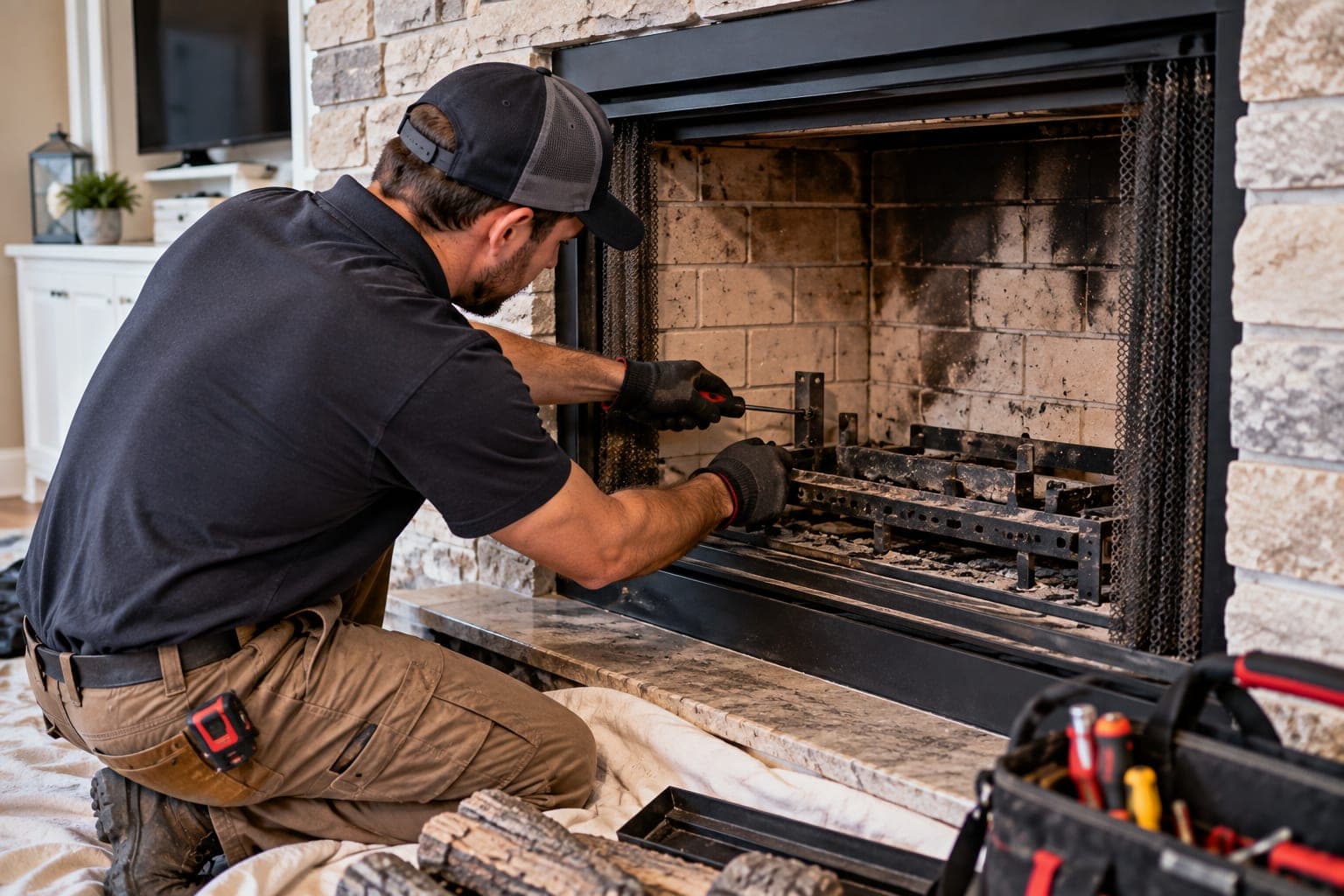
Most fireplaces don't need a rebuild. Loose mortar, a few cracked firebricks or a sticky damper are repair jobs. Rebuilding becomes the better choice when damage is so widespread that patching one area just moves the failure to the next. If you're not sure which category you're in, common chimney issues describes what each kind of damage looks like.
| Feature | Repair | Rebuild |
|---|---|---|
| Firebox | Replace individual firebricks, repoint joints | Tear out and relay the firebox |
| Smoke chamber | Patch rough or gapped areas | Rebuild when the masonry is coming apart |
| Chimney above the roof | Tuckpointing, crown repair | Take down and rebuild from sound masonry |
| When it fits | Damage is limited and the structure is sound | Damage is spread out or the structure has shifted |
Firebox
- Repair
- Replace individual firebricks, repoint joints
- Rebuild
- Tear out and relay the firebox
Smoke chamber
- Repair
- Patch rough or gapped areas
- Rebuild
- Rebuild when the masonry is coming apart
Chimney above the roof
- Repair
- Tuckpointing, crown repair
- Rebuild
- Take down and rebuild from sound masonry
When it fits
- Repair
- Damage is limited and the structure is sound
- Rebuild
- Damage is spread out or the structure has shifted
Water entry, freeze-thaw cracking and years of heat cause most of the damage that leads to a rebuild. Our guide to common chimney problems shows how small issues grow.
Full fireplace rebuilding
A full fireplace rebuilding job can run from the hearth to the chimney top. Depending on what has failed, it can include:
- Rebuilding the firebox with new firebrick and refractory mortar
- Smoke chamber repair and a new or repaired damper
- Chimney rebuild above the roofline, with a new crown
- Chimney liner installation where the old flue can't be reused
- A new chimney cap to keep water and animals out of the finished work
How the visit works
Design choices — size, materials, a raised or flush hearth — have to fit the room and the chimney. A fireplace draws well only when the opening, the smoke chamber and the flue are sized to each other.
Design
The opening size, materials and look, matched to the room and to a flue that can serve it.
Plan
Footing, clearances to framing, hearth extension and permits are worked out first.
Build
Firebox, smoke chamber, damper, hearth and the chimney are built in sequence.
Cure and test
The masonry cures, then small fires come first and the draw is checked.
Clearances and curing
Wood trim, mantels and framing must keep the code clearances to the opening, and new masonry needs its full cure time before regular fires.
Getting ready for the visit
- Gather photos of fireplaces you like and the room's measurements.
- Ask your town about permits for new fireplaces.
- Note where the chimney can run and any existing flue.
What we look at
- Firebox depth and firebrick
- Permit requirements
- Damper type
- Opening size against the flue
- Hearth extension and clearances to trim
- Smoke chamber shape
- Footing and chimney support
Signs to watch for
- A new fireplace planned in a remodel or addition
- A fireplace that has never drawn well
- An old fireplace with a firebox or smoke chamber past repair
- A wish to change the look of the fireplace and its surround
Fireplace remove and rebuilding in East Hartford
A remove-and-rebuild project in East Hartford doesn't have to be like-for-like. Tearing a fireplace out and putting it back is a chance to fix what never worked, such as a firebox that always smoked or a hearth that's too short. It's also the time to swap a worn-out factory-built unit through prefab fireplace replacement. If the rebuild is also a makeover, see our classic marble fireplace renovation and custom fireplace pages for the design side.
Fireplace rebuilding contractors in East Hartford
When you compare fireplace rebuilding contractors, ask who will actually do the masonry. Estimates are free, and we accept emergency calls, including storm damage that leaves a chimney cracked or leaning.