Do gas fireplaces smell at all?
A gas fireplace in good working order should be close to odorless once it has warmed up. A few short-lived smells are normal, and they share one trait: they fade quickly and don't come back.
- A hot, oily or paint-like odor in a brand-new unit. Paint and manufacturing residue cure during the first several hours of use. Crack a window and the smell should taper off.
- A dusty, slightly burnt smell on the first fire of the season. Dust settles on the burner, logs and glass over the warm months and burns off within a fire or two.
- A faint whiff of gas the instant it lights. Any gas smell that lingers or comes back means leave the house and call your gas utility or 911 from outside. Some units release a tiny puff at ignition. It should vanish within seconds, not linger in the room.
Rotten eggs or sulfur means stop
Natural gas and propane have an odorant added so leaks can be noticed. if you smell gas at any other time or the smell lingers, don't relight the fireplace or flip switches. Any gas smell that lingers or comes back means leave the house and call your gas utility or 911 from outside. Leave the house and call your gas utility or 911 from outside. Carbon monoxide has no smell at all, so a working CO alarm matters even when nothing seems wrong.
Matching the smell to the cause
Common gas fireplace odors
01Sooty, acrid or burning smell
- What you may notice
- Black film on the glass, dark streaks on the logs, tall yellow flames
- How it’s confirmed
- Log placement compared with the manufacturer's layout, burner ports, air shutter setting and glass condition
02Sharp chemical odor
- What you may notice
- Cracked or crumbling ceramic logs, residue on the glass, stinging eyes
- How it’s confirmed
- Logs, embers and glass inspected for damage, and the media confirmed as correct for the burner
03Musty or damp smell when it's off
- What you may notice
- Worse after rain or on humid days, stale air near the hearth
- How it’s confirmed
- Vent termination, cap, chase cover and flashing checked for water getting in
04Exhaust smell in the room
- What you may notice
- Headaches, stuffiness, fogged windows. If a carbon monoxide alarm sounds, get everyone outside and call 911.
- How it’s confirmed
- Vent path checked for nests or debris, along with joints, seals and draft
Fixing a gas fireplace that smells
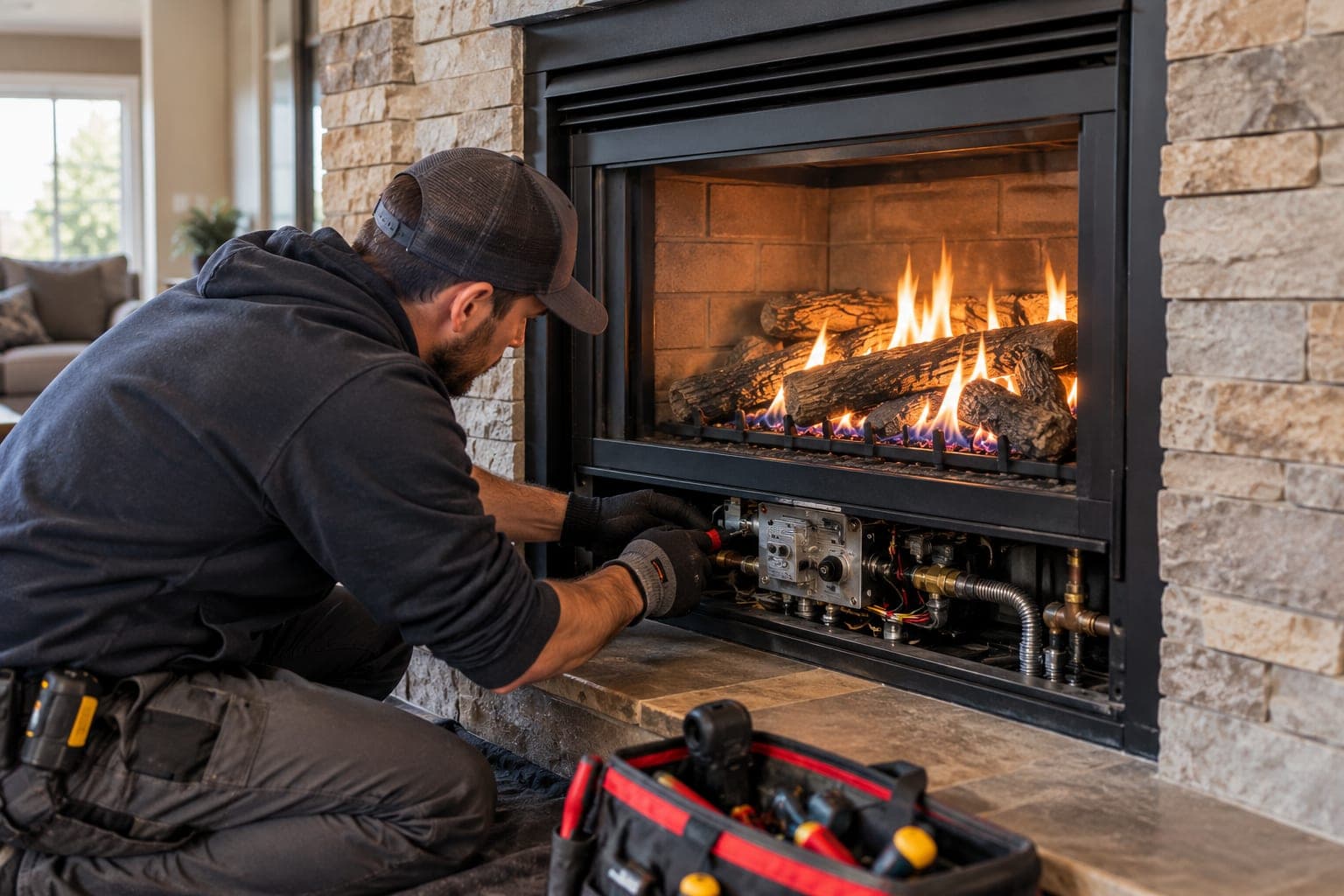
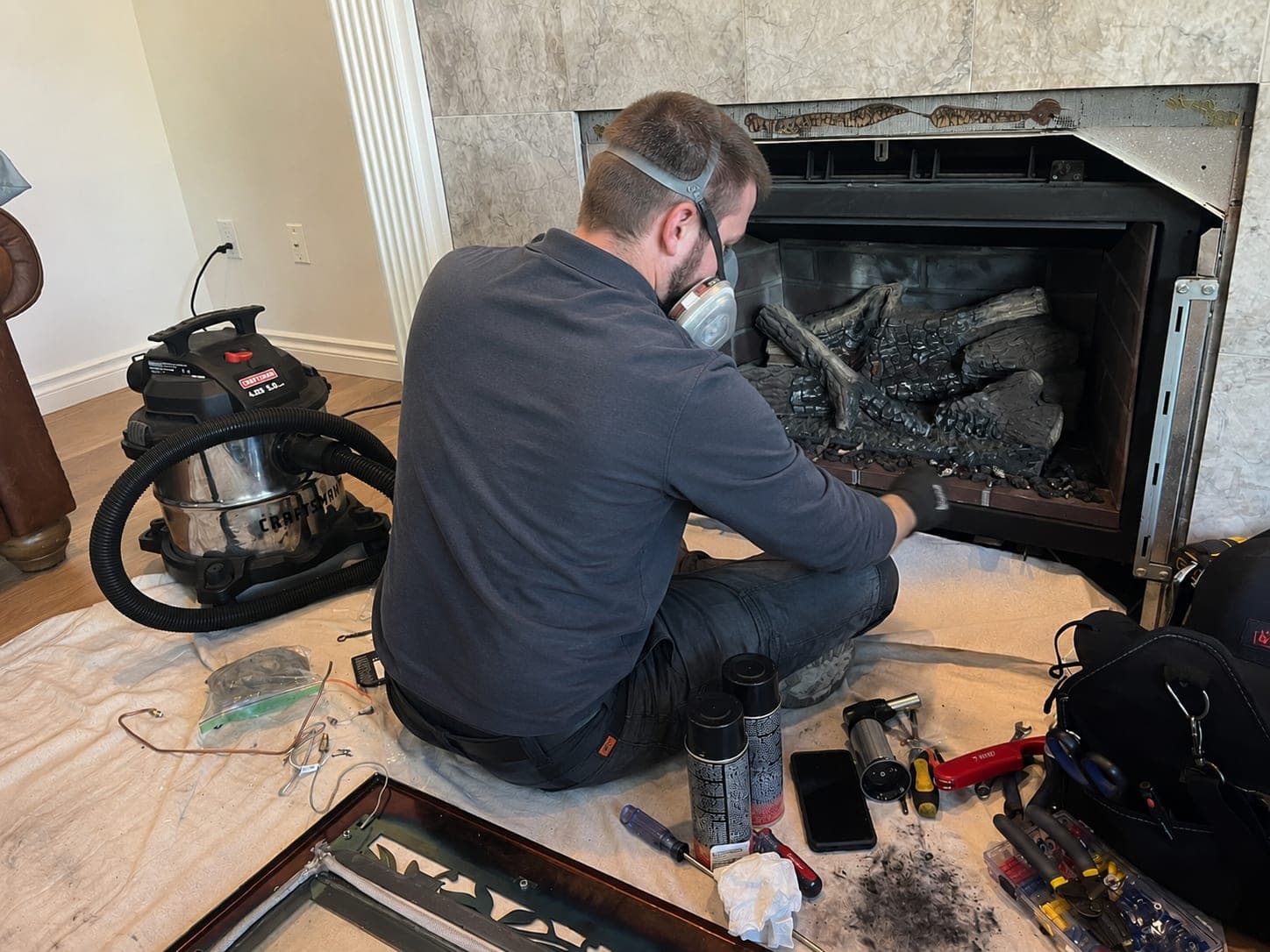
Most odors that keep coming back are fixed by cleaning, adjustment or venting repair. Soot, dust and misplaced logs usually respond to routine gas fireplace cleaning and tune-up work. We also handle gas fireplace repair, chimney cap replacement and animal and nest removal when a blocked vent is the source.
If your home also has a wood-burning hearth, its odors have different causes. Read about what makes a wood fireplace smell, or see ways to clear stubborn odors from a hearth.
If you'd rather have no combustion in the room at all, replacing the unit with an electric fireplace is one option. For background, see how the burner, logs and vent fit together and tips for running a fireplace efficiently. Estimates are free, same-day service is offered when the schedule allows, and emergency calls are accepted 24 hours a day, Sunday through Friday.
How the visit works
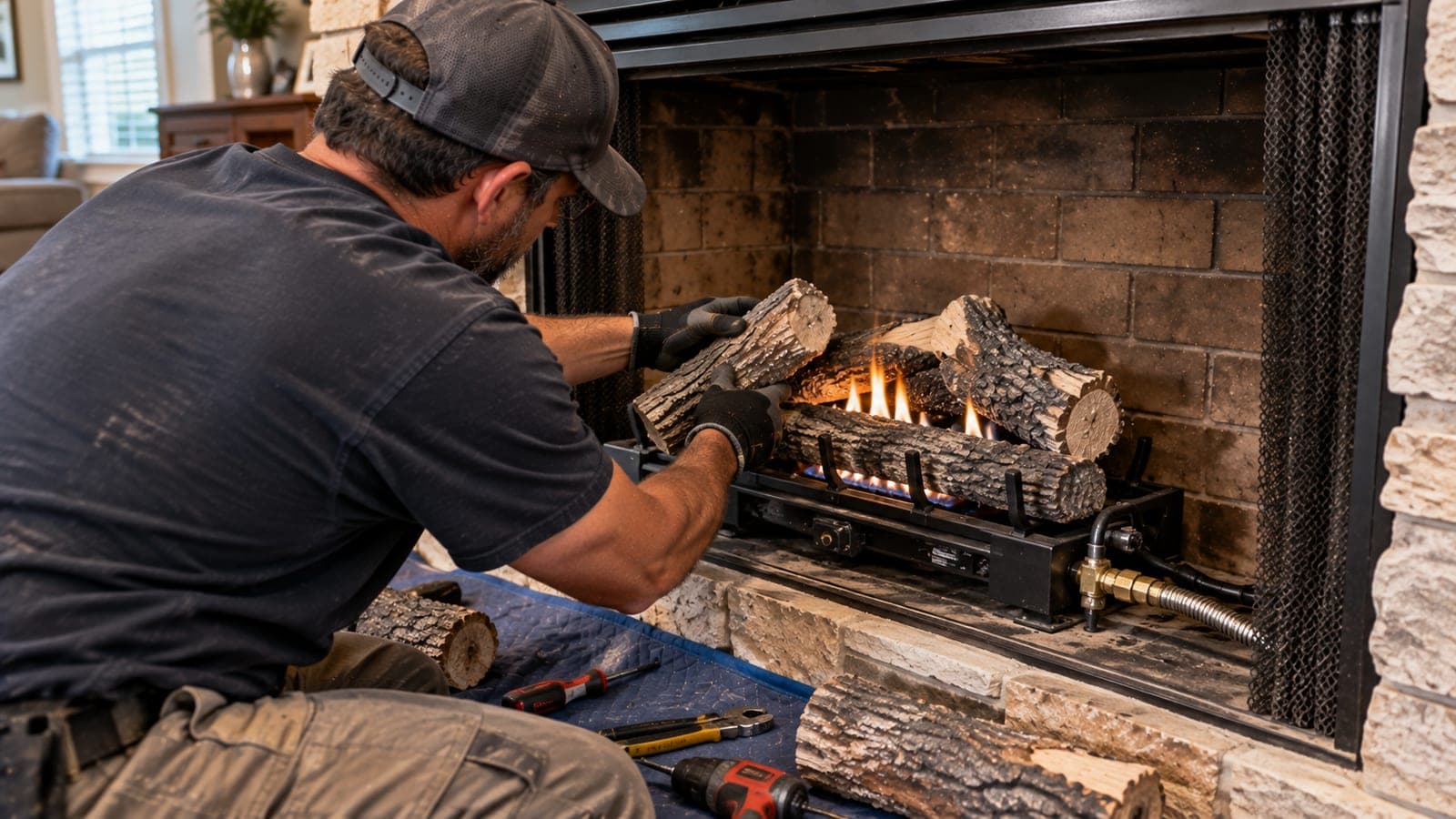
Logs set in the wrong place cause soot and incomplete burning. A dirty pilot or worn thermocouple is the usual reason a gas fireplace won't stay lit.
Diagnose
Why it won't light, stays lit poorly or soots.
Clean and adjust
Burner, pilot, logs and glass.
Inspect the vent
From the appliance to the outside cap.
Confirm
A test run before you use it.
Carbon monoxide
A blocked or damaged flue can push carbon monoxide into the home. If an alarm sounds or anyone feels dizzy or sick near the fireplace, get everyone outside and call 911.
When to book gas fireplace smell
- Glass that is cloudy, cracked or loose
- The unit clicks but won't ignite
- The pilot won't light or keeps going out
- Soot on the glass or logs
- A gas smell (leave and call the utility first)
When a gas fireplace smells like gas
Natural gas and propane have no smell on their own. Suppliers add a sulfur-smelling compound so leaks get noticed. If that smell is coming from the fireplace, one of these is usually behind it.
7 reasons your gas fireplace smells like gas
- A brief whiff at ignition. Any gas smell that lingers or comes back means leave the house and call your gas utility or 911 from outside. A small amount of gas can escape in the moment before the burner lights. It should fade within seconds; if it doesn't, something else is wrong.
- Delayed ignition. A dirty, weak or misaligned pilot lets gas build up before it catches, often with a noticeable whoosh.
- A loose or worn fitting. Connections at the valve, flex connector or pilot tubing can loosen from heating and cooling cycles and vibration.
- A failing control valve or regulator. Worn internal parts can let gas seep out, or send more gas than the burner can burn cleanly.
- Logs or media out of place. When flames hit the logs instead of flowing around them, combustion is incomplete and the smell turns sharp and sooty.
- Blocked or separated venting. Nests, debris or a disconnected vent pipe send exhaust back into the room instead of outside.
- A leak that isn't the fireplace at all. Supply piping or another gas appliance nearby can cause a smell that gets blamed on the fireplace.
Venting design changes which of these is likely. If you're weighing a replacement, read about how direct-vent gas fireplaces vent their exhaust and about installing a vent-free gas fireplace.
What we look at
- Log placement
- Glass and gasket seal
- Controls and remote
- Pilot assembly and flame
- Thermocouple or thermopile output