On this page
Zero clearance fireplaces explained
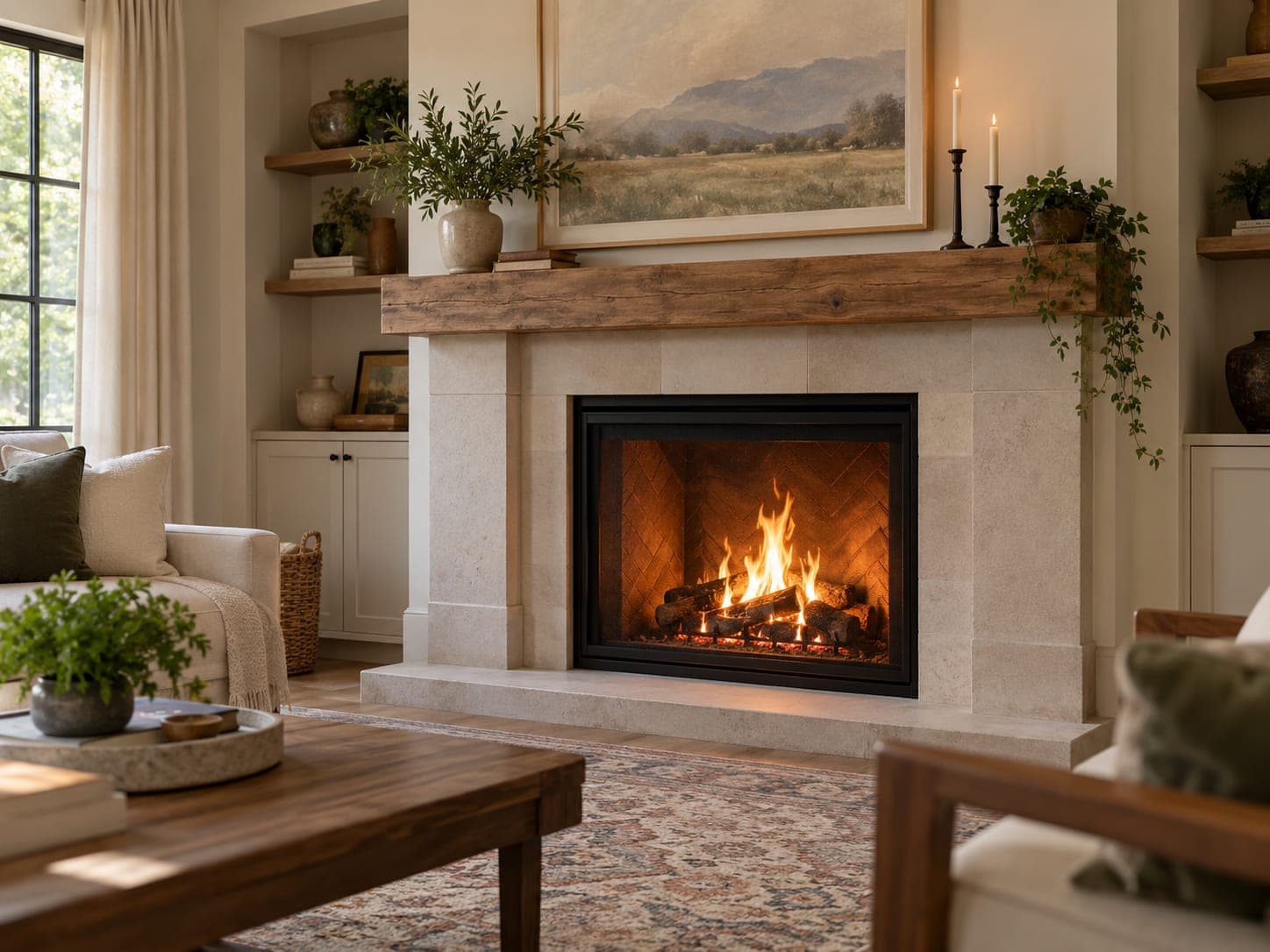
A traditional masonry fireplace needs a heavy foundation and generous space between the hot firebox and any wood framing. A zero clearance fireplace solves that with a factory-built metal firebox wrapped in insulated or air-cooled walls, so it can be framed in close to combustible materials. The unit, its chimney pipe and its termination cap are tested together and listed as one system.
What clearance really means on a clearance fireplace
Zero doesn't mean zero everywhere. The manufacturer's listing spells out required standoffs, the hearth extension in front, the space above the opening and the clearances around the chimney pipe. Those details live in the installation manual for your specific model, which is why we identify the make and model before any work. Our guide to zero clearance fireplaces goes deeper on how they're built.
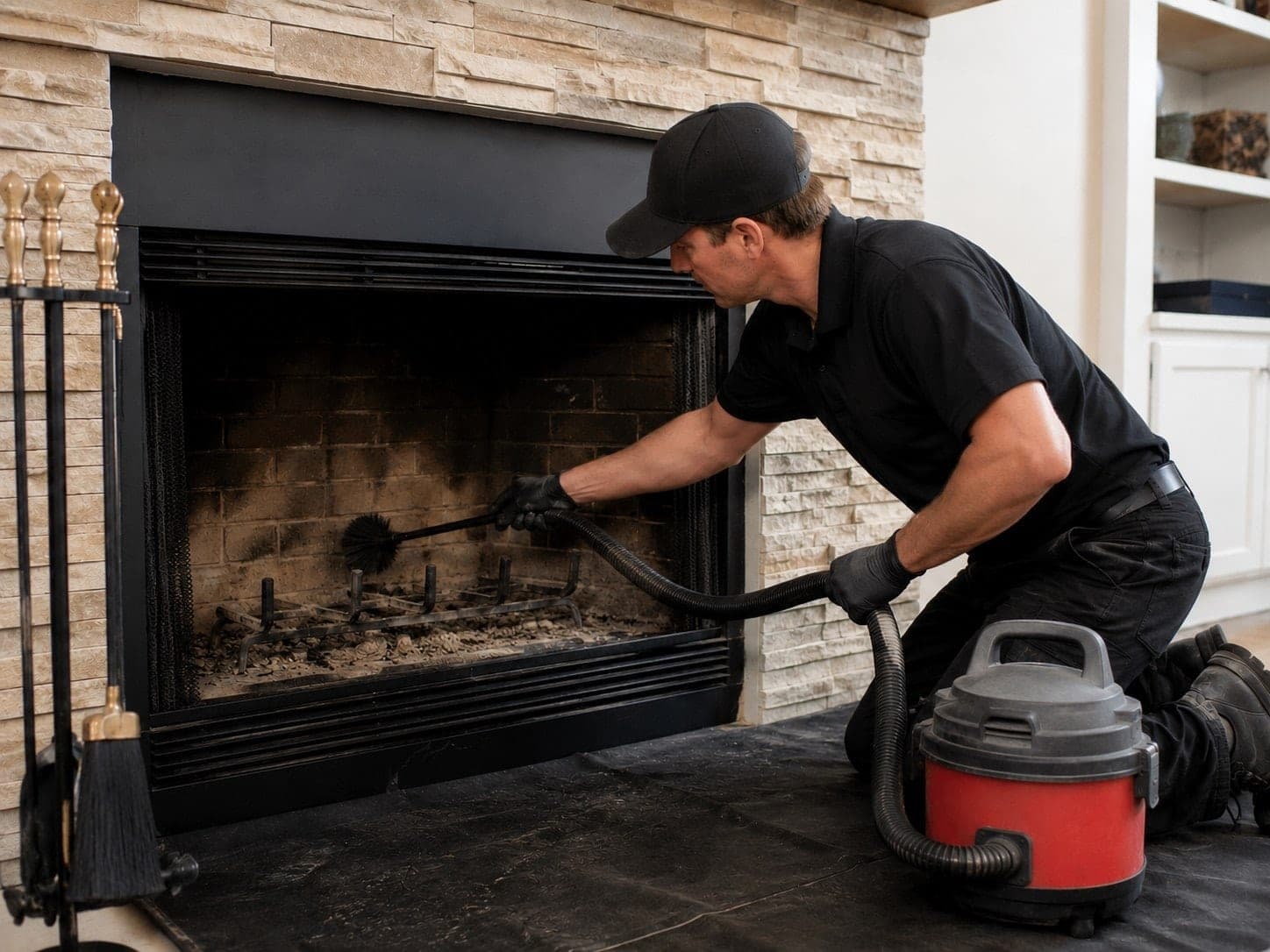
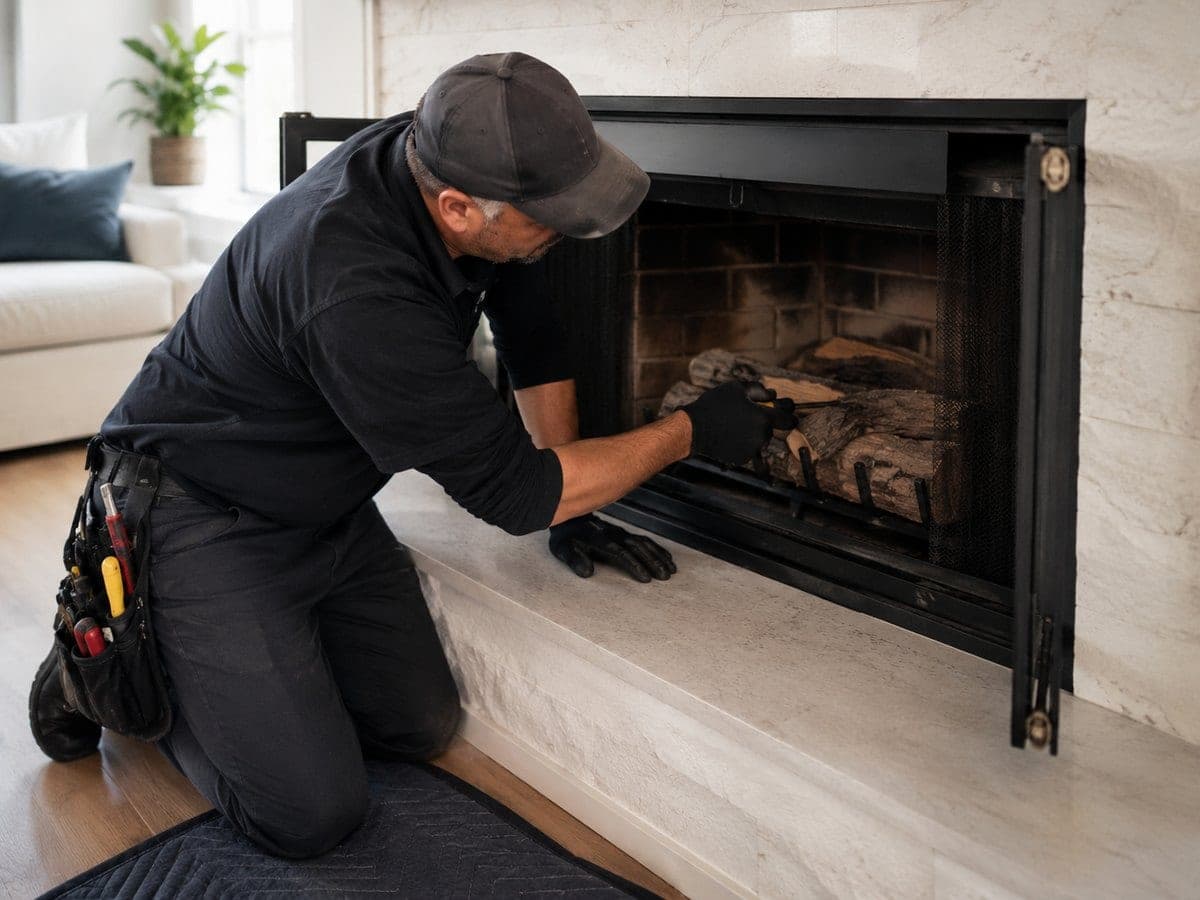
What the visit covers
Only parts listed for that model keep the fireplace within its tested clearances. Cracked refractory panels let heat reach the metal box and the framing around it.
Find the listing
The make, model and label decide which parts and repairs are allowed.
Check the firebox
Refractory panels, the metal box, doors, glass and the damper.
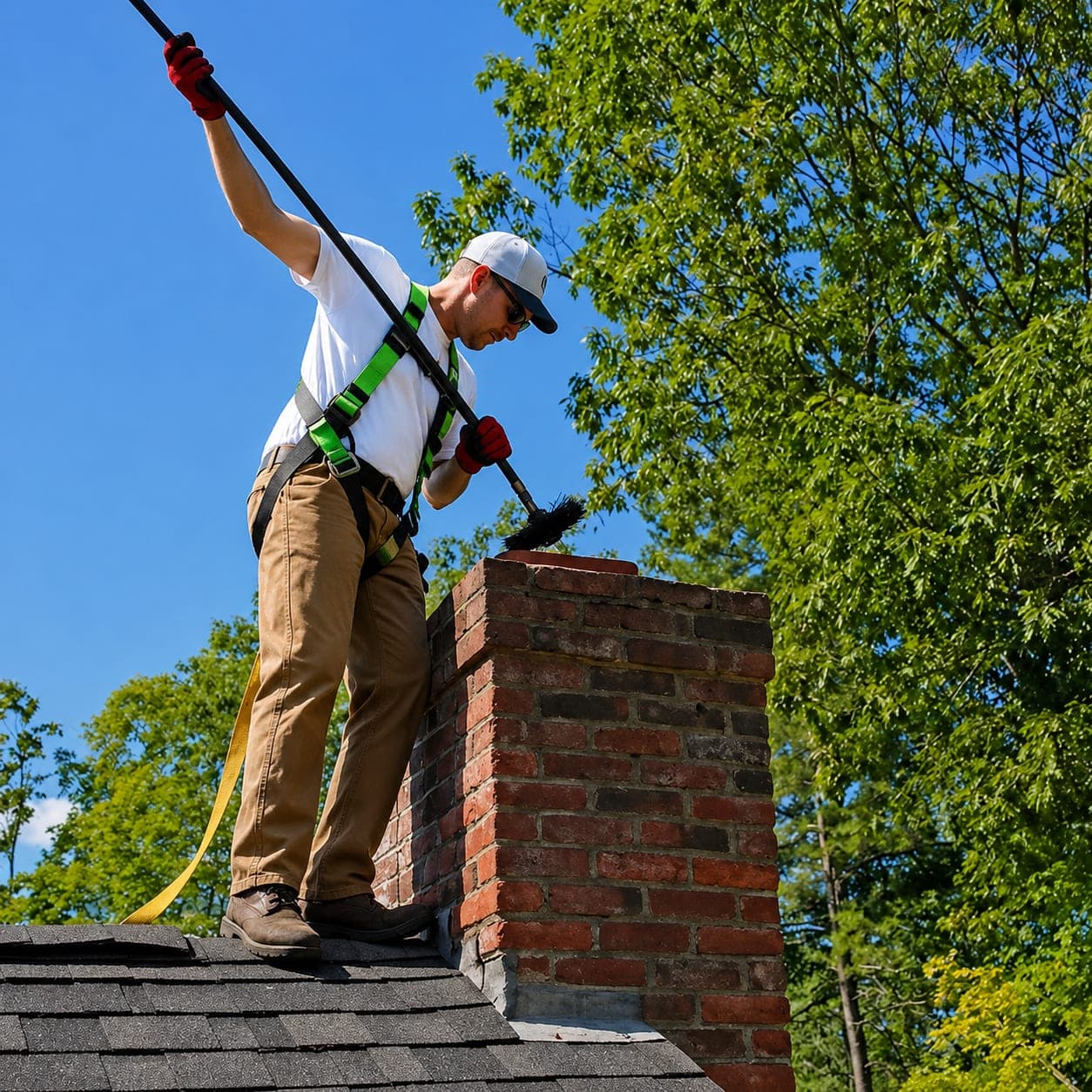
Check the chimney
Metal flue sections, joints, chase cover and cap from the top where it's safe.
Explain
Repair with listed parts, or replacement if the unit is beyond it.
Checked on every visit
- Firebox metal for rust or warping
- Refractory panels
- Rating label and model
- Damper and doors
- Chase cover and cap
Getting ready for the visit
- Clear a few feet around the unit and the area under any connector pipe.
- Write down what you've noticed — smoke at the door, a hard-to-control fire, noises or smells.
- Let the fireplace go out and cool completely — ideally no fire for a full day before the visit.
- Make sure the roof or the attic access can be reached if the flue needs to be checked from above.
Signs of a chimney fire
A loud roaring sound, a glowing connector pipe, dense smoke or sparks from the top of the chimney can mean a chimney fire. Get everyone out and call 911; have the system inspected before the next fire.
Signs to watch for
- Rust or warping in the firebox
- Cracked or crumbling refractory panels
- Gaps or loose sections in the metal chimney
- Doors or glass that don't seal
- Water stains or rust from a leaking chase cover
Zero clearance fireplaces benefits, and their limits
These units became popular for good reasons:
- They fit homes and rooms that never had a masonry chimney.
- They're far lighter, so they don't need a masonry footing.
- They can be framed into an interior wall or an exterior chase.
- They come in wood-burning and gas versions.
The trade-off is that much of the unit is a wear part. Refractory panels crack, metal firebox walls can warp, chase covers rust and the chimney pipe sections are specific to the manufacturer. Repairs have to use parts listed for that system; mixing brands isn't an option. That's where Refractory Panel Replacement, Prefab Chimney & Chase Repair, Chase Cover Replacement and Chimney Cap Replacement come in. For warning signs worth knowing, see common chimney issues.
Understanding zero clearance gas fireplaces
Many zero clearance gas fireplaces are direct-vent units: a sealed glass front with combustion air drawn from outdoors and exhaust sent out through a pipe-within-a-pipe vent. Others are B-vent models that use room air. Either way, they need different care than a wood unit. There's no creosote, but the glass picks up a white film, burners and pilot assemblies collect dust and debris, and gaskets wear.
Our Gas Fireplace Service & Maintenance covers the burner, pilot, logs and venting, and Fireplace Glass Replacement & Door Repair handles cracked or hazy glass. When a unit is past saving, Prefab Fireplace Replacement swaps in a new listed system; read about how zero clearance fireplace installation works if you're weighing that step, or see the custom fireplace design service for finish options around a new unit.