On this page
What zero clearance actually means
The name confuses a lot of people. Zero clearance means the firebox has insulated, air-cooled walls, so it can sit against or very close to wood framing at the points the manufacturer specifies. It doesn't mean nothing needs clearance. The chimney pipe, the wall above the opening and the mantel all have minimum distances listed in the installation manual, and those numbers vary by model.
The firebox and its chimney pipe are engineered and tested together, so they're installed as a matched system. Our guide to zero clearance fireplaces goes deeper, and the parts of a fireplace are explained in a separate guide.
| Feature | Masonry | Zero clearance |
|---|---|---|
| Construction | Brick, block and mortar built on site | Factory-built steel firebox with listed chimney pipe |
| Weight | Heavy; needs substantial support | Much lighter; framed into the room |
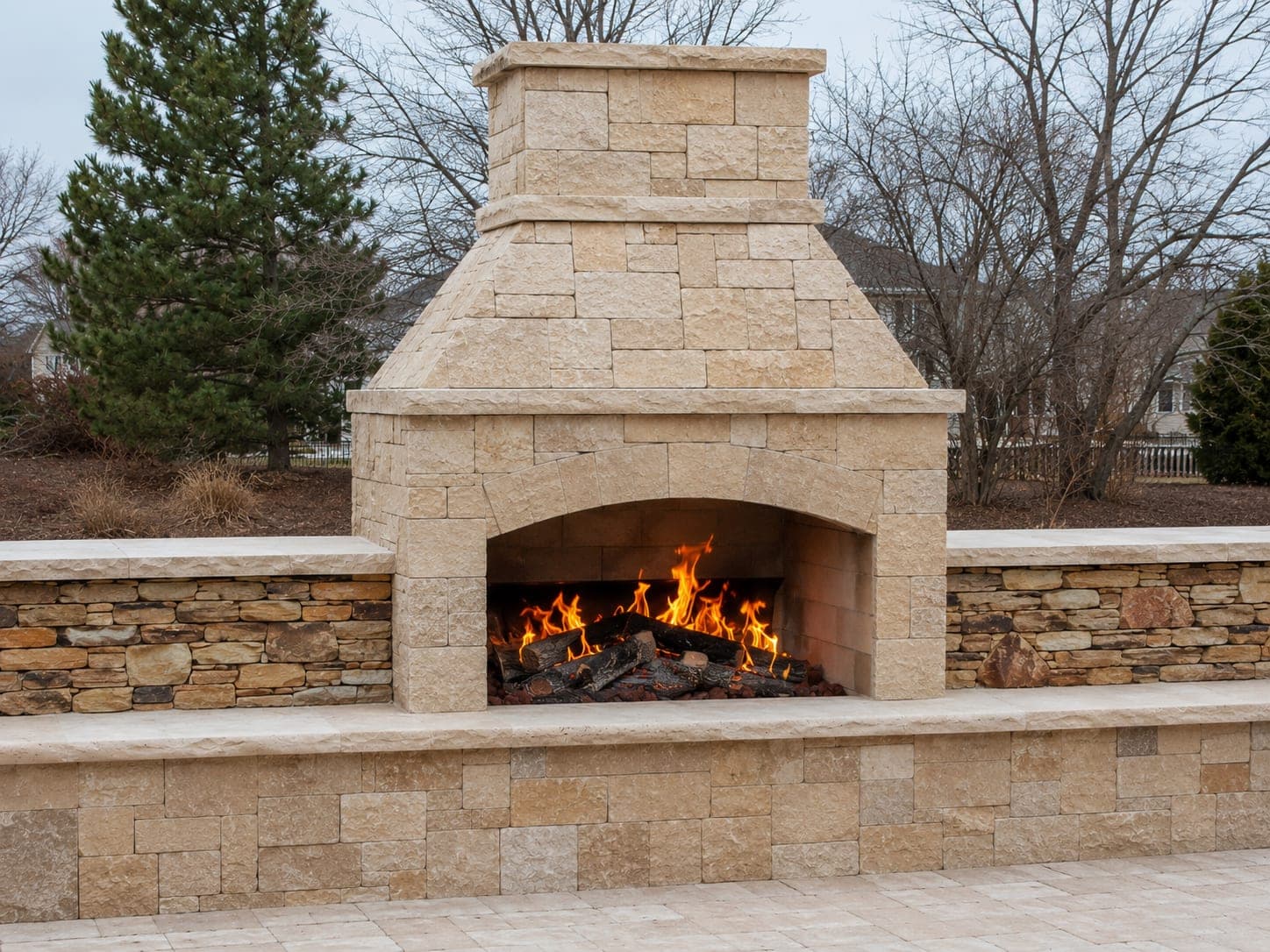
| Venting | Masonry chimney with a liner | Metal chimney pipe in a chase or interior run |
| Good fit for | New construction planned around it | Additions, basements and remodels |
Construction
- Masonry
- Brick, block and mortar built on site
- Zero clearance
- Factory-built steel firebox with listed chimney pipe
Weight
- Masonry
- Heavy; needs substantial support
- Zero clearance
- Much lighter; framed into the room
Venting
- Masonry
- Masonry chimney with a liner
- Zero clearance
- Metal chimney pipe in a chase or interior run
Good fit for
- Masonry
- New construction planned around it
- Zero clearance
- Additions, basements and remodels
What the visit covers
Cracked refractory panels let heat reach the metal box and the framing around it. The metal chimney and chase cover are part of the listing; a rusted cover or a mismatched part changes how the system performs.
Plan the system
Unit, listed chimney or vent route, chase and clearances are chosen together.
Remove and prepare
An old unit is removed and the framing checked or adjusted.
Install
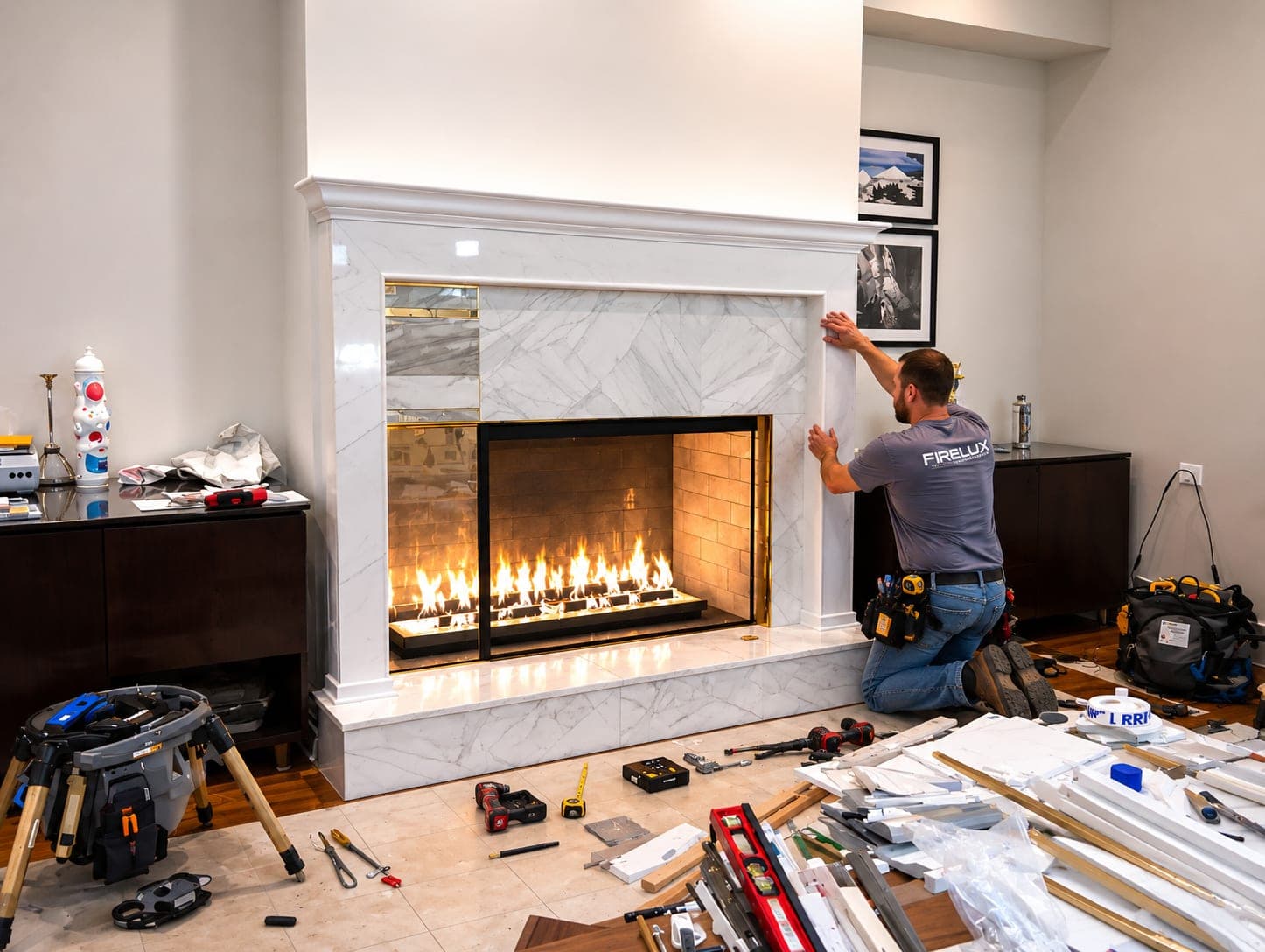
The fireplace and its listed chimney sections, chase cover and cap go in as one system.
Finish and test
Surround and hearth are completed and the unit is test-fired.
How to prepare
- Have the make and model handy; it's usually on a plate on the back or under the ash lip.
- Write down what you've noticed — smoke at the door, a hard-to-control fire, noises or smells.
- Let the fireplace go out and cool completely — ideally no fire for a full day before the visit.
- Make sure the roof or the attic access can be reached if the flue needs to be checked from above.
What we look at
- Framing and clearances
- Gas supply or hearth requirements by fuel
- Chase and chase cover
- Listed chimney or vent route
- Permit requirements
Signs of a chimney fire
A loud roaring sound, a glowing connector pipe, dense smoke or sparks from the top of the chimney can mean a chimney fire. Get everyone out and call 911; have the system inspected before the next fire.
When to book zero clearance fireplace installation
- Smoke spilling from the opening
- Cracked or crumbling refractory panels
- Rust or warping in the firebox
- Gaps or loose sections in the metal chimney
Planning a zero clearance installation
Most of the important decisions are made before the unit arrives. These are the ones that shape the job.
- Vent route. The chimney pipe needs a clear path straight up through the house or out to an exterior chase, with the offsets the manual allows.
- Fuel. Zero clearance fireplaces come in wood-burning and gas models. Gas units need a gas line, and we can install one.
- Wall finish. Stone, tile and drywall surrounds have to use materials the manual permits within each clearance zone.
- Doors and trim. Many units accept glass doors, and fireplace door installation can be done as part of the job.
Some zero clearance models are built for heating, with tight doors and outside combustion air. Others are mainly decorative. Efficient fireplace design covers the difference, which is worth knowing before you choose a model. If you'd rather skip combustion altogether, an electric unit can be framed into a wall instead. See electric fireplace installation.
Replacing an Old zero clearance unit
Factory-built fireplaces wear out differently from masonry ones. Common problems include warped or rusted firebox walls, cracked refractory panels and a leaking chase cover that rusts the unit from above. Panels and chase covers can often be replaced on their own. When the firebox itself has failed, the safe fix is a new unit matched to its own listed venting. Pairing a new firebox with old pipe from a different manufacturer isn't.