On this page
Fireplace throat damper installation
The throat damper is the cast-iron plate just above the firebox, at the narrow opening into the smoke chamber. Most masonry fireplaces were built with one, operated by a handle, a rotary knob or a poker hook. Years of heating and cooling can warp the plate, rust through the pivot pins and crack the frame loose from the masonry. Once that happens, no amount of adjusting will make it close square.
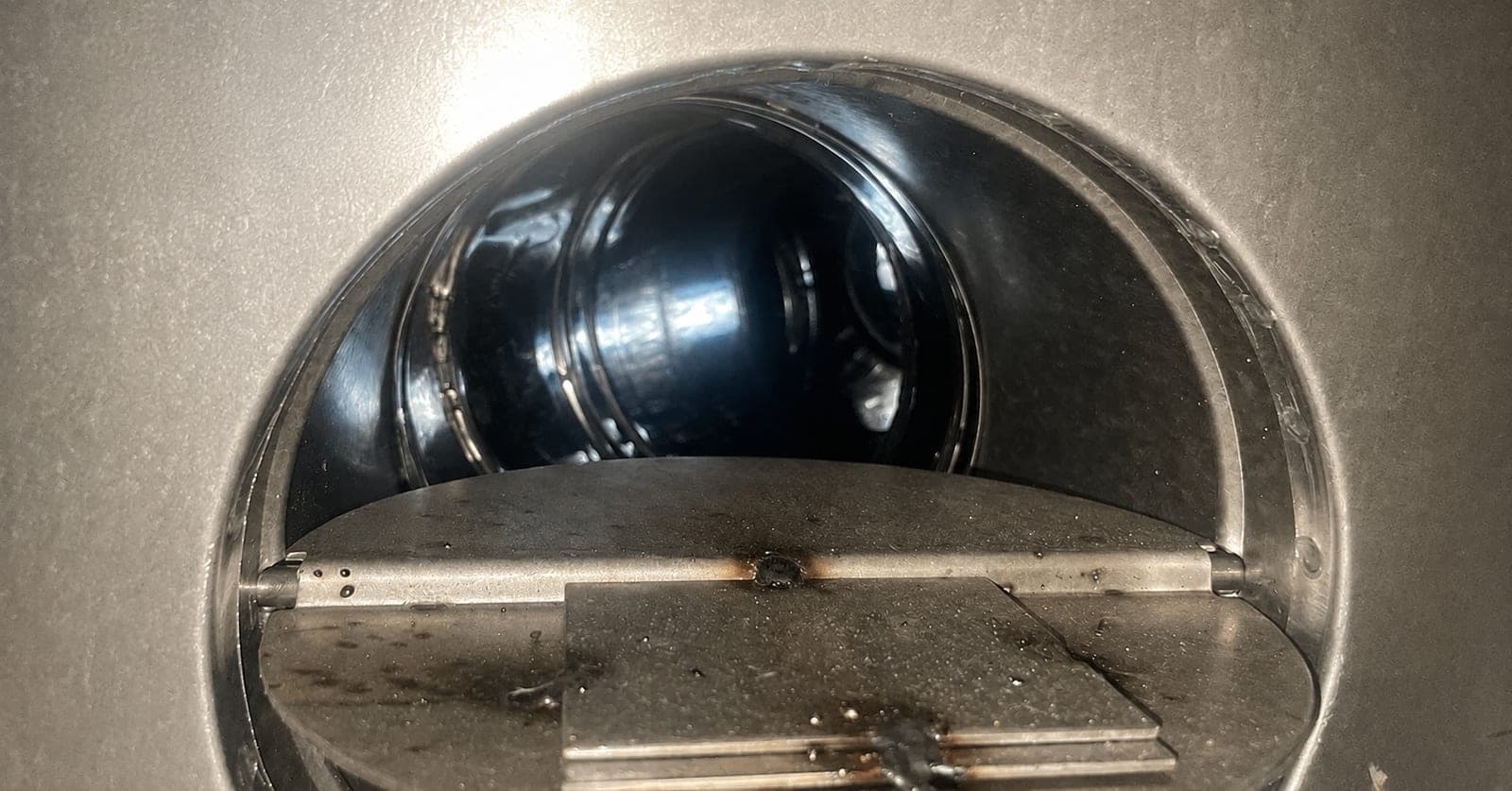
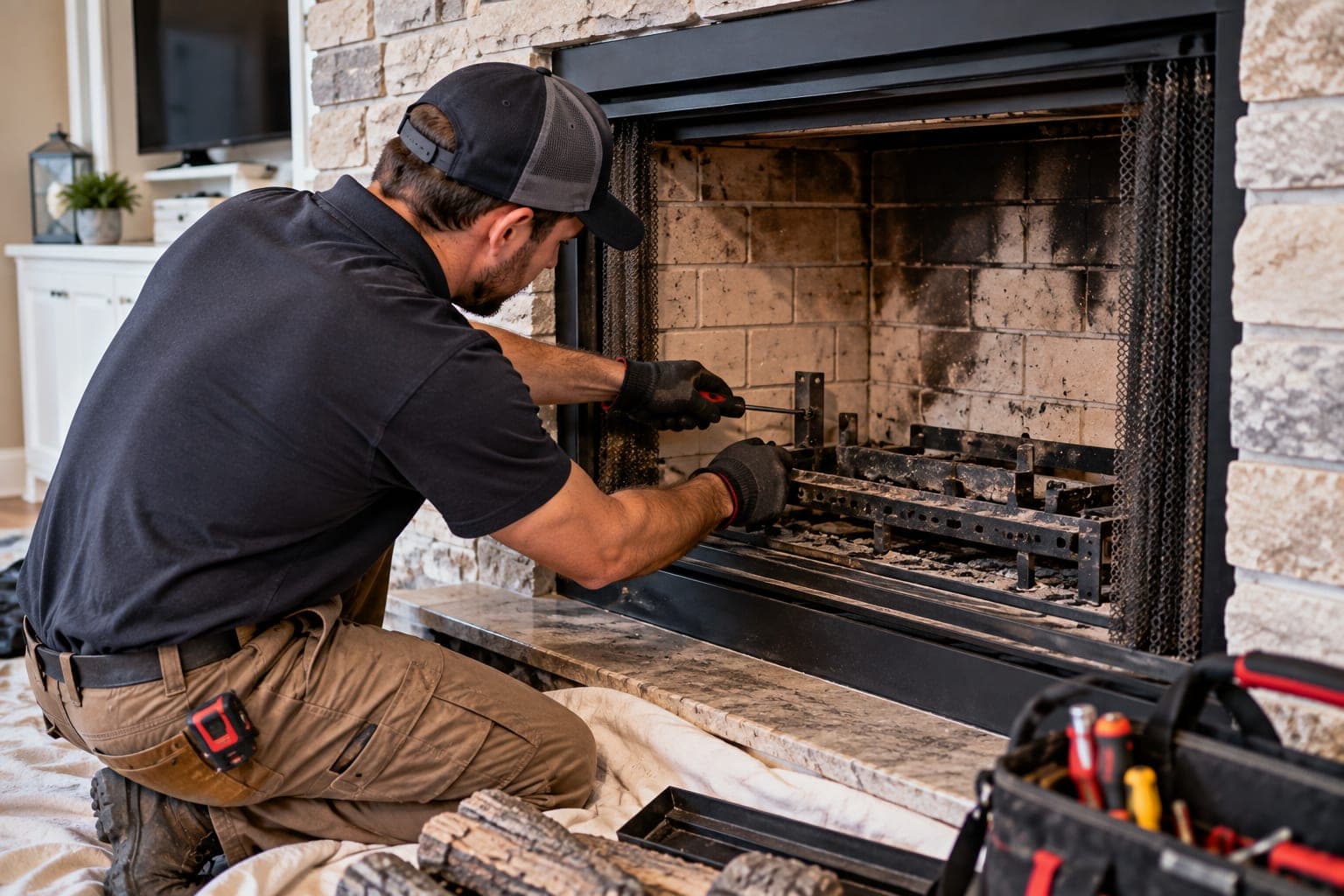
Installing a new throat damper means measuring the opening, removing the failed plate and frame, and setting a replacement sized to that throat so it seats against the masonry without gaps. For a picture of where the throat sits relative to the smoke shelf and flue, see our guide to fireplace anatomy.
Signs the throat damper has reached the end of its life
- The handle moves but the plate stays put
- You feel a cold draft or see daylight with the damper closed
- Rust flakes or bits of metal land on the firebox floor
- The plate jams partway open and the fire smokes
A stuck damper doesn't always need replacing. A seized pivot or bent linkage can sometimes be freed, and that falls under fireplace damper repair. We'll tell you which one your fireplace actually needs.
Throat damper or Top-Sealing damper?
| Feature | Throat damper | Top-sealing damper |
|---|---|---|
| Location | Just above the firebox | At the top of the flue |
| Operation | Handle or knob at the firebox | Cable running down to the firebox |
| Seal when closed | Metal on metal, with some leakage | Gasketed lid at the top |
| Best fit | Throat frame still sound | Throat too damaged or irregular for a new plate |
Location
- Throat damper
- Just above the firebox
- Top-sealing damper
- At the top of the flue
Operation
- Throat damper
- Handle or knob at the firebox
- Top-sealing damper
- Cable running down to the firebox
Seal when closed
- Throat damper
- Metal on metal, with some leakage
- Top-sealing damper
- Gasketed lid at the top
Best fit
- Throat damper
- Throat frame still sound
- Top-sealing damper
- Throat too damaged or irregular for a new plate
A top-sealing damper is often the practical answer when the old throat frame is too corroded or oddly shaped to take a new plate. Because it closes the flue at the top, it stops warm room air from escaping between fires, which helps if you're working toward a more efficient fireplace. Either type has to be fully open before every fire. Lighting a fire with the damper closed sends smoke and carbon monoxide into the room, as our fireplace safety guide explains. For dampers on other flues, see our damper installation service.
Fireplace damper installation across Connecticut
The work is the same from town to town. What changes is the fireplace, so we measure and fit to the flue in front of us. Estimates are free, same-day visits are offered when the schedule allows, and emergency calls are accepted 24 hours a day, Sunday through Friday.
Fireplace damper installation in Connecticut
If the damper handle in your Hartford home has gone slack, or the room stays chilly with the damper shut, we'll check whether the throat can take a new plate and quote the job before any work starts.
Fireplace damper installation in Meriden, CT
Smoke rolling into the room is a common sign that a damper won't open all the way. If that's happening in Meriden, request an estimate before your next fire so we can see whether the plate, the frame or the flue is to blame.
Fireplace damper installation in Naugatuck, CT
When a Naugatuck fireplace has sat unused for years, a new damper is often one step in getting it ready to burn again. We look at the damper along with the firebox and flue.
Fireplace damper installation in Oronoque, CT
Homeowners in Oronoque can describe what their damper is doing and ask for a free estimate. We'll measure the opening and explain the options that suit it.
How damper work is done
A damper stuck partly closed sends smoke into the room. A damper that won't close lets warm air out and cold air, rain and animals in.
Check the damper
How it opens, closes and seals, and what has rusted, warped or broken.
Choose the fix
Clean and adjust, replace parts, or add a top-sealing damper at the crown.
Install or repair
The damper is repaired or installed, with its control run to the firebox where needed.
Test
Open, close and seal are checked, and you're shown how to use it.
Damper open before every fire
Always open the damper fully before lighting a fire and leave it open until the fire is completely out and the fireplace is cold. A closed damper sends smoke and carbon monoxide into the room.
How to prepare
- Let the fireplace cool completely — no fire the day before.
- Note whether the damper sticks open, sticks closed or won't seal.
- Clear the hearth and the area in front of the fireplace.
Checked on every visit
- Handle, chain or control
- Smoke chamber above the damper
- Crown and flue top for a top-sealing damper
- Seal when closed
- Damper plate and frame
- Rust and warping
Signs to watch for
- Smoke in the room even with the damper open
- A damper handle that won't move or moves without opening anything
- A damper plate that's missing or broken
- Cold drafts from the fireplace when it isn't in use