On this page
Masonry or prefab: the fireplace decides the door
Brick and stone openings are rarely perfectly square. Mortar joints wander, the lintel may sag slightly and the face can be uneven. We measure at several points and choose or size the frame to seal against the actual opening, not a nominal one. Gaps around a frame let room air feed the fire and let warm air leak out when the fireplace is off.
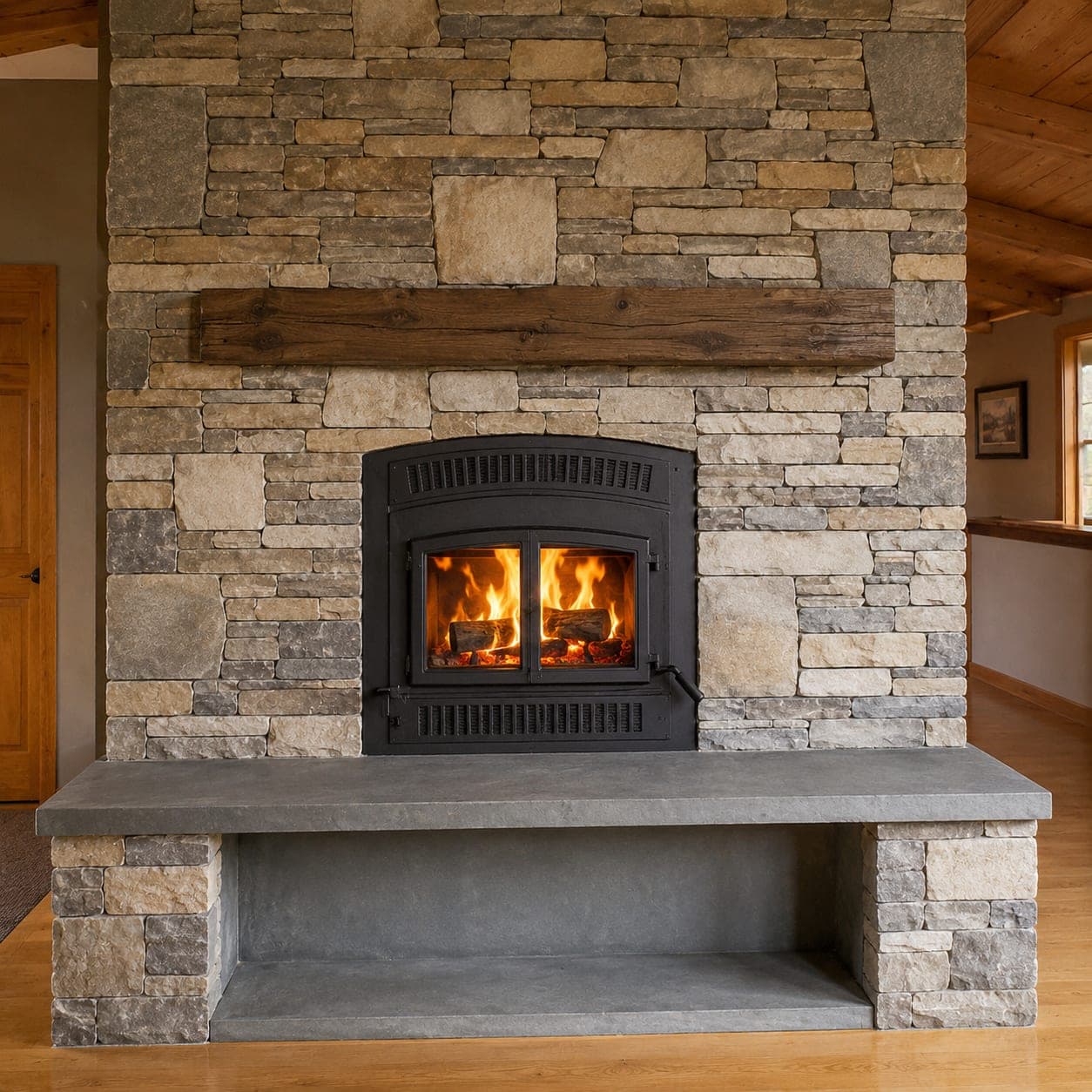
Factory-built fireplaces work differently. Most manufacturers allow only doors listed for that specific model, because an unapproved door can block cooling air passages and overheat the unit. We check the fireplace's make and model before recommending anything. Not sure which type you have? Our guide to fireplace anatomy shows the differences. Fireplace safety basics explain why clearances and approved parts matter.
Doors don't replace a damper
Glass doors cut drafts but don't seal the flue. If the damper is rusted, warped or missing, pair the new doors with fireplace damper installation.
How the visit works
Venting must match the appliance's listing or it won't draft or pass inspection. A unit sized for the room heats comfortably; one far too large makes the space too warm.
Look at the space
The opening, wall or chase, the chimney and the fuel available are checked.
Choose the unit
Size, fuel and style are matched to the room and the venting.
Install
The unit and its venting are installed to the manufacturer's instructions and local code.
Test
The unit is fired and checked, and you're shown how to use it.
Getting ready for the visit
- Keep pets in another room while the work area is open.
- Make sure the technician can reach the roof or attic access if it's needed.
- Clear a few feet of space in front of the hearth or appliance.
- Write down what you've noticed and when it happens — smells, smoke, sounds or stains.
What we look at
- Opening or framing dimensions
- Hearth extension and protection
- Vent or liner route and length
- Required clearances to combustibles
- Gas supply or electrical needs
When to book fireplace door installation
- An open fireplace that sends most of its heat up the chimney
- A switch from wood to gas or electric
- A remodel that adds or moves a fireplace
- A worn-out insert or stove
If you smell gas
Leave the home right away, don't use switches or phones inside, and call your gas utility or 911 from outside.
Fireplace ash door installation service
Many masonry fireplaces have a second kind of door that gets forgotten: the ash door. An ash dump door sits in the firebox floor and drops ashes into a pit below. A cleanout door at the base of the chimney lets you empty that pit. When either door rusts through, warps or goes missing, it leaks cold air, lets ash escape and can give small animals a way in.
We replace ash dump and cleanout doors sized to the existing opening. A damaged ash door is often something we spot while installing glass doors above it, so it's worth asking about both at once.
Fireplace door installation in Hartford and west of the city
We install fireplace doors in Hartford, in the surrounding communities including towns to the west, and across Connecticut. Estimates are free, same-day service is offered where the schedule allows, and we take calls 24 hours a day, Sunday through Friday. Still deciding on a style? Compare options on the fireplace door page first. For habits that save heat alongside new doors, see efficient fireplace tips.