On this page
- What wood fireplace repair covers and who needs it
- Signs your wood-burning fireplace needs repair
- What a repair visit involves
- What we check and fix
- Wood fireplace cracks repair solutions
- Repair, restore, insert or replace: choosing the right option
- Wood fireplace repair cost: what affects the scope
- Wood fireplace repair in East Hartford, Fairfield and across Connecticut
- Claim a free wood fireplace repair estimate today
- How to prepare for the visit
What wood fireplace repair covers and who needs it
Wood fireplace repair restores the parts of a wood-burning fireplace that handle intense heat and smoke. These include the firebox, the refractory panels or firebrick, the damper, the smoke chamber, the doors and glass, and the connection to the chimney. When one of these fails, heat can reach framing it was never meant to touch, or smoke and carbon monoxide can find a way into the house.
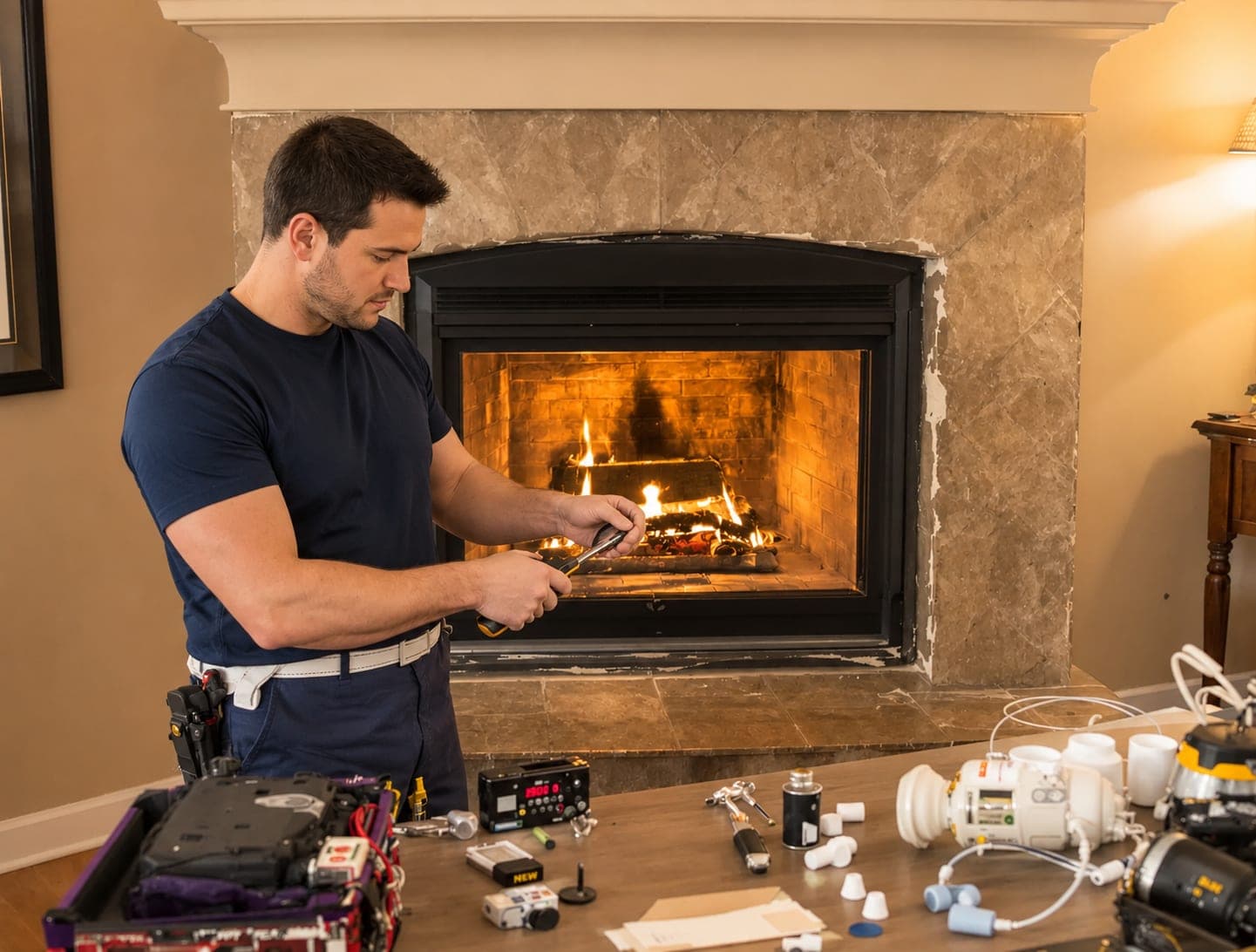
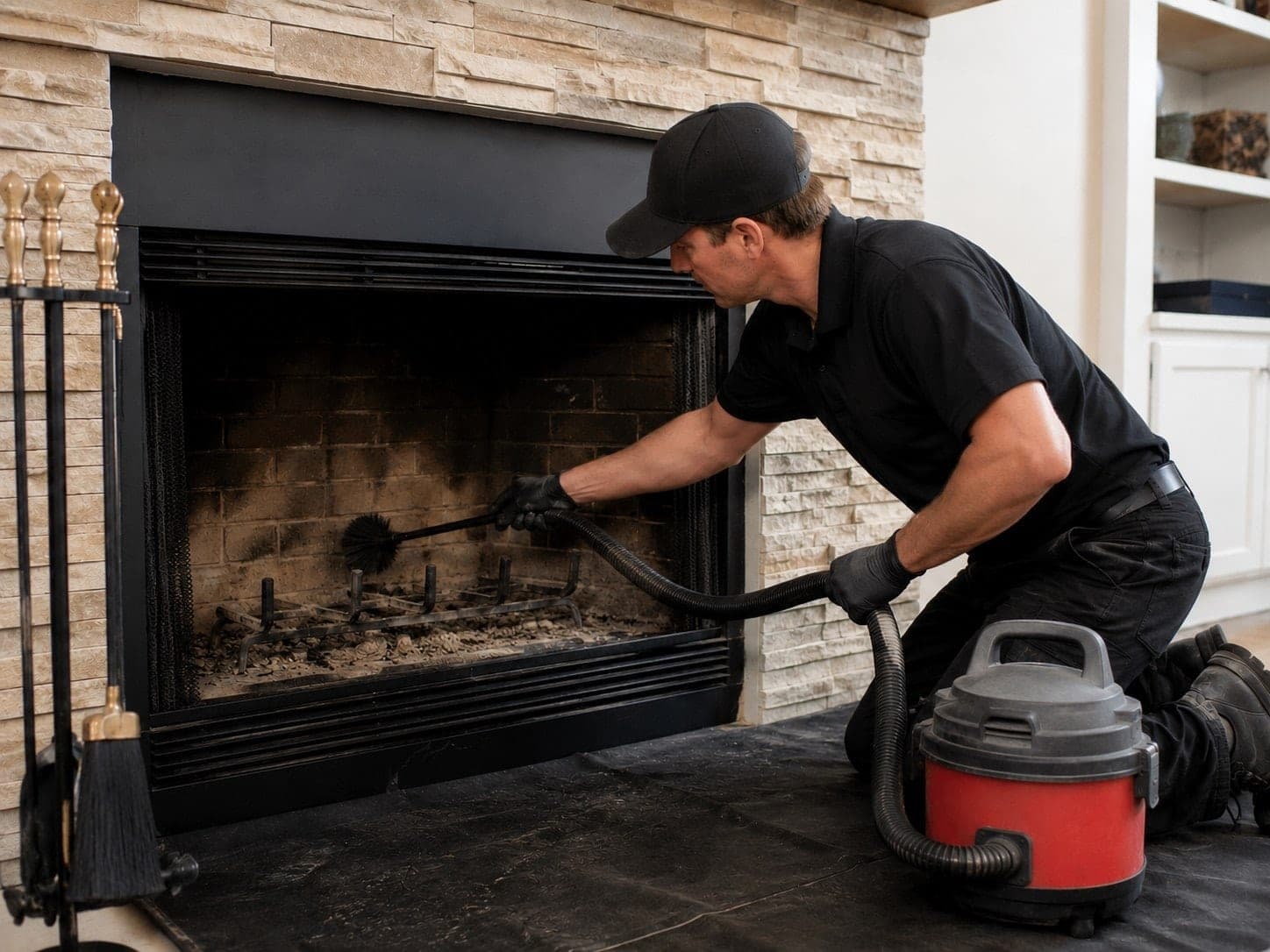
You likely need this service if you burn wood regularly, just bought a home with an older fireplace, or are returning to a fireplace that sat unused for years. It also applies to factory-built wood units, which have their own parts and repair rules. If the firebox only needs soot and ash cleared out, our wood burning fireplace cleaning service may be the better first step.
Signs your wood-burning fireplace needs repair
- Cracks, gaps or missing mortar in the firebrick or the back wall
- Refractory panels in a factory-built unit that are crumbling, split or bulging
- Smoke spilling into the room when the fire is lit or the door is opened
- A damper that sticks, won't close fully, or has rusted through
- Cracked glass, warped doors or worn gaskets on a glass-front unit
- A strong smoky or musty smell when the fireplace isn't in use
- Rust stains, flaking metal or water marks inside the firebox
- A carbon monoxide alarm that sounds while a fire is burning
Stop using the fireplace if you see this
Open cracks that go through the firebox, smoke inside the home, or a carbon monoxide alarm all mean the fireplace should not be used until it has been checked. Stop adding fuel, open a window and don't relight the fire until the chimney has been checked. If the smoke is heavy, an alarm sounds or you suspect a chimney fire, get everyone outside and call 911. Emergency calls are accepted, and we're available 24 hours, Sunday through Friday.
What a repair visit involves
How a wood fireplace repair visit works
Talk through the problem
You describe what you've noticed, such as when the smoke appears, where the crack is, and how often you burn.
Inspect the fireplace
We look at the firebox, damper, smoke chamber, doors and chimney connection. For factory-built units, we also read the rating plate to identify the model.
Explain what we found
You get a plain account of the damage, what's causing it, and which repairs are needed now versus later.
Free estimate
The estimate is free. It covers the repair options and what each involves, so you can decide before any work starts.
Complete the repair
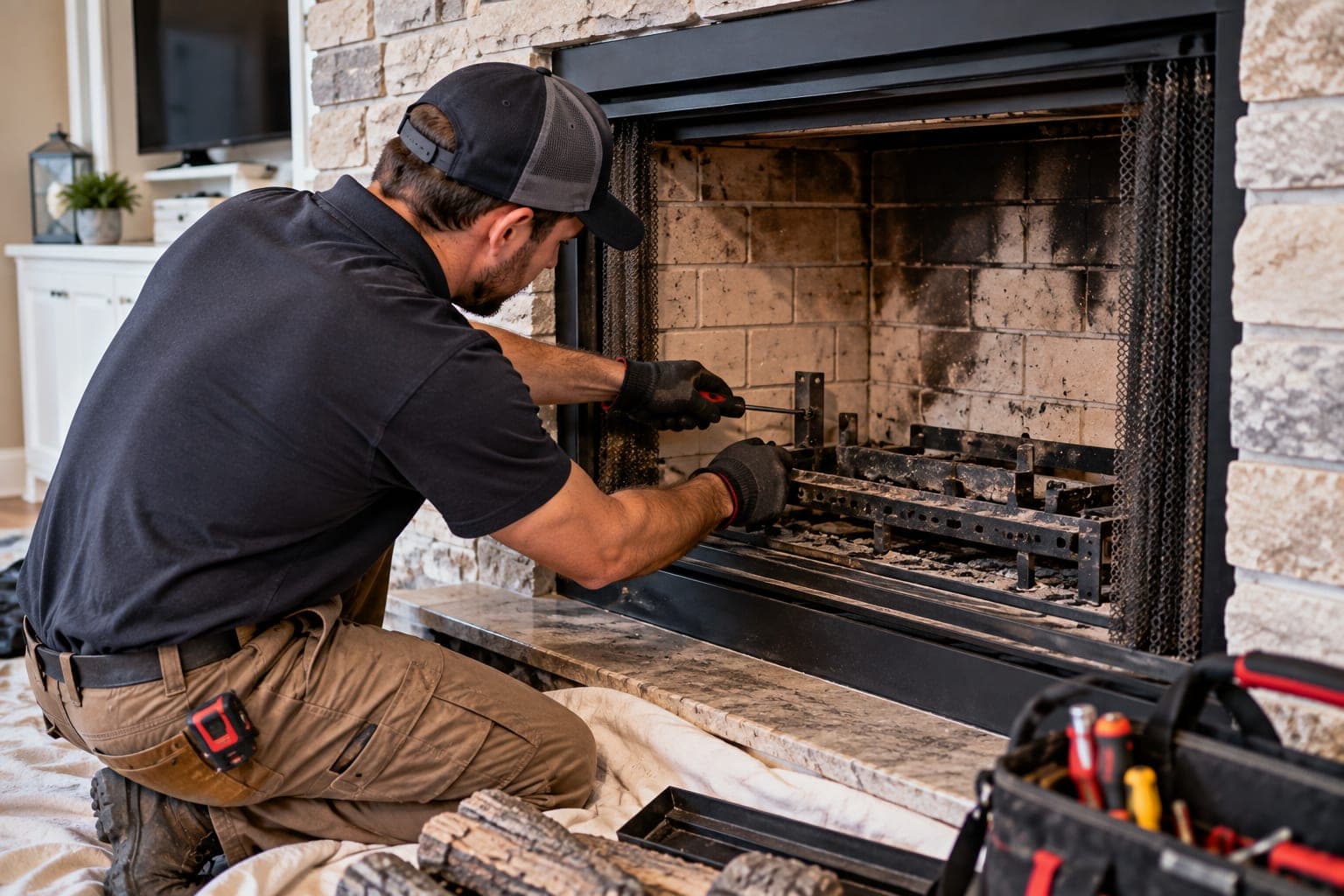
We repair or replace the damaged parts using materials suited to fireplace heat, then check that the damper, doors and draft work properly.
What we check and fix
Wood fireplace repair checklist
- Firebrick joints and faces for cracks, spalling and loose mortar
- Refractory panels in factory-built fireboxes
- Hearth and hearth extension for cracks and gaps
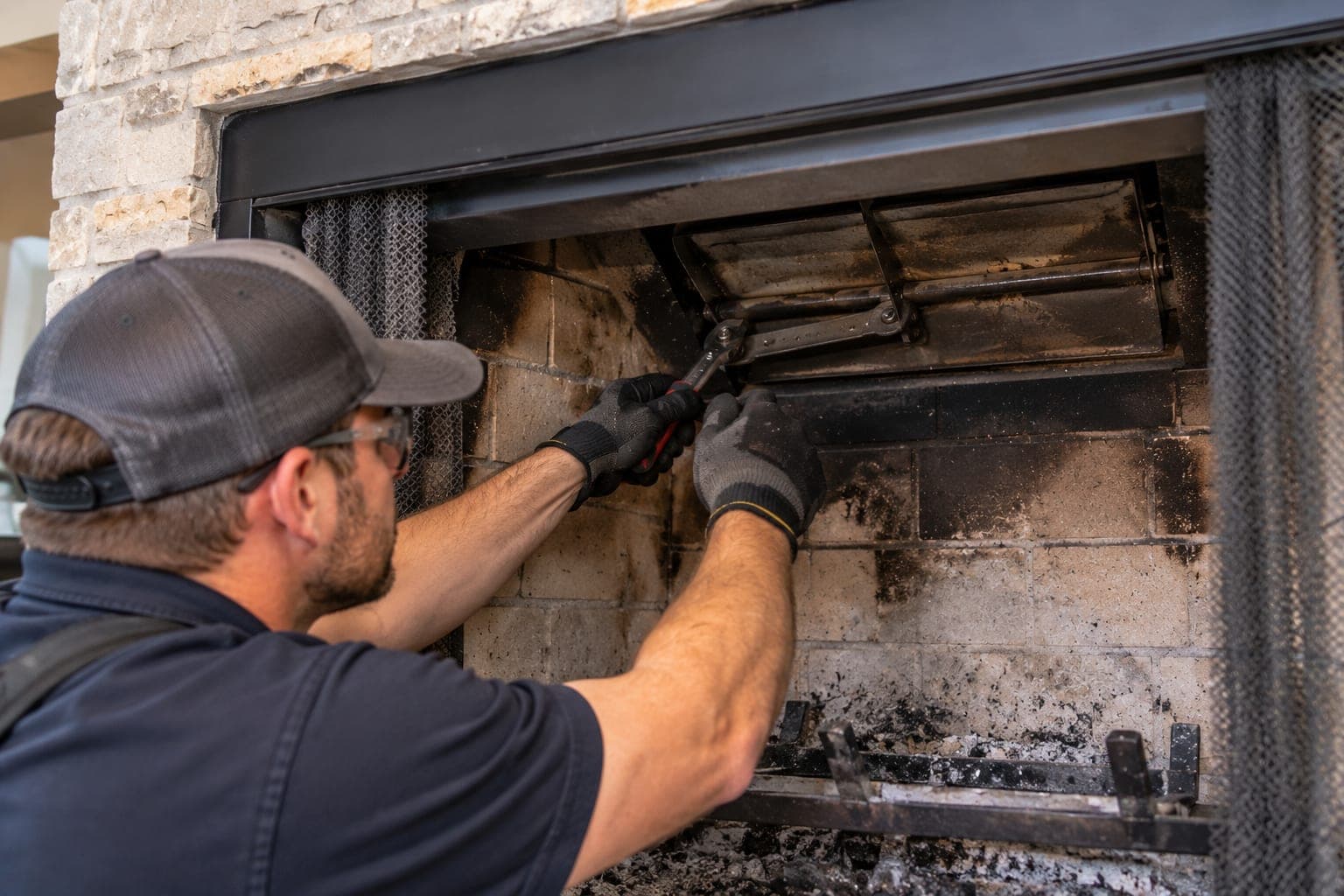
- Damper plate, handle, frame and seal
- Smoke chamber walls above the damper
- Glass doors, frames, hinges and gaskets
- Firebox-to-flue connection and visible chimney liner
- Draft behavior during a test, where it's safe to run one
- Signs of water entry, rust or heat damage around the opening
Wood fireplace cracks repair solutions
Not every crack means the same thing. The right fix depends on how wide the crack is, where it sits, and whether the fireplace is masonry or factory-built.
Masonry fireboxes
Hairline cracks in mortar joints can often be raked out and refilled with refractory mortar made for high heat. Ordinary mortar breaks down under fire. Cracked or crumbling firebricks are cut out and replaced. When the back wall or sides have failed across a wide area, a partial or full firebox rebuild is usually the lasting fix. If cracks continue into the smoke chamber, that area is parged or repaired as well.
Factory-built fireboxes
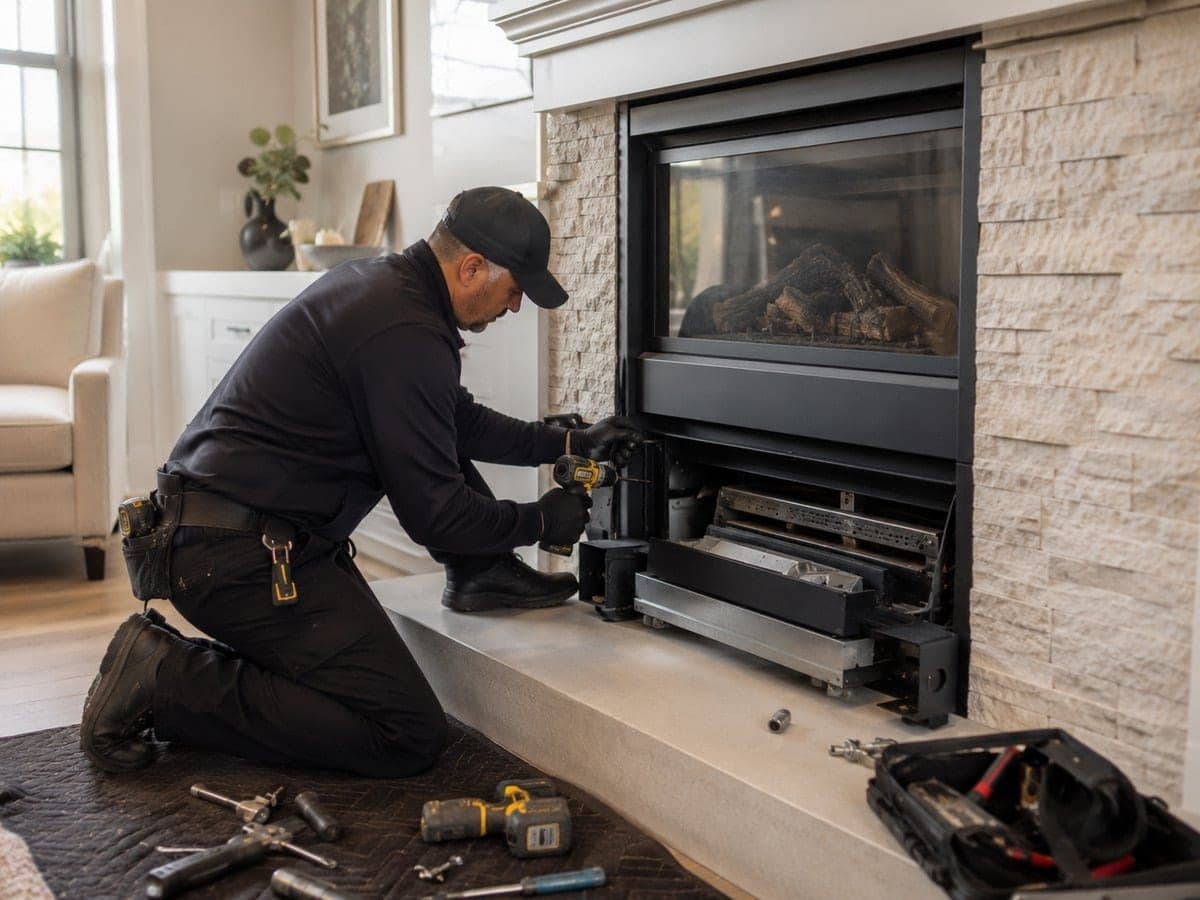
Prefab wood fireplaces use refractory panels instead of brick. Small surface checking is common and isn't always a problem. Panels that are split through, bulging, or missing pieces should be replaced with panels made for that specific model. Patching them with general-purpose products can affect how the unit was designed to handle heat.
| Feature | Masonry fireplace | Factory-built fireplace |
|---|---|---|
| Firebox lining | Firebrick set in refractory mortar | Model-specific refractory panels |
| Typical crack fix | Repoint joints or replace bricks | Replace damaged panels |
| Major damage | Firebox or smoke chamber rebuild | Unit repair or replacement |
| Parts | Standard refractory materials | Parts listed for that model |
Firebox lining
- Masonry fireplace
- Firebrick set in refractory mortar
- Factory-built fireplace
- Model-specific refractory panels
Typical crack fix
- Masonry fireplace
- Repoint joints or replace bricks
- Factory-built fireplace
- Replace damaged panels
Major damage
- Masonry fireplace
- Firebox or smoke chamber rebuild
- Factory-built fireplace
- Unit repair or replacement
Parts
- Masonry fireplace
- Standard refractory materials
- Factory-built fireplace
- Parts listed for that model
Repair, restore, insert or replace: choosing the right option
Most problems are solved with a straightforward repair. Sometimes a different approach makes more sense:
- Repair works when the damage is limited to specific parts, such as joints, panels, the damper or the doors.
- Restoration suits a masonry fireplace that is structurally sound but worn in many places.
- An insert can make an old open fireplace burn more efficiently. See how wood and gas fireplace inserts work.
- Replacement or new installation may be the answer for a failed factory-built unit. Our traditional wood fireplace installation service covers that route.
If you're also wondering whether to keep burning wood at all, our guide to gas vs wood fireplaces compares the two. The tips on running a more efficient fireplace are also useful after a repair.
Wood fireplace repair cost: what affects the scope
We don't publish prices because two fireplaces with the same symptom can need very different work. The free estimate is based on what we actually find during the inspection.
| Factor | Why it matters |
|---|---|
| Type of fireplace | Masonry and factory-built units use different materials and methods |
| Extent of damage | A few joints need far less work than a failed back wall |
| Parts availability | Model-specific panels and doors may need to be ordered |
| Access | Tight openings and tall smoke chambers take longer to work in |
| Related problems | Water entry or chimney issues may need to be fixed at the same time |
Wood fireplace repair cost in East Hartford, CT
The same factors apply in East Hartford as anywhere else in Connecticut. The scope of the work sets the cost, not the zip code. Request an estimate, and we'll explain what's needed and why before any work begins.
Wood fireplace repair in East Hartford, Fairfield and across Connecticut
We handle wood fireplace repair for homeowners in Hartford, East Hartford, West Hartford, Fairfield and elsewhere in Connecticut. Same-day service is offered where the schedule allows, and emergency calls are accepted at any hour, Sunday through Friday.
Claim a free wood fireplace repair estimate today
Call or request an estimate. Describe what you're seeing, and send photos of the firebox, glass or damper if you can. We'll arrange a visit and walk you through the options.
How to prepare for the visit
- Stop burning at least a day ahead so the firebox is cool to work in.
- Leave ashes in place unless they're fully cold, and store any you remove in a metal container with a lid.
- Clear the hearth and about a few feet of floor space in front of it.
- Move rugs, furniture and decorations away from the opening.
- Note when the problem happens, for example only on windy days or only when a door is open.
- Find the model information for factory-built units if you can.
Safety notes
Never pour water on a fire or into a hot firebox. The sudden temperature change can crack brick and panels. Don't use a fireplace with cracked glass or a door that won't latch, and keep working carbon monoxide and smoke alarms on every level of the home.