On this page
What makes an Osburn fireplace worth repairing
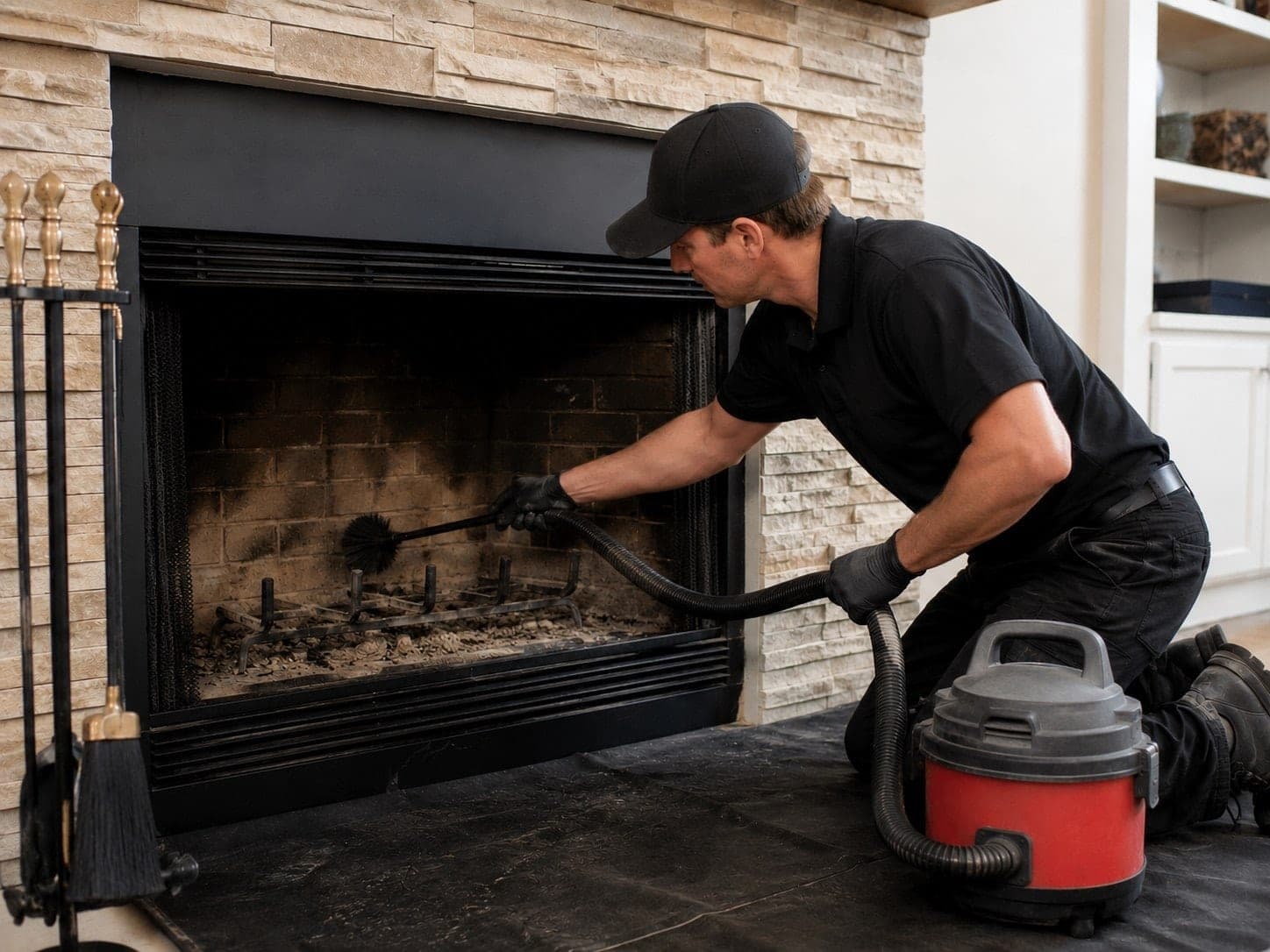
Osburn builds wood-burning inserts, freestanding stoves and wood fireplaces around a heavy steel body lined with firebrick. A secondary-combustion system sits at the top of the firebox. Stainless air tubes and a baffle there burn off smoke before it reaches the flue. That body rarely wears out. The parts around it do, which is why a tired Osburn is usually a repair job rather than a replacement. To see how these pieces fit together, start with our guide to fireplace anatomy.
Advantages of an Osburn fireplace, and what keeps them working
- Long, steady burns need a door gasket that seals tightly and a baffle that is intact.
- A clean secondary burn needs air tubes that are straight, seated and present.
- A clear view of the fire needs an open air-wash channel and uncracked glass.
- Strong radiant heat needs whole firebrick and heat shields left in place. Read more in our efficient fireplace guide.
What the visit covers
Cracks in the firebox let heat reach the framing behind it. A damaged smoke chamber is a common cause of smoke spilling into the room.
Diagnosis
What is failing and why.
Options
Repair, replace a part, or reline — explained plainly.
Work
Done once you approve the scope.
Check
Draft and operation are tested afterwards.
Carbon monoxide
A blocked or damaged flue can push carbon monoxide into the home. If an alarm sounds or anyone feels dizzy or sick near the fireplace, get everyone outside and call 911.
How to prepare
- Let the fireplace or stove cool completely — ideally no fire for 24 hours before the visit.
- Write down what you've noticed and when it happens — smells, smoke, sounds or stains.
- Make sure the technician can reach the roof or attic access if it's needed.
- Move rugs, photos and anything fragile away from the work area.
Signs it's time for fireplace repair
- Rust or warping inside the firebox
- Cracked or missing firebrick or refractory panels
- Smoke coming into the room
- A fireplace that is hard to light or won't stay lit
- Doors or glass that are cracked or don't seal
What we look at
- Draft from the opening
- Doors, glass and gaskets
- Firebrick or refractory panels
- Hearth and surround
- Smoke chamber and smoke shelf
- Damper operation
- Mortar joints inside the firebox
Osburn fireplace heat shield replacement
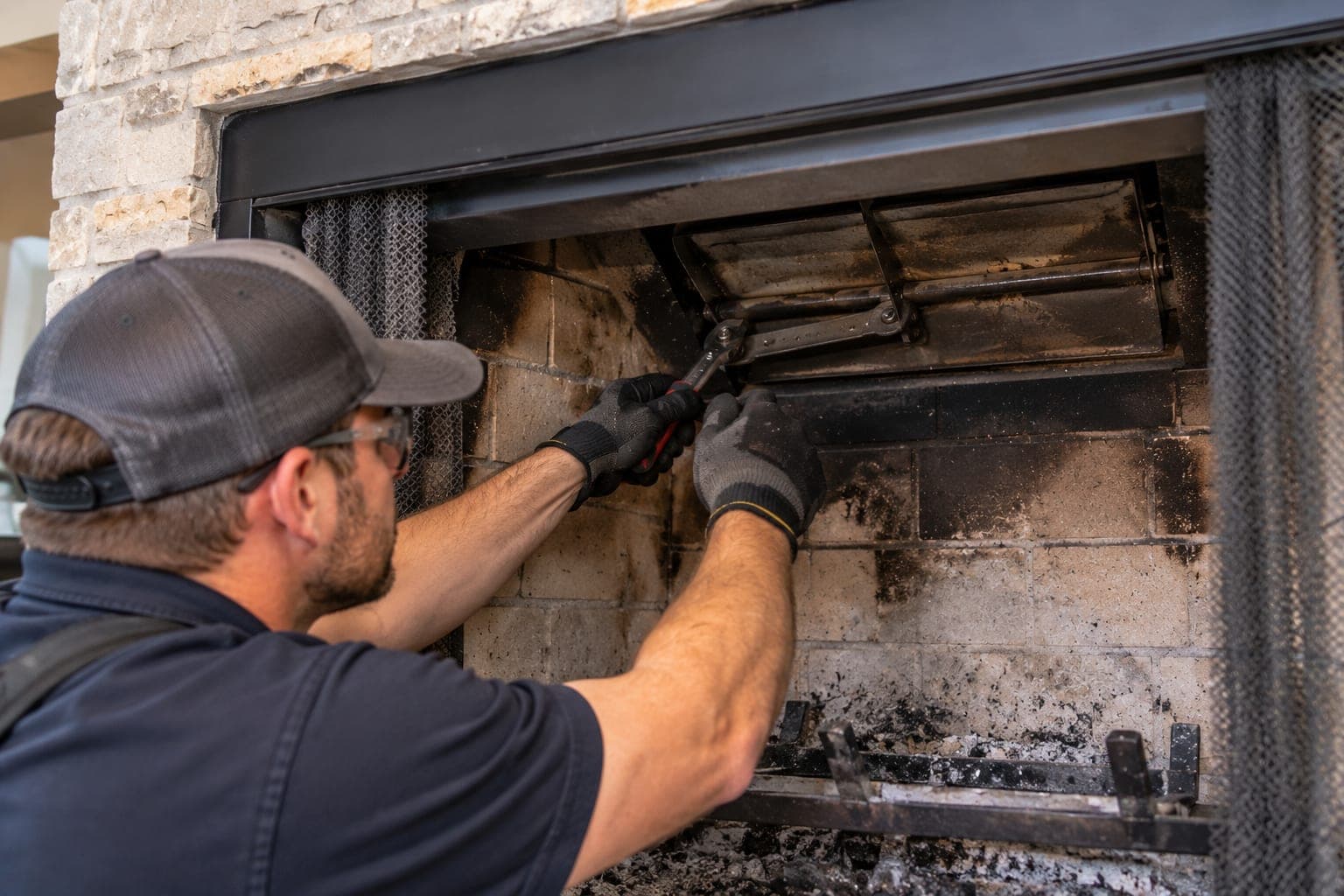
Many Osburn stoves and inserts use sheet-metal heat shields on the back, the sides or underneath. These shields keep nearby surfaces cooler, and they help the unit meet the clearances listed in its owner's manual. Shields get bent when a unit is moved. They rust on damp hearths. Sometimes nobody puts them back after a stove is relocated.
Signs a heat shield needs attention
- The shield is warped or pulled away from the body
- Fasteners are loose or missing
- The metal is rusted through
- The shield went missing after the stove or insert was moved
- Nearby wall, mantel or floor surfaces are scorched or discolored
We read the model from the unit's label, confirm which shields that model calls for, and then refit or replace them. If the listed clearances depend on a shield, we treat a missing one as a safety repair, not a cosmetic one. Our fireplace safety guide explains why clearances matter.
Osburn fireplace repair we provide across Connecticut
We handle Osburn fireplace repair in Hartford, CT, and across Connecticut. The work covers:
- Baffle and air tube replacement when tubes sag, crack or go missing
- Door gasket and glass gasket replacement
- Cracked door glass replacement and door latch adjustment
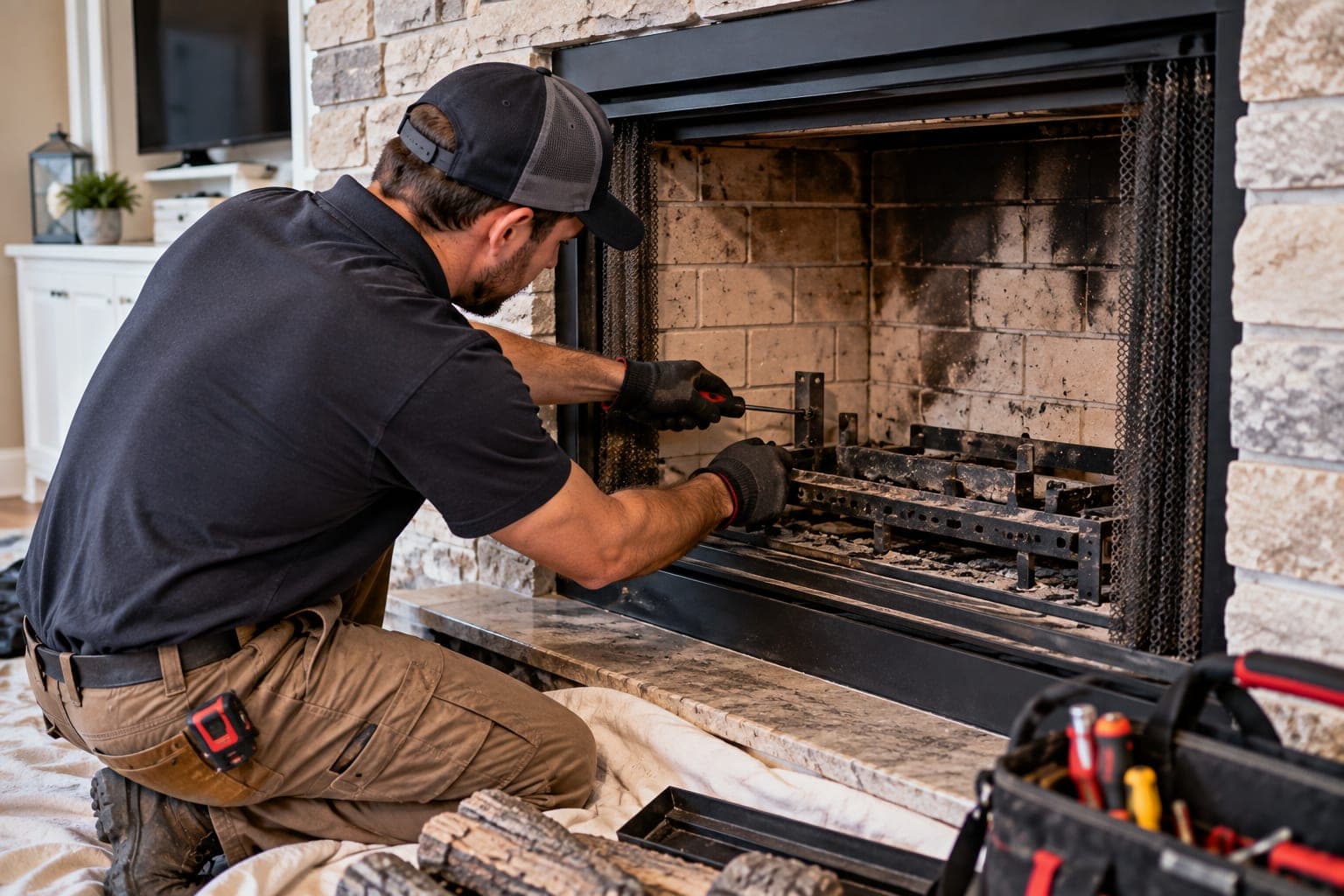
- Firebrick panel replacement
- Heat shield refitting and replacement
Seasonal cleaning is covered on our Osburn fireplace maintenance service page. This page is for when something is broken. If you are thinking about switching to electric, compare this page with electric fireplace repair. Estimates are free, and same-day visits are possible when the schedule allows.