On this page
Finding out why your fireplace stopped working
To fix a non-working fireplace, start with what kind it is. A gas unit that won't ignite, a wood-burning firebox that fills the room with smoke and a stove that smolders without heating are three different problems with three different fixes. If you're not sure what's behind the glass or the screen, how a fireplace is put together explains the firebox, damper, smoke chamber and flue in plain terms. An electric unit follows a separate path. See repairing an electric fireplace.
Both non-working gas fireplaces at the same time
When two gas fireplaces in the same house stop working together, it's unlikely that both units broke at once. A shared cause is much more likely, so we check that first:
- The gas supply, such as a closed shutoff, an empty propane tank or an interrupted utility supply
- Household power, if either unit uses electronic ignition, a powered wall switch or a blower
- Anything that affected both units at the same time, such as recent gas work, a renovation or a power outage
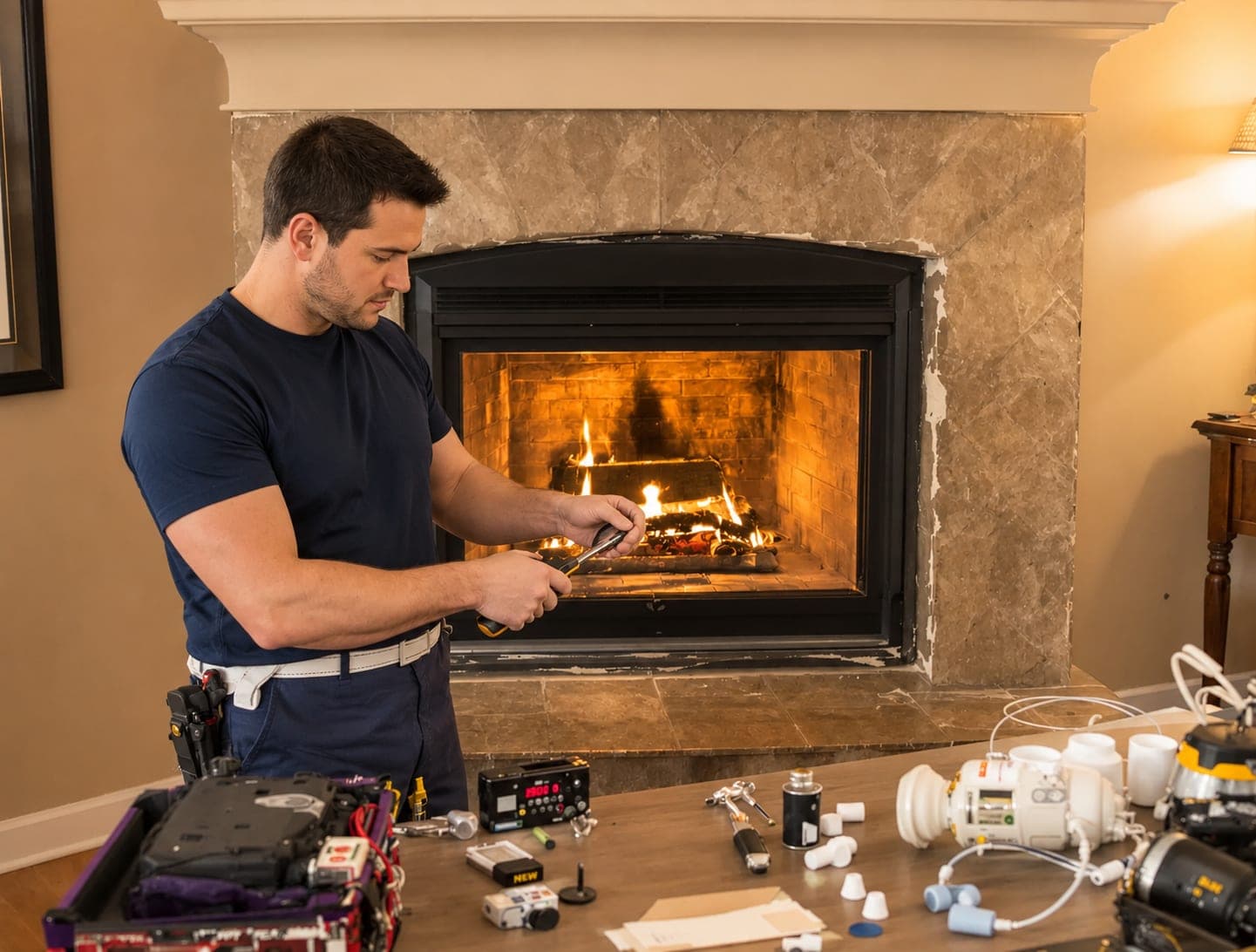
If the shared supply is fine, we check each unit separately. That means the pilot assembly, thermocouple or thermopile, gas valve and venting. If you smell gas, leave the house and call your gas utility before anything else.
Wood fireplaces that smoke or won't draw
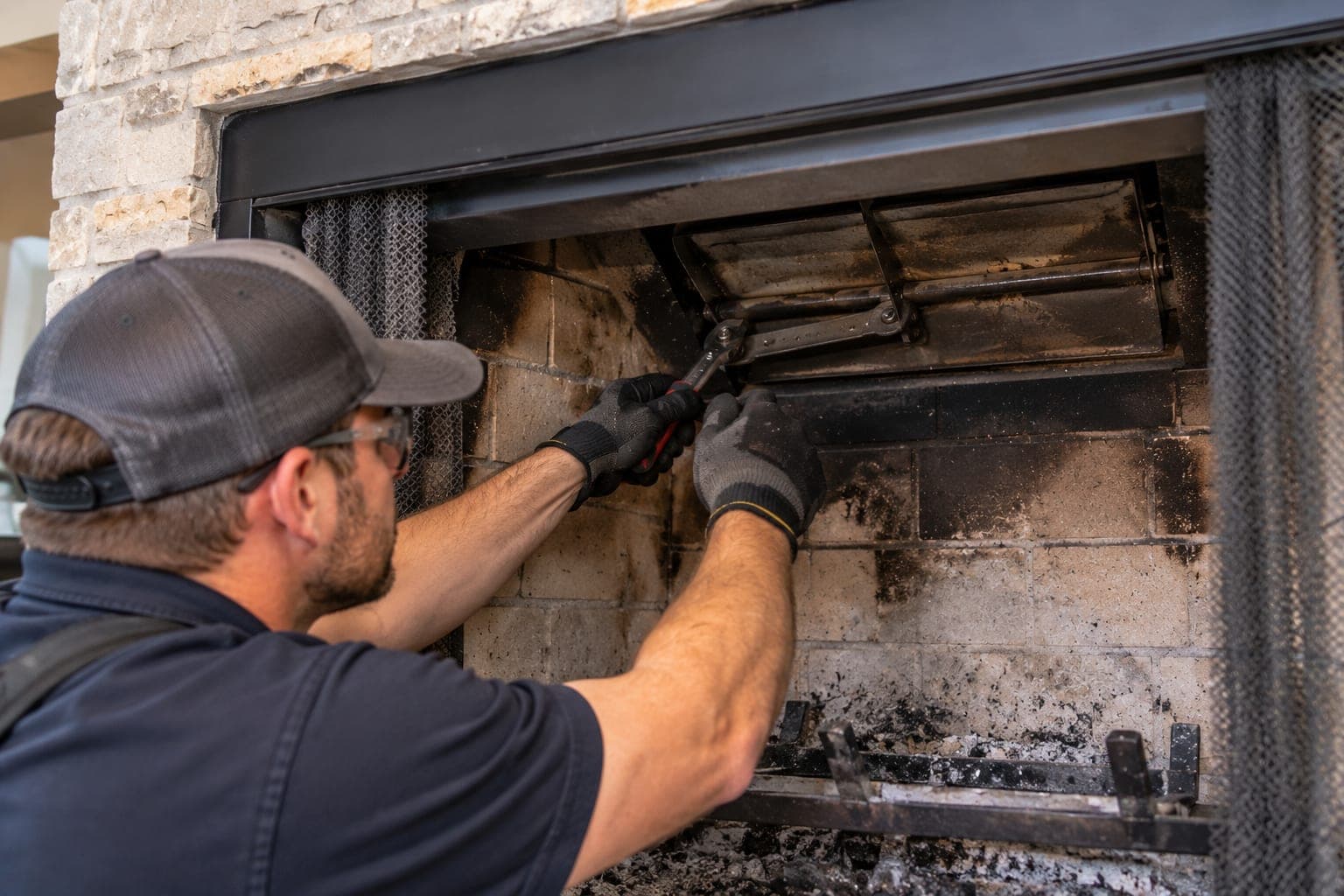
A fire that won't catch, or that pushes smoke into the room, usually points to one of three things: a closed or broken damper, a cold or blocked flue, or a chimney that doesn't match the size of the opening. Our page on what causes a smoky fireplace covers the most common culprits.
Creosote buildup: removal risks and fixes
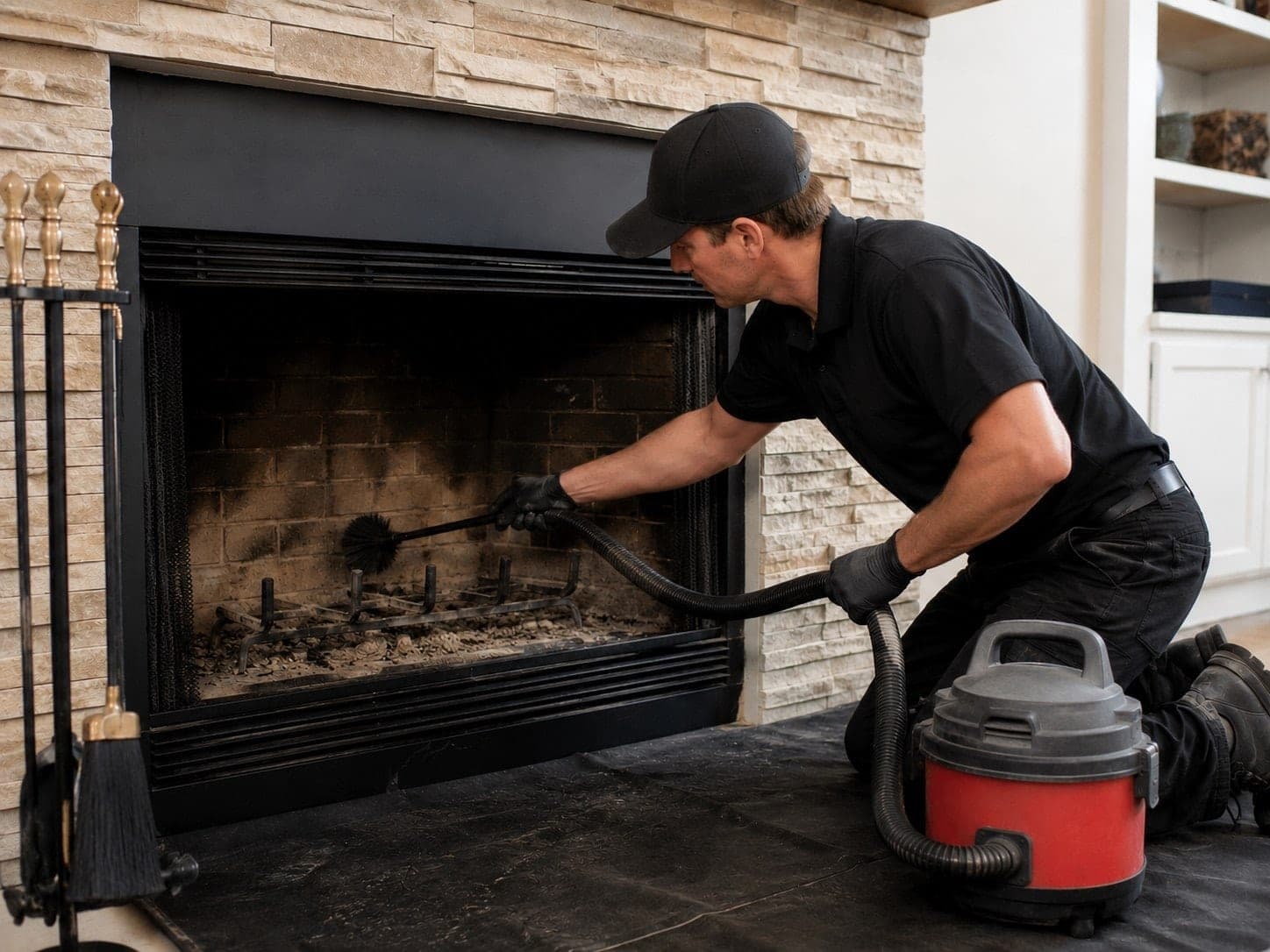
Creosote is the tar-like residue that wood smoke leaves inside the flue. A thick layer narrows the passage, so the fire draws poorly. It is also the fuel behind most chimney fires. Removal has its own risks if it's done wrong. Scraping hard, glazed creosote with the wrong tools can damage a clay liner. Burning a creosote-treatment log on its own won't clear heavy deposits. We clean the flue mechanically and note whether the deposits are flaky, tarry or glazed. Then we tell you what is causing the buildup, such as wet wood, smoldering fires or an oversized flue, so it doesn't come straight back.
Don't light a fire to test a clogged flue
If you can see heavy buildup, or the fireplace has had a chimney fire, don't use it until the flue has been cleaned and checked.
Stoves, and what drives the repair cost
Catalytic vs non-catalytic stoves
| Feature | Catalytic | Non-catalytic |
|---|---|---|
| How smoke is burned | Smoke passes through a coated combustor that ignites it at lower temperatures | Preheated secondary air and a baffle burn the gases inside the firebox |
| Typical signs of trouble | Combustor clogged or cracked, or no longer lighting off; more visible smoke outside | Warped or missing baffle, burned-out air tubes, a sluggish burn |
| Heat output | Long, steady, lower output | Livelier fire that responds faster to the air control |
| Upkeep focus | Combustor and bypass damper | Baffle and secondary air system |
How smoke is burned
- Catalytic
- Smoke passes through a coated combustor that ignites it at lower temperatures
- Non-catalytic
- Preheated secondary air and a baffle burn the gases inside the firebox
Typical signs of trouble
- Catalytic
- Combustor clogged or cracked, or no longer lighting off; more visible smoke outside
- Non-catalytic
- Warped or missing baffle, burned-out air tubes, a sluggish burn
Heat output
- Catalytic
- Long, steady, lower output
- Non-catalytic
- Livelier fire that responds faster to the air control
Upkeep focus
- Catalytic
- Combustor and bypass damper
- Non-catalytic
- Baffle and secondary air system
Either type runs poorly with a dirty flue, so a stove cleaning is often the first fix. For ways to send more heat into the room instead of up the chimney, read our tips on running an efficient fireplace.
Non-working fireplace repair cost
The cost depends entirely on what is wrong. Replacing a thermocouple on a gas unit is a very different job from rebuilding a cracked firebox or relining a flue. Other factors also change the number: parts availability for older or discontinued units, access to the chimney, and whether several problems turn up together. That's why we inspect first and quote second. Estimates are free, so you know the scope before any work begins.
How the visit works
Cracks in the firebox let heat reach the framing behind it. A damaged smoke chamber is a common cause of smoke spilling into the room.
Find the cause
The firebox, damper, smoke chamber and any doors, glass or panels are checked.
Confirm the type
Masonry or factory-built — the repair has to suit the system.
Explain the fix
You hear the options and what each involves before work starts.
Repair and test
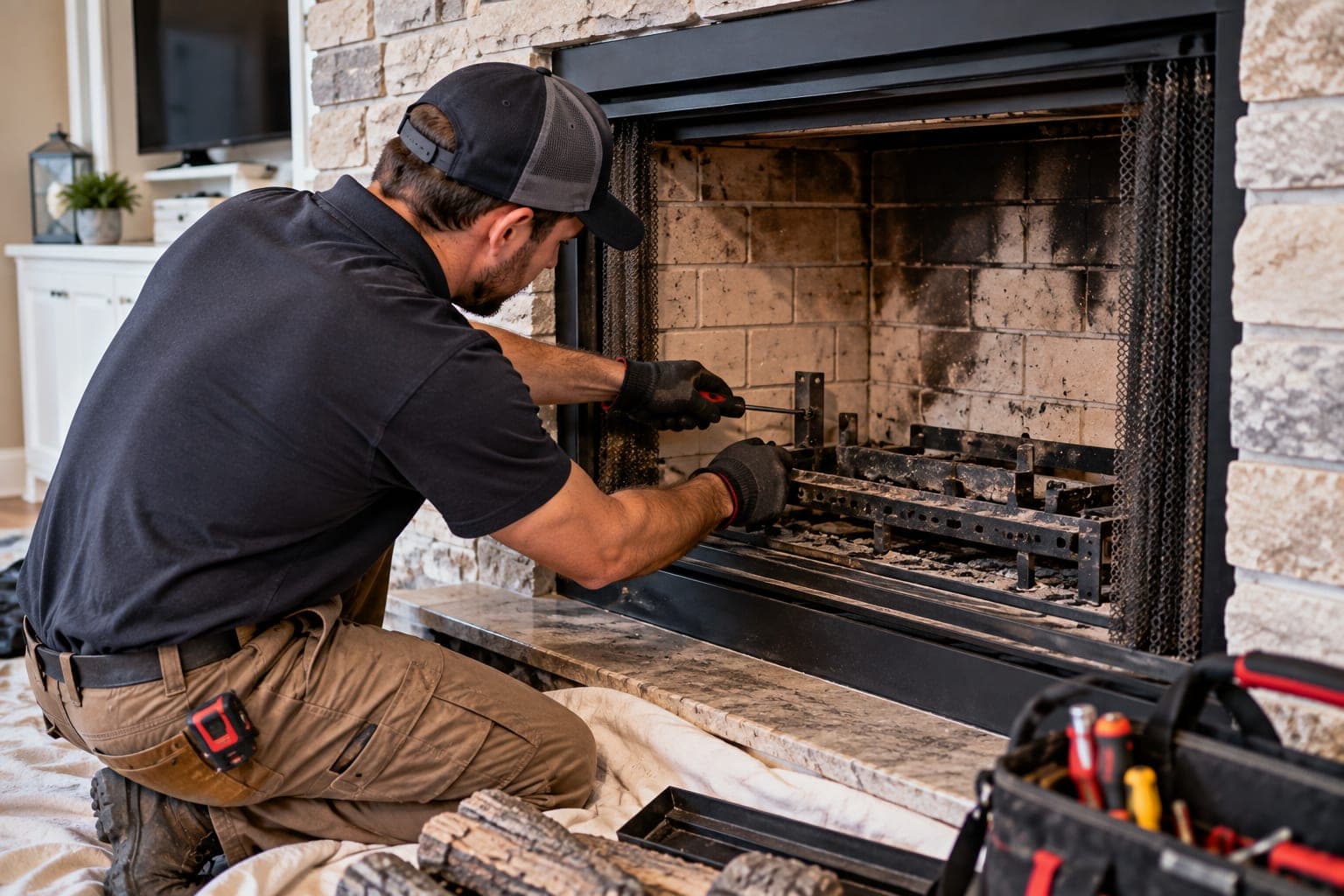
The work is done and the fireplace is checked before you use it.
Signs to watch for
- A fireplace that is hard to light or won't stay lit
- A damper that won't open or close
- Smoke coming into the room
- Rust or warping inside the firebox
What gets checked
- Firebrick or refractory panels
- Smoke chamber and smoke shelf
- Mortar joints inside the firebox
- Hearth and surround
- Draft from the opening
- Damper operation
How to prepare
- Clear a few feet of space in front of the hearth or appliance.
- Let the fireplace or stove cool completely — ideally no fire for 24 hours before the visit.
- Note the make and model of any insert, stove or gas unit if you have it.
- Move rugs, photos and anything fragile away from the work area.
If smoke comes into the room
Stop adding fuel, open a window and don't relight the fire until the chimney has been checked. If the smoke is heavy, an alarm sounds or you suspect a chimney fire, get everyone outside and call 911.