On this page
Chimneys we inspect beyond the single-family house
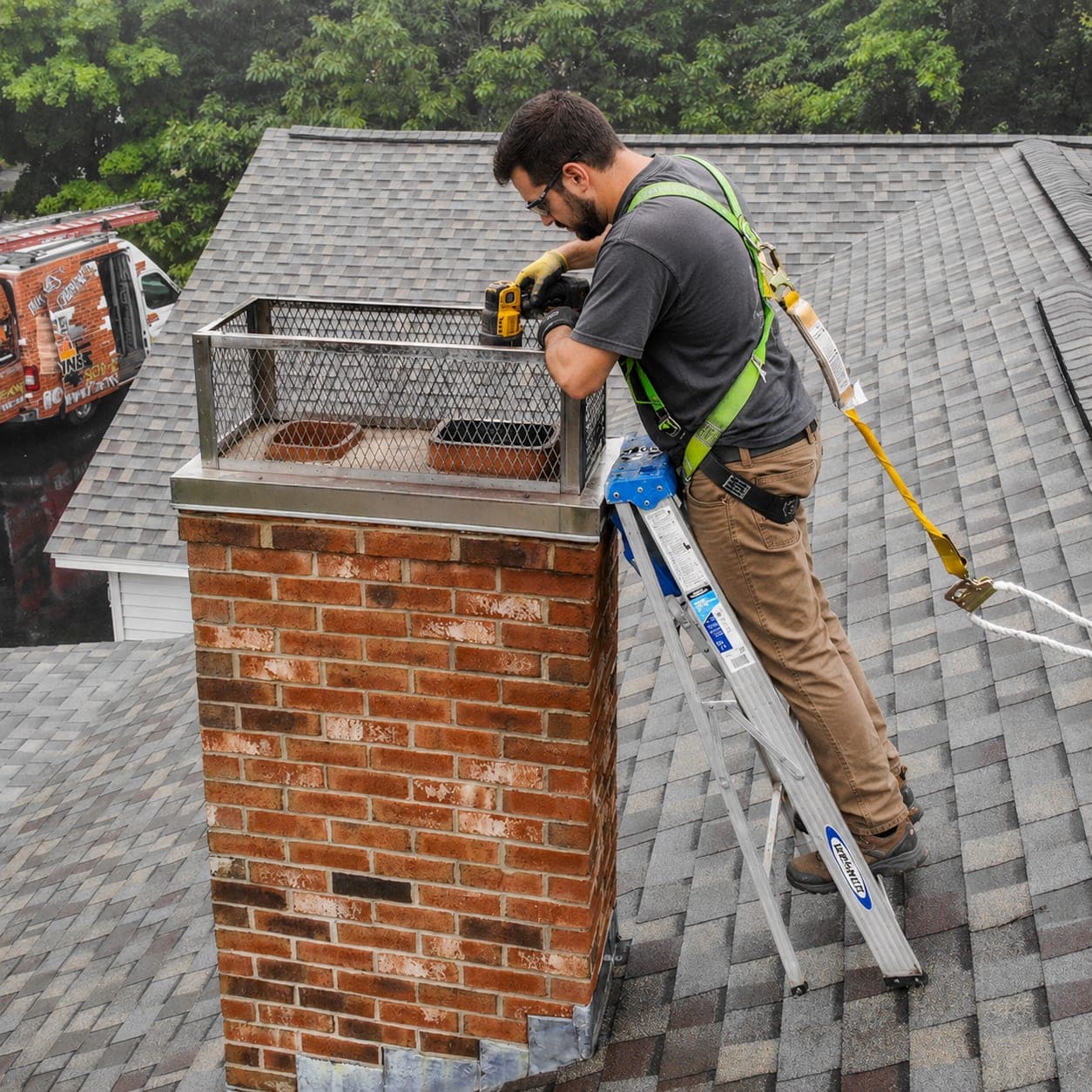
Our commercial work centers on chimneys attached to buildings. That includes masonry stacks that vent boilers, furnaces and water heaters, multi-flue chimneys on apartment and mixed-use properties, and prefab chases on commercial roofs. If a building also has fireplaces or wood-burning appliances, we inspect those flues on the same visit. Our industrial and commercial chimney page describes the full scope.
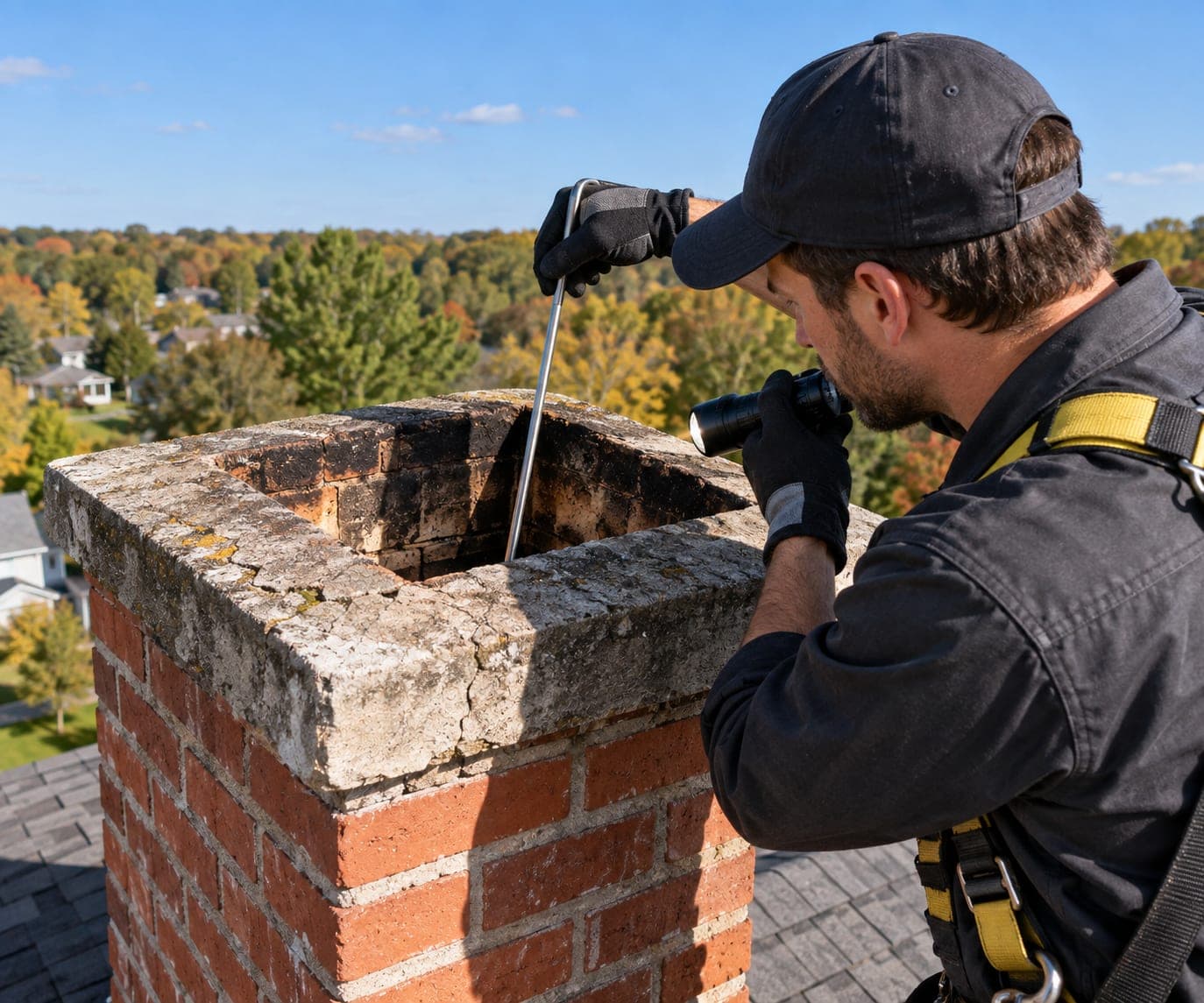
Tall freestanding stacks
Some industrial smokestacks need specialized access well beyond a ladder or a roof. When you call, tell us the height, how the top is reached and what the stack serves. We'll tell you plainly whether the job is within our work.
How the visit works
Cracks in a liner or crown are often invisible from the room but let heat and water through. After a chimney fire, an earthquake or a storm, hidden damage is common.
History first
Recent work, past problems and how the fireplace is used.
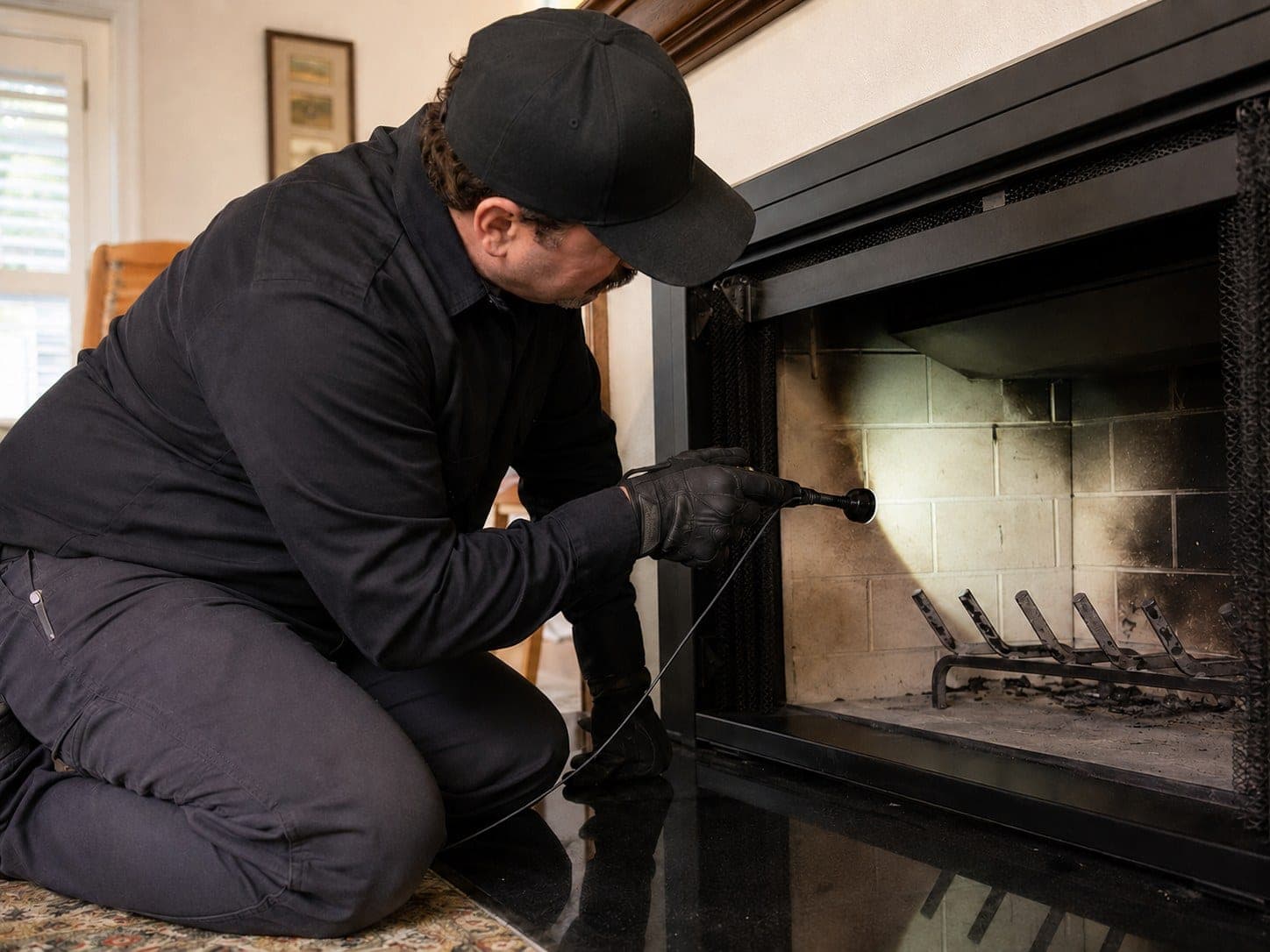
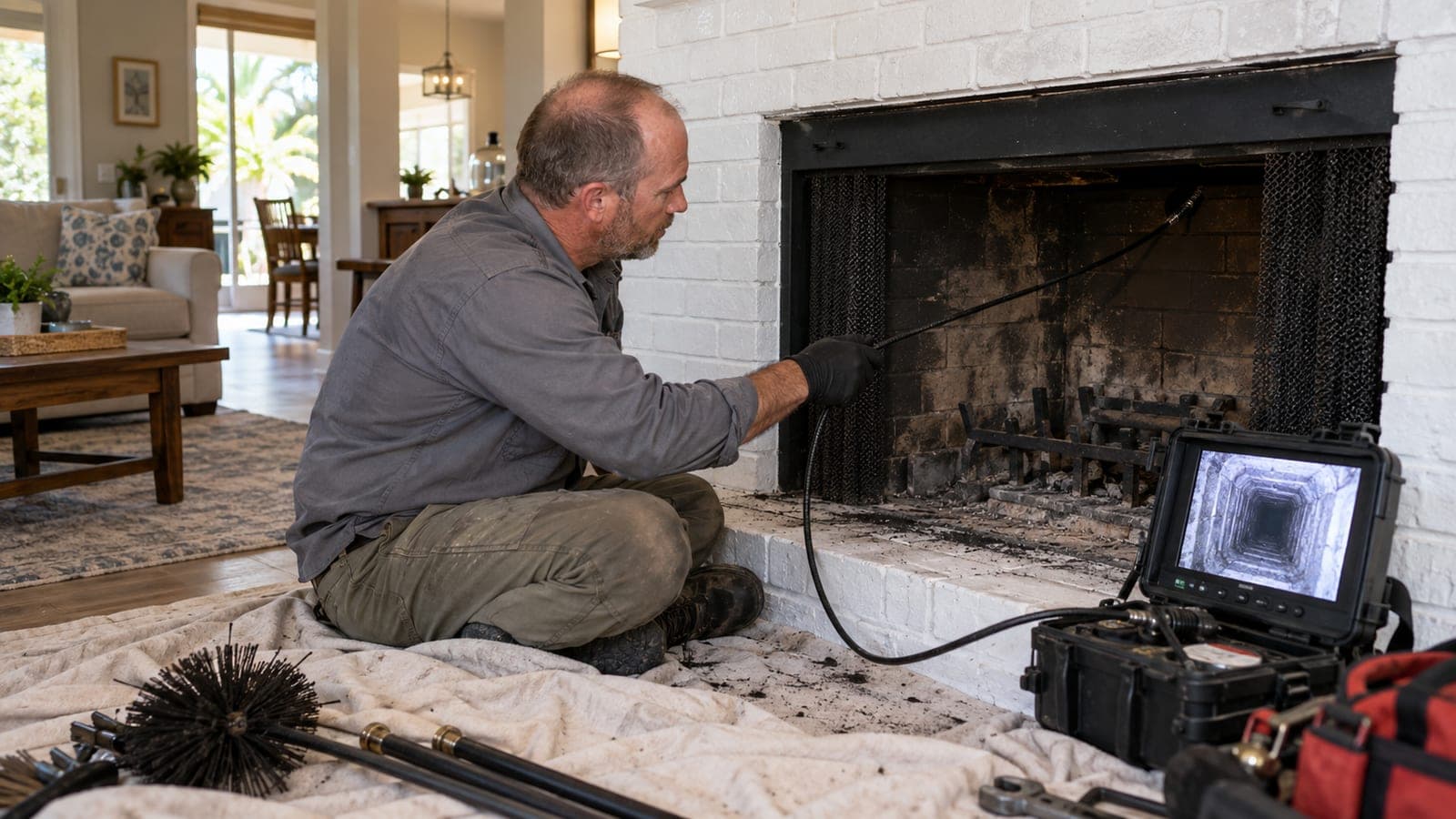
Inside
The visible parts of the firebox, damper, smoke shelf and flue.
Outside
The stack, crown, cap and roof flashing, where safely accessible.
Findings
A clear explanation of the condition and the options, if any are needed.
Signs of a chimney fire
A loud roaring sound, dense smoke or sparks from the top of the chimney can mean a chimney fire. Get everyone out and call 911; have the chimney inspected before the next fire.
What we look at
- Crown for cracks and pooling water
- Smoke chamber and smoke shelf
- Clearances to framing and combustibles, where visible
- Flue liner for cracks, gaps and missing mortar
- Cap, screen and spark arrestor
How to prepare
- Let the fireplace or stove cool completely — ideally no fire for 24 hours before the visit.
- Note the make and model of any insert, stove or gas unit if you have it.
- Move rugs, photos and anything fragile away from the work area.
- Clear a few feet of space in front of the hearth or appliance.
When to book industrial chimney inspections
- It has been more than a year since the last inspection
- A storm, earthquake or chimney fire may have damaged it
- You've just bought the home or are about to sell it
- You're switching fuel or adding an insert or stove
- Smoke in the room or a fire that won't draw
Why heavy-use flues wear differently
A boiler flue that fires all winter carries a steady stream of hot gas, and as the equipment cycles, it also collects condensation. Exhaust from oil and gas contains moisture and acidic compounds. When that exhaust cools inside an oversized or uninsulated flue, it condenses on the liner and in the mortar joints. Over time this can erode tile joints, flake the inside of the masonry and corrode metal parts.
- Equipment upgrades: a new high-efficiency boiler can send cooler exhaust through a flue sized for the old one.
- Shared flues: several appliances venting into one stack make sizing and draft harder to get right.
- Long run times: small cracks get far more exposure each season than they would in a home that burns occasionally.
If an inspection points to liner damage, this background on chimney liners explains the relining options in plain terms.
When to put an inspection on the calendar
Most building owners do better with a set schedule than with waiting for a tenant complaint. Book an inspection outside that routine in these situations:
- Before the heating season, while equipment can be shut down without hardship
- After replacing or converting a boiler or furnace
- Before buying, leasing or refinancing a property
- After a storm, a lightning strike or debris landing on the roof
- When occupants report odors, soot or smoke backing up
To see why a yearly schedule makes sense, read why routine inspections pay off. For a single-family house, our residential chimney inspection service is the better fit, and our page on scheduling yearly chimney checkups covers recurring visits.