Most homeowners never see their flue liner, so it rarely gets attention until something goes wrong. Understanding chimney liners starts with one idea. The masonry or framed chimney you see from the yard is only the outer shell. The liner inside does the real work. It contains heat, guides exhaust upward, and resists the corrosive moisture that wood, gas and oil appliances produce. When it is cracked, undersized or missing, the chimney can still look fine outside while it becomes less safe inside.
Understanding your chimney structure
It helps to picture the chimney as a stack of parts, each with its own job. A problem in one usually puts stress on the others, and the liner tends to take the damage.
| Component | Where it is | What it does |
|---|---|---|
| Firebox or appliance connection | Inside the home | Holds the fire or connects the stove, insert or furnace to the flue |
| Damper | Just above the firebox or at the top of the flue | Closes the flue when not in use to limit drafts and heat loss |
| Smoke chamber | Above the damper | Funnels smoke from the wide firebox into the narrower flue |
| Flue liner | Runs the full height of the chimney | Contains heat and exhaust and protects the structure from heat and acids |
| Chimney walls or chase | Around the liner | Brick, block or a framed enclosure that supports and shelters the flue |
| Flashing | Where the chimney meets the roof | Seals the joint so rain cannot run into the attic or walls |
| Crown or chase cover | Top of the chimney | Sheds water away from the flue and the chimney walls |
| Cap | Over the flue opening | Keeps out rain, animals and debris, and often includes a spark screen |
The main types of chimney liners
Three liner types cover most homes. None is right for every chimney. The best fit depends on the appliance, the size and shape of the flue, and the condition of the existing chimney.
| Liner type | How it is built | Strengths | Limitations |
|---|---|---|---|
| Clay tile | Square or rectangular terracotta sections stacked and mortared during construction | Long-lasting when undamaged; handles wood-fire heat well | Joints and tiles can crack from a chimney fire, settling or rapid temperature change; hard to replace a single tile |
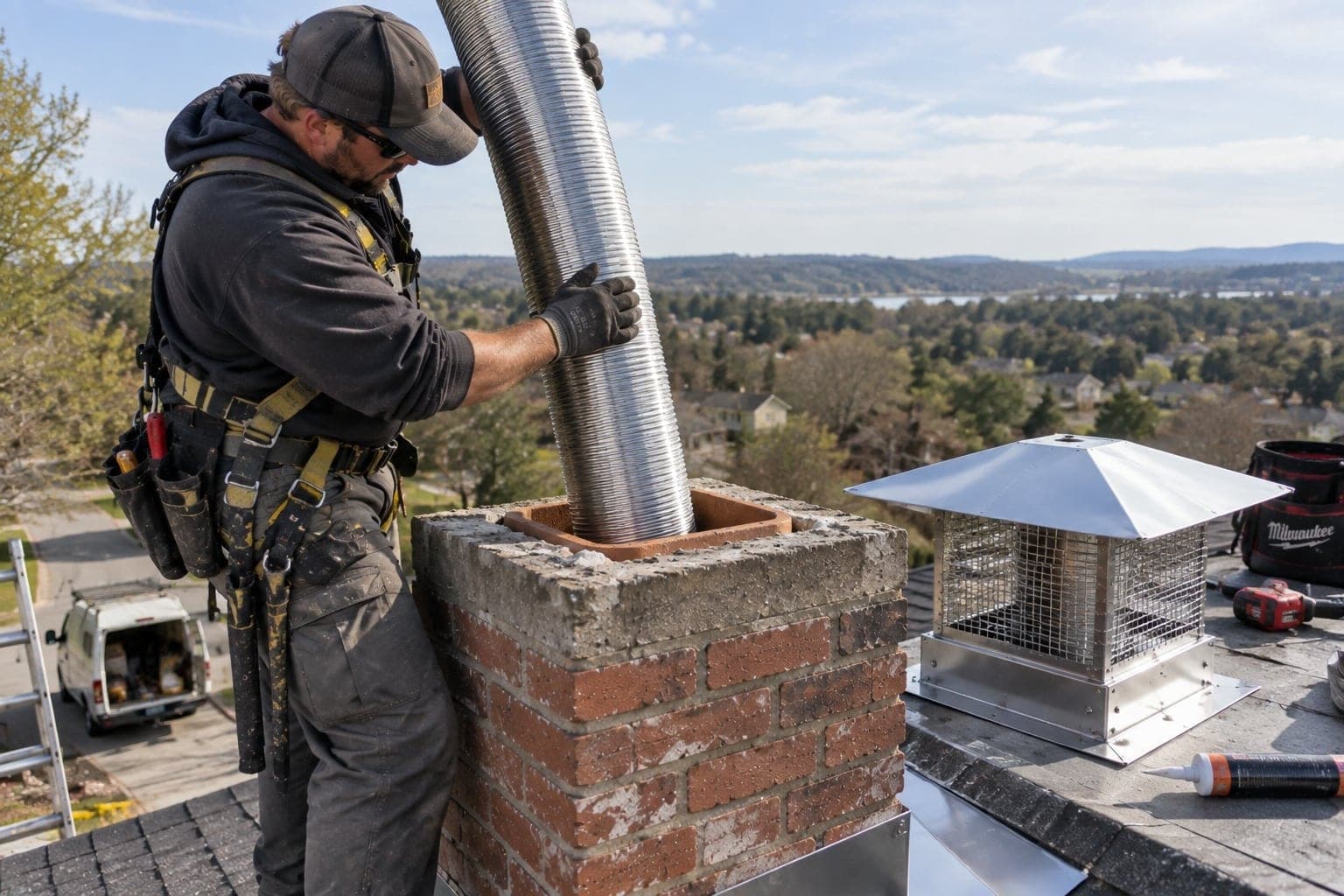
| Stainless steel | A rigid or flexible metal pipe installed down the existing flue, often with insulation | Can be sized to match a specific appliance; suits wood, gas and oil when the correct grade is used | Must be the right size and grade for the fuel; needs a proper top plate and cap |
| Cast-in-place | A cement-based mix poured or formed around a mold inside the chimney | Creates a smooth, continuous flue and can add strength to an older chimney | Reduces flue size; the existing chimney must be a suitable candidate |
Relining with metal is a common fix when clay tiles have cracked or when a new appliance needs a smaller flue. You can read about how stainless steel liners are sized and installed on our service page.
Understanding chimney gas and why it matters
Every fuel-burning appliance produces exhaust. Wood smoke carries creosote-forming vapors and fine particles. Gas and oil appliances produce carbon monoxide and a lot of water vapor. As these gases cool on the way up, the moisture can condense on the flue walls and mix with combustion byproducts to form weak acids. Over time those acids eat at mortar joints and unprotected masonry.
A sound, correctly sized liner keeps gases moving fast enough to leave the chimney before they cool too much. A cracked liner lets exhaust seep into the chimney walls and, in some cases, into living space. That is why a working carbon monoxide detector near sleeping areas and near fuel-burning appliances matters even when the chimney seems fine.
Understanding chimney and ventilation requirements
Building codes and appliance manufacturers set rules for flue size, clearances to combustibles and venting materials. The exact requirements vary by appliance and jurisdiction. A few general principles apply almost everywhere:
- Match the flue to the appliance. An oversized flue lets exhaust cool and condense, which leads to slow draft and heavy buildup. An undersized flue cannot carry the exhaust away fast enough and can spill smoke or gas back into the room.
- One appliance per flue, unless the system was designed for sharing. Connecting a new stove or insert to a flue already serving another appliance can cause dangerous backdrafting.
- The house has to supply air. Tight windows, kitchen range hoods, bath fans and clothes dryers can pull air out of the home and reverse the draft in a chimney.
- Changing appliances often means changing the liner. A flue that served an open wood fireplace is usually far too large for a modern insert or gas appliance.
Understanding chimney fires
Creosote is a tar-like residue that builds up inside the flue when wood smoke cools. It is flammable. A chimney fire happens when that deposit ignites. Some fires are loud and obvious, with a roaring sound, popping and dense smoke. If you hear roaring or see flames or sparks from the top of the chimney, get everyone out and call 911. Others burn slowly and quietly and are only discovered later during an inspection.
The liner takes the brunt of a chimney fire. Clay tiles can crack or shift from the sudden heat, and a damaged liner may no longer contain the next fire. After any suspected chimney fire, have the flue inspected before using it again.
If you suspect a chimney fire
Get everyone out of the house and call 911. Do not reopen the fireplace or stove to check on it. After the fire department has cleared the home, the flue should be inspected before the fireplace or stove is used again.
Signs a past chimney fire may have damaged the liner
- Puffy, flaky or honeycomb-textured creosote in the firebox or on the damper
- Cracked or missing clay tile pieces that have fallen to the smoke shelf
- A warped damper, cap or metal parts at the top of the flue
- Discolored or cracked masonry on the outside of the chimney
- Smoke smell or staining in rooms next to the chimney
Understanding your chimney's protective components
Water is the liner's slow enemy. Rain that gets past the top of the chimney soaks the masonry, washes down the flue, and mixes with the acidic deposits described above. The parts below exist mainly to keep that water out.
Understanding the purpose of a chimney crown
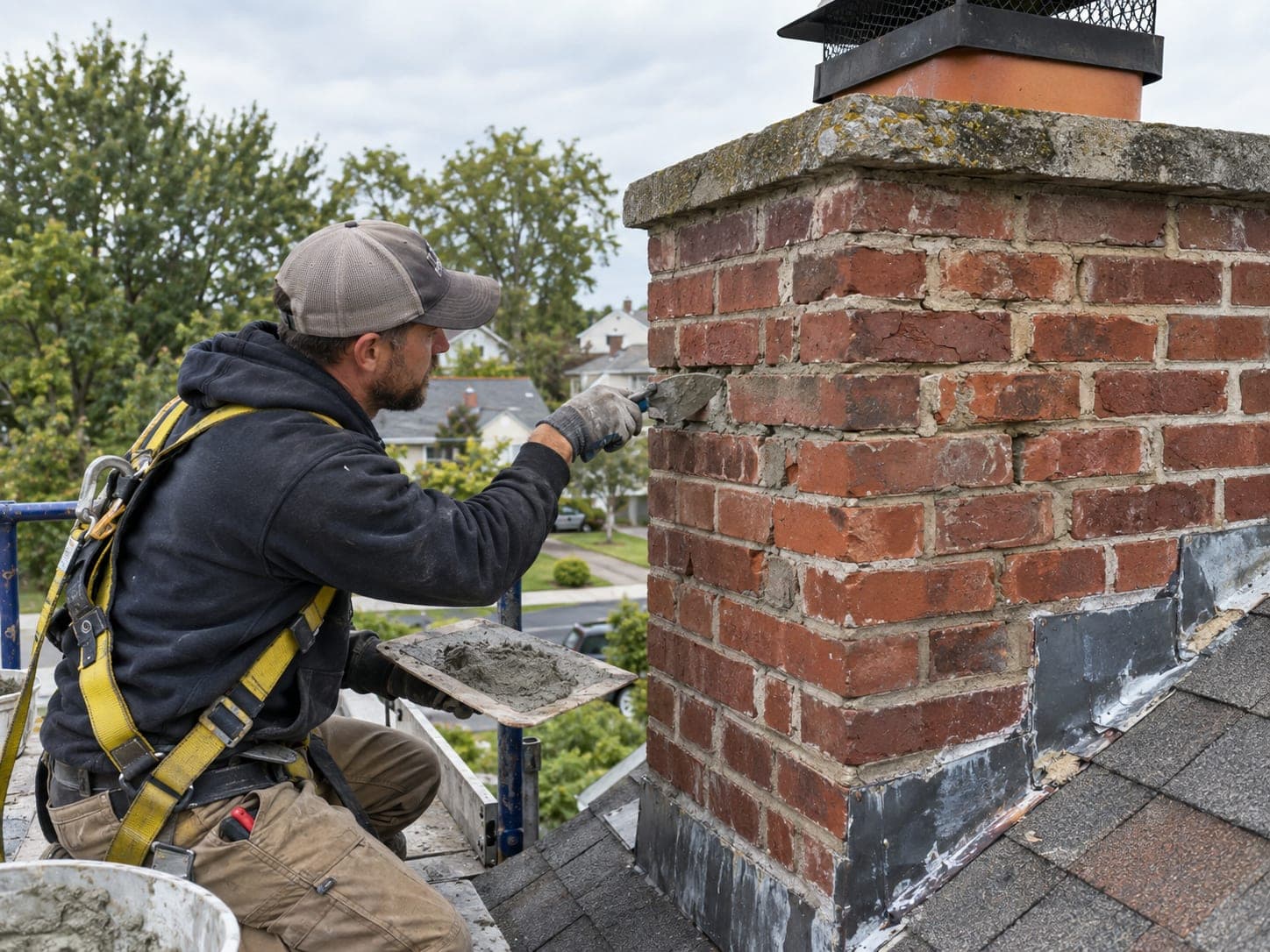
The crown is the cement slab that caps a masonry chimney around the flue. It should slope away from the flue and overhang the brick so water drips clear of the walls. A crown built from ordinary mortar, laid flat, or cracked by freeze-thaw cycles lets water straight into the top of the chimney. Small hairline cracks can sometimes be sealed. Wider cracks or crumbling sections usually call for repairing a cracked crown or chimney masonry before water reaches the liner.
Understanding the chimney chase cover
Factory-built fireplaces often sit inside a framed chase instead of a brick chimney. A metal chase cover seals the top of that box. Covers that are flat, thin or rusted let water pool, then leak into the chase and down the metal flue pipe. Rust streaks on the siding below the chimney are a common clue.
Understanding the purpose of chimney flashing
Flashing is the metal seal where the chimney passes through the roof. It usually has two layers. Step flashing is woven into the shingles, and counter-flashing is set into the masonry above it. Loose or corroded flashing typically shows up as stains on the ceiling or attic framing near the chimney. It does not damage the liner directly, but it lets moisture into the structure around it.
Caps and screens
A cap keeps rain from falling straight down the flue. Its mesh screen keeps animals out and helps stop sparks from leaving the chimney. If the screen has rusted through or blown loose, look into fixing a damaged animal screen or chimney cap before the next nesting season.
Understanding how chimney nesting can affect performance
Birds, squirrels and raccoons treat an uncapped flue as shelter. Nests made of twigs, leaves and debris can partly or fully block the flue, which slows the draft and can push smoke and carbon monoxide back into the home. Nesting material is also highly flammable when it sits just above a fire. Animals and their droppings can leave strong odors, and some damage the liner or damper as they move around. Never light a fire to drive animals out. Have the nest and any animals removed and the flue checked first.
Understanding chimney noise
Sounds from the chimney are often the first hint that something has changed. Here is what common noises usually point to.
| Sound | Likely cause | What to do |
|---|---|---|
| Scratching, chirping or fluttering | Animals or birds in the flue or smoke chamber | Keep the damper closed and arrange removal |
| Dripping or tapping | Water entering through the cap, crown or flashing | Check the top of the chimney and the attic for moisture |
| Whistling or moaning on windy days | Wind across the flue opening or a loose cap | Usually harmless, but check that the cap is secure |
| Ticking or popping during a fire | Metal expanding as it heats, common with steel liners and inserts | Normal if it is mild; louder or new sounds deserve a look |
| Loud roaring with heavy smoke | Possible chimney fire | Leave the house and call 911 |
Signs your liner needs attention
Common liner warning signs
01Cracked or missing flue tiles
- What you may notice
- Tile shards in the firebox, smoke seeping where it should not, or a strong smell next to the chimney wall
- How it’s confirmed
- A camera inspection of the full flue height shows cracks, gaps and offset joints
02Water damage from above
- What you may notice
- Rusted damper, stained firebox, spalling bricks, or white residue on the masonry
- How it’s confirmed
- The crown, cap, flashing and chase cover are examined from the roof and the flue is checked for moisture damage
03Poor draft or smoke in the room
- What you may notice
- Smoke rolling out of the fireplace, fires that are hard to start, or odors when the fireplace is not in use
- How it’s confirmed
- The flue is checked for blockages, nests and correct sizing for the appliance
| Feature | Repair | Reline |
|---|---|---|
| Best for | Limited damage such as a few open mortar joints | Widespread cracking, fire damage, or a flue the wrong size for the appliance |
| Typical approach | Resurfacing or sealing specific sections | Installing a stainless steel or cast-in-place liner through the full height |
| When switching appliances | Rarely enough on its own | Often required so the flue matches the new appliance |
Best for
- Repair
- Limited damage such as a few open mortar joints
- Reline
- Widespread cracking, fire damage, or a flue the wrong size for the appliance
Typical approach
- Repair
- Resurfacing or sealing specific sections
- Reline
- Installing a stainless steel or cast-in-place liner through the full height
When switching appliances
- Repair
- Rarely enough on its own
- Reline
- Often required so the flue matches the new appliance
Liner problems often show up alongside other wear, such as a deteriorating firebox or smoke chamber. A broader chimney and fireplace repair visit can address those at the same time. If you suspect a chimney fire, get everyone out and call 911 first. If you notice smoke or odors outside normal hours, our Sunday–Friday 24-hour chimney service takes emergency calls.
When you are ready to have your liner looked at, get in touch to request a free estimate. Same-day visits are available when the schedule allows.