On this page
How often a chimney needs inspecting
NFPA 211, the widely used national standard for chimneys, calls for chimneys, fireplaces and vents to be inspected at least once a year. That baseline makes sense whether you burn wood every night or almost never. Many chimney problems, such as animals, water damage and shifting masonry, have nothing to do with how often you light a fire. How much you use the chimney matters more for how often it needs cleaning.
| How the chimney is used | Inspection | Cleaning |
|---|---|---|
| Wood fireplace or stove used often | Yearly | Whenever deposits build up, often yearly or more |
| Occasional wood fires | Yearly | When the inspection shows it's needed |
| Gas fireplace or gas appliance | Yearly | Less often, though the venting and parts still get checked |
| Chimney not in use | Yearly, or before you start using it | Before the first fire |
Not sure whether you need a sweep or just an inspection? Our chimney inspection service explains what happens on each kind of visit.
What happens during the visit
After a chimney fire, an earthquake or a storm, hidden damage is common. Buying or selling a home is a common reason to document the chimney's condition.
Ask about the system
What you burn, how often, and anything you've noticed sets what to look at closely.
Check from the room
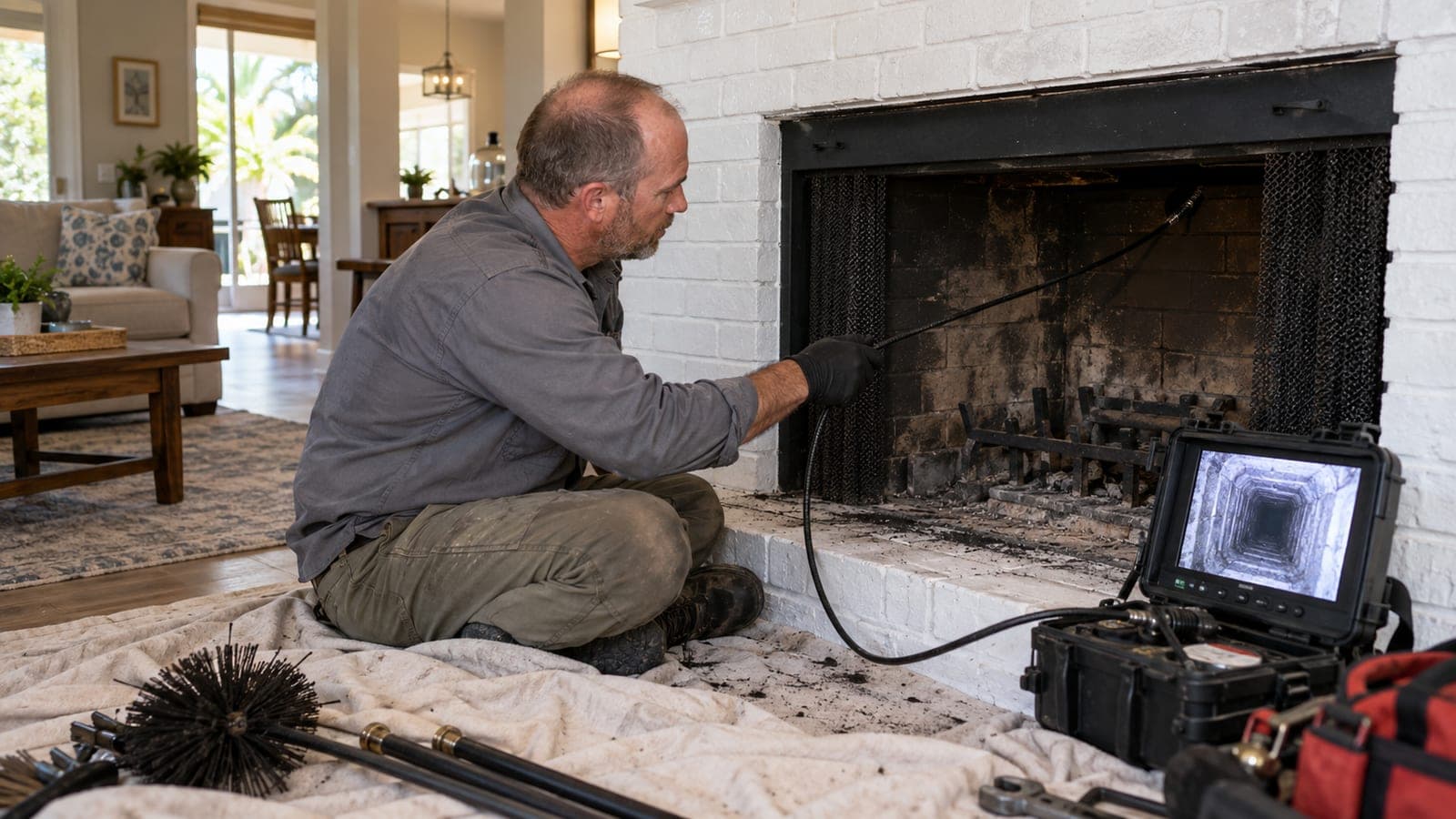
Firebox, damper, smoke chamber and the lower flue are examined with a light.
Check from outside
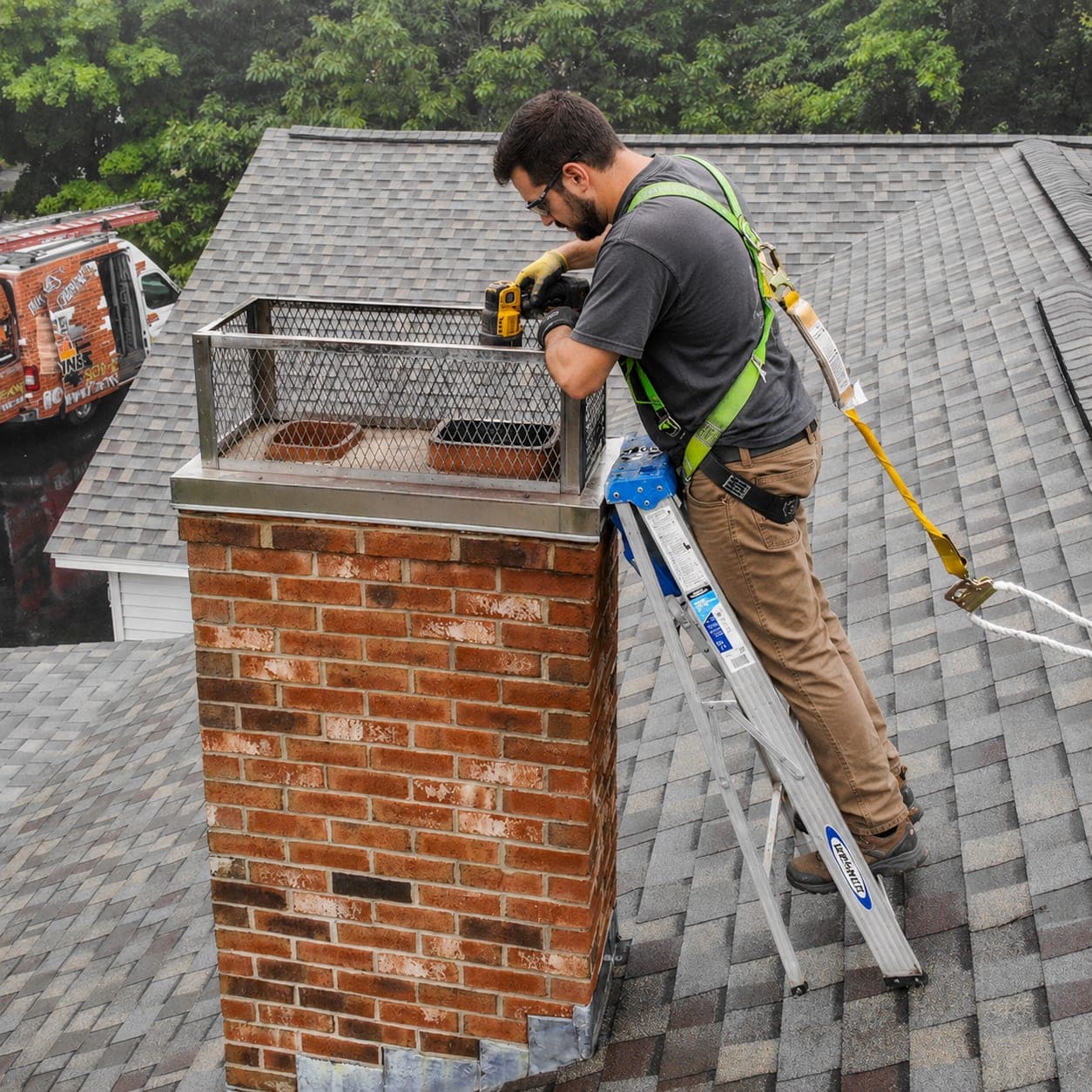
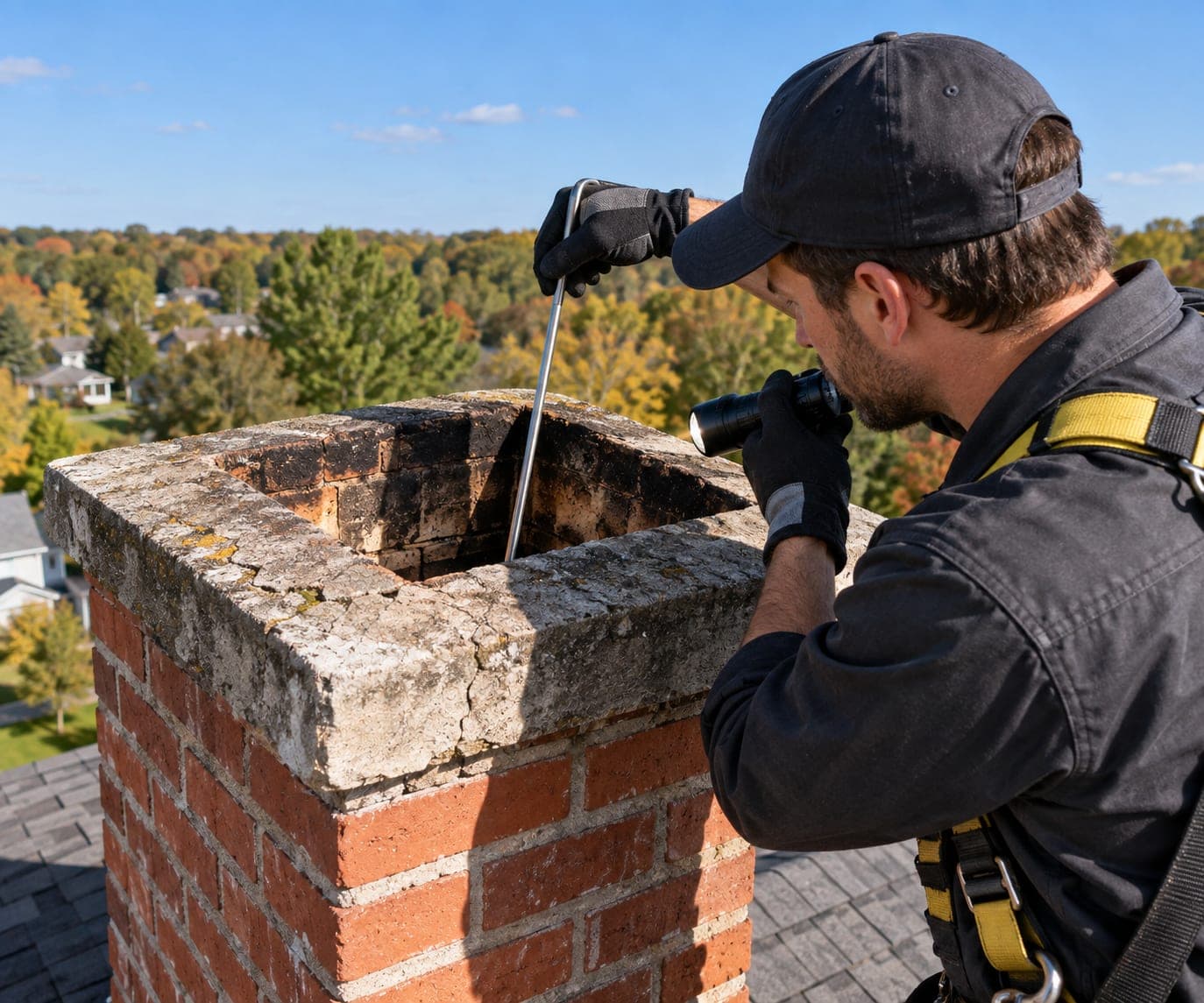
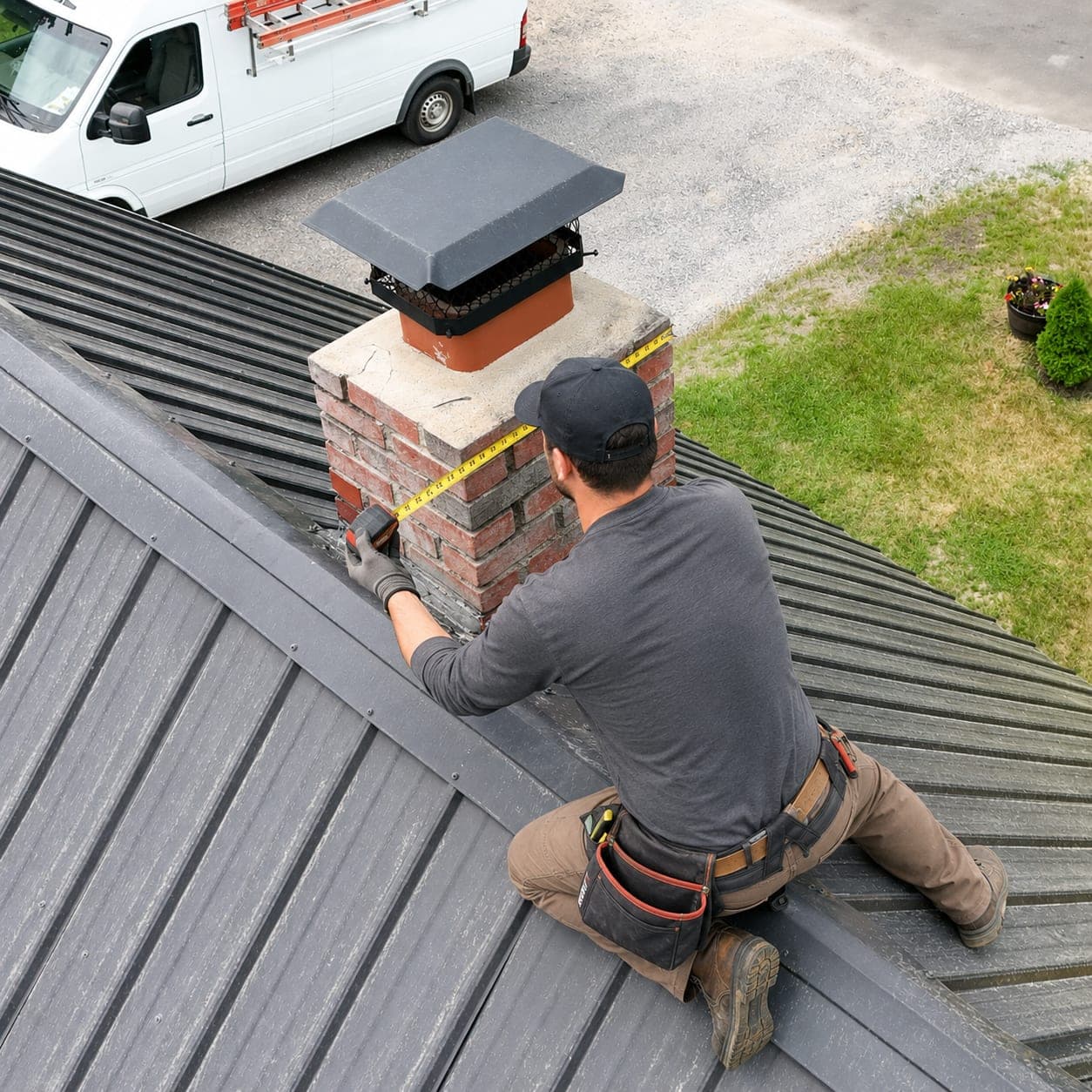
Crown, cap, flashing and the masonry above the roof are looked at where it is safe to reach.
Go further where needed
A camera can be run up the flue when the liner can't be seen any other way.
Report
You get the findings in plain terms: what's urgent, what can wait, and what's fine.
Checked on every visit
- Flashing where the chimney meets the roof
- Damper operation and seal
- Firebox walls, floor and joints
- Cap, screen and spark arrestor
- Flue liner for cracks, gaps and missing mortar
- Clearances to framing and combustibles, where visible
Signs it's time for regular chimney inspections
- You've just bought the home or are about to sell it
- You're switching fuel or adding an insert or stove
- It has been more than a year since the last inspection
- A storm, earthquake or chimney fire may have damaged it
- Water stains, a damp smell or flaking brick near the chimney
Stay off the roof
Looking from the ground or with binoculars is safe. Climbing a steep or wet roof to inspect a chimney is not — leave that to someone with the right equipment.
Before the technician arrives
- Note the make and model of any insert, stove or gas unit if you have it.
- Let the fireplace or stove cool completely — ideally no fire for 24 hours before the visit.
- Keep pets in another room while the work area is open.
- Clear a few feet of space in front of the hearth or appliance.
What a routine schedule gives you
The real value of a yearly visit is the comparison over time. One inspection shows how the chimney looks today. A series shows whether a hairline crack in the crown is growing, whether creosote builds faster since you changed firewood, or whether the mortar joints are starting to recede. Small fixes can then happen while they're still small.
Regular inspections also catch what shows up between seasons: a bird or squirrel nest in spring, a crown split by a hard winter, or flashing loosened by wind. For the full reasoning, see the case for inspecting every year.
When to call between yearly visits
- After a chimney fire, or loud popping or roaring in the flue. If you hear roaring or see flames or sparks from the top of the chimney, get everyone out and call 911.
- After a storm, a fallen limb or roof work near the chimney
- When you buy or sell a home
- When you add a wood stove or insert, or switch fuels
- When you notice smoke spilling into the room, a new smell or water at the hearth
If an inspection turns up a problem, our chimney and fireplace repair service can make the fix. If the problem involves the flue lining, a plain-language guide to liners will help you understand the options. Property managers with boilers or multi-unit buildings should see our inspections for commercial and industrial chimneys.