On this page
If you can feel a draft near a cold fireplace, hear wind in the flue, or smell soot on humid days, the damper is the first thing to look at. Damper installation means fitting a new movable plate or lid that closes the flue when the fireplace is off and opens fully when a fire is burning. We do this work as part of our fireplace installation and repair services for homes across Connecticut, including Hartford.
What a damper does and who needs a New one
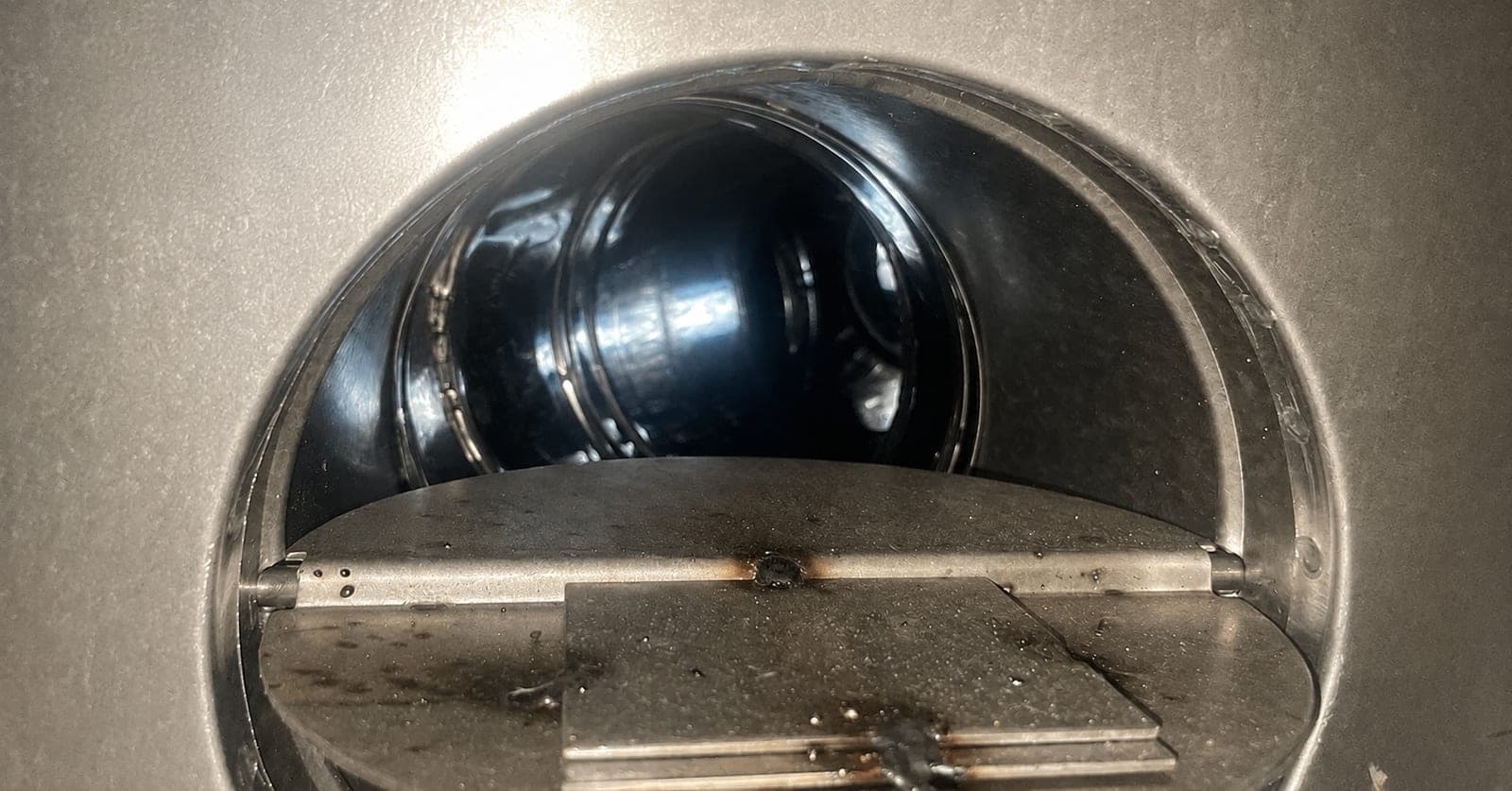
A damper has two jobs. When it is open, it gives smoke and combustion gases a clear path up the chimney. When it is closed, it keeps conditioned air in and outside air, rain and debris out. If you want a clearer picture of where the damper sits relative to the firebox, smoke chamber and flue, our guide to fireplace anatomy walks through each part.
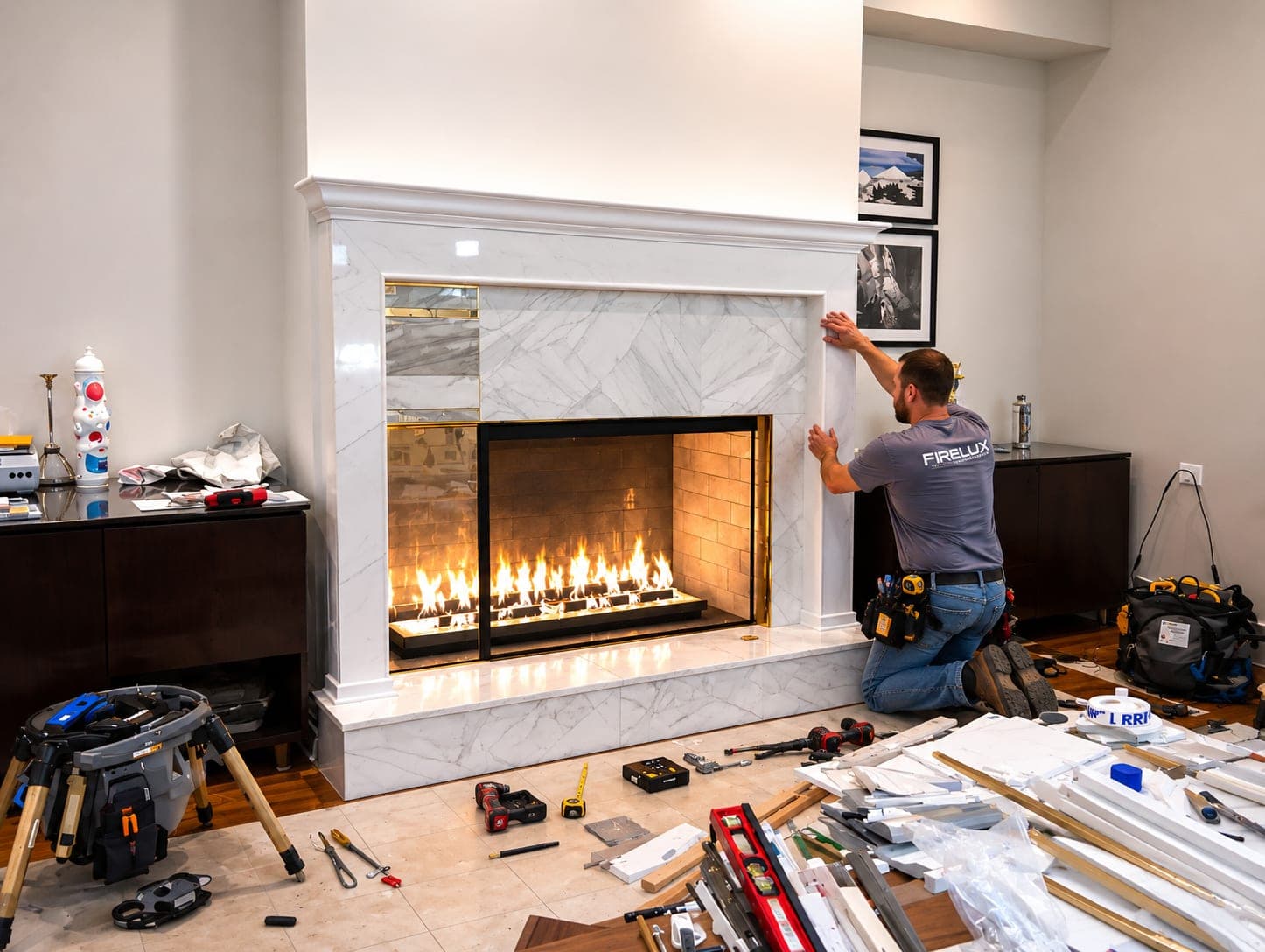
Homeowners usually call for a new damper in one of these situations:
- The original cast-iron throat damper has rusted, warped or seized and can't be repaired
- The damper was removed years ago, or a liner was installed without one
- A fireplace is being brought back into use after sitting idle
- The existing damper closes but leaks so much air that it barely helps
- You want a sealed top-mount damper to cut drafts and keep rain out of the flue
Signs it's time for damper installation
Common symptoms and what we look for
01Cold drafts with the damper closed
- What you may notice
- Cool air near the hearth, ashes stirring, a whistling sound in wind
- How it’s confirmed
- We close the damper and look and feel for gaps between the plate and frame, and check whether the plate seats evenly
02Handle won't move or the plate is stuck
- What you may notice
- Lever frozen in place, plate hanging at an angle, grinding when you try to open it
- How it’s confirmed
- We inspect the pivot points, frame and plate for rust, warping or broken parts to decide between repair and replacement
03Water, debris or animals in the firebox
- What you may notice
- Damp ashes, rust stains, leaves or nesting material, musty odor
- How it’s confirmed
- We check the top of the flue and the cap condition, and whether a top-sealing damper or cap combination would help
Throat damper vs. Top-Mount damper
There are two main styles, and the right one depends on your chimney, not just preference. A throat damper sits just above the firebox. A top-mount damper sits at the top of the flue and is opened and closed with a cable that runs down to a handle inside the fireplace.
| Feature | Throat damper | Top-mount damper |
|---|---|---|
| Location | Just above the firebox, below the smoke chamber | At the top of the flue, on the chimney crown or flue tile |
| Seal when closed | Metal-to-metal, so some air leakage is normal | Usually closes against a gasket for a much tighter seal |
| Keeps rain and animals out | No. Water and debris still enter the flue above it | Yes, when closed it caps the top of the flue |
| Typical use | Replacing a failed original with a similar unit where the opening allows | Chimneys where the throat damper is beyond repair or a tighter seal is the goal |
| Operation | Lever or rotary handle at the throat | Spring-loaded lid with a cable and handle inside the firebox |
Location
- Throat damper
- Just above the firebox, below the smoke chamber
- Top-mount damper
- At the top of the flue, on the chimney crown or flue tile
Seal when closed
- Throat damper
- Metal-to-metal, so some air leakage is normal
- Top-mount damper
- Usually closes against a gasket for a much tighter seal
Keeps rain and animals out
- Throat damper
- No. Water and debris still enter the flue above it
- Top-mount damper
- Yes, when closed it caps the top of the flue
Typical use
- Throat damper
- Replacing a failed original with a similar unit where the opening allows
- Top-mount damper
- Chimneys where the throat damper is beyond repair or a tighter seal is the goal
Operation
- Throat damper
- Lever or rotary handle at the throat
- Top-mount damper
- Spring-loaded lid with a cable and handle inside the firebox
Top mount damper installation
Top mount damper installation is often the practical choice when the old throat damper is rusted in place, because the new unit doesn't depend on the condition of the throat. The damper is secured to the top of the flue, and the cable is routed down the flue to a bracket mounted inside the firebox. It also works as a rain barrier when closed. Some homeowners pair it with a cap, and how chimney cap damper installation works explains that combined approach.
Seal tight damper installation
A seal tight damper installation focuses on how well the damper blocks air when closed. Most sealed designs use a silicone or similar gasket around the lid, so the closed damper shuts off air movement far better than a metal plate. If lower heating and cooling losses are your main reason for the project, read our guide to efficient fireplace use for other ways to keep heat in the room.
Proper installation of a damper: What the visit involves
Proper installation of a damper is mostly about fit and access. A damper that is the wrong size, mounted on a cracked crown, or attached to a cable that binds will fail early or not seal at all. Here is how the work usually goes.
Damper installation, step by step
Inspection and measurement
We look at the firebox, throat, smoke chamber and flue, and measure the flue opening so the new damper matches its size and shape.
Recommendation and free estimate
We explain whether a throat or top-mount damper suits your chimney and note anything that needs attention first, such as heavy creosote or crown damage.
Preparation and cleaning
The firebox area is protected and the flue is cleaned if needed, since a damper should be mounted on a clean, sound surface.
Removal of the old damper, if required
A failed throat damper may be removed or fixed fully open so it can't block the flue.
Mounting the new damper
The damper is secured to the flue or throat, and for top-mount units the cable is routed and the handle bracket anchored in the firebox.
Testing
We open and close the damper several times, confirm it opens fully for drafting, check the seal when closed and show you how to operate it.
What we check and do during the job
- Flue size and shape measured for the right damper fit
- Flue tile or liner top checked for cracks before mounting
- Crown condition at the top of the chimney
- Smoke chamber and throat condition
- Cable route free of sharp edges and binding
- Handle bracket secured where it won't be in the fire's path
- Full opening confirmed so smoke can exit freely
- Gasket contact checked when the damper is closed
Damper installation repair: Fix or replace?
Not every sticky damper needs replacing. Damper installation repair covers problems with an existing unit: a loose handle, a stretched or frayed cable on a top-mount damper, a worn gasket, or a throat plate that only needs cleaning and freeing up. We handle these through our chimney damper repair service. Replacement makes more sense when the frame is cracked, the plate is badly warped, rust has eaten through, or the existing damper was never sized right for the flue.
What affects the scope of the job
- Damper type: a throat replacement and a top-mount installation involve different work and access
- Flue size and shape: unusual or oversized flues can limit the options
- Condition of the old damper: whether it can be left in place, fixed open or must be removed
- Crown and flue tile condition: damage at the top needs fixing before a top-mount damper can be secured
- Chimney cleanliness: heavy buildup must be cleaned out first
- Roof access: steep or tall roofs make top-of-chimney work more involved
Every estimate is free, and we explain what's included before any work starts. Same-day service is available where the schedule allows.
How to prepare for the visit
- Don't use the fireplace for at least a day beforehand so the firebox and ashes are cold
- Clear furniture, rugs and decor from around the hearth
- Move vehicles or items away from the side of the house where the chimney is
- Let us know about any past leaks, smoke problems or animals in the chimney
- Keep pets in another room during the work
Safety notes
Never close the damper on a live fire
Keep the damper fully open until the fire is completely out and the ashes are cold. Closing it early can push smoke and carbon monoxide into your home.
Gas logs need special attention
Many gas log setups require the damper to stay open or be fixed partly open. Always follow the appliance's instructions, and tell us if gas logs are installed so the damper is set up correctly. For other gas options, see how gas vent free gas fireplaces installation works.
For everyday habits that keep a wood-burning fireplace safe, including damper use and ash disposal, read our guide to fireplace safety. If you're in West Hartford, details on damper installation for homes in West Hartford are on that area page. Ready to talk about your fireplace? Get in touch to request a free estimate, or call any time, as we're available 24 hours, Sunday through Friday and accept emergency calls.