On this page
When a fireplace rebuild makes more sense than another patch
Patching works while the damage is small, such as a single cracked firebrick or a joint or two of missing mortar. A fireplace rebuild is the better choice for homes across Connecticut when the problems run through the whole unit. Typical signs are firebrick that crumbles when touched, a back wall that has started to lean forward, gaps opening between the firebox and the surrounding brick, or a smoke chamber so rough that smoke rolls back into the room. At that point each new patch fails against the weak material around it.
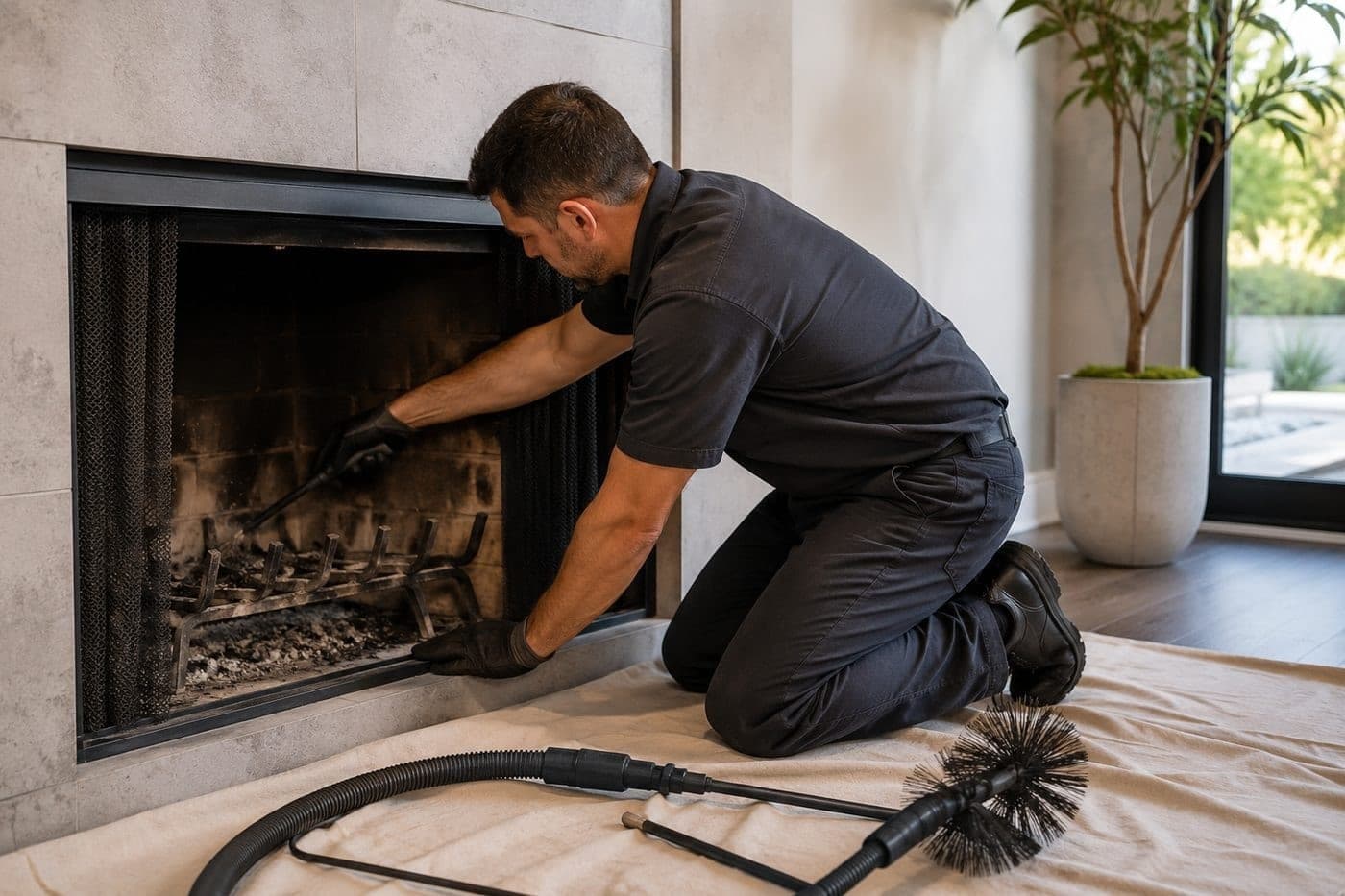
If you're not sure where your fireplace falls, our guide to common chimney issues walks through the damage that turns up most often. We can rebuild your fireplace in sections, such as the firebox, smoke chamber, hearth or surround, so you only replace what has actually failed.
Fireplace tear down and rebuild
A full tear down and rebuild is the largest version of this work. The firebox, hearth and sometimes the face are removed down to sound masonry, and the fireplace is built back up from there. This is usually reserved for structural trouble: a hearth that has settled, masonry badly damaged by water, or a chimney above that also needs rebuilding. Most fireplaces don't need to go this far, and an inspection is how you find out.
Rebuilding a fireplace firebox
The firebox takes the direct heat of the fire. That is why it's lined with firebrick laid in refractory mortar instead of ordinary brick and cement mortar. Over years of fires, heating and cooling cracks the brick and burns out the joints, and the back wall takes the worst of it. Rebuilding the firebox means removing the damaged firebrick and relaying it with heat-rated materials. Sometimes that's only the back wall, and sometimes it's all three walls and the floor. Factory-built fireplaces are lined with refractory panels instead, and those are replaced panel by panel.
How to rebuild the firebox of an unused fireplace
A fireplace that has been closed off for years needs some groundwork before anyone touches the firebox:
- Clear the flue and look inside it first. Idle chimneys collect nests, leaves and fallen mortar. A camera inspection shows whether the liner is intact.
- Check the damper and smoke chamber. A rusted damper or a crumbling smoke chamber should be fixed at the same time as the firebox.
- Remove failed firebrick and mortar down to a solid base. Then rebuild the walls and floor with firebrick and refractory mortar.
- Let the new mortar cure. Start with small fires before using the fireplace normally.
Skipping the first two steps is the most common mistake. A new firebox doesn't help if the flue above it is blocked or cracked. Our guide to common Chimney Problems covers what tends to show up in chimneys that have sat unused.
Masonry fireplace rebuild service
Beyond the firebox, a masonry fireplace has a smoke chamber, a damper, a hearth and a face, and a rebuild can include any of them. Smoke chamber repair smooths the sloped area above the damper with a mortar coating so smoke flows up instead of tumbling back. A repaired damper seals the flue when the fireplace isn't in use. These parts together decide how well the fireplace draws, which is why a rebuild often improves how it burns. There's more on that in our guide to efficient fireplace use. If your surround is marble rather than brick, read how classic marble fireplace renovation works before planning the face.
Commercial fireplace rebuild
Restaurants, inns, offices and multi-unit buildings with working fireplaces wear them out the same way, usually faster because the fireplace sees more use. We handle commercial fireplace rebuilds as part of our commercial chimney services. Because we're available 24 hours, Sunday through Friday, the assessment and the work can be scheduled outside your busiest hours.
From design to first fire
The firebox is laid in firebrick and refractory mortar; the hearth and clearances to wood trim are set by the building code. Design choices — size, materials, a raised or flush hearth — have to fit the room and the chimney.
Design
The opening size, materials and look, matched to the room and to a flue that can serve it.
Plan
Footing, clearances to framing, hearth extension and permits are worked out first.
Build
Firebox, smoke chamber, damper, hearth and the chimney are built in sequence.
Cure and test
The masonry cures, then small fires come first and the draw is checked.
Clearances and curing
Wood trim, mantels and framing must keep the code clearances to the opening, and new masonry needs its full cure time before regular fires.
Signs it's time for fireplace rebuild
- A new fireplace planned in a remodel or addition
- An old fireplace with a firebox or smoke chamber past repair
- A fireplace that has never drawn well
- A wish to change the look of the fireplace and its surround
How to prepare
- Note where the chimney can run and any existing flue.
- Gather photos of fireplaces you like and the room's measurements.
- Ask your town about permits for new fireplaces.
What gets checked
- Firebox depth and firebrick
- Permit requirements
- Hearth extension and clearances to trim
- Footing and chimney support
- Opening size against the flue
- Damper type
- Smoke chamber shape