Four ways to upgrade a fireplace you already have
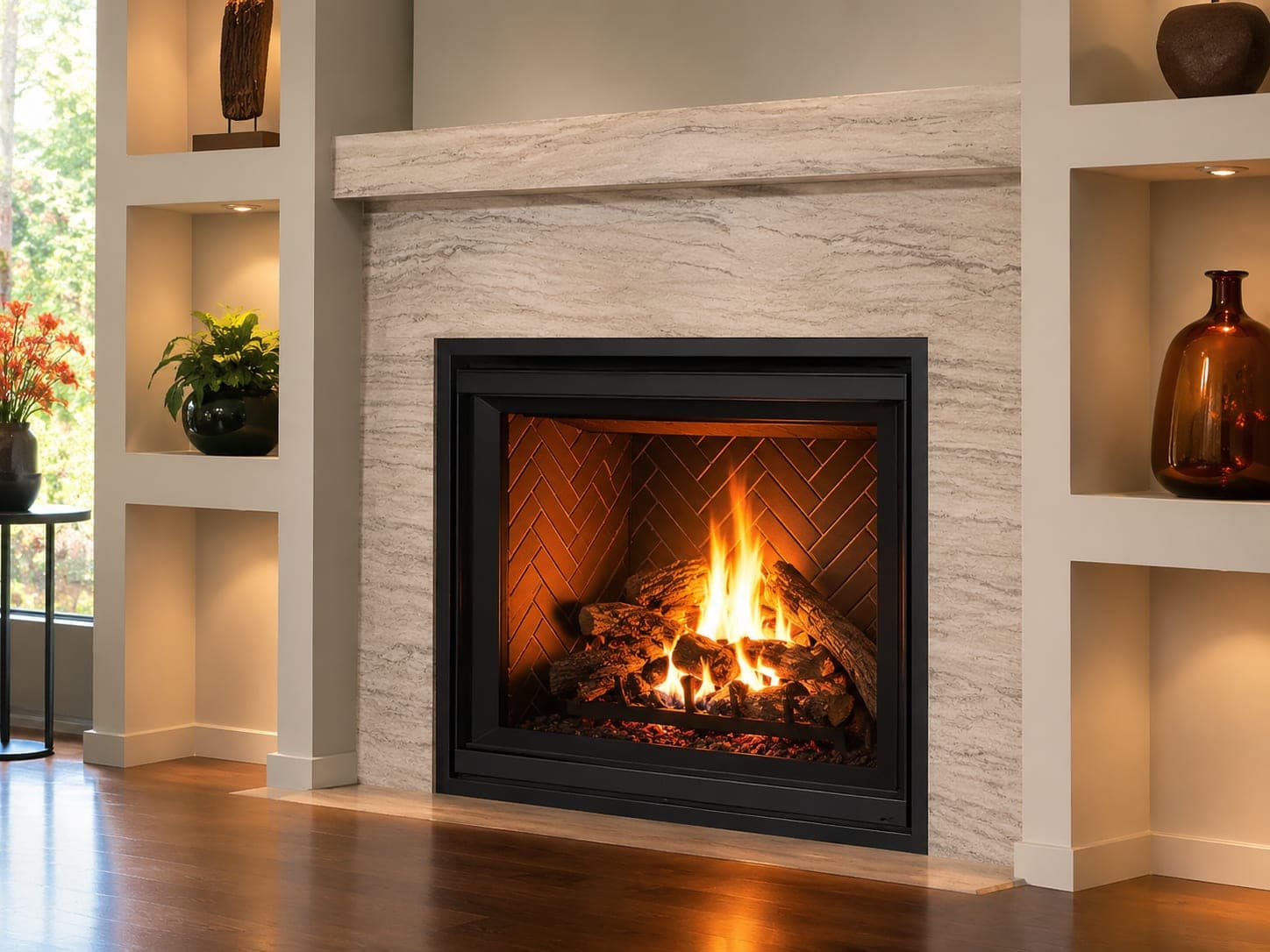
Many existing fireplaces are open masonry boxes that send much of their warmth up the chimney. You usually don't have to tear one out. You can change what goes inside it.
| Upgrade | What changes | Good fit if |
|---|---|---|
| Wood or gas insert | A sealed unit sits in the firebox and vents up a liner | You want real heat from the room you already have |
| Gas logs | A burner and log set go into the existing firebox | You mainly want an easy flame for looks |
| Fireplace conversion | A wood-burning setup is changed over to gas | You're done buying, stacking and hauling firewood |
| Fireplace doors | New glass doors close off the opening | The fireplace works but pulls warm air out of the room when idle |
Gas logs and gas inserts are not the same thing. Logs are mostly about atmosphere. An insert is built to push heat into the room. We'll explain which one suits your firebox and how you plan to use it.
When starting fresh makes more sense
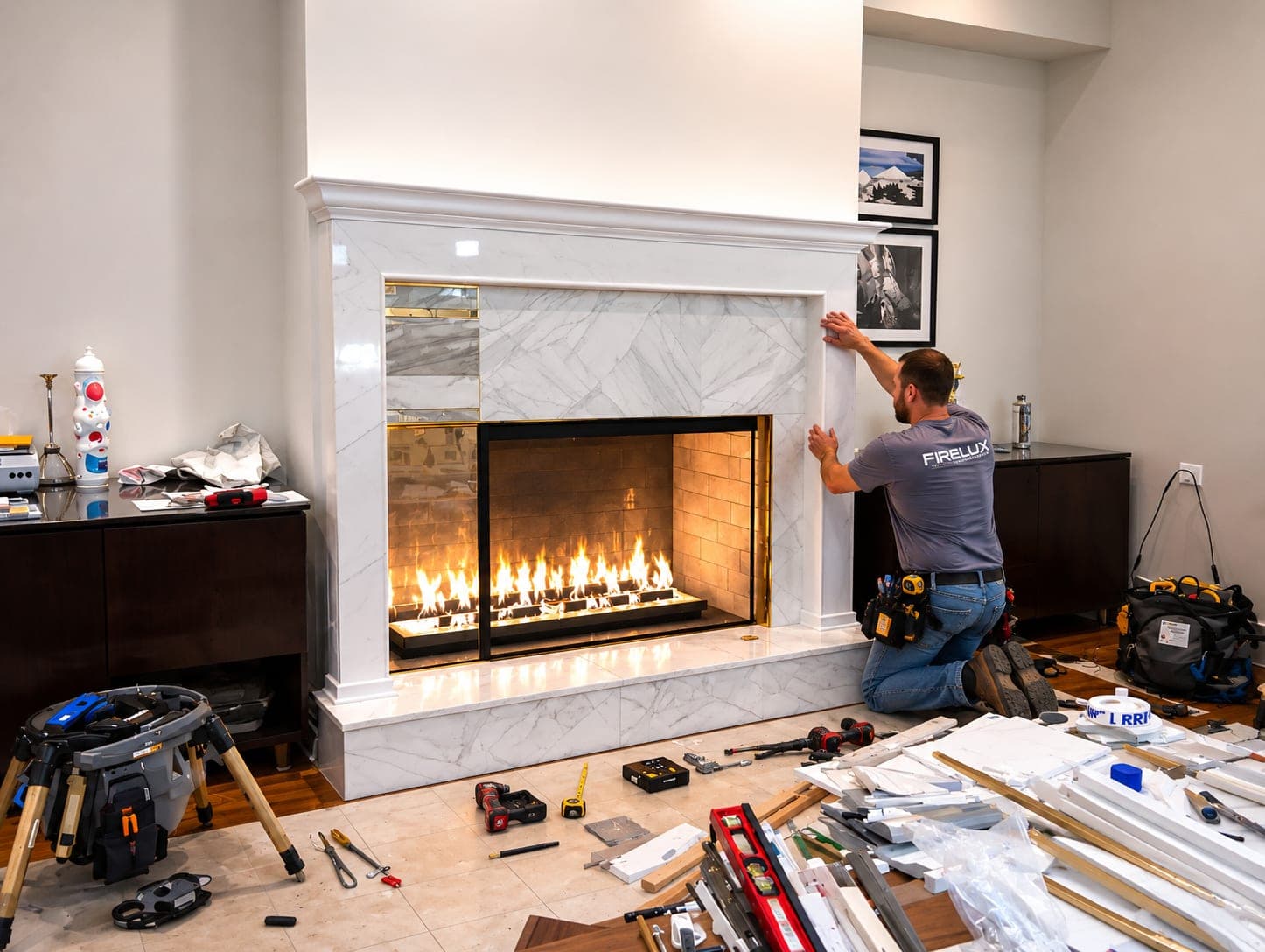
Sometimes an existing unit isn't worth upgrading. An aging factory-built fireplace with warped panels or a damaged chase is often a candidate for prefab fireplace replacement. A room with no fireplace at all can take a new unit with its own venting.
If the damage is limited, fireplace repair for West Hartford homes may be the smarter first step. We'll say so rather than push a new install. For a broader look at units and venting, see our full fireplace installation service page.
Working in West Hartford and next-door towns
West Hartford had 64,242 residents as of the 2025 Census figure. It sits under 4 miles from Hartford, close to home for us. We also install in Bloomfield, Newington, Farmington and New Britain. If you're comparing ideas, see what installation looks like in Farmington, or check our West Hartford service area for everything else we do locally.
If your chimney hasn't been cleaned in a while, book a chimney sweep in West Hartford before an insert or gas conversion. It gives the new setup a clean flue and a clear look at the chimney's condition.
How the visit works
A unit sized for the room heats comfortably; one far too large makes the space too warm. Clearances to combustibles are set by the manufacturer and the building code.
Look at the space
The opening, wall or chase, the chimney and the fuel available are checked.
Choose the unit
Size, fuel and style are matched to the room and the venting.
Install
The unit and its venting are installed to the manufacturer's instructions and local code.
Test
The unit is fired and checked, and you're shown how to use it.
What we look at
- Permit requirements
- Vent or liner route and length
- Required clearances to combustibles
- Hearth extension and protection
- Opening or framing dimensions
When to book fireplace installation
- A damaged factory-built unit past repair
- A switch from wood to gas or electric
- An open fireplace that sends most of its heat up the chimney
- A worn-out insert or stove
Before the technician arrives
- Let the fireplace or stove cool completely — ideally no fire for 24 hours before the visit.
- Make sure the technician can reach the roof or attic access if it's needed.
- Keep pets in another room while the work area is open.
- Move rugs, photos and anything fragile away from the work area.
Sources (2)
Where the West Hartford numbers and code references come from.