On this page
How the damper assembly works
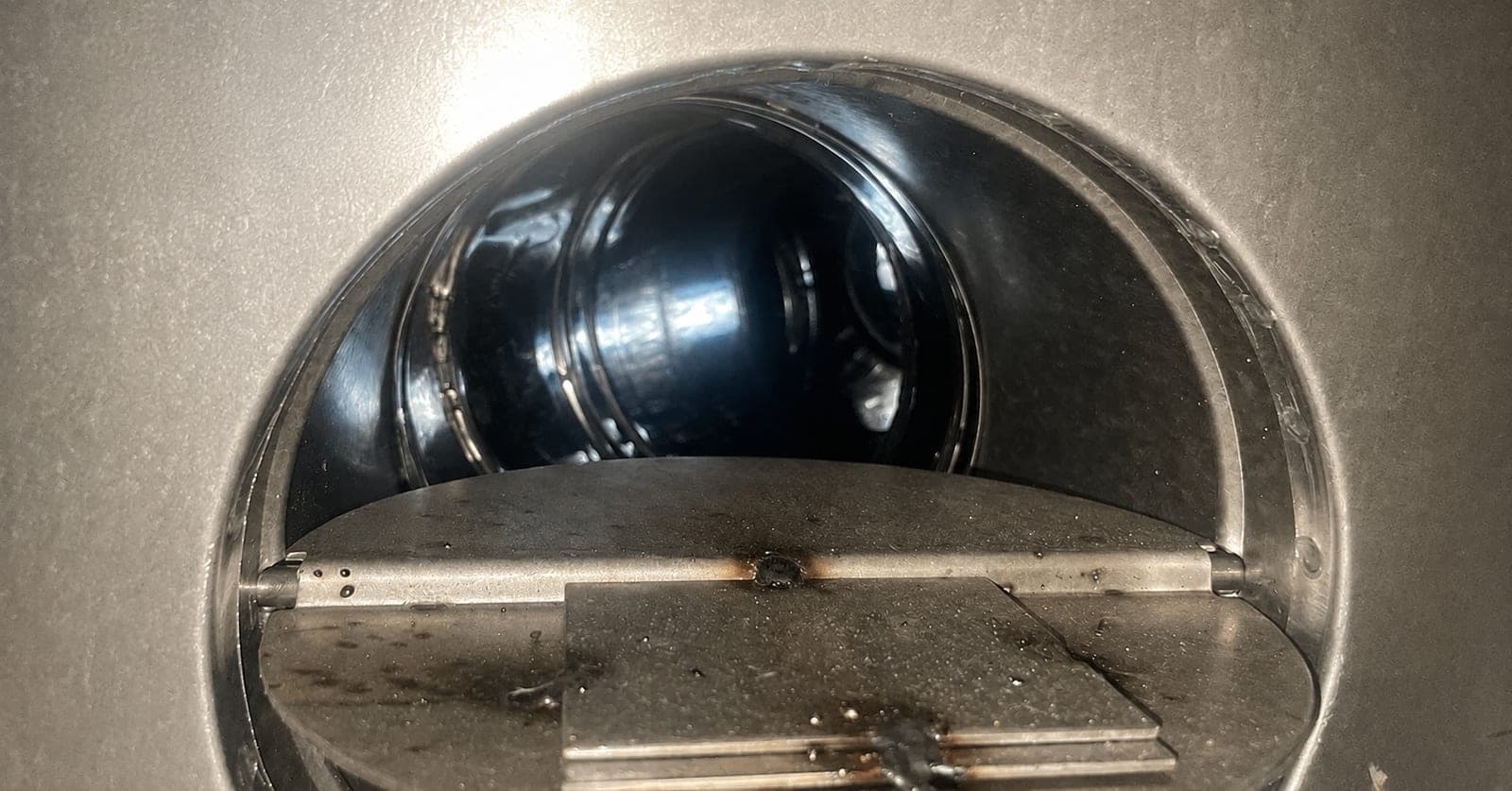
Most fireplaces have a throat damper: a cast iron frame and plate just above the firebox, moved by a handle, poker or rotary knob. Over time heat warps the plate, rust builds on the hinge points and soot packs into the frame, so it no longer opens fully or closes tightly. Another common design is the top-sealing damper, which mounts at the top of the flue and is opened and closed with a cable that runs down into the firebox.
| Feature | Throat damper | Top-sealing damper |
|---|---|---|
| Location | Just above the firebox | At the top of the chimney |
| Seal | Metal on metal, often loose with age | Gasketed lid that closes over the flue |
| Common trouble | Warping, rust, broken handles | Worn gaskets, stretched or snapped cables |
Location
- Throat damper
- Just above the firebox
- Top-sealing damper
- At the top of the chimney
Seal
- Throat damper
- Metal on metal, often loose with age
- Top-sealing damper
- Gasketed lid that closes over the flue
Common trouble
- Throat damper
- Warping, rust, broken handles
- Top-sealing damper
- Worn gaskets, stretched or snapped cables
Poor airflow and damper issues
Many draft complaints start at the damper, but not all of them. These are the signs we hear about most:
- Cold air falling into the room with no fire lit: the damper isn't sealing, or was left open
- Smoke rolling out when you light a fire: the plate may not be opening all the way
- A handle that won't budge: rust, debris on the frame or a broken linkage
- Rattling or banging on windy days: a loose plate or worn hardware
- Light showing around a closed damper: a warped plate or damaged frame
Smoke problems can also come from a blockage, a nest, a cold flue or a house that's sealed tightly, so it pays to rule those out. Our page on common chimney problems covers the other usual suspects.
Firebox and damper assessment
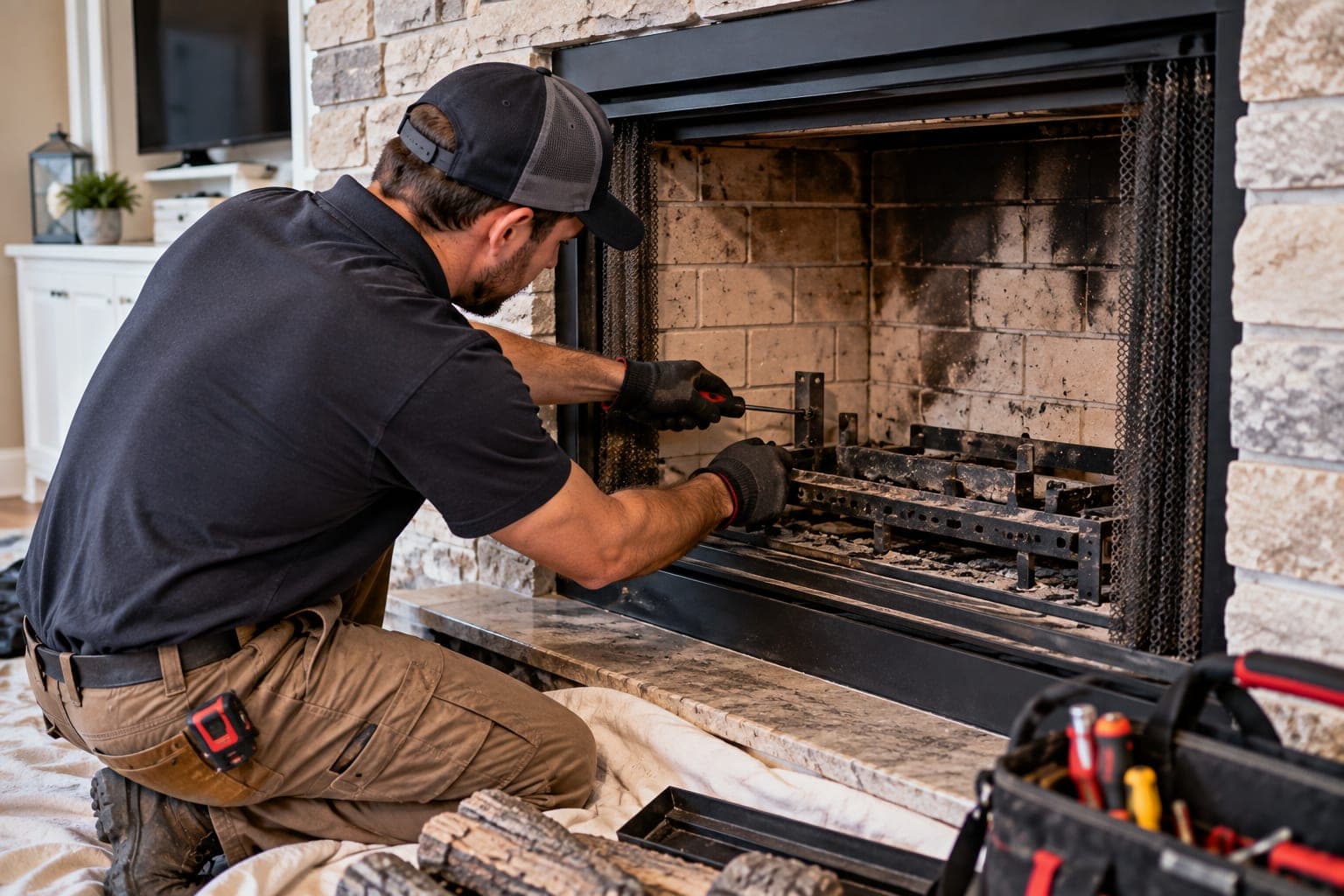
We check the plate's full travel, how it seats against the frame, the condition of the handle or cable, debris on the smoke shelf, and the firebox mortar near the throat where heat damage tends to show first. Then you'll know whether the damper can be repaired or needs replacing. A good seal also matters for heating bills, which our guide to efficient fireplace use explains.
Leaving the damper open after a fire
The damper should stay open until the fire is completely out and the ashes are cold. Embers keep producing smoke and carbon monoxide long after the flames die, and closing the damper too soon pushes those gases into the house. Once the firebox is cold, close it so warm room air doesn't escape up the flue.
Never close the damper on smoldering embers
If you're unsure whether the fire is out, leave the damper open. A bit of lost heat overnight is far better than smoke in the house.
If your damper is part of an older fireplace you're restoring, the classic marble fireplace renovation service page shows how damper work fits into a larger project, and our overview of common chimney issues helps you spot related trouble.
How damper work is done
Rusted throat dampers can warp or break apart and stop sealing at all. A damper stuck partly closed sends smoke into the room.
Check the damper
How it opens, closes and seals, and what has rusted, warped or broken.
Choose the fix
Clean and adjust, replace parts, or add a top-sealing damper at the crown.
Install or repair
The damper is repaired or installed, with its control run to the firebox where needed.
Test
Open, close and seal are checked, and you're shown how to use it.
Getting ready for the visit
- Let the fireplace cool completely — no fire the day before.
- Clear the hearth and the area in front of the fireplace.
- Note whether the damper sticks open, sticks closed or won't seal.
Signs it's time for fireplace damper
- Cold drafts from the fireplace when it isn't in use
- Smoke in the room even with the damper open
- A damper plate that's missing or broken
- Rust flakes or debris falling into the firebox
- A damper handle that won't move or moves without opening anything
Damper open before every fire
Always open the damper fully before lighting a fire and leave it open until the fire is completely out and the fireplace is cold. A closed damper sends smoke and carbon monoxide into the room.
What gets checked
- Seal when closed
- Rust and warping
- Smoke chamber above the damper
- Damper plate and frame
- Handle, chain or control
- Crown and flue top for a top-sealing damper