On this page
What goes wrong with a fireplace damper
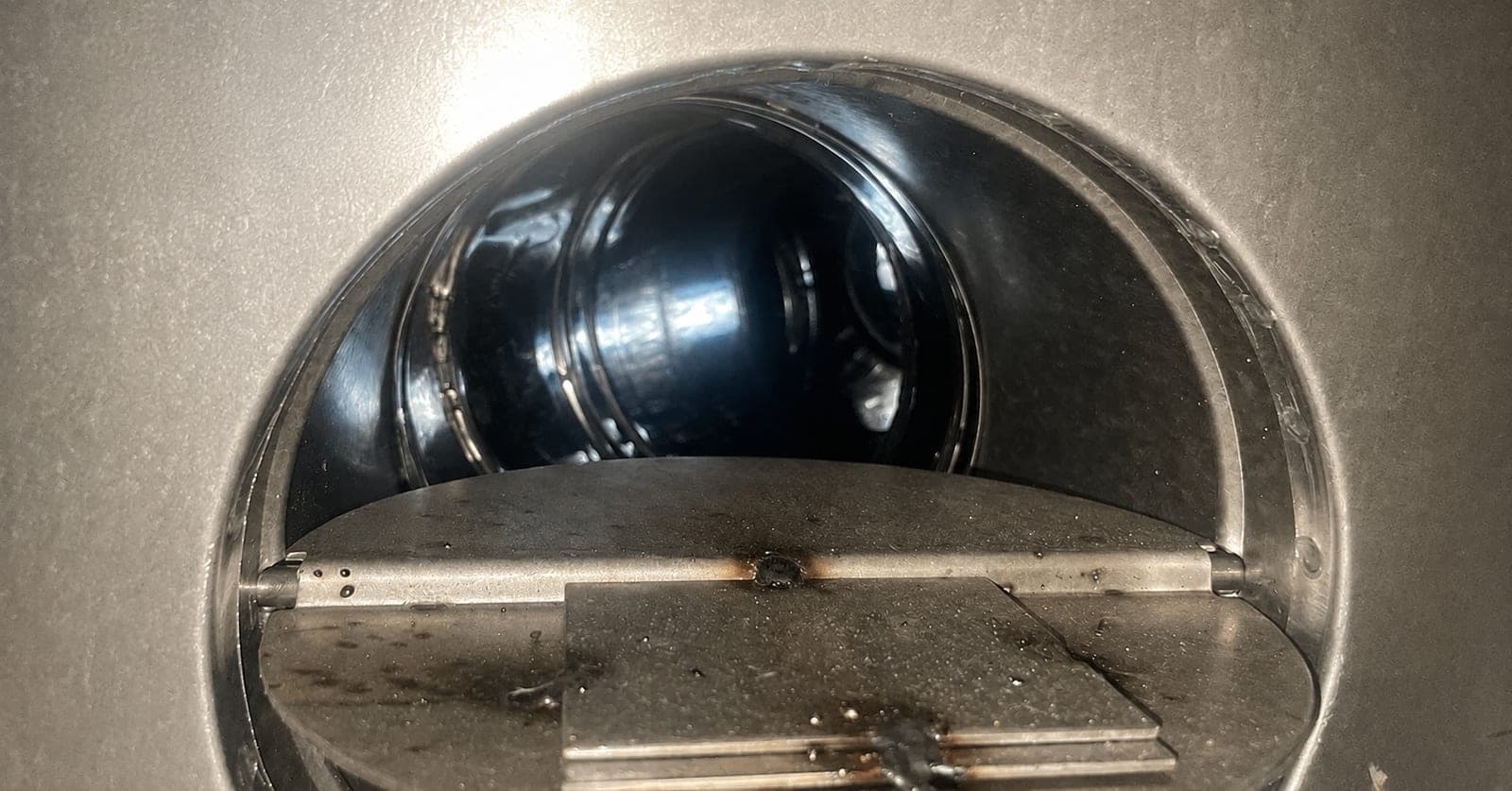
Most masonry fireplaces have a throat damper. It's a cast-iron or steel plate just above the firebox, worked by a handle, chain or rotary knob. Some chimneys have a top-sealing damper at the crown instead, opened by a cable that runs down into the firebox. To see where the damper sits relative to the smoke shelf and flue, our guide to fireplace anatomy has a clear diagram. Either type tends to fail in a few predictable ways:
- Seized plate: rust and creosote bind the hinge or pivot, so the handle won't budge.
- Warped plate or frame: repeated hot fires distort the metal until it no longer closes flush.
- Broken linkage: a snapped pin, a worn control rod or a frayed top-damper cable.
- Failed gasket: top-sealing dampers depend on a rubber or silicone seal that hardens and cracks with age.
- Debris on the plate: fallen mortar, nesting material or soot that keeps it from seating.
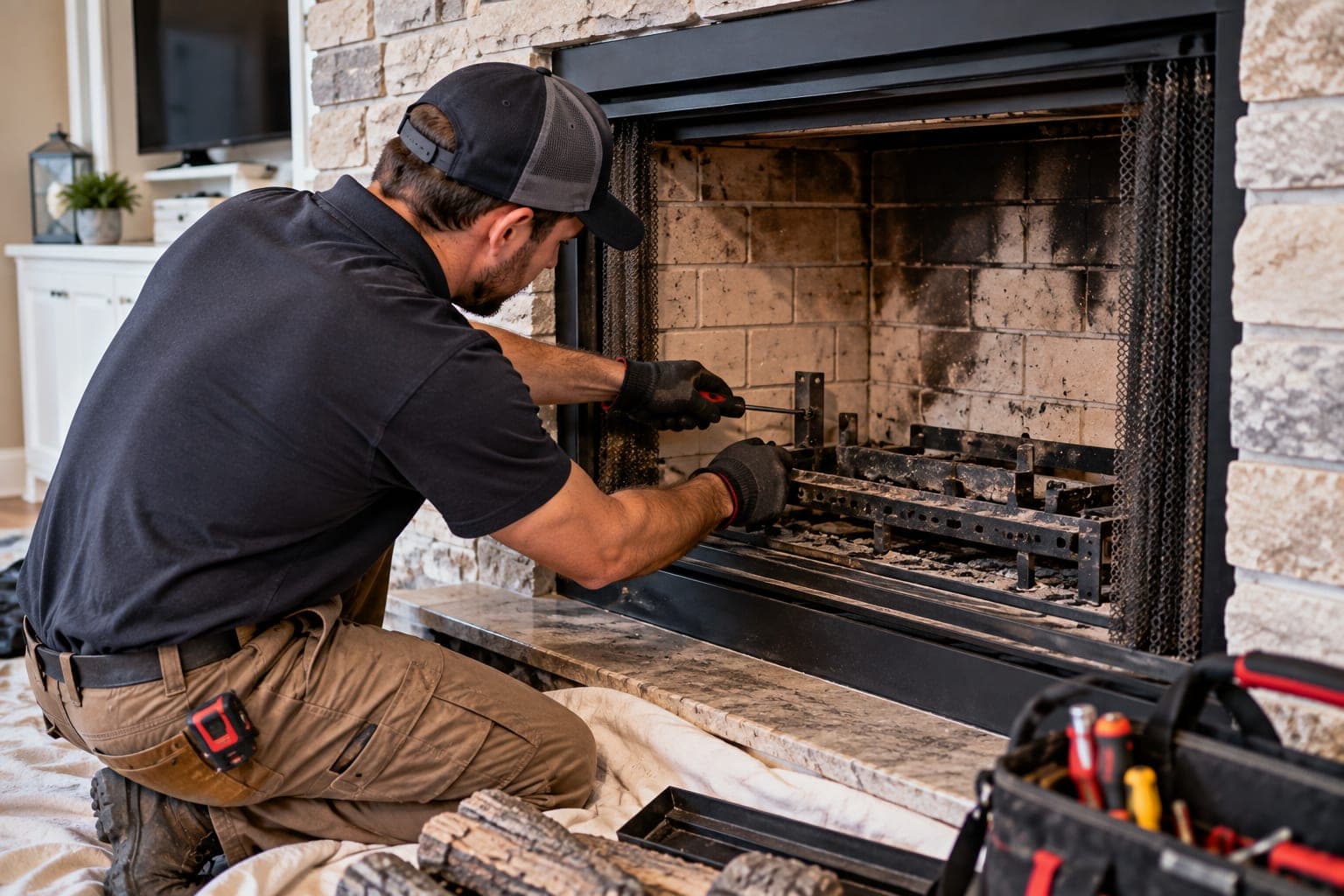
Repair means freeing and cleaning the moving parts, replacing the handle, pin, spring, cable or gasket, and adjusting the plate so it seats properly. If the frame itself is cracked or rusted through, repair stops making sense, and we'll tell you that plainly. In that case the next step is fireplace damper installation. A sealing top damper is a common answer for a throat damper that can't be saved, so it's worth reading how damper installation works before you decide.
Why the damper matters when the fire is out
An open damper on a cold night works like an open window at the top of the house. Making sure the damper closes and seals is one of the simplest steps in running a more efficient fireplace.
What happens during the visit
Rusted throat dampers can warp or break apart and stop sealing at all. A damper that won't close lets warm air out and cold air, rain and animals in.
Check the damper
How it opens, closes and seals, and what has rusted, warped or broken.
Choose the fix
Clean and adjust, replace parts, or add a top-sealing damper at the crown.
Install or repair
The damper is repaired or installed, with its control run to the firebox where needed.
Test
Open, close and seal are checked, and you're shown how to use it.
Signs it's time for fireplace damper repair
- A damper plate that's missing or broken
- Rust flakes or debris falling into the firebox
- A damper handle that won't move or moves without opening anything
- Cold drafts from the fireplace when it isn't in use
- Smoke in the room even with the damper open
Checked on every visit
- Damper plate and frame
- Seal when closed
- Crown and flue top for a top-sealing damper
- Handle, chain or control
- Smoke chamber above the damper
- Rust and warping
Damper open before every fire
Always open the damper fully before lighting a fire and leave it open until the fire is completely out and the fireplace is cold. A closed damper sends smoke and carbon monoxide into the room.
How to prepare
- Clear the hearth and the area in front of the fireplace.
- Note whether the damper sticks open, sticks closed or won't seal.
- Let the fireplace cool completely — no fire the day before.
Damper repair in Connecticut towns
Fireplace damper repair in sandy hook
Homeowners in Sandy Hook can request a free estimate for a stuck or leaking damper. Tell us whether you have a throat damper with a handle or a top-sealing damper with a cable, and whether the trouble is opening, closing or both. That tells us which parts to bring.
Fireplace damper repair in Plainfield Village
For fireplace damper repair in Plainfield Village, CT, a phone photo of the handle or the cable bracket inside the firebox helps. Also mention if the fireplace has gone unused for a few seasons. A damper that hasn't moved in years is more likely to be rusted in place.
Fireplace damper repair in South Windham
Damper problems often show up the first time the fireplace is lit in the fall. Stop adding fuel, open a window and don't relight the fire until the chimney has been checked. If the smoke is heavy, an alarm sounds or you suspect a chimney fire, get everyone outside and call 911. Don't force a jammed handle while the metal is hot.
Fireplace damper repair in West Simsbury
In West Simsbury homes with gas logs in a masonry opening, the damper usually has to be clamped open so combustion gases can vent. If that clamp is missing or the damper has slipped shut, we'll check it and set it correctly as part of the repair.