On this page
How a cap damper differs from a throat damper
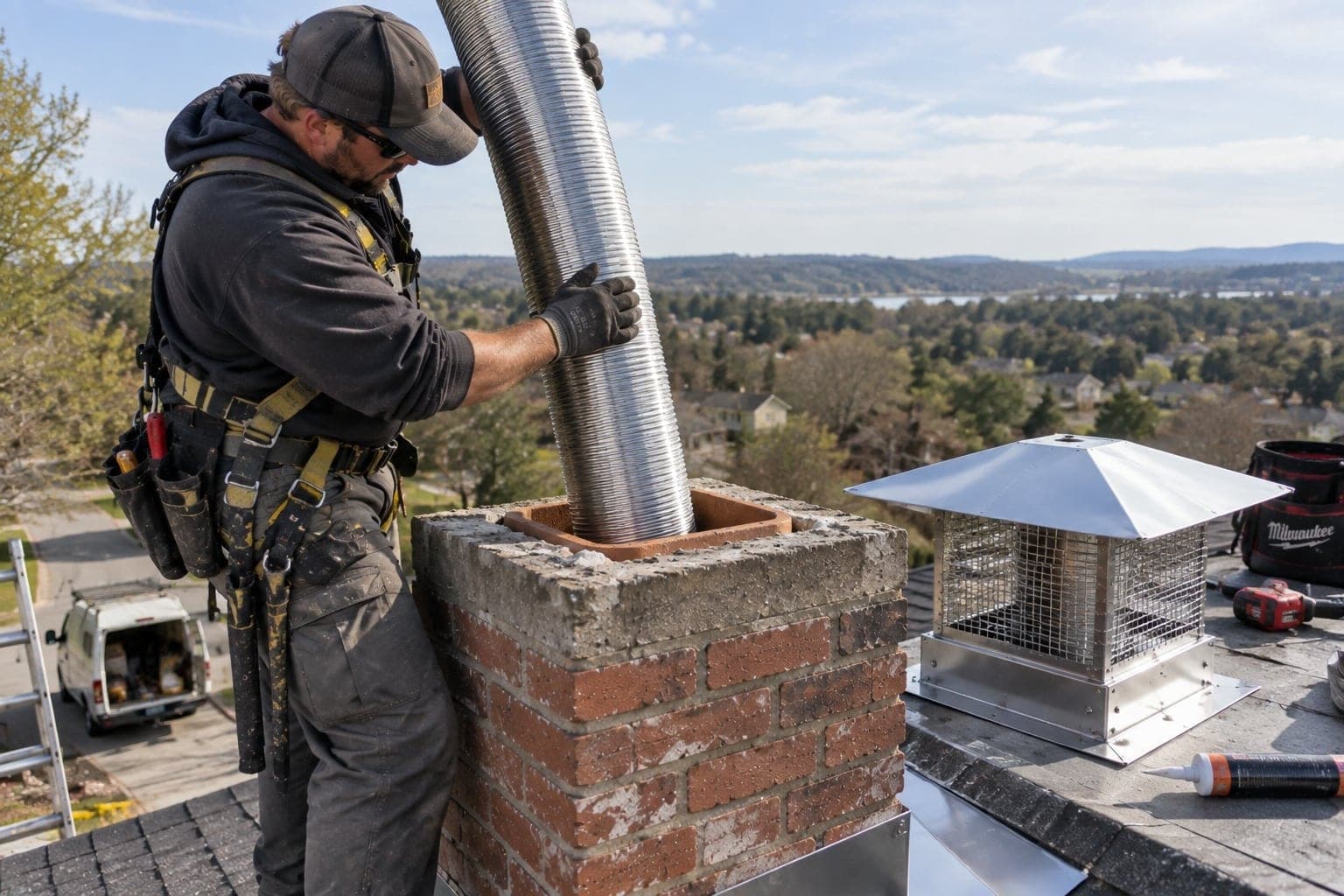
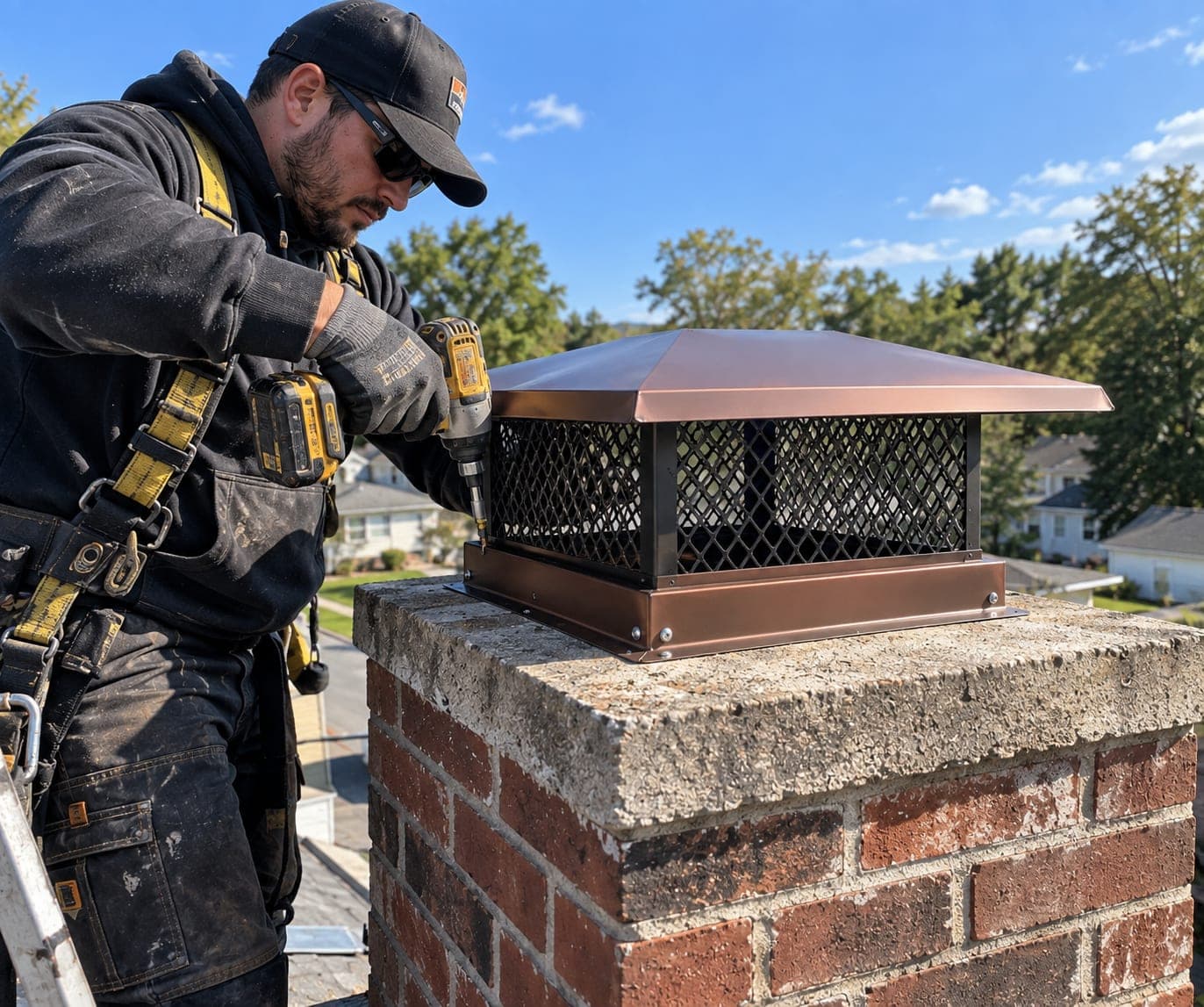
Most masonry fireplaces came with a cast-iron throat damper just above the firebox. Over years of heat and moisture, these plates warp, rust and stop closing flat. A cap damper, also called a top-sealing damper, sits on the flue opening at the top of the chimney. You open and close it with a cable that runs down to the firebox.
| Feature | Throat damper | Cap damper |
|---|---|---|
| Location | Just above the firebox | On top of the flue |
| Seal when closed | Metal on metal, often loose with age | Gasketed lid pressed onto the flue |
| Rain and animals | No protection | Lid and mesh sides act as a cap |
| Operation | Lever or handle in the firebox | Cable and handle mounted in the firebox |
Location
- Throat damper
- Just above the firebox
- Cap damper
- On top of the flue
Seal when closed
- Throat damper
- Metal on metal, often loose with age
- Cap damper
- Gasketed lid pressed onto the flue
Rain and animals
- Throat damper
- No protection
- Cap damper
- Lid and mesh sides act as a cap
Operation
- Throat damper
- Lever or handle in the firebox
- Cap damper
- Cable and handle mounted in the firebox
If your existing damper only needs a new handle or has a stuck plate, repairing the old damper may be the simpler fix. We'll tell you which way makes more sense.
Custom chimney cap installation across Connecticut
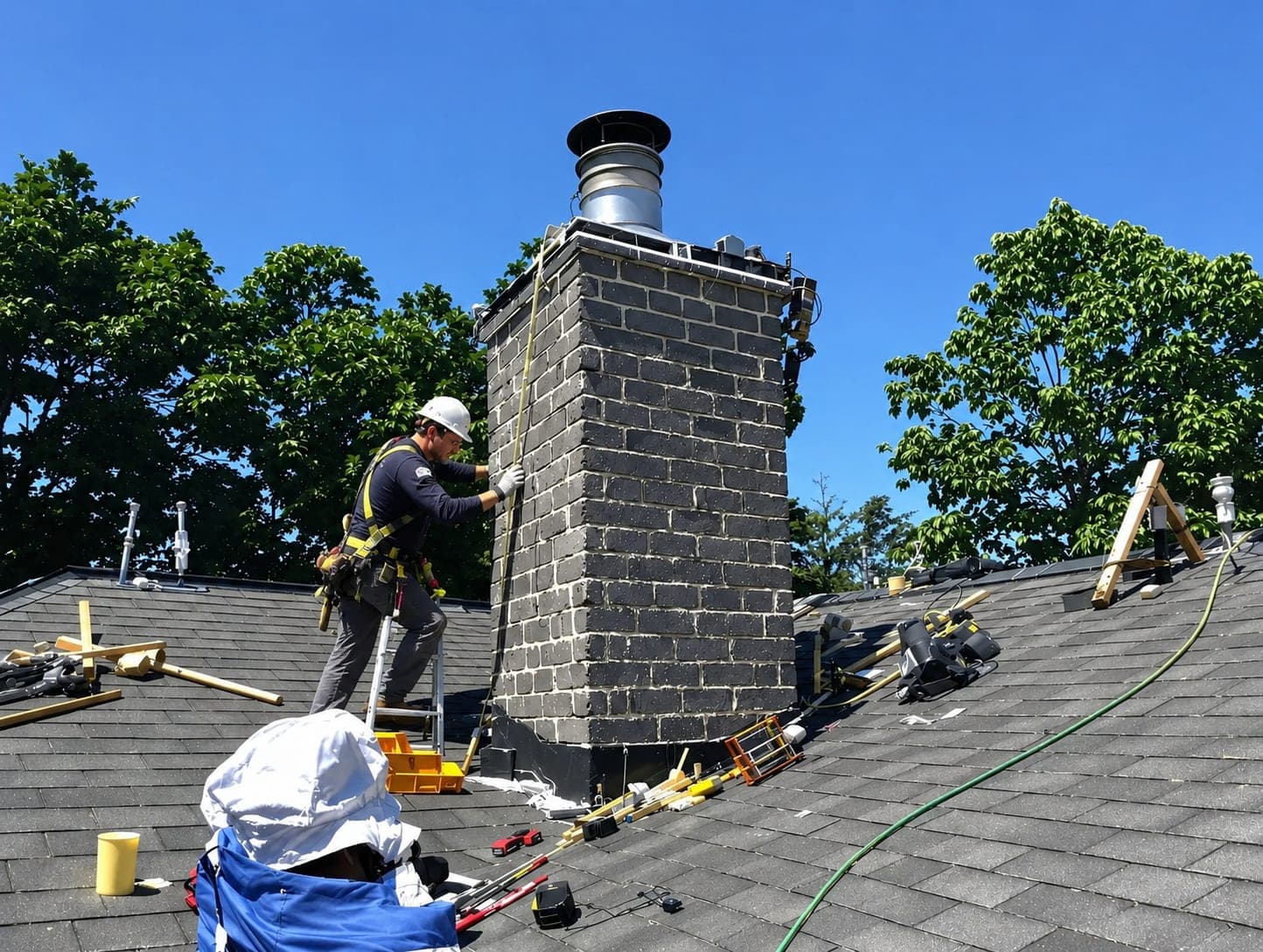
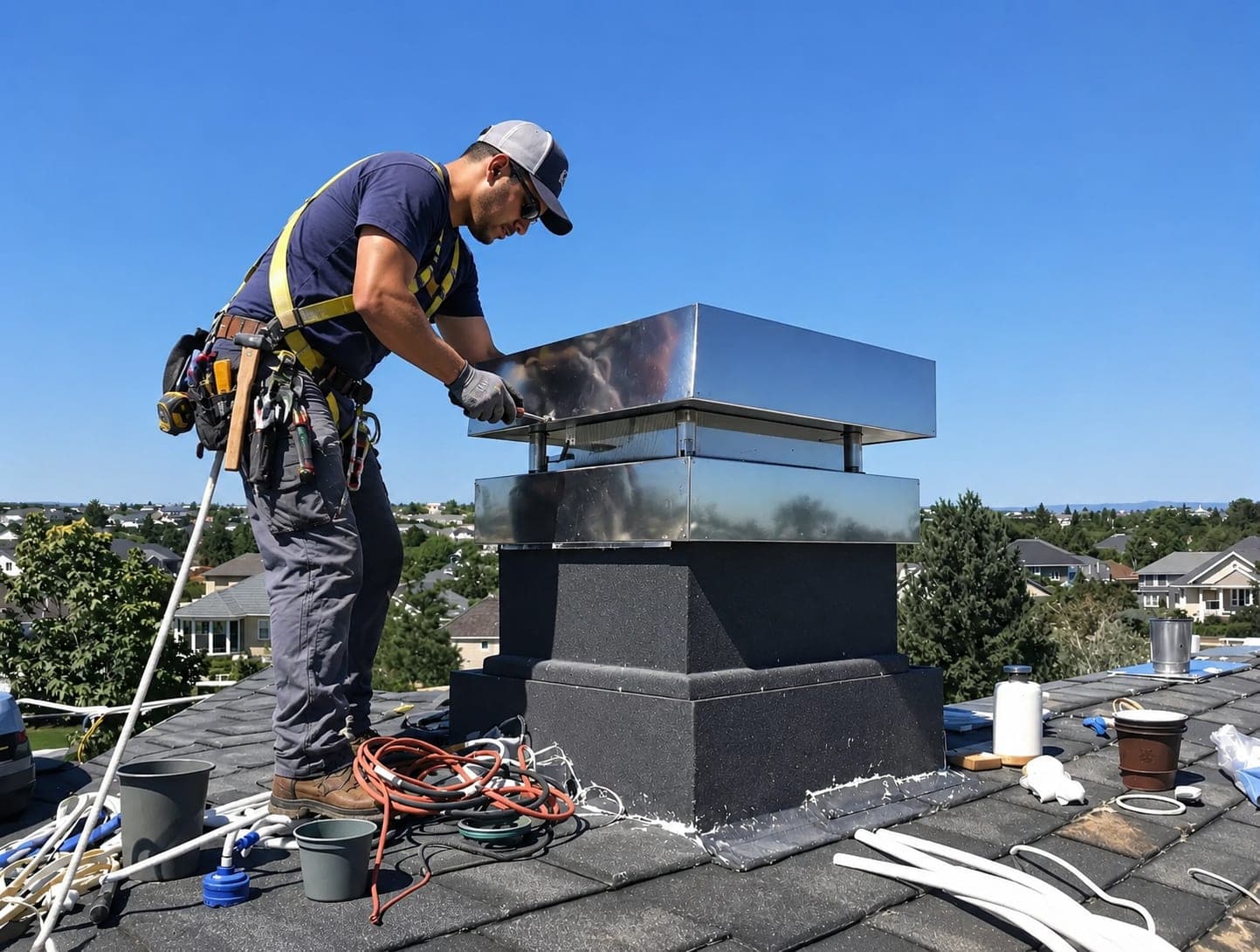
A cap damper has to seat on the flue tile or liner, so fit decides everything. Round and rectangular flues take different frames. A flue tile set too low in the crown, or a crown that is cracked, has to be addressed before a sealing lid will close properly. On crowns with more than one flue, each flue needs its own solution. Cap dampers are one piece of our broader chimney installation work. When the masonry under the cap is failing, a brick chimney rebuild may need to come first.
Spark arrestor chimney cap installation
The mesh sides of a cap damper double as a spark arrestor and catch embers before they reach the roof or nearby trees. That mesh needs to be kept clear, because creosote and ash can build up on it and restrict draft. Cap dampers are generally designed for open wood-burning fireplaces. A flue serving a wood stove, an insert or a gas appliance usually calls for a standard spark arrestor cap instead. A relined flue also needs a cap that fits the liner. This explainer on chimney liners covers why.
Open it before every fire
A cap damper must be fully open before you light a fire. If the cable or spring no longer holds the lid open, stop using the fireplace and have it looked at.
What happens during the visit
A damper stuck partly closed sends smoke into the room. Rusted throat dampers can warp or break apart and stop sealing at all.
Check the damper
How it opens, closes and seals, and what has rusted, warped or broken.
Choose the fix
Clean and adjust, replace parts, or add a top-sealing damper at the crown.
Install or repair
The damper is repaired or installed, with its control run to the firebox where needed.
Test
Open, close and seal are checked, and you're shown how to use it.
Damper open before every fire
Always open the damper fully before lighting a fire and leave it open until the fire is completely out and the fireplace is cold. A closed damper sends smoke and carbon monoxide into the room.
How to prepare
- Let the fireplace cool completely — no fire the day before.
- Note whether the damper sticks open, sticks closed or won't seal.
- Clear the hearth and the area in front of the fireplace.
What gets checked
- Rust and warping
- Crown and flue top for a top-sealing damper
- Smoke chamber above the damper
- Seal when closed
- Handle, chain or control
When to book chimney cap damper installation
- A damper plate that's missing or broken
- A damper handle that won't move or moves without opening anything
- Cold drafts from the fireplace when it isn't in use
- Smoke in the room even with the damper open