On this page
- What brick chimney repair covers and who needs it
- Signs your chimney needs repair
- 4 important chimney repairs to address
- Addressing structural damage through chimney repair
- Aluminum chimney flashing repair
- What a brick chimney repair visit involves
- Repair options and what decides between them
- What affects the scope of the work
- Before and after chimney repair
- Time of year for chimney repair
- Chimney repair 24 hours a day, sunday through friday
- Brick chimney repair across Connecticut
- How to prepare for the visit
What brick chimney repair covers and who needs it
Brick chimney repair is masonry work on the outside of the chimney. That includes the brick, the mortar joints, the concrete or mortar crown on top, and the flashing that seals the joint between chimney and roof. It is for homeowners whose masonry chimney is showing age, was damaged in a storm, or was flagged in an inspection before a sale. The goal is a chimney that sheds water, stands plumb and keeps its brick in place.
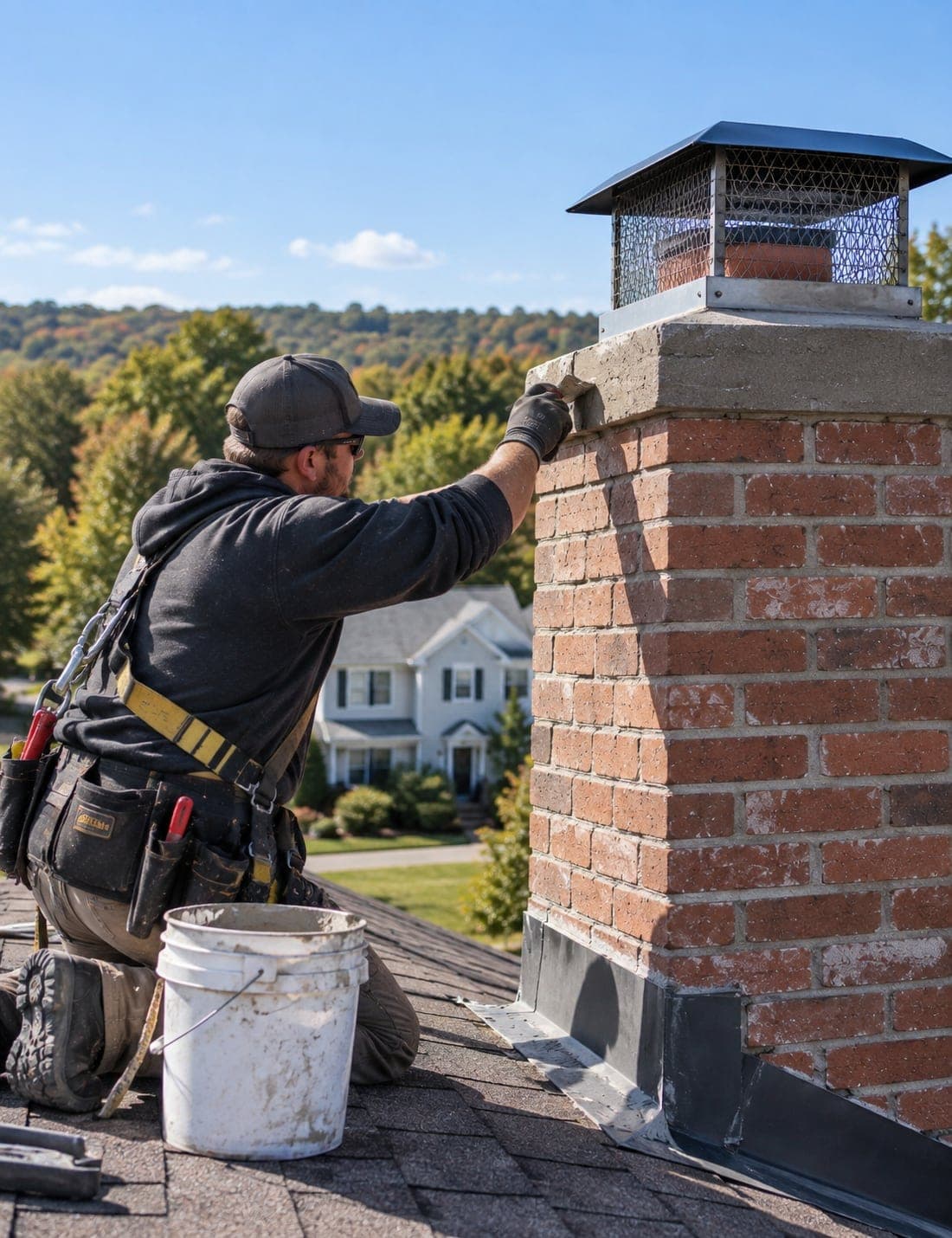
Masonry problems rarely stay in one spot. A crack in the crown lets water into the top courses. Wet brick then breaks down faster, and loose mortar lets more water in. If the brick problems extend beyond the chimney, take a look at our brick masonry repair service as well.
Signs your chimney needs repair
- Brick faces flaking, popping off or crumbling (called spalling). See what causes cracked chimney bricks.
- Mortar joints that are recessed, sandy to the touch or missing in places.
- White, chalky staining on the brick (efflorescence), a sign that water is moving through the masonry.
- Water stains on a ceiling or wall near the chimney, or water in the firebox. Our page on fixing a leaking chimney explains how leaks are traced.
- Gaps or lifted edges where the flashing meets the roof.
- A chimney that looks tilted or is separating from the house. Read more about what causes a leaning chimney.
- Pieces of brick, mortar or crown on the roof, in the gutters or on the ground.
4 important chimney repairs to address
1. Crown repair
The crown is the slab that caps the masonry around the flue. Hairline cracks can often be sealed. A crown that is broken through, or one built flat so water pools on it, usually needs to be rebuilt with a proper slope and overhang.
2. Tuckpointing
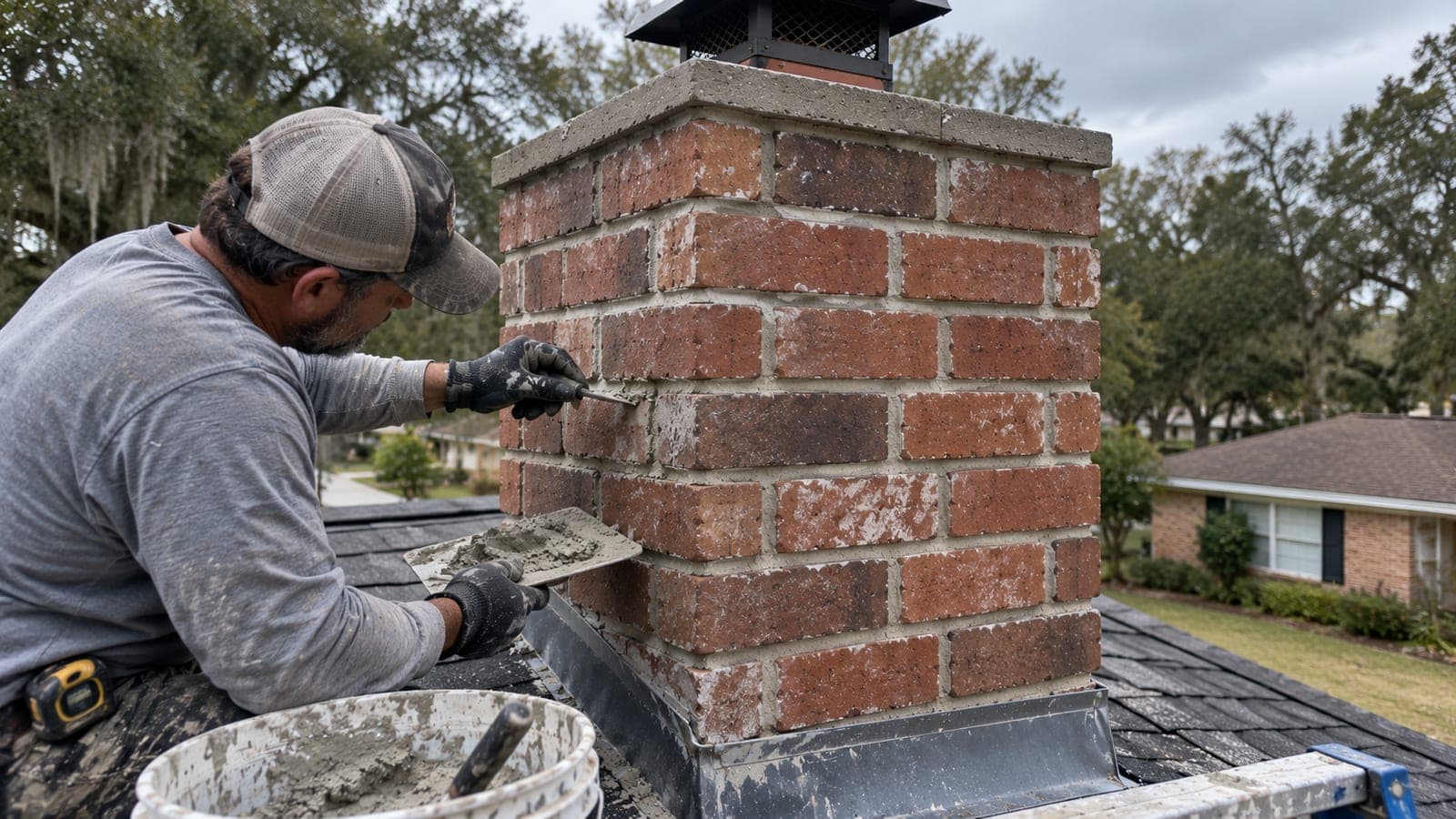
Tuckpointing means grinding out deteriorated mortar to a consistent depth and packing in fresh mortar. Matching the strength of the new mortar to the existing brick matters. Mortar that is too hard can crack the brick around it.
3. Spalled brick replacement
Badly spalled bricks are cut out one at a time and replaced, then the joints around them are repointed. Replacement brick is chosen to match the old brick as closely as possible in size and color.
4. Flashing repair
Failed flashing is one of the most common sources of a leak that looks like a chimney problem. Resealing or replacing it often stops water that was blamed on the brick.
Addressing structural damage through chimney repair
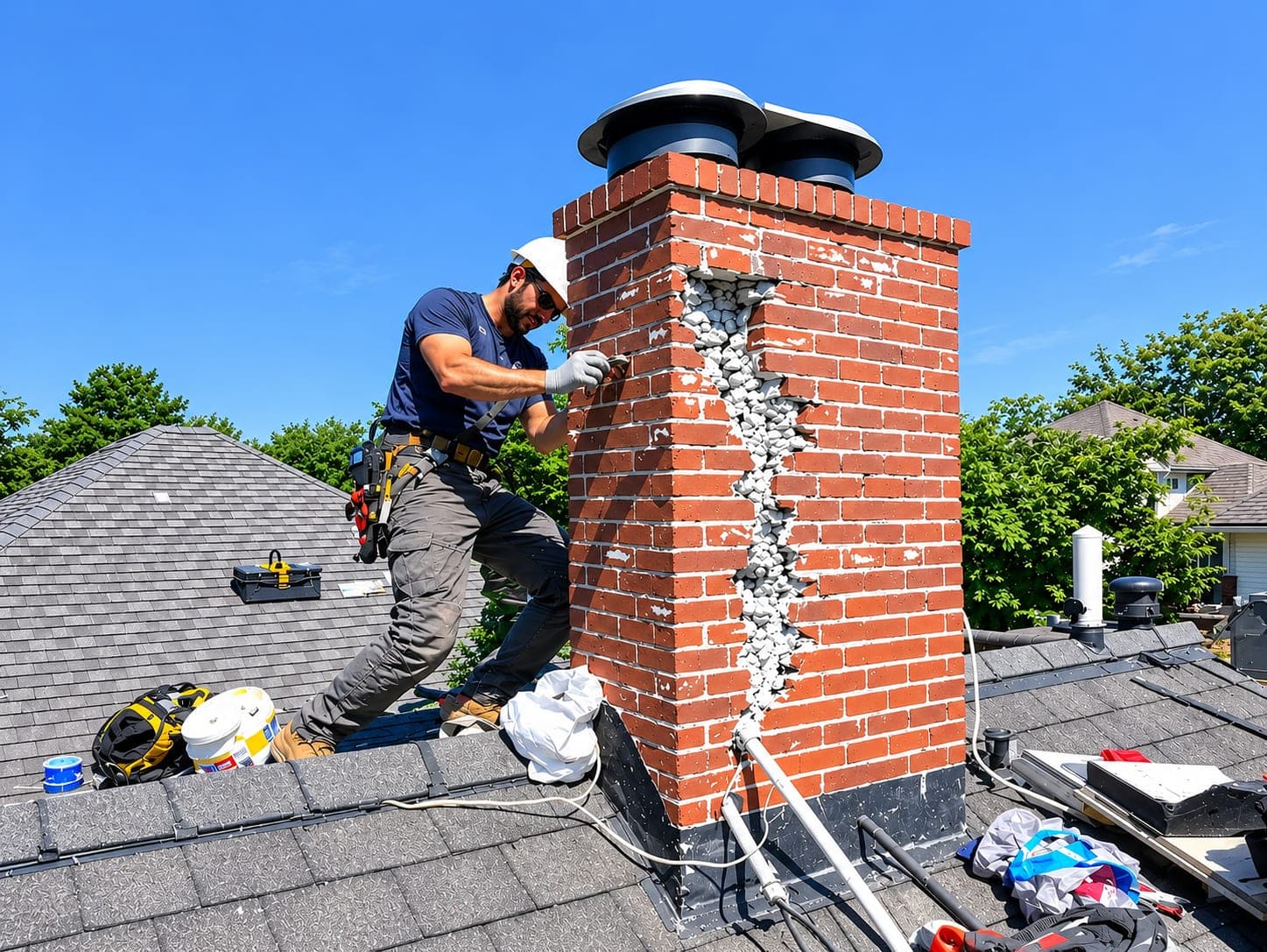
Some damage goes beyond the surface. A chimney may lean, pull away from the house, or have loose courses above the roofline. In those cases patching is not enough. Repair usually means taking the damaged section down to sound masonry and rebuilding it, and sometimes means a full rebuild. Part of the inspection is finding out how far the damage goes, so the repair addresses the cause and not just the visible cracks.
If bricks are falling or the chimney is leaning
Keep people and cars away from the area below the chimney and stop using the fireplace or any appliance vented through it. Do not climb onto the roof to check it yourself. Emergency calls are accepted, so get in touch right away.
Aluminum chimney flashing repair
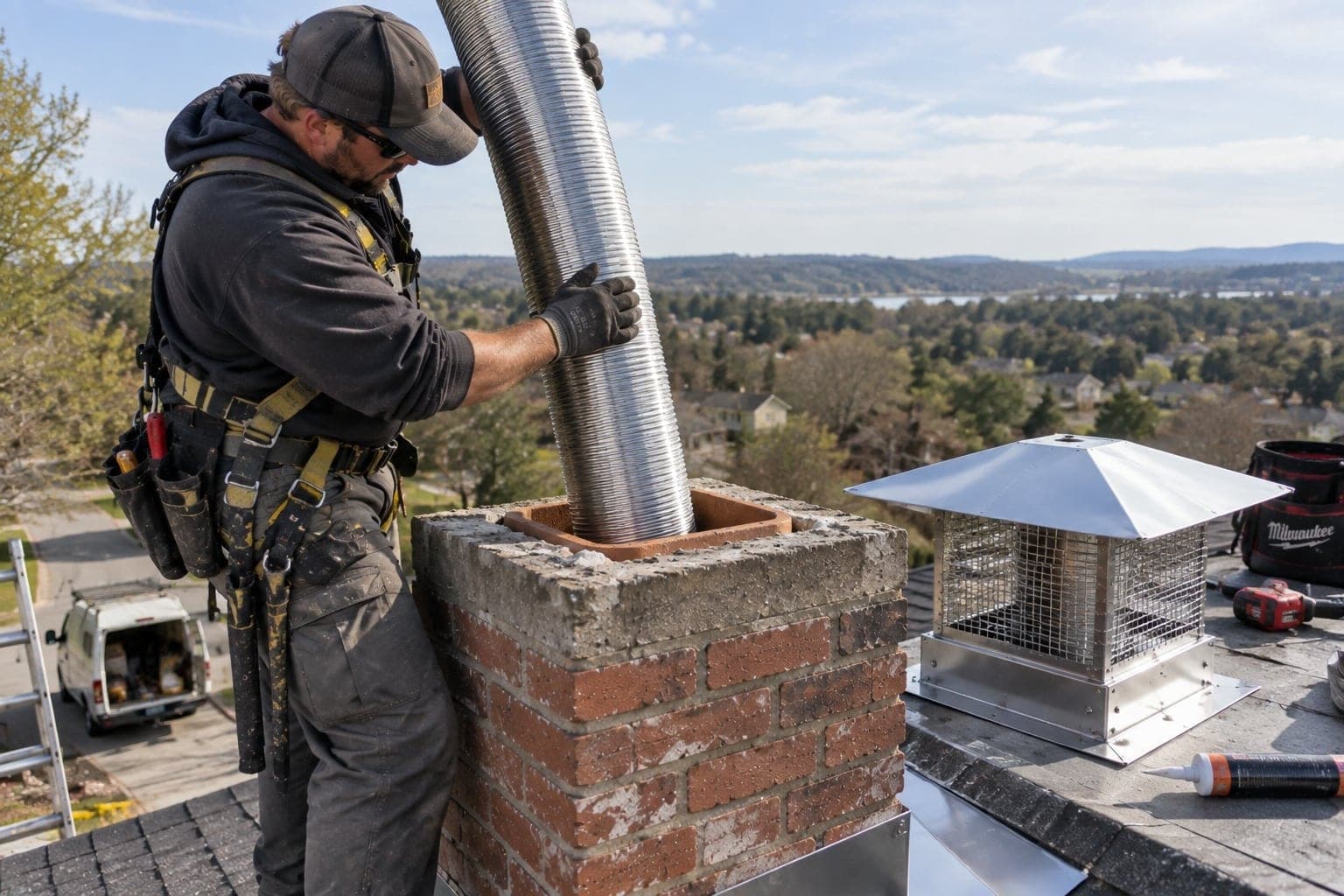
Many chimneys use aluminum step flashing that is woven into the shingles, with counter flashing set into the mortar joints over it. Common failures include sealant that has dried and pulled away, counter flashing that has worked loose from the joint, and pieces that are bent or corroded. Small failures can be resealed and re-secured. Flashing that is torn, mis-lapped or short is replaced, and the counter flashing is cut back into fresh mortar joints.
What a brick chimney repair visit involves
From first look to finished repair
Talk through the problem
You describe what you've noticed: leaks, fallen brick, stains or an inspection finding.
Inspect the chimney
We look at the brick, mortar, crown, flashing and cap from the roof, and check the inside for signs of water.
Explain the findings
You get a plain explanation of what's wrong, what caused it and which repairs make sense. The estimate is free.
Protect the work area
Landscaping, walkways and roofing near the chimney are covered before any masonry work starts.
Make the repair
Mortar is ground out, brick replaced, the crown rebuilt or the flashing reset, depending on the agreed scope.
Clean up and review
Debris is removed, and we walk you through what was done and what to keep an eye on.
What gets checked and repaired
- Brick faces for spalling, cracking and looseness
- Mortar joints for erosion, gaps and soft mortar
- Crown for cracks, pooling water and missing overhang
- Flashing and counter flashing for gaps, lifting and corrosion
- Chimney cap and screen for damage or a missing cap
- Overall alignment, to catch leaning or separation from the house
- Interior signs of water, such as a rusted damper or a stained firebox
- Visible flue liner condition. A damaged liner is a separate repair, explained in our guide to understanding chimney liners
Repair options and what decides between them
| Feature | Tuckpointing and brick replacement | Partial or full rebuild |
|---|---|---|
| Best fit | Localized mortar loss and scattered spalled brick on a sound, plumb chimney | Leaning, widespread loose brick or damage that runs deep into the structure |
| What's removed | Failed mortar and individual damaged bricks | Courses of brick down to sound masonry, or the whole stack |
| Usual triggers | Recessed joints, efflorescence, a few flaking bricks | Separation from the house, cracks through the structure, falling brick |
| Disruption | Lighter work, mostly done from the roof | More materials and staging, and the fireplace is out of use longer |
Best fit
- Tuckpointing and brick replacement
- Localized mortar loss and scattered spalled brick on a sound, plumb chimney
- Partial or full rebuild
- Leaning, widespread loose brick or damage that runs deep into the structure
What's removed
- Tuckpointing and brick replacement
- Failed mortar and individual damaged bricks
- Partial or full rebuild
- Courses of brick down to sound masonry, or the whole stack
Usual triggers
- Tuckpointing and brick replacement
- Recessed joints, efflorescence, a few flaking bricks
- Partial or full rebuild
- Separation from the house, cracks through the structure, falling brick
Disruption
- Tuckpointing and brick replacement
- Lighter work, mostly done from the roof
- Partial or full rebuild
- More materials and staging, and the fireplace is out of use longer
Two things drive the choice: how sound the chimney is under the visible damage, and how much of it is affected. When most of the masonry is solid, targeted repair is the sensible option. When it isn't, rebuilding is often the more honest answer.
What affects the scope of the work
- How much of the chimney is damaged and how deep the damage goes
- Chimney height, roof pitch and access, which affect how the work is staged
- Whether the crown, flashing or cap need work along with the brick
- How closely replacement brick and mortar need to match the existing masonry
- Hidden water damage found once failed material is removed
- Whether waterproofing or a new cap is added to protect the repair
Before and after chimney repair
Before repair, you typically see stained, flaking brick, open joints and a crown that holds water. After repair, the joints are full and tight, damaged brick has been replaced, the crown sheds water away from the stack, and the flashing lies flat and sealed. New mortar can look lighter than the old mortar at first. That difference usually fades as it weathers.
Time of year for chimney repair
Mortar needs above-freezing temperatures to cure properly, so many homeowners plan masonry work for spring through early fall. Getting it done before you start using the fireplace also avoids downtime during heating season. Active leaks, falling brick and leaning chimneys should not wait for good weather. Those need attention as soon as you notice them.
Chimney repair 24 hours a day, sunday through friday
Chimney problems don't keep business hours. A storm can loosen brick overnight, and a leak can show up in the middle of a weekend. We are available 24 hours, Sunday through Friday, accept emergency calls, and offer same-day service when the schedule allows.
Brick chimney repair across Connecticut
We do the repair work for homeowners in Hartford and across Connecticut. The same crew that inspects your chimney explains the findings and does the work. If you live nearby, see our page on brick chimney repair for homes in West Hartford.
How to prepare for the visit
- Stop using the fireplace or stove at least a day ahead so the firebox is cool.
- Clear a path to the fireplace and move fragile items off the mantel.
- Move vehicles, grills and patio furniture away from the base of the chimney.
- Keep pets and children inside and away from the work area.
- Note where and when you've seen leaks or fallen debris. Photos help.
Safety note
Don't use a fireplace that has loose brick, a damaged crown or signs of structural movement until it has been inspected. Damaged masonry can let heat and gases reach places they shouldn't.